Compare commits
413
Commits
| Author | SHA1 | Date | |
|---|---|---|---|

|
ed89c8b043 | ||
|
dengyunyang
|
70a5de9dd4 | ||
|
Canlin Guo
|
722a69e8d1 | ||
|
|
2e6895ff0e | ||
|
|
07f4c3fdd6 | ||
|
TJian
|
e503a41941 | ||
|
Markus / Mark
|
425952e7d3 | ||
|
Didan DengandHongsheng Liu
|
23cf48d7bb | ||
|
Jiangyun ZhuandHongsheng Liu
|
8ad39570b8 | ||
|
|
f6cfc0d1e3 | ||
|
Canlin Guo
|
4eeea68cff | ||
|
XU MingshiandHongsheng Liu
|
be835c4483 | ||
|
amy-why-3459andHongsheng Liu
|
e6b9d52905 | ||
|
|
2923d5a91e | ||
|
WeiQing Chen
|
be580d5c24 | ||
|
Pierre LE GUEN
|
2c294a750b | ||
|
NATURE
|
790e34e375 | ||
|
|
7bfd3c069d | ||
|
Andy Zhou
|
c7fb59fd28 | ||
|
Ding Zuhao
|
0e07eb6ff9 | ||
|
dengyunyang
|
47a0969976 | ||
|
Canlin Guo
|
2c4974c6ea | ||
|
dongbo910220
|
3eecd2057b | ||
|
Fanli LinandCopilot
|
bfbf3e5b69 | ||
|
Fanli LinandSamit
|
c7f89ef085 | ||
|
Ziming HuangandHongsheng Liu
|
a909d36415 | ||
|
dsinghvi
|
f8dd566abd | ||
|
Ziming Huang
|
c48a9f33ad | ||
|
JohnJan
|
ee0f7a7797 | ||
|
Canlin Guo
|
0c8b5ac2d5 | ||
|
amy-why-3459andRein Yang
|
dd518973de | ||
|
XU MingshiandHongsheng Liu
|
5b8ade8446 | ||
|
Zhou Taichangandroot
|
def39561ae | ||
|
Yueqian Lin
|
cac6504adf | ||
|
NATURE
|
8306c91ea9 | ||
|
Jiangyun Zhu
|
43c6f520ca | ||
|
TJian
|
2ac141026b | ||
|
Jiangyun Zhu
|
d4190115f7 | ||
|
kYLe
|
144fd6e1e0 | ||
|
|
20e7310eb1 | ||
|
汪志鹏
|
741f7e2826 | ||
|
Canlin Guo
|
c9392dff01 | ||
|
|
b11d436e19 | ||
|
Samit
|
c0beebbfe3 | ||
|
Canlin Guo
|
cb48968294 | ||
|
Hongsheng Liu
|
91a3d465ee | ||
|
dengyunyang
|
6fb4058566 | ||
|
JohnJan
|
ae96aa8a8b | ||
|
Zeyu Huang | 黃澤宇
|
d64bbde561 | ||
|
zhou zhuoxin
|
9ece725fc5 | ||
|
lif
|
c4220f0979 | ||
|
Jiangyun ZhuandHongsheng Liu
|
1c8fcf436f | ||
|
dongbo910220
|
e8aa32b82b | ||
|
dongbo910220andHongsheng Liu
|
40cbd8ef7f | ||
|
Yueqian Lin
|
9bca8880fe | ||
|
amy-why-3459
|
d2b3a24af3 | ||
|
Yuanheng Zhao
|
2f5e32477c | ||
|
yangsonglin13
|
16be03b909 | ||
|
wangyuandwangyu31577
|
2cc4375df8 | ||
|
TJian
|
46e96e18e3 | ||
|
Canlin Guo
|
cadd77262d | ||
|
Andy Zhou
|
8efd912d32 | ||
|
Jiangyun Zhu
|
50b44303f1 | ||
|
Andy Zhou
|
d12d3d711b | ||
|
Yueqian Lin
|
77ff875170 | ||
|
Jiangyun Zhu
|
4a3a1b6de8 | ||
|
Jiangyun ZhuandHongsheng Liu
|
17e79336aa | ||
|
XU MingshiandHongsheng Liu
|
1fe8e71433 | ||
|
|
5037af1033 | ||
|
zhou zhuoxin
|
4f3fd4de37 | ||
|
SamitandHongsheng Liu
|
978a290d6e | ||
|
|
52bf1e2f40 | ||
|
Jiangyun ZhuandHongsheng Liu
|
578ed1967e | ||
|
Ding Zuhao
|
7f0825832a | ||
|
汪志鹏
|
06c9d9b463 | ||
|
YinHankeandHongsheng Liu
|
f9c69a8c40 | ||
|
WeiQing Chen
|
3d9cd16df7 | ||
|
Jiangyun Zhu
|
28a6597c4c | ||
|
|
21ee1ff6e6 | ||
|
|
5d9918fa67 | ||
|
|
34c9d8f2a2 | ||
|
WeiQing Chen
|
8f4f091387 | ||
|
TJian
|
28d13e0dee | ||
|
Roger Wang
|
b8499e4839 | ||
|
TJian
|
75dddcb2b5 | ||
|
Zhou Taichang
|
e3b6254090 | ||
|
汪志鹏andwzliu
|
7f821be57b | ||
|
Gao Han
|
a54c323952 | ||
|
Jiangyun Zhu
|
0df8e80574 | ||
|
Samit
|
f266b04534 | ||
|
NATURE
|
c9d7cd189f | ||
|
TJian
|
4869311f2f | ||
|
Jiangyun Zhu
|
58efc5dde3 | ||
|
Sihao Li
|
0aa72b952f | ||
|
John Liu BUAA
|
c3894585b5 | ||
|
Canlin GuoandHongsheng Liu
|
b564132e44 | ||
|
Jiangyun Zhu
|
6d5ceaebcc | ||
|
Chenguang Zheng
|
72a8553310 | ||
|
XU Mingshi
|
25b08b3371 | ||
|
|
334d306d9a | ||
|
Zhou Taichang
|
d2a72f380f | ||
|
SYLARandHongsheng Liu
|
9f552d010b | ||
|
+13
|
776c3a794e | ||
|
Nicolò Lucchesi
|
a578a376d5 | ||
|
DefTruthandyanjun.qiu
|
8825730b98 | ||
|
Zeyu Huang | 黃澤宇
|
430c60b9b5 | ||
|
SYLAR
|
a1c37cc6e3 | ||
|
Jiangyun Zhu
|
3fc4f988ea | ||
|
D!NE$H
|
5e7035e183 | ||
|
汪志鹏
|
36c28767cd | ||
|
John Liu BUAA
|
bb24e07a7a | ||
|
汪志鹏
|
0888520875 | ||
|
wangyuandwangyu31577
|
4e23bfff9e | ||
|
Yueqian LinandHongsheng Liu
|
3fb6adc40a | ||
|
WeiQing Chen
|
a7f9926013 | ||
|
Didan Deng
|
43ec7f701b | ||
|
Peiqi Yin
|
35f994e255 | ||
|
Ziming Huang
|
b5cf8806f0 | ||
|
WeiQing Chen
|
4203bfa350 | ||
|
Yueqian Lin
|
aaea77a180 | ||
|
Samit
|
2d5faf3634 | ||
|
Alicia
|
314bb4e324 | ||
|
Alicia
|
1fe64e85a6 | ||
|
Yuhan Liu
|
e213bdd0a4 | ||
|
Ziming Huang
|
1444e1fc45 | ||
|
catcat
|
e9a1beec77 | ||
|
Jiangyun Zhu
|
d7cd00e26c | ||
|
Sihyeon Jang
|
f7611198ae | ||
|
XU Mingshi
|
8e20b33b38 | ||
|
JustQJ
|
9cdf592782 | ||
|
Chenguang Zheng
|
7e14c943d5 | ||
|
Prajwal Aandzjy0516
|
779f5987d9 | ||
|
Zhou Taichangandroot
|
2e13bddf87 | ||
|
XU Mingshi
|
8c7f704c23 | ||
|
Sihao LiandHongsheng Liu
|
2c92b63cce | ||
|
Hongsheng Liu
|
61ddeef9f9 | ||
|
wangyuandwangyu31577
|
19887997eb | ||
|
Hongsheng Liu
|
36c7b0148f | ||
|
TJian
|
f25cd37f93 | ||
|
Junhong Liu
|
d0836d8459 | ||
|
dongbo910220andJiangyun Zhu
|
67c0a17a0e | ||
|
Canlin Guo
|
dde96c2468 | ||
|
汪志鹏
|
0ec2da08de | ||
|
|
f3741ac2b9 | ||
|
Canlin GuoandIsotr0py
|
9c2f7467a0 | ||
|
Hongsheng Liu
|
65b55d1c83 | ||
|
TsuKKIandasumaska
|
f26219162b | ||
|
Ziming Huang
|
978e3ad7d4 | ||
|
dongbo910220
|
1467b3e2c7 | ||
|
Jiangyun Zhu
|
c784b3e07d | ||
|
Ziming Huang
|
cddcc400d3 | ||
|
Yuanheng Zhao
|
4c72b67444 | ||
|
Junhong Liu
|
bb13467adc | ||
|
dsinghvi
|
8c1259383c | ||
|
Didan Deng
|
4df794bdaa | ||
|
ApsarasX
|
89f47c910a | ||
|
TJian
|
27b804cea7 | ||
|
Yueqian LinandHongsheng Liu
|
0cb7ec62da | ||
|
Gao Han
|
75cdf1cb4e | ||
|
Chenguang Zheng
|
aaba243832 | ||
|
Didan Deng
|
14c04d0fd4 | ||
|
knlnguyen1802andJiangyun Zhu
|
c32235c4e0 | ||
|
Samit
|
b7e63e07d7 | ||
|
Roger Wang
|
aa5b628b6a | ||
|
dengyunyang
|
b60030092c | ||
|
Canlin Guo
|
695e62e2b9 | ||
|
SYLAR
|
c3a638e8b6 | ||
|
catcatandHongsheng Liu
|
026f613e57 | ||
|
knlnguyen1802
|
b414a4d15e | ||
|
Yueqian Lin
|
c9a4683a1a | ||
|
Zhou Taichang
|
4a26b2eca9 | ||
|
Samit
|
535b1a93f5 | ||
|
汪志鹏
|
e7eeb54e08 | ||
|
Canlin Guoandlishunyang
|
52afcb6055 | ||
|
|
927d952405 | ||
|
Ziming Huang
|
f9b8bfd7bb | ||
|
SamitandHongsheng Liu
|
4cc28275f9 | ||
|
Zhou Taichang
|
ec8ff95e22 | ||
|
汪志鹏
|
d430beef76 | ||
|
Gao Han
|
cd623598b1 | ||
|
WeiQing Chen
|
ad3011dcaf | ||
|
Gao HanandHongsheng Liu
|
6b18d31aaa | ||
|
Jiaxin Shan
|
cb7361f021 | ||
|
WeiQing Chen
|
b076941a9d | ||
|
Fanli LinandHongsheng Liu
|
be0fca9a4c | ||
|
WeiQing Chen
|
0a2b5e87b6 | ||
|
SYLAR
|
3c2661da16 | ||
|
SamitandHongsheng Liu
|
61ac92a84d | ||
|
Canlin Guo
|
1c9e58ee19 | ||
|
catcat
|
7961eb6a02 | ||
|
Yipeng Liu
|
4321b42e47 | ||
|
catcat
|
fe509c0c10 | ||
|
catcat
|
fd52647028 | ||
|
Samit
|
667f6cf25d | ||
|
Hongsheng Liu
|
d7062550d7 | ||
|
Dong WandHongsheng Liu
|
c1ebb60747 | ||
|
Canlin GuoandHongsheng Liu
|
4f8cb95571 | ||
|
|
680742bc33 | ||
|
Gao Han
|
9c7de5373a | ||
|
Zeyu Huang
|
c94ce4d85f | ||
|
Fanli Lin
|
9850f60743 | ||
|
Canlin Guo
|
46afa046ce | ||
|
Ziming HuangandHongsheng Liu
|
ad0224f2e6 | ||
|
Zeyu Huang
|
6f8deb4a5a | ||
|
WeiQing ChenandHongsheng Liu
|
7c7636f6bb | ||
|
|
23bf317cc5 | ||
|
Hongsheng Liu
|
5842a74815 | ||
|
Hongsheng Liu
|
5b90ddf099 | ||
|
WeiQing ChenandHongsheng Liu
|
ef01223c42 | ||
|
SYLARandHongsheng Liu
|
380c43eb86 | ||
|
Peiqi YinandHongsheng Liu
|
2eebd22e32 | ||
|
Gao Han
|
194fa159a3 | ||
|
|
f0b8d3db82 | ||
|
Hongsheng Liu
|
51c0303945 | ||
|
Ziming HuangandHongsheng Liu
|
1ae0c64fe0 | ||
|
WeiQing ChenandHongsheng Liu
|
1753a878e0 | ||
|
Zhou Taichang
|
59ae174bba | ||
|
|
099a36dfdc | ||
|
|
ebe37e9f57 | ||
|
SYLAR
|
0aedbf4a18 | ||
|
Peiqi YinandHongsheng Liu
|
60143adc52 | ||
|
Canlin Guo
|
be81443c8a | ||
|
dsinghviandHongsheng Liu
|
df4909630c | ||
|
|
c9eace8371 | ||
|
|
2f69748ee4 | ||
|
|
fb57a6162f | ||
|
Jiangyun Zhu
|
6dd948d5a2 | ||
|
|
4913f9cc18 | ||
|
Ziming HuangandHongsheng Liu
|
d456721d81 | ||
|
|
595e7c0032 | ||
|
Jiangyun Zhu
|
1f875f06d9 | ||
|
Canlin GuoandHongsheng Liu
|
52d15c4c04 | ||
|
dsinghviandHongsheng Liu
|
abde501dfa | ||
|
tukwilaandHongsheng Liu
|
8ddf052a95 | ||
|
Canlin GuoandHongsheng Liu
|
fe3d9a6a81 | ||
|
Junhong Liu
|
51eefbfebc | ||
|
Canlin Guo
|
4f1c34099a | ||
|
dengyunyangandHongsheng Liu
|
a500ca1f28 | ||
|
wuhangandHongsheng Liu
|
b3d212e985 | ||
|
WeiQing ChenandHongsheng Liu
|
beb474b65c | ||
|
Canlin Guo
|
e1f9691120 | ||
|
knlnguyen1802andJiangyun Zhu
|
15523a3909 | ||
|
Ziming Huang
|
1a7dcdf65c | ||
|
Yueqian LinandHongsheng Liu
|
3ec35e5409 | ||
|
catcatandiwzbi
|
d51f4c086d | ||
|
Peiqi Yin
|
e9e6b3711c | ||
|
Wonjae Leeandwonjae.lee0
|
341457a121 | ||
|
Peiqi Yin
|
da7f25e14b | ||
|
Wonjae Leeandwonjae.lee0
|
cbaf508665 | ||
|
Alicia
|
cfc356f01d | ||
|
rein yang
|
c78c326eb3 | ||
|
rein yangandroot
|
2a3c50147a | ||
|
Samit
|
2d42bdcc40 | ||
|
Canlin Guo
|
259fe1150c | ||
|
Yuanheng Zhao
|
edbd610060 | ||
|
Zeyu Huang
|
a16476bebf | ||
|
WeiQing Chen
|
d9faeb29c0 | ||
|
Doug Smith
|
74c142460d | ||
|
Peiqi Yin
|
0e878a92d2 | ||
|
elijahandhuangxulong
|
ef827022b8 | ||
|
Alicia
|
f363108425 | ||
|
Alicia
|
89e0836f78 | ||
|
Didan DengandJiangyun Zhu
|
ee2b78e826 | ||
|
dsinghvi
|
b06a5148f6 | ||
|
Alicia
|
36a20de5af | ||
|
dsinghvi
|
92c20afdc1 | ||
|
Canlin Guo
|
97a5860681 | ||
|
Jiangyun Zhu
|
a7fe4fba4e | ||
|
TJian
|
01f28217b1 | ||
|
Yuanheng Zhao
|
6b9944f11d | ||
|
TJianandHongxia Yang
|
13584fd98e | ||
|
dengyunyang
|
85bc8bfa6a | ||
|
Samit
|
96e4690013 | ||
|
dsinghviandHongsheng Liu
|
4586efe651 | ||
|
Jiangyun Zhu
|
6ec427f82f | ||
|
rein yang
|
c591ea124f | ||
|
Samit
|
094de95548 | ||
|
WeiQing Chen
|
628c0a9217 | ||
|
|
8939eb835d | ||
|
WeiQing Chen
|
9464e1479d | ||
|
Jiangyun Zhu
|
5216cf4ae6 | ||
|
AliciaandHongsheng Liu
|
d6310e2ea9 | ||
|
elijahandhuangxulong
|
b5e50d552a | ||
|
Samit
|
eb41000851 | ||
|
汪志鹏
|
a97f979ec4 | ||
|
Yuanheng Zhao
|
61b6010765 | ||
|
Isotr0py
|
cf8d297af0 | ||
|
Zhou Taichang
|
1f4e1badc6 | ||
|
Gao Han
|
c4cd502d82 | ||
|
Chenguang Zhengandyinpe
|
acf66ee2cc | ||
|
Gao Han
|
8722c6374c | ||
|
Canlin Guo
|
2b6d8f17ba | ||
|
Didan Deng
|
85f0c1177f | ||
|
TJian
|
f785a5d401 | ||
|
dengyunyang
|
bd53347615 | ||
|
Samit
|
4f25803289 | ||
|
Lancer
|
01549fb953 | ||
|
Cyrus Leung
|
c091a03d82 | ||
|
Lancer
|
31fedcfa2b | ||
|
Samit
|
06c2b7f6e4 | ||
|
Jiangyun Zhu
|
5a9e312a2e | ||
|
dengyunyang
|
bd5c81cb7e | ||
|
SamitandJiangyun Zhu
|
2b4a9fe729 | ||
|
Aliciaandwangyu31577
|
63f1e347ad | ||
|
Jiangyun Zhu
|
9c03b80428 | ||
|
汪志鹏
|
6c333161a4 | ||
|
Jiangyun Zhu
|
c52270cfee | ||
|
Alicia
|
c32f52fcc0 | ||
|
WeiQing Chen
|
7c8e5be627 | ||
|
Roger Wang
|
8654a25565 | ||
|
Hongsheng LiuandWeiQing Chen
|
f22944eea4 | ||
|
rein yang
|
50dcc5086b | ||
|
|
65ca13102d | ||
|
WeiQing Chen
|
7aaec2d7f4 | ||
|
LancerandLancer
|
0548674d30 | ||
|
TJian
|
cc716e139a | ||
|
Yueqian Lin
|
4128d63c51 | ||
|
Hongsheng Liu
|
3e4f7eb9ba | ||
|
WeiQing Chen
|
3f699a7b4d | ||
|
NATURE
|
f995211da0 | ||
|
|
cafe52e8ec | ||
|
汪志鹏
|
71f9f9a9a7 | ||
|
WeiQing Chen
|
9a7f7b7de5 | ||
|
WeiQing Chen
|
75a84c8127 | ||
|
WeiQing Chen
|
c45cdea512 | ||
|
Doug Smith
|
811b5f919d | ||
|
Isotr0py
|
83c2723113 | ||
|
Hongsheng Liu
|
3bf21396c6 | ||
|
rein yang
|
baf1086d55 | ||
|
Hongsheng Liu
|
892f837c5a | ||
|
Samit
|
e8ea4784c6 | ||
|
SamitandHongsheng Liu
|
4ac3e6e7d0 | ||
|
Gao Han
|
45dc189d8d | ||
|
Peiqi Yin
|
bbb5a72871 | ||
|
Jiangyun Zhu
|
aa689e6af0 | ||
|
Gao Han
|
02b1b36c6d | ||
|
Baoyuan Qi
|
cfe7ad47c1 | ||
|
Isotr0py
|
059f45e48d | ||
|
汪志鹏
|
08fb978c46 | ||
|
|
f75c21bcd0 | ||
|
Jiangyun ZhuandSamit
|
98fe15762d | ||
|
Canlin Guo
|
6079b14040 | ||
|
Chenguang Zheng
|
a3f5cd55ee | ||
|
Zhou TaichangandGao Han
|
c70b167f70 | ||
|
汪志鹏
|
f3c69df419 | ||
|
Isotr0py
|
128248650c | ||
|
汪志鹏
|
522ce30a85 | ||
|
Yueqian Lin
|
1406c6ec71 | ||
|
Jiangyun ZhuandKevin H. Luu
|
630cbe1ee6 | ||
|
AliciaandRoger Wang
|
c0b88a87ba | ||
|
Canlin Guo
|
863cdb82b6 | ||
|
knlnguyen1802andn00909098
|
f73791d246 | ||
|
Gao Han
|
0e07a0ae9e | ||
|
汪志鹏andZhipeng Wang
|
598d26580e | ||
|
Cyrus Leung
|
574e1fb68d | ||
|
|
8ed9716d5b | ||
|
Jiangyun ZhuandSamit
|
7a6d2fe3f6 | ||
|
Samit
|
5a0d7882c5 | ||
|
Roger Wang
|
55ea6ef7e9 | ||
|
Roger Wang
|
9fe730a44b | ||
|
Mengqing Cao
|
00b1a9a1a0 | ||
|
Canlin Guo
|
7e60c49ce4 | ||
|
Samit
|
98d94e0e3d | ||
|
Roger Wang
|
510aeb7da4 | ||
|
Roger Wang
|
5939089c98 | ||
|
Samit
|
1a23d70a97 | ||
|
Roger Wang
|
a6c5a6aca4 | ||
|
Gao Han
|
d53155f45c | ||
|
youkaichao
|
e8fb85d38c | ||
|
Samit
|
f378f80430 | ||
|
Roger Wang
|
a1914e1176 | ||
|
Roger Wang
|
3b12ed9cf4 | ||
|
Roger Wang
|
c852267a1a | ||
|
Cyrus Leung
|
2c5d0481b3 | ||
|
Roger Wang
|
7391db62d1 | ||
|
Yikun Jiang
|
90ba189232 | ||
|
Alicia
|
a33bbcedea | ||
|
Samit
|
04987ffa7a | ||
|
Alicia
|
3427fb4774 | ||
|
Hongsheng LiuandRoger Wang
|
0c245dd1f9 | ||
|
Gao Han
|
bfd3cad5ee | ||
|
Canlin Guo
|
0d110312df | ||
|
Samit
|
3ea7fd280b | ||
|
Canlin Guo
|
ec9e04027d | ||
|
Gao Han
|
88c00fb271 | ||
|
Zhou Taichang
|
228f4e5070 | ||
|
Samit
|
f77e44d5bf | ||
|
Jiangyun Zhu
|
e1bec308a3 | ||
|
Jiangyun Zhu
|
425cbd49c1 | ||
|
Roger Wang
|
22cd976980 | ||
|
R2-YandRein
|
0a4e5a8710 | ||
|
Roger WangandGao Han
|
a5800cd2c2 | ||
|
Samit
|
1f1be495b0 | ||
|
Roger WangandWANG Cong
|
1ab88823d4 | ||
|
Jiangyun Zhu
|
bcc6bd9642 | ||
|
Syed Muhammad Bin Asif
|
f4633fe381 | ||
|
Samit
|
befc7fdfd7 | ||
|
Jiangyun Zhu
|
54351f2ac8 | ||
|
Jiangyun Zhu
|
4049f356f2 | ||
|
Gao Han
|
db81ee9f69 | ||
|
Baoyuan Qi
|
38f58064eb | ||
|
Alicia
|
6d1bcfd18f | ||
|
Roger Wang
|
99c46e1adc | ||
|
Samit
|
b2d845742a | ||
|
Gao Han
|
598b4ddb51 | ||
|
Alicia
|
08faf16f81 | ||
|
Hongsheng LiuandRoger Wang
|
1fb46ddd62 | ||
|
Jiangyun Zhu
|
9ccff6c710 | ||
|
Jiangyun Zhu
|
5707fc78d5 | ||
|
Alicia
|
09fab2ecc9 | ||
|
Gao Han
|
c5a89302f1 | ||
|
Baoyuan Qi
|
bf82e18374 | ||
|
Samit
|
8cafb4294d |
No files matched your search
Executable
+238
@@ -0,0 +1,238 @@
|
||||
#!/bin/bash
|
||||
# vllm-omni customized version
|
||||
# Based on: https://github.com/vllm-project/ci-infra/blob/main/buildkite/bootstrap-amd.sh
|
||||
# Last synced: 2025-12-15
|
||||
# Modifications: Use local template file instead of downloading from ci-infra
|
||||
|
||||
set -euo pipefail
|
||||
|
||||
if [[ -z "${RUN_ALL:-}" ]]; then
|
||||
RUN_ALL=0
|
||||
fi
|
||||
|
||||
if [[ -z "${NIGHTLY:-}" ]]; then
|
||||
NIGHTLY=0
|
||||
fi
|
||||
|
||||
if [[ -z "${VLLM_CI_BRANCH:-}" ]]; then
|
||||
VLLM_CI_BRANCH="main"
|
||||
fi
|
||||
|
||||
if [[ -z "${AMD_MIRROR_HW:-}" ]]; then
|
||||
AMD_MIRROR_HW="amdproduction"
|
||||
fi
|
||||
|
||||
if [[ -z "${DOCS_ONLY_DISABLE:-}" ]]; then
|
||||
DOCS_ONLY_DISABLE=0
|
||||
fi
|
||||
|
||||
fail_fast() {
|
||||
DISABLE_LABEL="ci-no-fail-fast"
|
||||
# If BUILDKITE_PULL_REQUEST != "false", then we check the PR labels using curl and jq
|
||||
if [ "$BUILDKITE_PULL_REQUEST" != "false" ]; then
|
||||
PR_LABELS=$(curl -s "https://api.github.com/repos/vllm-project/vllm-omni/pulls/$BUILDKITE_PULL_REQUEST" | jq -r '.labels[].name')
|
||||
if [[ $PR_LABELS == *"$DISABLE_LABEL"* ]]; then
|
||||
echo false
|
||||
else
|
||||
echo true
|
||||
fi
|
||||
else
|
||||
echo false # not a PR or BUILDKITE_PULL_REQUEST not set
|
||||
fi
|
||||
}
|
||||
|
||||
check_run_all_label() {
|
||||
RUN_ALL_LABEL="ready-run-all-tests"
|
||||
# If BUILDKITE_PULL_REQUEST != "false", then we check the PR labels using curl and jq
|
||||
if [ "$BUILDKITE_PULL_REQUEST" != "false" ]; then
|
||||
PR_LABELS=$(curl -s "https://api.github.com/repos/vllm-project/vllm-omni/pulls/$BUILDKITE_PULL_REQUEST" | jq -r '.labels[].name')
|
||||
if [[ $PR_LABELS == *"$RUN_ALL_LABEL"* ]]; then
|
||||
echo true
|
||||
else
|
||||
echo false
|
||||
fi
|
||||
else
|
||||
echo false # not a PR or BUILDKITE_PULL_REQUEST not set
|
||||
fi
|
||||
}
|
||||
|
||||
if [[ -z "${COV_ENABLED:-}" ]]; then
|
||||
COV_ENABLED=0
|
||||
fi
|
||||
|
||||
upload_pipeline() {
|
||||
echo "Uploading pipeline..."
|
||||
# Install minijinja
|
||||
ls .buildkite || buildkite-agent annotate --style error 'Please merge upstream main branch for buildkite CI'
|
||||
curl -sSfL https://github.com/mitsuhiko/minijinja/releases/download/2.3.1/minijinja-cli-installer.sh | sh
|
||||
source /var/lib/buildkite-agent/.cargo/env
|
||||
|
||||
if [[ $BUILDKITE_PIPELINE_SLUG == "fastcheck" ]]; then
|
||||
AMD_MIRROR_HW="amdtentative"
|
||||
fi
|
||||
|
||||
# Use local template file for vllm-omni
|
||||
cp .buildkite/test-template-amd-omni.j2 .buildkite/test-template.j2
|
||||
|
||||
|
||||
# (WIP) Use pipeline generator instead of jinja template
|
||||
if [ -e ".buildkite/pipeline_generator/pipeline_generator.py" ]; then
|
||||
python -m pip install click pydantic
|
||||
python .buildkite/pipeline_generator/pipeline_generator.py --run_all=$RUN_ALL --list_file_diff="$LIST_FILE_DIFF" --nightly="$NIGHTLY" --mirror_hw="$AMD_MIRROR_HW"
|
||||
buildkite-agent pipeline upload .buildkite/pipeline.yaml
|
||||
exit 0
|
||||
fi
|
||||
echo "List file diff: $LIST_FILE_DIFF"
|
||||
echo "Run all: $RUN_ALL"
|
||||
echo "Nightly: $NIGHTLY"
|
||||
echo "AMD Mirror HW: $AMD_MIRROR_HW"
|
||||
|
||||
FAIL_FAST=$(fail_fast)
|
||||
|
||||
cd .buildkite
|
||||
(
|
||||
set -x
|
||||
# Output pipeline.yaml with all blank lines removed
|
||||
minijinja-cli test-template.j2 test-amd.yaml \
|
||||
-D branch="$BUILDKITE_BRANCH" \
|
||||
-D list_file_diff="$LIST_FILE_DIFF" \
|
||||
-D run_all="$RUN_ALL" \
|
||||
-D nightly="$NIGHTLY" \
|
||||
-D mirror_hw="$AMD_MIRROR_HW" \
|
||||
-D fail_fast="$FAIL_FAST" \
|
||||
-D vllm_use_precompiled="$VLLM_USE_PRECOMPILED" \
|
||||
-D vllm_merge_base_commit="$(git merge-base origin/main HEAD)" \
|
||||
-D cov_enabled="$COV_ENABLED" \
|
||||
-D vllm_ci_branch="$VLLM_CI_BRANCH" \
|
||||
| sed '/^[[:space:]]*$/d' \
|
||||
> pipeline.yaml
|
||||
)
|
||||
cat pipeline.yaml
|
||||
buildkite-agent artifact upload pipeline.yaml
|
||||
buildkite-agent pipeline upload pipeline.yaml
|
||||
exit 0
|
||||
}
|
||||
|
||||
get_diff() {
|
||||
$(git add .)
|
||||
echo $(git diff --name-only --diff-filter=ACMDR $(git merge-base origin/main HEAD))
|
||||
}
|
||||
|
||||
get_diff_main() {
|
||||
$(git add .)
|
||||
echo $(git diff --name-only --diff-filter=ACMDR HEAD~1)
|
||||
}
|
||||
|
||||
file_diff=$(get_diff)
|
||||
if [[ $BUILDKITE_BRANCH == "main" ]]; then
|
||||
file_diff=$(get_diff_main)
|
||||
fi
|
||||
|
||||
# ----------------------------------------------------------------------
|
||||
# Early exit start: skip pipeline if conditions are met
|
||||
# ----------------------------------------------------------------------
|
||||
|
||||
# skip pipeline if all changed files are under docs/
|
||||
if [[ "${DOCS_ONLY_DISABLE}" != "1" ]]; then
|
||||
if [[ -n "${file_diff:-}" ]]; then
|
||||
docs_only=1
|
||||
# Robust iteration over newline-separated file_diff
|
||||
while IFS= read -r f; do
|
||||
[[ -z "$f" ]] && continue
|
||||
# **Policy:** only skip if *every* path starts with docs/
|
||||
if [[ "$f" != docs/* ]]; then
|
||||
docs_only=0
|
||||
break
|
||||
fi
|
||||
done < <(printf '%s\n' "$file_diff" | tr ' ' '\n' | tr -d '\r')
|
||||
|
||||
if [[ "$docs_only" -eq 1 ]]; then
|
||||
buildkite-agent annotate ":memo: CI skipped — docs/** only changes detected
|
||||
|
||||
\`\`\`
|
||||
${file_diff}
|
||||
\`\`\`" --style "info" || true
|
||||
echo "[docs-only] All changes are under docs/. Exiting before pipeline upload."
|
||||
exit 0
|
||||
fi
|
||||
fi
|
||||
fi
|
||||
|
||||
# ----------------------------------------------------------------------
|
||||
# Early exit end
|
||||
# ----------------------------------------------------------------------
|
||||
|
||||
patterns=(
|
||||
"docker/Dockerfile"
|
||||
"CMakeLists.txt"
|
||||
"requirements/common.txt"
|
||||
"requirements/cuda.txt"
|
||||
"requirements/build.txt"
|
||||
"requirements/test.txt"
|
||||
"setup.py"
|
||||
"csrc/"
|
||||
"cmake/"
|
||||
)
|
||||
|
||||
ignore_patterns=(
|
||||
"docker/Dockerfile."
|
||||
"csrc/cpu"
|
||||
"csrc/rocm"
|
||||
"cmake/hipify.py"
|
||||
"cmake/cpu_extension.cmake"
|
||||
)
|
||||
|
||||
for file in $file_diff; do
|
||||
# First check if file matches any pattern
|
||||
matches_pattern=0
|
||||
for pattern in "${patterns[@]}"; do
|
||||
if [[ $file == $pattern* ]] || [[ $file == $pattern ]]; then
|
||||
matches_pattern=1
|
||||
break
|
||||
fi
|
||||
done
|
||||
|
||||
# If file matches pattern, check it's not in ignore patterns
|
||||
if [[ $matches_pattern -eq 1 ]]; then
|
||||
matches_ignore=0
|
||||
for ignore in "${ignore_patterns[@]}"; do
|
||||
if [[ $file == $ignore* ]] || [[ $file == $ignore ]]; then
|
||||
matches_ignore=1
|
||||
break
|
||||
fi
|
||||
done
|
||||
|
||||
if [[ $matches_ignore -eq 0 ]]; then
|
||||
RUN_ALL=1
|
||||
echo "Found changes: $file. Run all tests"
|
||||
break
|
||||
fi
|
||||
fi
|
||||
done
|
||||
|
||||
# Check for ready-run-all-tests label
|
||||
LABEL_RUN_ALL=$(check_run_all_label)
|
||||
if [[ $LABEL_RUN_ALL == true ]]; then
|
||||
RUN_ALL=1
|
||||
NIGHTLY=1
|
||||
echo "Found 'ready-run-all-tests' label. Running all tests including optional tests."
|
||||
fi
|
||||
|
||||
# Decide whether to use precompiled wheels
|
||||
# Relies on existing patterns array as a basis.
|
||||
if [[ -n "${VLLM_USE_PRECOMPILED:-}" ]]; then
|
||||
echo "VLLM_USE_PRECOMPILED is already set to: $VLLM_USE_PRECOMPILED"
|
||||
elif [[ $RUN_ALL -eq 1 ]]; then
|
||||
export VLLM_USE_PRECOMPILED=0
|
||||
echo "Detected critical changes, building wheels from source"
|
||||
else
|
||||
export VLLM_USE_PRECOMPILED=1
|
||||
echo "No critical changes, using precompiled wheels"
|
||||
fi
|
||||
|
||||
|
||||
LIST_FILE_DIFF=$(get_diff | tr ' ' '|')
|
||||
if [[ $BUILDKITE_BRANCH == "main" ]]; then
|
||||
LIST_FILE_DIFF=$(get_diff_main | tr ' ' '|')
|
||||
fi
|
||||
upload_pipeline
|
||||
@@ -0,0 +1,307 @@
|
||||
steps:
|
||||
- label: ":docker: Build image"
|
||||
key: image-build
|
||||
commands:
|
||||
- "aws ecr-public get-login-password --region us-east-1 | docker login --username AWS --password-stdin public.ecr.aws/q9t5s3a7"
|
||||
- "docker build --file docker/Dockerfile.ci -t vllm-omni-ci ."
|
||||
- "docker tag vllm-omni-ci public.ecr.aws/q9t5s3a7/vllm-ci-test-repo:$BUILDKITE_COMMIT"
|
||||
- "docker push public.ecr.aws/q9t5s3a7/vllm-ci-test-repo:$BUILDKITE_COMMIT"
|
||||
agents:
|
||||
queue: "cpu_queue_premerge"
|
||||
|
||||
# - label: "Test on NPU"
|
||||
# depends_on: ~
|
||||
# key: npu-test
|
||||
# commands:
|
||||
# - ".buildkite/scripts/hardware_ci/run_npu_test.sh"
|
||||
# agents:
|
||||
# queue: "ascend"
|
||||
|
||||
- label: "Simple Unit Test"
|
||||
depends_on: image-build
|
||||
commands:
|
||||
- pytest -v -s tests/entrypoints/
|
||||
- pytest -v -s tests/diffusion/cache/
|
||||
- pytest -v -s tests/diffusion/lora/
|
||||
- pytest -v -s tests/model_executor/models/qwen2_5_omni/test_audio_length.py
|
||||
- pytest -v -s tests/worker/
|
||||
- pytest -v -s tests/distributed/omni_connectors/test_kv_flow.py
|
||||
agents:
|
||||
queue: "gpu_1_queue"
|
||||
plugins:
|
||||
- docker#v5.2.0:
|
||||
image: public.ecr.aws/q9t5s3a7/vllm-ci-test-repo:$BUILDKITE_COMMIT
|
||||
always-pull: true
|
||||
propagate-environment: true
|
||||
environment:
|
||||
- "HF_HOME=/fsx/hf_cache"
|
||||
volumes:
|
||||
- "/fsx/hf_cache:/fsx/hf_cache"
|
||||
|
||||
- label: "Diffusion Model Test"
|
||||
timeout_in_minutes: 20
|
||||
depends_on: image-build
|
||||
commands:
|
||||
- pytest -s -v tests/e2e/offline_inference/test_t2i_model.py
|
||||
agents:
|
||||
queue: "gpu_1_queue" # g6.4xlarge instance on AWS, has 1 L4 GPU
|
||||
plugins:
|
||||
- docker#v5.2.0:
|
||||
image: public.ecr.aws/q9t5s3a7/vllm-ci-test-repo:$BUILDKITE_COMMIT
|
||||
always-pull: true
|
||||
propagate-environment: true
|
||||
environment:
|
||||
- "HF_HOME=/fsx/hf_cache"
|
||||
volumes:
|
||||
- "/fsx/hf_cache:/fsx/hf_cache"
|
||||
|
||||
- label: "Diffusion Images API LoRA E2E"
|
||||
timeout_in_minutes: 20
|
||||
depends_on: image-build
|
||||
commands:
|
||||
- pytest -s -v tests/e2e/online_serving/test_images_generations_lora.py
|
||||
agents:
|
||||
queue: "gpu_1_queue" # g6.4xlarge instance on AWS, has 1 L4 GPU
|
||||
plugins:
|
||||
- docker#v5.2.0:
|
||||
image: public.ecr.aws/q9t5s3a7/vllm-ci-test-repo:$BUILDKITE_COMMIT
|
||||
always-pull: true
|
||||
propagate-environment: true
|
||||
environment:
|
||||
- "HF_HOME=/fsx/hf_cache"
|
||||
volumes:
|
||||
- "/fsx/hf_cache:/fsx/hf_cache"
|
||||
|
||||
- label: "Diffusion Model CPU offloading Test"
|
||||
timeout_in_minutes: 20
|
||||
depends_on: image-build
|
||||
commands:
|
||||
- pytest -s -v tests/e2e/offline_inference/test_diffusion_cpu_offload.py
|
||||
- pytest -s -v tests/e2e/offline_inference/test_diffusion_layerwise_offload.py
|
||||
agents:
|
||||
queue: "gpu_1_queue" # g6.4xlarge instance on AWS, has 1 L4 GPU
|
||||
plugins:
|
||||
- docker#v5.2.0:
|
||||
image: public.ecr.aws/q9t5s3a7/vllm-ci-test-repo:$BUILDKITE_COMMIT
|
||||
always-pull: true
|
||||
propagate-environment: true
|
||||
environment:
|
||||
- "HF_HOME=/fsx/hf_cache"
|
||||
volumes:
|
||||
- "/fsx/hf_cache:/fsx/hf_cache"
|
||||
|
||||
- label: "Audio Generation Model Test"
|
||||
timeout_in_minutes: 20
|
||||
depends_on: image-build
|
||||
commands:
|
||||
- pytest -s -v tests/e2e/offline_inference/test_stable_audio_model.py
|
||||
agents:
|
||||
queue: "gpu_1_queue" # g6.4xlarge instance on AWS, has 1 L4 GPU
|
||||
plugins:
|
||||
- docker#v5.2.0:
|
||||
image: public.ecr.aws/q9t5s3a7/vllm-ci-test-repo:$BUILDKITE_COMMIT
|
||||
always-pull: true
|
||||
propagate-environment: true
|
||||
environment:
|
||||
- "HF_HOME=/fsx/hf_cache"
|
||||
volumes:
|
||||
- "/fsx/hf_cache:/fsx/hf_cache"
|
||||
|
||||
- label: "Diffusion Cache Backend Test"
|
||||
timeout_in_minutes: 15
|
||||
depends_on: image-build
|
||||
commands:
|
||||
- pytest -s -v tests/e2e/offline_inference/test_cache_dit.py tests/e2e/offline_inference/test_teacache.py
|
||||
agents:
|
||||
queue: "gpu_1_queue" # g6.4xlarge instance on AWS, has 1 L4 GPU
|
||||
plugins:
|
||||
- docker#v5.2.0:
|
||||
image: public.ecr.aws/q9t5s3a7/vllm-ci-test-repo:$BUILDKITE_COMMIT
|
||||
always-pull: true
|
||||
propagate-environment: true
|
||||
environment:
|
||||
- "HF_HOME=/fsx/hf_cache"
|
||||
volumes:
|
||||
- "/fsx/hf_cache:/fsx/hf_cache"
|
||||
|
||||
- label: "Diffusion Sequence Parallelism Test"
|
||||
timeout_in_minutes: 20
|
||||
depends_on: image-build
|
||||
commands:
|
||||
- pytest -s -v tests/e2e/offline_inference/test_sequence_parallel.py
|
||||
agents:
|
||||
queue: "gpu_4_queue" # g6.12xlarge instance on AWS, has 4 L4 GPU
|
||||
plugins:
|
||||
- docker#v5.2.0:
|
||||
image: public.ecr.aws/q9t5s3a7/vllm-ci-test-repo:$BUILDKITE_COMMIT
|
||||
always-pull: true
|
||||
propagate-environment: true
|
||||
shm-size: "8gb"
|
||||
environment:
|
||||
- "HF_HOME=/fsx/hf_cache"
|
||||
volumes:
|
||||
- "/fsx/hf_cache:/fsx/hf_cache"
|
||||
|
||||
- label: "Diffusion Tensor Parallelism Test"
|
||||
timeout_in_minutes: 20
|
||||
depends_on: image-build
|
||||
commands:
|
||||
- pytest -s -v tests/e2e/offline_inference/test_zimage_tensor_parallel.py
|
||||
agents:
|
||||
queue: "gpu_4_queue" # g6.12xlarge instance on AWS, has 4 L4 GPU
|
||||
plugins:
|
||||
- docker#v5.2.0:
|
||||
image: public.ecr.aws/q9t5s3a7/vllm-ci-test-repo:$BUILDKITE_COMMIT
|
||||
always-pull: true
|
||||
propagate-environment: true
|
||||
shm-size: "8gb"
|
||||
environment:
|
||||
- "HF_HOME=/fsx/hf_cache"
|
||||
volumes:
|
||||
- "/fsx/hf_cache:/fsx/hf_cache"
|
||||
|
||||
- label: "Diffusion GPU Worker Test"
|
||||
timeout_in_minutes: 20
|
||||
depends_on: image-build
|
||||
commands:
|
||||
- pytest -s -v tests/diffusion/test_diffusion_worker.py
|
||||
agents:
|
||||
queue: "gpu_4_queue" # g6.12xlarge instance on AWS, has 4 L4 GPU
|
||||
plugins:
|
||||
- docker#v5.2.0:
|
||||
image: public.ecr.aws/q9t5s3a7/vllm-ci-test-repo:$BUILDKITE_COMMIT
|
||||
always-pull: true
|
||||
propagate-environment: true
|
||||
shm-size: "8gb"
|
||||
environment:
|
||||
- "HF_HOME=/fsx/hf_cache"
|
||||
volumes:
|
||||
- "/fsx/hf_cache:/fsx/hf_cache"
|
||||
|
||||
|
||||
- label: "Benchmark Test"
|
||||
timeout_in_minutes: 15
|
||||
depends_on: image-build
|
||||
commands:
|
||||
- export VLLM_WORKER_MULTIPROC_METHOD=spawn
|
||||
- pytest -s -v tests/benchmarks/test_serve_cli.py
|
||||
agents:
|
||||
queue: "mithril-h100-pool"
|
||||
plugins:
|
||||
- kubernetes:
|
||||
podSpec:
|
||||
containers:
|
||||
- image: public.ecr.aws/q9t5s3a7/vllm-ci-test-repo:$BUILDKITE_COMMIT
|
||||
resources:
|
||||
limits:
|
||||
nvidia.com/gpu: 2
|
||||
volumeMounts:
|
||||
- name: devshm
|
||||
mountPath: /dev/shm
|
||||
- name: hf-cache
|
||||
mountPath: /root/.cache/huggingface
|
||||
env:
|
||||
- name: HF_HOME
|
||||
value: /root/.cache/huggingface
|
||||
nodeSelector:
|
||||
node.kubernetes.io/instance-type: gpu-h100-sxm
|
||||
volumes:
|
||||
- name: devshm
|
||||
emptyDir:
|
||||
medium: Memory
|
||||
- name: hf-cache
|
||||
hostPath:
|
||||
path: /mnt/hf-cache
|
||||
type: DirectoryOrCreate
|
||||
|
||||
- label: "Omni Model Test"
|
||||
timeout_in_minutes: 15
|
||||
depends_on: image-build
|
||||
commands:
|
||||
- export VLLM_LOGGING_LEVEL=DEBUG
|
||||
- export VLLM_WORKER_MULTIPROC_METHOD=spawn
|
||||
- pytest -s -v tests/e2e/offline_inference/test_qwen2_5_omni.py
|
||||
agents:
|
||||
queue: "gpu_4_queue" # g6.12xlarge instance on AWS, has 4 L4 GPU
|
||||
plugins:
|
||||
- docker#v5.2.0:
|
||||
image: public.ecr.aws/q9t5s3a7/vllm-ci-test-repo:$BUILDKITE_COMMIT
|
||||
always-pull: true
|
||||
propagate-environment: true
|
||||
environment:
|
||||
- "HF_HOME=/fsx/hf_cache"
|
||||
volumes:
|
||||
- "/fsx/hf_cache:/fsx/hf_cache"
|
||||
|
||||
- label: "Omni Model Test with H100"
|
||||
timeout_in_minutes: 30
|
||||
depends_on: image-build
|
||||
commands:
|
||||
- export VLLM_WORKER_MULTIPROC_METHOD=spawn
|
||||
- export VLLM_TEST_CLEAN_GPU_MEMORY="1"
|
||||
- pytest -s -v tests/e2e/offline_inference/test_qwen3_omni.py
|
||||
- pytest -s -v tests/e2e/online_serving/test_qwen3_omni.py
|
||||
- pytest -s -v tests/e2e/online_serving/test_async_omni.py
|
||||
agents:
|
||||
queue: "mithril-h100-pool"
|
||||
plugins:
|
||||
- kubernetes:
|
||||
podSpec:
|
||||
containers:
|
||||
- image: public.ecr.aws/q9t5s3a7/vllm-ci-test-repo:$BUILDKITE_COMMIT
|
||||
resources:
|
||||
limits:
|
||||
nvidia.com/gpu: 2
|
||||
volumeMounts:
|
||||
- name: devshm
|
||||
mountPath: /dev/shm
|
||||
- name: hf-cache
|
||||
mountPath: /root/.cache/huggingface
|
||||
env:
|
||||
- name: HF_HOME
|
||||
value: /root/.cache/huggingface
|
||||
nodeSelector:
|
||||
node.kubernetes.io/instance-type: gpu-h100-sxm
|
||||
volumes:
|
||||
- name: devshm
|
||||
emptyDir:
|
||||
medium: Memory
|
||||
- name: hf-cache
|
||||
hostPath:
|
||||
path: /mnt/hf-cache
|
||||
type: DirectoryOrCreate
|
||||
|
||||
- label: "Diffusion Image Edit Test with H100 (1 GPU)"
|
||||
timeout_in_minutes: 20
|
||||
depends_on: image-build
|
||||
commands:
|
||||
- export VLLM_WORKER_MULTIPROC_METHOD=spawn
|
||||
- pytest -s -v tests/e2e/online_serving/test_image_gen_edit.py
|
||||
agents:
|
||||
queue: "mithril-h100-pool"
|
||||
plugins:
|
||||
- kubernetes:
|
||||
podSpec:
|
||||
containers:
|
||||
- image: public.ecr.aws/q9t5s3a7/vllm-ci-test-repo:$BUILDKITE_COMMIT
|
||||
resources:
|
||||
limits:
|
||||
nvidia.com/gpu: 1
|
||||
volumeMounts:
|
||||
- name: devshm
|
||||
mountPath: /dev/shm
|
||||
- name: hf-cache
|
||||
mountPath: /root/.cache/huggingface
|
||||
env:
|
||||
- name: HF_HOME
|
||||
value: /root/.cache/huggingface
|
||||
nodeSelector:
|
||||
node.kubernetes.io/instance-type: gpu-h100-sxm
|
||||
volumes:
|
||||
- name: devshm
|
||||
emptyDir:
|
||||
medium: Memory
|
||||
- name: hf-cache
|
||||
hostPath:
|
||||
path: /mnt/hf-cache
|
||||
type: DirectoryOrCreate
|
||||
+73
@@ -0,0 +1,73 @@
|
||||
#!/bin/bash
|
||||
# Helper function to safely login to ECR Public with per-job config isolation
|
||||
# Uses DOCKER_CONFIG environment variable to prevent race conditions
|
||||
#
|
||||
# This script prevents the "device or resource busy" error by giving each
|
||||
# Buildkite job its own isolated Docker config directory.
|
||||
#
|
||||
# Usage:
|
||||
# source docker_login_ecr_public.sh && safe_docker_login_ecr_public
|
||||
|
||||
set -euo pipefail
|
||||
|
||||
# Configuration
|
||||
ECR_REGISTRY="public.ecr.aws"
|
||||
|
||||
setup_isolated_docker_config() {
|
||||
# Use BUILDKITE_JOB_ID for job-specific isolation
|
||||
# Fallback to PID if running outside Buildkite
|
||||
local job_id="${BUILDKITE_JOB_ID:-$$}"
|
||||
|
||||
# Set Docker config to job-specific directory
|
||||
export DOCKER_CONFIG="/tmp/docker-config-${job_id}"
|
||||
|
||||
# Create directory if it doesn't exist
|
||||
mkdir -p "$DOCKER_CONFIG"
|
||||
|
||||
echo "[docker-config] Using isolated Docker config: $DOCKER_CONFIG"
|
||||
}
|
||||
|
||||
check_docker_auth() {
|
||||
# Check if already authenticated to the given registry
|
||||
# Returns 0 if authenticated, 1 if not
|
||||
local registry="$1"
|
||||
|
||||
# Check if credentials exist in the isolated config
|
||||
if [[ -f "$DOCKER_CONFIG/config.json" ]]; then
|
||||
# Check if registry is present in config
|
||||
if grep -q "$registry" "$DOCKER_CONFIG/config.json" 2>/dev/null; then
|
||||
return 0
|
||||
fi
|
||||
fi
|
||||
|
||||
return 1
|
||||
}
|
||||
|
||||
safe_docker_login_ecr_public() {
|
||||
# Setup isolated config first
|
||||
setup_isolated_docker_config
|
||||
|
||||
local registry="$ECR_REGISTRY"
|
||||
|
||||
# Check if already authenticated (within this job)
|
||||
if check_docker_auth "$registry"; then
|
||||
echo "[docker-login] Already authenticated to $registry in this job"
|
||||
return 0
|
||||
fi
|
||||
|
||||
# Perform login to isolated config directory
|
||||
echo "[docker-login] Logging in to $ECR_REGISTRY (isolated config)..."
|
||||
if aws ecr-public get-login-password --region us-east-1 | docker login --username AWS --password-stdin "$ECR_REGISTRY"; then
|
||||
echo "[docker-login] Login successful (config: $DOCKER_CONFIG)"
|
||||
return 0
|
||||
else
|
||||
local exit_code=$?
|
||||
echo "[docker-login] ERROR: Login failed with exit code $exit_code" >&2
|
||||
return $exit_code
|
||||
fi
|
||||
}
|
||||
|
||||
# Execute if run as script (not sourced)
|
||||
if [[ "${BASH_SOURCE[0]}" == "${0}" ]]; then
|
||||
safe_docker_login_ecr_public
|
||||
fi
|
||||
+166
@@ -0,0 +1,166 @@
|
||||
#!/bin/bash
|
||||
# vllm-omni customized version
|
||||
# Based on: vllm/.buildkite/scripts/hardware_ci/run-amd-test.sh
|
||||
# Last synced: 2025-12-15
|
||||
# Modifications: docker image name for vllm-omni
|
||||
|
||||
# This script runs test inside the corresponding ROCm docker container.
|
||||
set -o pipefail
|
||||
|
||||
# Export Python path
|
||||
export PYTHONPATH=".."
|
||||
|
||||
# Print ROCm version
|
||||
echo "--- Confirming Clean Initial State"
|
||||
while true; do
|
||||
sleep 3
|
||||
if grep -q clean /opt/amdgpu/etc/gpu_state; then
|
||||
echo "GPUs state is \"clean\""
|
||||
break
|
||||
fi
|
||||
done
|
||||
|
||||
echo "--- ROCm info"
|
||||
rocminfo
|
||||
|
||||
# cleanup older docker images
|
||||
cleanup_docker() {
|
||||
# Get Docker's root directory
|
||||
docker_root=$(docker info -f '{{.DockerRootDir}}')
|
||||
if [ -z "$docker_root" ]; then
|
||||
echo "Failed to determine Docker root directory."
|
||||
exit 1
|
||||
fi
|
||||
echo "Docker root directory: $docker_root"
|
||||
# Check disk usage of the filesystem where Docker's root directory is located
|
||||
disk_usage=$(df "$docker_root" | tail -1 | awk '{print $5}' | sed 's/%//')
|
||||
# Define the threshold
|
||||
threshold=70
|
||||
if [ "$disk_usage" -gt "$threshold" ]; then
|
||||
echo "Disk usage is above $threshold%. Cleaning up Docker images and volumes..."
|
||||
# Remove dangling images (those that are not tagged and not used by any container)
|
||||
docker image prune -f
|
||||
# Remove unused volumes / force the system prune for old images as well.
|
||||
docker volume prune -f && docker system prune --force --filter "until=72h" --all
|
||||
echo "Docker images and volumes cleanup completed."
|
||||
else
|
||||
echo "Disk usage is below $threshold%. No cleanup needed."
|
||||
fi
|
||||
}
|
||||
|
||||
# Call the cleanup docker function
|
||||
cleanup_docker
|
||||
|
||||
echo "--- Resetting GPUs"
|
||||
|
||||
echo "reset" > /opt/amdgpu/etc/gpu_state
|
||||
|
||||
while true; do
|
||||
sleep 3
|
||||
if grep -q clean /opt/amdgpu/etc/gpu_state; then
|
||||
echo "GPUs state is \"clean\""
|
||||
break
|
||||
fi
|
||||
done
|
||||
|
||||
echo "--- Pulling container"
|
||||
image_name="public.ecr.aws/q9t5s3a7/vllm-ci-test-repo:${BUILDKITE_COMMIT}-rocm-omni"
|
||||
container_name="rocm_${BUILDKITE_COMMIT}_$(tr -dc A-Za-z0-9 < /dev/urandom | head -c 10; echo)"
|
||||
|
||||
# Install AWS CLI to authenticate to ECR Public Gallery to get higher rate limit for pulling images
|
||||
sudo apt-get update && sudo apt-get install -y awscli
|
||||
# Use safe docker login helper to prevent race conditions
|
||||
source "$(dirname "${BASH_SOURCE[0]}")/../docker_login_ecr_public.sh"
|
||||
safe_docker_login_ecr_public
|
||||
# Pull the container from ECR Public Gallery
|
||||
|
||||
docker pull "${image_name}"
|
||||
|
||||
remove_docker_container() {
|
||||
docker rm -f "${container_name}" || docker image rm -f "${image_name}" || true
|
||||
}
|
||||
trap remove_docker_container EXIT
|
||||
|
||||
echo "--- Running container"
|
||||
|
||||
HF_CACHE="$(realpath ~)/huggingface"
|
||||
mkdir -p "${HF_CACHE}"
|
||||
HF_MOUNT="/root/.cache/huggingface"
|
||||
|
||||
commands=$@
|
||||
echo "Commands:$commands"
|
||||
|
||||
PARALLEL_JOB_COUNT=8
|
||||
MYPYTHONPATH=".."
|
||||
|
||||
# Test that we're launching on the machine that has
|
||||
# proper access to GPUs
|
||||
render_gid=$(getent group render | cut -d: -f3)
|
||||
if [[ -z "$render_gid" ]]; then
|
||||
echo "Error: 'render' group not found. This is required for GPU access." >&2
|
||||
exit 1
|
||||
fi
|
||||
|
||||
# check if the command contains shard flag, we will run all shards in parallel because the host have 8 GPUs.
|
||||
if [[ $commands == *"--shard-id="* ]]; then
|
||||
# assign job count as the number of shards used
|
||||
commands=$(echo "$commands" | sed -E "s/--num-shards[[:blank:]]*=[[:blank:]]*[0-9]*/--num-shards=${PARALLEL_JOB_COUNT} /g" | sed 's/ \\ / /g')
|
||||
for GPU in $(seq 0 $(($PARALLEL_JOB_COUNT-1))); do
|
||||
# assign shard-id for each shard
|
||||
commands_gpu=$(echo "$commands" | sed -E "s/--shard-id[[:blank:]]*=[[:blank:]]*[0-9]*/--shard-id=${GPU} /g" | sed 's/ \\ / /g')
|
||||
echo "Shard ${GPU} commands:$commands_gpu"
|
||||
echo "Render devices: $BUILDKITE_AGENT_META_DATA_RENDER_DEVICES"
|
||||
docker run \
|
||||
--device /dev/kfd $BUILDKITE_AGENT_META_DATA_RENDER_DEVICES \
|
||||
--network=host \
|
||||
--shm-size=16gb \
|
||||
--group-add "$render_gid" \
|
||||
--rm \
|
||||
-e MIOPEN_DEBUG_CONV_DIRECT=0 \
|
||||
-e MIOPEN_DEBUG_CONV_GEMM=0 \
|
||||
-e VLLM_ROCM_USE_AITER=1 \
|
||||
-e HIP_VISIBLE_DEVICES="${GPU}" \
|
||||
-e HF_TOKEN \
|
||||
-e AWS_ACCESS_KEY_ID \
|
||||
-e AWS_SECRET_ACCESS_KEY \
|
||||
-v "${HF_CACHE}:${HF_MOUNT}" \
|
||||
-e "HF_HOME=${HF_MOUNT}" \
|
||||
-e "PYTHONPATH=${MYPYTHONPATH}" \
|
||||
--name "${container_name}_${GPU}" \
|
||||
"${image_name}" \
|
||||
/bin/bash -c "${commands_gpu}" \
|
||||
|& while read -r line; do echo ">>Shard $GPU: $line"; done &
|
||||
PIDS+=($!)
|
||||
done
|
||||
#wait for all processes to finish and collect exit codes
|
||||
for pid in "${PIDS[@]}"; do
|
||||
wait "${pid}"
|
||||
STATUS+=($?)
|
||||
done
|
||||
for st in "${STATUS[@]}"; do
|
||||
if [[ ${st} -ne 0 ]]; then
|
||||
echo "One of the processes failed with $st"
|
||||
exit "${st}"
|
||||
fi
|
||||
done
|
||||
else
|
||||
echo "Render devices: $BUILDKITE_AGENT_META_DATA_RENDER_DEVICES"
|
||||
docker run \
|
||||
--device /dev/kfd $BUILDKITE_AGENT_META_DATA_RENDER_DEVICES \
|
||||
--network=host \
|
||||
--shm-size=16gb \
|
||||
--group-add "$render_gid" \
|
||||
--rm \
|
||||
-e MIOPEN_DEBUG_CONV_DIRECT=0 \
|
||||
-e MIOPEN_DEBUG_CONV_GEMM=0 \
|
||||
-e VLLM_ROCM_USE_AITER=1 \
|
||||
-e HF_TOKEN \
|
||||
-e AWS_ACCESS_KEY_ID \
|
||||
-e AWS_SECRET_ACCESS_KEY \
|
||||
-v "${HF_CACHE}:${HF_MOUNT}" \
|
||||
-e "HF_HOME=${HF_MOUNT}" \
|
||||
-e "PYTHONPATH=${MYPYTHONPATH}" \
|
||||
--name "${container_name}" \
|
||||
"${image_name}" \
|
||||
/bin/bash -c "${commands}"
|
||||
fi
|
||||
@@ -0,0 +1,145 @@
|
||||
#!/bin/bash
|
||||
|
||||
# This script build the Ascend NPU docker image and run the offline inference inside the container.
|
||||
# It serves a sanity check for compilation and basic model usage.
|
||||
set -ex
|
||||
|
||||
# Base ubuntu image with basic ascend development libraries and python installed
|
||||
VLLM_OMNI_REPO="https://github.com/vllm-project/vllm-omni.git"
|
||||
BASE_IMAGE_NAME="quay.nju.edu.cn/ascend/vllm-ascend:v0.11.0rc2"
|
||||
image_name="npu/vllm-omni-ci:${BUILDKITE_COMMIT}_${EPOCHSECONDS}"
|
||||
# image_name="npu/vllm-ci:${BUILDKITE_COMMIT}_${EPOCHSECONDS}"
|
||||
container_name="npu_${BUILDKITE_COMMIT}_$(tr -dc A-Za-z0-9 < /dev/urandom | head -c 10; echo)"
|
||||
|
||||
# BUILDKITE_AGENT_NAME format is {hostname}-{agent_idx}-{npu_card_num}cards
|
||||
agent_idx=$(echo "${BUILDKITE_AGENT_NAME}" | awk -F'-' '{print $(NF-1)}')
|
||||
echo "agent_idx: ${agent_idx}"
|
||||
builder_name="cachebuilder${agent_idx}"
|
||||
builder_cache_dir="/mnt/docker-cache${agent_idx}"
|
||||
mkdir -p ${builder_cache_dir}
|
||||
|
||||
# Try building the docker image
|
||||
cat <<EOF | DOCKER_BUILDKIT=1 docker build \
|
||||
--add-host pypi-cache:${PYPI_CACHE_HOST} \
|
||||
--builder ${builder_name} --cache-from type=local,src=${builder_cache_dir} \
|
||||
--cache-to type=local,dest=${builder_cache_dir},mode=max \
|
||||
--build-arg BUILDKITE_PULL_REQUEST="${BUILDKITE_PULL_REQUEST}" \
|
||||
--build-arg BUILDKITE_PULL_REQUEST_REPO="${BUILDKITE_PULL_REQUEST_REPO}" \
|
||||
--progress=plain --load -t ${image_name} -f - .
|
||||
FROM ${BASE_IMAGE_NAME}
|
||||
|
||||
# Define environments
|
||||
ENV DEBIAN_FRONTEND=noninteractive
|
||||
|
||||
RUN pip config set global.index-url http://pypi-cache:${PYPI_CACHE_PORT}/pypi/simple && \
|
||||
pip config set global.trusted-host pypi-cache && \
|
||||
apt-get update -y && \
|
||||
apt-get install -y python3-pip git vim wget net-tools gcc g++ cmake libnuma-dev && \
|
||||
rm -rf /var/cache/apt/* && \
|
||||
rm -rf /var/lib/apt/lists/*
|
||||
|
||||
# Install for pytest to make the docker build cache layer always valid
|
||||
RUN --mount=type=cache,target=/root/.cache/pip \
|
||||
pip install pytest>=6.0 pytest-cov modelscope
|
||||
|
||||
COPY . .
|
||||
|
||||
# Install vllm-omni
|
||||
WORKDIR /workspace
|
||||
ARG VLLM_OMNI_REPO=https://github.com/vllm-project/vllm-omni.git
|
||||
ARG VLLM_OMNI_TAG=main
|
||||
ARG BUILDKITE_PULL_REQUEST
|
||||
ARG BUILDKITE_PULL_REQUEST_REPO
|
||||
RUN git config --global url."https://gh-proxy.test.osinfra.cn/https://github.com/".insteadOf "https://github.com/" && \
|
||||
if [ "\$BUILDKITE_PULL_REQUEST" != "false" ] && [ -n "\$BUILDKITE_PULL_REQUEST" ]; then \
|
||||
echo "Cloning and checking out PR #\$BUILDKITE_PULL_REQUEST..." && \
|
||||
git clone \$VLLM_OMNI_REPO /workspace/vllm-omni && \
|
||||
cd /workspace/vllm-omni && \
|
||||
git fetch origin pull/\$BUILDKITE_PULL_REQUEST/head:pr-\$BUILDKITE_PULL_REQUEST && \
|
||||
git checkout pr-\$BUILDKITE_PULL_REQUEST; \
|
||||
else \
|
||||
echo "Not a PR build, using main branch" && \
|
||||
git clone --depth 1 \$VLLM_OMNI_REPO /workspace/vllm-omni; \
|
||||
fi
|
||||
|
||||
RUN --mount=type=cache,target=/root/.cache/pip \
|
||||
export PIP_EXTRA_INDEX_URL=https://mirrors.huaweicloud.com/ascend/repos/pypi && \
|
||||
source /usr/local/Ascend/ascend-toolkit/set_env.sh && \
|
||||
source /usr/local/Ascend/nnal/atb/set_env.sh && \
|
||||
export LD_LIBRARY_PATH=\$LD_LIBRARY_PATH:/usr/local/Ascend/ascend-toolkit/latest/`uname -i`-linux/devlib && \
|
||||
python3 -m pip install -v -e /workspace/vllm-omni/
|
||||
|
||||
ENV VLLM_WORKER_MULTIPROC_METHOD=spawn
|
||||
|
||||
WORKDIR /workspace/vllm-omni
|
||||
CMD ["/bin/bash"]
|
||||
|
||||
EOF
|
||||
|
||||
# Setup cleanup
|
||||
remove_docker_container() {
|
||||
docker rm -f "${container_name}" || true;
|
||||
docker image rm -f "${image_name}" || true;
|
||||
docker system prune -f || true;
|
||||
}
|
||||
trap remove_docker_container EXIT
|
||||
|
||||
# Generate corresponding --device args based on BUILDKITE_AGENT_NAME
|
||||
# Ascend NPU BUILDKITE_AGENT_NAME format is {hostname}-{agent_idx}-{npu_card_num}cards, and agent_idx starts from 1.
|
||||
# e.g. atlas-a2-001-1-2cards means this is the 1-th agent on atlas-a2-001 host, and it has 2 NPU cards.
|
||||
# returns --device /dev/davinci0 --device /dev/davinci1
|
||||
parse_and_gen_devices() {
|
||||
local input="$1"
|
||||
local index cards_num
|
||||
if [[ "$input" =~ ([0-9]+)-([0-9]+)cards$ ]]; then
|
||||
index="${BASH_REMATCH[1]}"
|
||||
cards_num="${BASH_REMATCH[2]}"
|
||||
else
|
||||
echo "parse error" >&2
|
||||
return 1
|
||||
fi
|
||||
|
||||
local devices=""
|
||||
local i=0
|
||||
while (( i < cards_num )); do
|
||||
local dev_idx=$(((index - 1)*cards_num + i ))
|
||||
devices="$devices --device /dev/davinci${dev_idx}"
|
||||
((i++))
|
||||
done
|
||||
|
||||
# trim leading space
|
||||
devices="${devices#"${devices%%[![:space:]]*}"}"
|
||||
# Output devices: assigned to the caller variable
|
||||
printf '%s' "$devices"
|
||||
}
|
||||
|
||||
devices=$(parse_and_gen_devices "${BUILDKITE_AGENT_NAME}") || exit 1
|
||||
|
||||
# Run the image and execute the Out-Of-Tree (OOT) platform interface test case on Ascend NPU hardware.
|
||||
# This test checks whether the OOT platform interface is functioning properly in conjunction with
|
||||
# the hardware plugin vllm-ascend.
|
||||
hf_model_cache_dir=/mnt/hf_cache${agent_idx}
|
||||
ms_model_cache_dir=/mnt/modelscope${agent_idx}
|
||||
mkdir -p ${hf_model_cache_dir}
|
||||
mkdir -p ${ms_model_cache_dir}
|
||||
docker run \
|
||||
--init \
|
||||
${devices} \
|
||||
--device /dev/davinci_manager \
|
||||
--device /dev/devmm_svm \
|
||||
--device /dev/hisi_hdc \
|
||||
-v /usr/local/dcmi:/usr/local/dcmi \
|
||||
-v /usr/local/bin/npu-smi:/usr/local/bin/npu-smi \
|
||||
-v /usr/local/Ascend/driver/lib64/:/usr/local/Ascend/driver/lib64/ \
|
||||
-v /usr/local/Ascend/driver/version.info:/usr/local/Ascend/driver/version.info \
|
||||
-v /etc/ascend_install.info:/etc/ascend_install.info \
|
||||
-v ${hf_model_cache_dir}:/root/.cache/huggingface \
|
||||
-v ${ms_model_cache_dir}:/root/.cache/modelscope \
|
||||
--network host \
|
||||
--entrypoint="" \
|
||||
--name "${container_name}" \
|
||||
"${image_name}" \
|
||||
bash -c '
|
||||
set -e
|
||||
VLLM_USE_MODELSCOPE=True pytest -s -v tests/e2e/offline_inference/test_qwen2_5_omni.py
|
||||
'
|
||||
@@ -0,0 +1,116 @@
|
||||
steps:
|
||||
|
||||
- label: "Diffusion Model Test"
|
||||
timeout_in_minutes: 20
|
||||
agent_pool: mi325_2
|
||||
depends_on: amd-build
|
||||
mirror_hardwares: [amdproduction]
|
||||
grade: Blocking
|
||||
commands:
|
||||
- export GPU_ARCHS=gfx942
|
||||
- pytest -s -v tests/e2e/offline_inference/test_t2i_model.py
|
||||
|
||||
- label: "Diffusion Images API LoRA E2E"
|
||||
timeout_in_minutes: 20
|
||||
agent_pool: mi325_1
|
||||
depends_on: amd-build
|
||||
mirror_hardwares: [amdproduction]
|
||||
grade: Blocking
|
||||
commands:
|
||||
- export GPU_ARCHS=gfx942
|
||||
- export VLLM_LOGGING_LEVEL=DEBUG
|
||||
- export VLLM_WORKER_MULTIPROC_METHOD=spawn
|
||||
- pytest -s -v tests/e2e/online_serving/test_images_generations_lora.py
|
||||
|
||||
- label: "Diffusion Model CPU offloading Test"
|
||||
timeout_in_minutes: 20
|
||||
agent_pool: mi325_1
|
||||
depends_on: amd-build
|
||||
mirror_hardwares: [amdproduction]
|
||||
grade: Blocking
|
||||
commands:
|
||||
- export GPU_ARCHS=gfx942
|
||||
- export VLLM_LOGGING_LEVEL=DEBUG
|
||||
- export VLLM_WORKER_MULTIPROC_METHOD=spawn
|
||||
- pytest -s -v tests/e2e/offline_inference/test_diffusion_cpu_offload.py
|
||||
|
||||
- label: "Diffusion Cache Backend Test"
|
||||
timeout_in_minutes: 15
|
||||
agent_pool: mi325_1
|
||||
depends_on: amd-build
|
||||
mirror_hardwares: [amdproduction]
|
||||
grade: Blocking
|
||||
commands:
|
||||
- export GPU_ARCHS=gfx942
|
||||
- export VLLM_LOGGING_LEVEL=DEBUG
|
||||
- export VLLM_WORKER_MULTIPROC_METHOD=spawn
|
||||
- pytest -s -v tests/e2e/offline_inference/test_cache_dit.py tests/e2e/offline_inference/test_teacache.py
|
||||
|
||||
- label: "Diffusion Sequence Parallelism Test"
|
||||
timeout_in_minutes: 20
|
||||
agent_pool: mi325_2
|
||||
depends_on: amd-build
|
||||
mirror_hardwares: [amdproduction]
|
||||
grade: Blocking
|
||||
commands:
|
||||
- export GPU_ARCHS=gfx942
|
||||
- export VLLM_LOGGING_LEVEL=DEBUG
|
||||
- export VLLM_WORKER_MULTIPROC_METHOD=spawn
|
||||
- pytest -s -v tests/e2e/offline_inference/test_sequence_parallel.py
|
||||
|
||||
- label: "Diffusion Tensor Parallelism Test"
|
||||
timeout_in_minutes: 20
|
||||
agent_pool: mi325_2
|
||||
depends_on: amd-build
|
||||
commands:
|
||||
- export GPU_ARCHS=gfx942
|
||||
- export VLLM_LOGGING_LEVEL=DEBUG
|
||||
- export VLLM_WORKER_MULTIPROC_METHOD=spawn
|
||||
- pytest -s -v tests/e2e/offline_inference/test_zimage_tensor_parallel.py
|
||||
|
||||
- label: "Diffusion GPU Worker Test"
|
||||
timeout_in_minutes: 20
|
||||
agent_pool: mi325_2
|
||||
depends_on: amd-build
|
||||
mirror_hardwares: [amdproduction]
|
||||
grade: Blocking
|
||||
commands:
|
||||
- pytest -s -v tests/diffusion/test_diffusion_worker.py
|
||||
|
||||
- label: "Omni Model Test Qwen2-5-Omni"
|
||||
timeout_in_minutes: 15
|
||||
agent_pool: mi325_2
|
||||
depends_on: amd-build
|
||||
mirror_hardwares: [amdproduction]
|
||||
grade: Blocking
|
||||
commands:
|
||||
- export GPU_ARCHS=gfx942
|
||||
- export VLLM_LOGGING_LEVEL=DEBUG
|
||||
- export VLLM_WORKER_MULTIPROC_METHOD=spawn
|
||||
- pytest -s -v tests/e2e/offline_inference/test_qwen2_5_omni.py
|
||||
|
||||
- label: "Omni Model Test Qwen3-Omni"
|
||||
timeout_in_minutes: 15
|
||||
agent_pool: mi325_2
|
||||
depends_on: amd-build
|
||||
mirror_hardwares: [amdproduction]
|
||||
grade: Blocking
|
||||
commands:
|
||||
- export VLLM_LOGGING_LEVEL=DEBUG
|
||||
- export VLLM_WORKER_MULTIPROC_METHOD=spawn
|
||||
- export VLLM_TEST_CLEAN_GPU_MEMORY="1"
|
||||
- pytest -s -v tests/e2e/offline_inference/test_qwen3_omni.py
|
||||
- pytest -s -v tests/e2e/online_serving/test_qwen3_omni.py
|
||||
- pytest -s -v tests/e2e/online_serving/test_async_omni.py
|
||||
|
||||
- label: "Diffusion Image Edit Test"
|
||||
timeout_in_minutes: 15
|
||||
agent_pool: mi325_1
|
||||
depends_on: amd-build
|
||||
mirror_hardwares: [amdproduction]
|
||||
grade: Blocking
|
||||
commands:
|
||||
- export GPU_ARCHS=gfx942
|
||||
- export VLLM_LOGGING_LEVEL=DEBUG
|
||||
- export VLLM_WORKER_MULTIPROC_METHOD=spawn
|
||||
- pytest -s -v tests/e2e/online_serving/test_image_gen_edit.py
|
||||
@@ -0,0 +1,53 @@
|
||||
{# vllm-omni customized version
|
||||
Based on: https://github.com/vllm-project/ci-infra/blob/main/buildkite/test-template-amd.j2
|
||||
Last synced: 2025-12-15
|
||||
Modifications: Removed unused CUDA/NVIDIA logic, keeping only AMD tests
|
||||
#}
|
||||
{% set docker_image_amd = "public.ecr.aws/q9t5s3a7/vllm-ci-test-repo:$BUILDKITE_COMMIT-rocm-omni" %}
|
||||
{% set default_working_dir = "/app/vllm-omni" %}
|
||||
|
||||
- group: "AMD Tests"
|
||||
depends_on: ~
|
||||
steps:
|
||||
- label: "AMD: :docker: build image"
|
||||
depends_on: ~
|
||||
soft_fail: false
|
||||
commands:
|
||||
- "source .buildkite/scripts/docker_login_ecr_public.sh && safe_docker_login_ecr_public"
|
||||
- "docker build -f docker/Dockerfile.rocm -t {{ docker_image_amd }} --target final --progress plain ."
|
||||
- "docker push {{ docker_image_amd }}"
|
||||
key: "amd-build"
|
||||
env:
|
||||
DOCKER_BUILDKIT: "1"
|
||||
retry:
|
||||
automatic:
|
||||
- exit_status: -1 # Agent was lost
|
||||
limit: 1
|
||||
- exit_status: -10 # Agent was lost
|
||||
limit: 1
|
||||
- exit_status: 1 # Machine occasionally fail
|
||||
limit: 1
|
||||
agents:
|
||||
queue: cpu_queue_premerge
|
||||
|
||||
{% for step in steps %}
|
||||
{% if step.mirror_hardwares and mirror_hw in step.mirror_hardwares %}
|
||||
- label: "{{ step.agent_pool }}: {{ step.label }}"
|
||||
depends_on: amd-build
|
||||
agents:
|
||||
{% if step.agent_pool %}
|
||||
queue: amd_{{ step.agent_pool }}
|
||||
{% else %}
|
||||
queue: amd_mi325_1
|
||||
{% endif %}
|
||||
command: bash .buildkite/scripts/hardware_ci/run-amd-test.sh "(command rocm-smi || true) && cd {{ (step.working_dir or default_working_dir) | safe }} ; {{ step.command or (step.commands | join(" && ")) | safe }}"
|
||||
env:
|
||||
DOCKER_BUILDKIT: "1"
|
||||
priority: 100
|
||||
{% if step.grade and step.grade == "Blocking" %}
|
||||
soft_fail: false
|
||||
{% else %}
|
||||
soft_fail: true
|
||||
{% endif%}
|
||||
{% endif %}
|
||||
{% endfor %}
|
||||
@@ -0,0 +1,17 @@
|
||||
# CODEOWNERS is used to automatically assign PR reviewers
|
||||
# Format: path pattern @username or @team
|
||||
# More info: https://docs.github.com/en/repositories/managing-your-repositorys-settings-and-features/customizing-your-repository/about-code-owners
|
||||
|
||||
# Default owners (fallback reviewers for all files)
|
||||
# later, we can add more reviewers here
|
||||
* @hsliuustc0106
|
||||
|
||||
# Assign reviewers by directory
|
||||
/.github/ @owner1
|
||||
/tests/ @owner1
|
||||
/docs/ @owner1
|
||||
|
||||
# Example: reviewers for specific directories
|
||||
# /examples/offline_inference/ @offline-inference-team
|
||||
# /vllm_omni/core/ @core-team
|
||||
# /vllm_omni/model_executor/ @model-team
|
||||
@@ -7,14 +7,14 @@ body:
|
||||
- type: markdown
|
||||
attributes:
|
||||
value: >
|
||||
#### Before submitting an issue, please make sure the issue hasn't been already addressed by searching through [the existing and past issues](https://github.com/hsliuustc0106/vllm-omni/issues?q=is%3Aissue+sort%3Acreated-desc+).
|
||||
#### Before submitting an issue, please make sure the issue hasn't been already addressed by searching through [the existing and past issues](https://github.com/vllm-project/vllm-omni/issues?q=is%3Aissue+sort%3Acreated-desc+).
|
||||
- type: textarea
|
||||
attributes:
|
||||
label: Your current environment
|
||||
description: |
|
||||
Please run the following and paste the output below.
|
||||
```sh
|
||||
wget https://raw.githubusercontent.com/hsliuustc0106/vllm-omni/main/vllm_omni/collect_env.py
|
||||
wget https://raw.githubusercontent.com/vllm-project/vllm-omni/main/vllm_omni/collect_env.py
|
||||
# For security purposes, please feel free to check the contents of collect_env.py before running it.
|
||||
python collect_env.py
|
||||
```
|
||||
|
||||
@@ -7,7 +7,7 @@ body:
|
||||
- type: markdown
|
||||
attributes:
|
||||
value: >
|
||||
#### Before submitting an issue, please make sure the issue hasn't been already addressed by searching through [the existing and past issues](https://github.com/hsliuustc0106/vllm-omni/issues?q=is%3Aissue+sort%3Acreated-desc+).
|
||||
#### Before submitting an issue, please make sure the issue hasn't been already addressed by searching through [the existing and past issues](https://github.com/vllm-project/vllm-omni/issues?q=is%3Aissue+sort%3Acreated-desc+).
|
||||
- type: markdown
|
||||
attributes:
|
||||
value: |
|
||||
@@ -24,7 +24,7 @@ body:
|
||||
description: |
|
||||
Please run the following and paste the output below.
|
||||
```sh
|
||||
wget https://raw.githubusercontent.com/hsliuustc0106/vllm-omni/main/vllm_omni/collect_env.py
|
||||
wget https://raw.githubusercontent.com/vllm-project/vllm-omni/main/collect_env.py
|
||||
# For security purposes, please feel free to check the contents of collect_env.py before running it.
|
||||
python collect_env.py
|
||||
```
|
||||
@@ -40,6 +40,31 @@ body:
|
||||
</details>
|
||||
validations:
|
||||
required: true
|
||||
|
||||
- type: textarea
|
||||
attributes:
|
||||
label: Your code version
|
||||
description: |
|
||||
Please provide a description of which commit id or version the code is.
|
||||
|
||||
value: |
|
||||
<details>
|
||||
<summary>The commit id or version of vllm</summary>
|
||||
|
||||
```text
|
||||
|
||||
```
|
||||
</details>
|
||||
<details>
|
||||
<summary>The commit id or version of vllm-omni</summary>
|
||||
|
||||
```text
|
||||
|
||||
```
|
||||
</details>
|
||||
validations:
|
||||
required: true
|
||||
|
||||
- type: textarea
|
||||
attributes:
|
||||
label: 🐛 Describe the bug
|
||||
|
||||
@@ -7,7 +7,7 @@ body:
|
||||
- type: markdown
|
||||
attributes:
|
||||
value: >
|
||||
#### Before submitting an issue, please make sure the issue hasn't been already addressed by searching through [the existing and past issues](https://github.com/hsliuustc0106/vllm-omni/issues?q=is%3Aissue+sort%3Acreated-desc+).
|
||||
#### Before submitting an issue, please make sure the issue hasn't been already addressed by searching through [the existing and past issues](https://github.com/vllm-project/vllm-omni/issues?q=is%3Aissue+sort%3Acreated-desc+).
|
||||
- type: textarea
|
||||
attributes:
|
||||
label: 🚀 The feature, motivation and pitch
|
||||
|
||||
@@ -7,7 +7,7 @@ body:
|
||||
- type: markdown
|
||||
attributes:
|
||||
value: >
|
||||
#### Before submitting an issue, please make sure the issue hasn't been already addressed by searching through [the existing and past issues](https://github.com/hsliuustc0106/vllm-omni/issues?q=is%3Aissue+sort%3Acreated-desc+).
|
||||
#### Before submitting an issue, please make sure the issue hasn't been already addressed by searching through [the existing and past issues](https://github.com/vllm-project/vllm-omni/issues?q=is%3Aissue+sort%3Acreated-desc+).
|
||||
|
||||
#### We also highly recommend you read the contributing guidelines first to understand how to add a new model.
|
||||
- type: textarea
|
||||
|
||||
@@ -7,7 +7,7 @@ body:
|
||||
- type: markdown
|
||||
attributes:
|
||||
value: >
|
||||
#### Before submitting an issue, please make sure the issue hasn't been already addressed by searching through [the existing and past issues](https://github.com/hsliuustc0106/vllm-omni/issues?q=is%3Aissue+sort%3Acreated-desc+).
|
||||
#### Before submitting an issue, please make sure the issue hasn't been already addressed by searching through [the existing and past issues](https://github.com/vllm-project/vllm-omni/issues?q=is%3Aissue+sort%3Acreated-desc+).
|
||||
- type: textarea
|
||||
attributes:
|
||||
label: Proposal to improve performance
|
||||
@@ -19,7 +19,7 @@ body:
|
||||
attributes:
|
||||
label: Report of performance regression
|
||||
description: >
|
||||
Please provide detailed description of performance comparison to confirm the regression. You may want to run the benchmark script at https://github.com/hsliuustc0106/vllm-omni/tree/main/tests/benchmarks .
|
||||
Please provide detailed description of performance comparison to confirm the regression. You may want to run the benchmark script at https://github.com/vllm-project/vllm-omni/tree/main/tests/benchmarks .
|
||||
validations:
|
||||
required: false
|
||||
- type: textarea
|
||||
@@ -35,7 +35,7 @@ body:
|
||||
description: |
|
||||
Please run the following and paste the output below.
|
||||
```sh
|
||||
wget https://raw.githubusercontent.com/hsliuustc0106/vllm-omni/main/vllm_omni/collect_env.py
|
||||
wget https://raw.githubusercontent.com/vllm-project/vllm-omni/main/vllm_omni/collect_env.py
|
||||
# For security purposes, please feel free to check the contents of collect_env.py before running it.
|
||||
python collect_env.py
|
||||
```
|
||||
|
||||
@@ -7,7 +7,7 @@ body:
|
||||
- type: markdown
|
||||
attributes:
|
||||
value: >
|
||||
#### Please take a look at previous [RFCs](https://github.com/hsliuustc0106/vllm-omni/issues?q=label%3ARFC+sort%3Aupdated-desc) for reference.
|
||||
#### Please take a look at previous [RFCs](https://github.com/vllm-project/vllm-omni/issues?q=label%3ARFC+sort%3Aupdated-desc) for reference.
|
||||
- type: textarea
|
||||
attributes:
|
||||
label: Motivation.
|
||||
@@ -20,6 +20,8 @@ body:
|
||||
label: Proposed Change.
|
||||
description: >
|
||||
The proposed change of the RFC.
|
||||
value: |
|
||||
Please provide the detailed design document of the RFC using the [template](https://docs.google.com/document/d/12YxSsVeD1jvL-InClkeAEnZyWFDndz_65JmXvsamuV4/edit?tab=t.0#heading=h.4ef4szrsgspp).
|
||||
validations:
|
||||
required: true
|
||||
- type: textarea
|
||||
|
||||
@@ -1,5 +1,5 @@
|
||||
blank_issues_enabled: false
|
||||
contact_links:
|
||||
- name: Questions
|
||||
url: https://github.com/hsliuustc0106/vllm-omni/discussions
|
||||
about: Ask questions and discuss with other vLLM-omni community members
|
||||
url: https://slack.vllm.ai
|
||||
about: Ask questions and discuss with other vLLM-Omni community members in our #sig-omni slack channel.
|
||||
@@ -18,4 +18,4 @@ PLEASE FILL IN THE PR DESCRIPTION HERE ENSURING ALL CHECKLIST ITEMS (AT THE BOTT
|
||||
- [ ] (Optional) Release notes update. If your change is user facing, please update the release notes draft.
|
||||
</details>
|
||||
|
||||
**BEFORE SUBMITTING, PLEASE READ <https://github.com/hsliuustc0106/vllm-omni/blob/main/CONTRIBUTING.md>** (anything written below this line will be removed by GitHub Actions)
|
||||
**BEFORE SUBMITTING, PLEASE READ <https://github.com/vllm-project/vllm-omni/blob/main/CONTRIBUTING.md>** (anything written below this line will be removed by GitHub Actions)
|
||||
Executable
+89
@@ -0,0 +1,89 @@
|
||||
#!/bin/bash
|
||||
# Script to detect changed files and find corresponding test files
|
||||
# Usage: ./detect_changed_tests.sh [base_sha] [head_sha] [event_type]
|
||||
#
|
||||
# Outputs to GITHUB_OUTPUT:
|
||||
# test_files: Space-separated list of test files to run
|
||||
# has_tests: 'true' if test files found, 'false' otherwise
|
||||
|
||||
set -e
|
||||
|
||||
BASE_SHA="${1:-}"
|
||||
HEAD_SHA="${2:-}"
|
||||
EVENT_TYPE="${3:-push}"
|
||||
|
||||
# Determine base and head SHA based on event type
|
||||
if [ "$EVENT_TYPE" = "pull_request" ]; then
|
||||
BASE_SHA="${BASE_SHA:-$GITHUB_BASE_REF}"
|
||||
HEAD_SHA="${HEAD_SHA:-$GITHUB_SHA}"
|
||||
elif [ -z "$BASE_SHA" ] || [ -z "$HEAD_SHA" ]; then
|
||||
# For push events, use git to find the previous commit
|
||||
BASE_SHA="${BASE_SHA:-$(git rev-parse HEAD~1 2>/dev/null || echo HEAD)}"
|
||||
HEAD_SHA="${HEAD_SHA:-HEAD}"
|
||||
fi
|
||||
|
||||
echo "Event type: $EVENT_TYPE"
|
||||
echo "Base SHA: $BASE_SHA"
|
||||
echo "Head SHA: $HEAD_SHA"
|
||||
|
||||
# Get changed Python files
|
||||
CHANGED_FILES=$(git diff --name-only --diff-filter=ACMRT "$BASE_SHA" "$HEAD_SHA" | grep -E '\.(py)$' || true)
|
||||
|
||||
if [ -z "$CHANGED_FILES" ]; then
|
||||
echo "No Python files changed"
|
||||
echo "test_files=" >> "$GITHUB_OUTPUT"
|
||||
echo "has_tests=false" >> "$GITHUB_OUTPUT"
|
||||
exit 0
|
||||
fi
|
||||
|
||||
echo "Changed Python files:"
|
||||
echo "$CHANGED_FILES"
|
||||
|
||||
# Extract related test files
|
||||
TEST_FILES=""
|
||||
for file in $CHANGED_FILES; do
|
||||
# If changed file is a test file, add it directly
|
||||
if [[ "$file" == tests/* ]]; then
|
||||
TEST_FILES="$TEST_FILES $file"
|
||||
# If changed file is source code, find corresponding test file
|
||||
elif [[ "$file" == vllm_omni/* ]]; then
|
||||
# Convert vllm_omni/path/to/module.py to possible test file paths
|
||||
REL_PATH=$(echo "$file" | sed 's|^vllm_omni/||' | sed 's|\.py$||')
|
||||
MODULE_NAME=$(basename "$REL_PATH")
|
||||
DIR_PATH=$(dirname "$REL_PATH")
|
||||
|
||||
# Try multiple possible test file naming patterns
|
||||
POSSIBLE_TESTS=(
|
||||
"tests/test_${REL_PATH//\//_}.py"
|
||||
"tests/${REL_PATH//\//_}_test.py"
|
||||
)
|
||||
|
||||
# If multi-level directory, also try directory structure
|
||||
if [ "$DIR_PATH" != "." ]; then
|
||||
POSSIBLE_TESTS+=(
|
||||
"tests/${DIR_PATH}/test_${MODULE_NAME}.py"
|
||||
"tests/${DIR_PATH}/${MODULE_NAME}_test.py"
|
||||
)
|
||||
fi
|
||||
|
||||
for test_file in "${POSSIBLE_TESTS[@]}"; do
|
||||
if [ -f "$test_file" ]; then
|
||||
TEST_FILES="$TEST_FILES $test_file"
|
||||
break
|
||||
fi
|
||||
done
|
||||
fi
|
||||
done
|
||||
|
||||
# Deduplicate and format
|
||||
TEST_FILES=$(echo "$TEST_FILES" | tr ' ' '\n' | grep -v '^$' | sort -u | tr '\n' ' ' | sed 's/^ *//;s/ *$//')
|
||||
|
||||
if [ -z "$TEST_FILES" ]; then
|
||||
echo "No related test files found, will run all tests"
|
||||
echo "test_files=" >> "$GITHUB_OUTPUT"
|
||||
echo "has_tests=false" >> "$GITHUB_OUTPUT"
|
||||
else
|
||||
echo "Found test files: $TEST_FILES"
|
||||
echo "test_files=$TEST_FILES" >> "$GITHUB_OUTPUT"
|
||||
echo "has_tests=true" >> "$GITHUB_OUTPUT"
|
||||
fi
|
||||
@@ -0,0 +1,61 @@
|
||||
name: Build Wheel
|
||||
|
||||
on:
|
||||
push:
|
||||
branches:
|
||||
- main
|
||||
paths-ignore:
|
||||
- 'docs/**'
|
||||
- 'examples/**'
|
||||
- '.github/**'
|
||||
- '.buildkite/**'
|
||||
- '**.md'
|
||||
- '*.yml'
|
||||
- '.gitignore'
|
||||
- '.gitattributes'
|
||||
- 'LICENSE'
|
||||
pull_request:
|
||||
branches:
|
||||
- main
|
||||
paths-ignore:
|
||||
- 'docs/**'
|
||||
- 'examples/**'
|
||||
- '.github/**'
|
||||
- '.buildkite/**'
|
||||
- '*.yml'
|
||||
- '**.md'
|
||||
- '.gitignore'
|
||||
- '.gitattributes'
|
||||
- 'LICENSE'
|
||||
workflow_dispatch:
|
||||
|
||||
jobs:
|
||||
build:
|
||||
runs-on: ubuntu-latest
|
||||
strategy:
|
||||
matrix:
|
||||
python-version: ["3.11", "3.12"]
|
||||
|
||||
steps:
|
||||
- uses: actions/checkout@v4
|
||||
|
||||
- name: Set up Python ${{ matrix.python-version }}
|
||||
uses: actions/setup-python@v5
|
||||
with:
|
||||
python-version: ${{ matrix.python-version }}
|
||||
|
||||
- name: Install uv
|
||||
run: |
|
||||
pip install uv
|
||||
|
||||
- name: Build Wheel
|
||||
env:
|
||||
UV_SYSTEM_PYTHON: 1
|
||||
run: |
|
||||
bash scripts/build_wheel.sh --python python
|
||||
|
||||
- name: Upload Wheel Artifact
|
||||
uses: actions/upload-artifact@v4
|
||||
with:
|
||||
name: vllm-omni-wheel-py${{ matrix.python-version }}
|
||||
path: dist/*.whl
|
||||
@@ -0,0 +1,26 @@
|
||||
name: pre-commit
|
||||
|
||||
on:
|
||||
pull_request:
|
||||
branches: [main]
|
||||
push:
|
||||
branches: [main]
|
||||
workflow_dispatch: # for manual trigger
|
||||
|
||||
concurrency:
|
||||
group: ${{ github.workflow }}-${{ github.ref }}
|
||||
cancel-in-progress: ${{ github.event_name == 'pull_request' }}
|
||||
|
||||
permissions:
|
||||
contents: read
|
||||
|
||||
jobs:
|
||||
pre-commit:
|
||||
runs-on: ubuntu-latest
|
||||
steps:
|
||||
- uses: actions/checkout@v4
|
||||
- uses: actions/setup-python@v5
|
||||
with:
|
||||
python-version: "3.12"
|
||||
cache: 'pip'
|
||||
- uses: pre-commit/action@v3.0.1
|
||||
+6
-8
@@ -156,14 +156,8 @@ cython_debug/
|
||||
# cursor
|
||||
.cursor/
|
||||
|
||||
# docker
|
||||
docker/
|
||||
|
||||
# scripts
|
||||
scripts/
|
||||
|
||||
# tests
|
||||
tests/
|
||||
/scripts/
|
||||
|
||||
# PyCharm
|
||||
# JetBrains specific template is maintained in a separate JetBrains.gitignore that can
|
||||
@@ -175,7 +169,7 @@ tests/
|
||||
# *.iws
|
||||
# .idea/
|
||||
|
||||
# vLLM-omni specific
|
||||
# vLLM-Omni specific
|
||||
# Model files and checkpoints
|
||||
checkpoints/
|
||||
*.bin
|
||||
@@ -185,6 +179,7 @@ checkpoints/
|
||||
|
||||
# Cache directories
|
||||
cache/
|
||||
!vllm_omni/diffusion/cache/
|
||||
.cache/
|
||||
diffusion_cache/
|
||||
kv_cache/
|
||||
@@ -226,6 +221,7 @@ datasets/
|
||||
outputs/
|
||||
results/
|
||||
generated/
|
||||
output_*/
|
||||
|
||||
# Configuration overrides
|
||||
configs/local.yaml
|
||||
@@ -235,3 +231,5 @@ configs/development.yaml
|
||||
# Docker
|
||||
.dockerignore
|
||||
Dockerfile.dev
|
||||
discussion
|
||||
tmp_test
|
||||
+52
-11
@@ -1,6 +1,9 @@
|
||||
default_install_hook_types:
|
||||
- pre-commit
|
||||
- commit-msg
|
||||
repos:
|
||||
- repo: https://github.com/pre-commit/pre-commit-hooks
|
||||
rev: v4.6.0
|
||||
rev: v6.0.0
|
||||
hooks:
|
||||
# list of supported hooks: https://pre-commit.com/hooks.html
|
||||
- id: check-yaml
|
||||
@@ -12,18 +15,56 @@ repos:
|
||||
- id: trailing-whitespace
|
||||
args: ["--markdown-linebreak-ext=md"]
|
||||
|
||||
- repo: https://github.com/PyCQA/isort
|
||||
rev: 5.13.2
|
||||
- repo: https://github.com/astral-sh/ruff-pre-commit
|
||||
rev: v0.14.10
|
||||
hooks:
|
||||
- id: isort
|
||||
- id: ruff-check
|
||||
args: [--output-format, github, --fix]
|
||||
- id: ruff-format
|
||||
|
||||
- repo: https://github.com/psf/black
|
||||
rev: 24.10.0
|
||||
- repo: https://github.com/crate-ci/typos
|
||||
rev: typos-dict-v0.13.13
|
||||
hooks:
|
||||
- id: black
|
||||
- id: typos
|
||||
# only for staged files
|
||||
|
||||
- repo: https://github.com/PyCQA/flake8
|
||||
rev: 7.1.1
|
||||
- repo: https://github.com/rhysd/actionlint
|
||||
# v1.7.8+ sets `go 1.24.0` in go.mod, which older Go toolchains (and most
|
||||
# current CI images) cannot parse. Pin to v1.7.7 until actionlint fixes the
|
||||
# go.mod directive.
|
||||
rev: v1.7.7
|
||||
hooks:
|
||||
- id: flake8
|
||||
args: ["--max-line-length=88", "--extend-ignore=E203,W503"]
|
||||
- id: actionlint
|
||||
files: ^\.github/workflows/.*\.ya?ml$
|
||||
|
||||
|
||||
- repo: local
|
||||
hooks:
|
||||
- id: signoff-commit
|
||||
name: Sign-off Commit
|
||||
entry: bash
|
||||
args:
|
||||
- -c
|
||||
- |
|
||||
if ! grep -q "^Signed-off-by: $(git config user.name) <$(git config user.email)>" "$(git rev-parse --git-path COMMIT_EDITMSG)"; then
|
||||
printf "\nSigned-off-by: $(git config user.name) <$(git config user.email)>\n" >> "$(git rev-parse --git-path COMMIT_EDITMSG)"
|
||||
fi
|
||||
language: system
|
||||
verbose: true
|
||||
stages: [commit-msg]
|
||||
|
||||
# Keep `suggestion` last
|
||||
- id: suggestion
|
||||
name: Suggestion
|
||||
entry: bash -c 'echo "To bypass all the pre-commit hooks, add --no-verify to git commit. To skip a specific hook, prefix the commit command with SKIP=<hook-id>."'
|
||||
language: system
|
||||
verbose: true
|
||||
pass_filenames: false
|
||||
# Insert new entries above the `suggestion` entry
|
||||
|
||||
- id: check-pickle-imports
|
||||
name: Prevent new pickle/cloudpickle imports
|
||||
entry: python tools/pre_commit/check_pickle_imports.py
|
||||
language: python
|
||||
types: [python]
|
||||
additional_dependencies: [regex]
|
||||
@@ -0,0 +1,24 @@
|
||||
# Read the Docs configuration file
|
||||
# See https://docs.readthedocs.io/en/stable/config-file/v2.html for details
|
||||
|
||||
version: 2
|
||||
|
||||
build:
|
||||
os: ubuntu-22.04
|
||||
tools:
|
||||
python: "3.12"
|
||||
jobs:
|
||||
post_checkout:
|
||||
- git fetch --unshallow || true
|
||||
|
||||
mkdocs:
|
||||
configuration: mkdocs.yml
|
||||
fail_on_warning: true
|
||||
|
||||
# Optionally declare the Python requirements required to build your docs
|
||||
python:
|
||||
install:
|
||||
- method: pip
|
||||
path: .
|
||||
extra_requirements:
|
||||
- docs
|
||||
+2
-18
@@ -1,19 +1,3 @@
|
||||
# Contributing to vLLM
|
||||
# Contributing to vLLM-Omni
|
||||
|
||||
## Getting Started
|
||||
|
||||
Setup environment with uv
|
||||
```bash
|
||||
uv venv --python 3.12 --seed
|
||||
source .venv/bin/activate
|
||||
```
|
||||
|
||||
Pre-commit has been linked to git commit. For run checks locally, please install pre-commit:
|
||||
```bash
|
||||
uv pip install pre-commit
|
||||
```
|
||||
|
||||
Then run:
|
||||
```bash
|
||||
pre-commit run --show-diff-on-failure --color=always --all-files
|
||||
```
|
||||
You may find information about contributing to vLLM-Omni on [Contributing](https://vllm-omni.readthedocs.io/en/latest/contributing/)
|
||||
@@ -1,115 +1,78 @@
|
||||
# vLLM-omni: Multi-modal Extension for vLLM
|
||||
<p align="center">
|
||||
<picture>
|
||||
<source media="(prefers-color-scheme: dark)" src="https://raw.githubusercontent.com/vllm-project/vllm-omni/refs/heads/main/docs/source/logos/vllm-omni-logo.png">
|
||||
<img alt="vllm-omni" src="https://raw.githubusercontent.com/vllm-project/vllm-omni/refs/heads/main/docs/source/logos/vllm-omni-logo.png" width=55%>
|
||||
</picture>
|
||||
</p>
|
||||
<h3 align="center">
|
||||
Easy, fast, and cheap omni-modality model serving for everyone
|
||||
</h3>
|
||||
|
||||
vLLM-omni is designed to extend vLLM capabilities to support multi-modality model inference and serving, particularly focusing on non-autoregressive structures and non-textual outputs.
|
||||
<p align="center">
|
||||
| <a href="https://vllm-omni.readthedocs.io/en/latest/"><b>Documentation</b></a> | <a href="https://discuss.vllm.ai"><b>User Forum</b></a> | <a href="https://slack.vllm.ai"><b>Developer Slack</b></a> | <a href="docs/assets/WeChat.jpg"><b>WeChat</b></a> |
|
||||
</p>
|
||||
|
||||
## 🎯 Overview
|
||||
---
|
||||
|
||||
Traditional vLLM systems are limited to text-based, autoregressive generation. vLLM-omni addresses this limitation by enabling support for:
|
||||
*Latest News* 🔥
|
||||
- [2026/01] We released [0.12.0rc1](https://github.com/vllm-project/vllm-omni/releases/tag/v0.12.0rc1) - a major RC milestone focused on maturing the diffusion stack, strengthening OpenAI-compatible serving, expanding omni-model coverage, and improving stability across platforms (GPU/NPU/ROCm), please check our latest [design](https://docs.google.com/presentation/d/1qv4qMW1rKAqDREMXiUDLIgqqHQe7TDPj/edit?usp=sharing&ouid=110473603432222024453&rtpof=true&sd=true).
|
||||
- [2025/11] vLLM community officially released [vllm-project/vllm-omni](https://github.com/vllm-project/vllm-omni) in order to support omni-modality models serving.
|
||||
|
||||
- **Multi-modal Models**: Text, image, video, audio, and sensor data processing
|
||||
- **Non-autoregressive Architectures**: Diffusion Transformers (DiT) and other parallel generation models
|
||||
- **Heterogeneous Outputs**: Beyond traditional text generation to multimodal outputs
|
||||
---
|
||||
|
||||
## 🏗️ Architecture
|
||||
## About
|
||||
|
||||
vLLM-omni is built on a modular architecture that extends vLLM's core functionality:
|
||||
[vLLM](https://github.com/vllm-project/vllm) was originally designed to support large language models for text-based autoregressive generation tasks. vLLM-Omni is a framework that extends its support for omni-modality model inference and serving:
|
||||
|
||||
- **Omni-modality**: Text, image, video, and audio data processing
|
||||
- **Non-autoregressive Architectures**: extend the AR support of vLLM to Diffusion Transformers (DiT) and other parallel generation models
|
||||
- **Heterogeneous outputs**: from traditional text generation to multimodal outputs
|
||||
|
||||
## 🚀 Key Features
|
||||
<p align="center">
|
||||
<picture>
|
||||
<img alt="vllm-omni" src="https://raw.githubusercontent.com/vllm-project/vllm-omni/refs/heads/main/docs/source/architecture/omni-modality-model-architecture.png" width=55%>
|
||||
</picture>
|
||||
</p>
|
||||
|
||||
### Multi-Engine Support
|
||||
vLLM-Omni is fast with:
|
||||
|
||||
- **Autoregressive Engine**: Traditional text generation with enhanced KV-caching
|
||||
- **Diffusion Engine**: Support for DiT models and iterative generation
|
||||
- **Hybrid Engine**: Combined AR+DiT processing pipelines
|
||||
- State-of-the-art AR support by leveraging efficient KV cache management from vLLM
|
||||
- Pipelined stage execution overlapping for high throughput performance
|
||||
- Fully disaggregation based on OmniConnector and dynamic resource allocation across stages
|
||||
|
||||
### Modality Processing
|
||||
vLLM-Omni is flexible and easy to use with:
|
||||
|
||||
- **Text**: Advanced tokenization and embedding generation
|
||||
- **Image**: Vision encoder integration (CLIP, etc.)
|
||||
- **Audio**: Speech processing and audio embedding
|
||||
- Heterogeneous pipeline abstraction to manage complex model workflows
|
||||
- Seamless integration with popular Hugging Face models
|
||||
- Tensor, pipeline, data and expert parallelism support for distributed inference
|
||||
- Streaming outputs
|
||||
- OpenAI-compatible API server
|
||||
|
||||
## 📋 Supported Models
|
||||
vLLM-Omni seamlessly supports most popular open-source models on HuggingFace, including:
|
||||
|
||||
### AR + Diffusion Transformer (DiT) Models
|
||||
- Qwen-omni (Thinker-Talker-Codec structure)
|
||||
- HunyunaImage 3.0 (Ongoing)
|
||||
- Qwen-Image (Ongoing)
|
||||
- Omni-modality models (e.g. Qwen-Omni)
|
||||
- Multi-modality generation models (e.g. Qwen-Image)
|
||||
|
||||
## 🛠️ Installation
|
||||
## Getting Started
|
||||
|
||||
### Environment setup
|
||||
Visit our [documentation](https://vllm-omni.readthedocs.io/en/latest/) to learn more.
|
||||
|
||||
Use Docker to keep consistent basic environment (Optional, Recommended)
|
||||
```bash
|
||||
docker run --gpus all --ipc=host --network=host -v $source_dir:$container_dir --name $container_name -it nvcr.io/nvidia/pytorch:25.01-py3 bash
|
||||
```
|
||||
- [Installation](https://vllm-omni.readthedocs.io/en/latest/getting_started/installation/)
|
||||
- [Quickstart](https://vllm-omni.readthedocs.io/en/latest/getting_started/quickstart/)
|
||||
- [List of Supported Models](https://vllm-omni.readthedocs.io/en/latest/models/supported_models/)
|
||||
|
||||
Set up basic uv environment
|
||||
```bash
|
||||
pip install uv
|
||||
uv venv --python 3.12 --seed
|
||||
source .venv/bin/activate
|
||||
```
|
||||
## Contributing
|
||||
|
||||
### Installation of vLLM (for users)
|
||||
We welcome and value any contributions and collaborations.
|
||||
Please check out [Contributing to vLLM-Omni](https://vllm-omni.readthedocs.io/en/latest/contributing/) for how to get involved.
|
||||
|
||||
Now we build it based on vLLM v0.11.0. Please install it with command below.
|
||||
```bash
|
||||
uv pip install vllm==0.11.0 --torch-backend=auto
|
||||
```
|
||||
## Join the Community
|
||||
Feel free to ask questions, provide feedbacks and discuss with fellow users of vLLM-Omni in `#sig-omni` slack channel at [slack.vllm.ai](https://slack.vllm.ai) or vLLM user forum at [discuss.vllm.ai](https://discuss.vllm.ai).
|
||||
|
||||
### Installation of vLLM (for developers)
|
||||
## Star History
|
||||
|
||||
If you want to check or debug with source code of vLLM, install stable release version of vllm with 0.11.0 from source with pre-built wheel file.
|
||||
[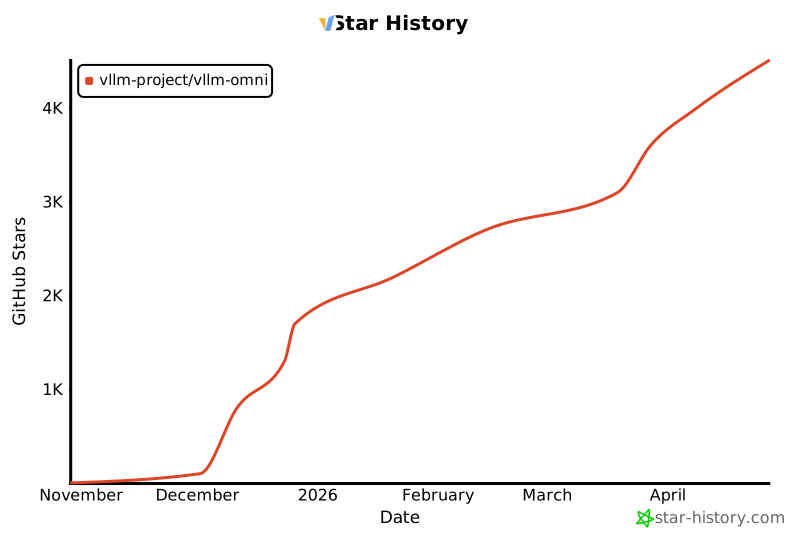](https://www.star-history.com/#vllm-project/vllm-omni&type=date&legend=top-left)
|
||||
|
||||
```bash
|
||||
git clone https://github.com/vllm-project/vllm.git
|
||||
cd vllm
|
||||
git checkout v0.11.0
|
||||
```
|
||||
Set up environment variables to get pre-built wheels. If there are internet problems, just download the whl file manually. And set VLLM_PRECOMPILED_WHEEL_LOCATION as your local absolute path of whl file.
|
||||
```bash
|
||||
export VLLM_PRECOMPILED_WHEEL_LOCATION=https://github.com/vllm-project/vllm/releases/download/v0.11.0/vllm-0.11.0-cp38-abi3-manylinux1_x86_64.whl
|
||||
```
|
||||
Install vllm with command below (If you have no existing PyTorch).
|
||||
```bash
|
||||
uv pip install --editable .
|
||||
```
|
||||
## License
|
||||
|
||||
Install vllm with command below (If you already have PyTorch).
|
||||
```bash
|
||||
python use_existing_torch.py
|
||||
uv pip install -r requirements/build.txt
|
||||
uv pip install --no-build-isolation --editable .
|
||||
```
|
||||
|
||||
### Verification for successful installation of vLLM
|
||||
Just run the command below. If no error, it demonstrates that the installation is successfull.
|
||||
```bash
|
||||
python -c "import vllm._C"
|
||||
```
|
||||
|
||||
### Installation of vLLM-omni
|
||||
Install additional requirements for vllm-omni
|
||||
```bash
|
||||
git clone https://github.com/vllm-project/vllm-omni.git
|
||||
cd vllm_omni
|
||||
uv pip install -r requirements.txt
|
||||
```
|
||||
|
||||
## Run examples (Qwen2.5-omni)
|
||||
|
||||
Get into the example folder
|
||||
```bash
|
||||
cd examples/offline_inference/qwen_2_5_omni
|
||||
```
|
||||
Modify PYTHONPATH in run.sh as your path of vllm_omni. Then run.
|
||||
```bash
|
||||
bash run.sh
|
||||
```
|
||||
The output audio is saved in ./output_audio
|
||||
|
||||
## Further details
|
||||
|
||||
For detailed architecture design, see [vllm_omni_design.md](docs/architecture/vllm_omni_design.md) and [high_level_arch_design.md](docs/architecture/high_level_arch_design.md).
|
||||
Apache License 2.0, as found in the [LICENSE](./LICENSE) file.
|
||||
@@ -0,0 +1,42 @@
|
||||
# Benchmarks Overview and Architecture
|
||||
|
||||
This document explains the benchmark architecture across all benchmark assets in this repo. It describes what we measure, and where to find or plug in new scenarios. Per-task details remain in subfolder READMEs (e.g., `benchmarks/<model>/README.md`).
|
||||
|
||||
## Scope and goals
|
||||
- Establish repeatable latency/throughput measurements for multimodal LLM pipelines.
|
||||
- Provide both HF Transformers (offline) and vLLM-Omni (multi-stage/pipeline) baselines.
|
||||
- Make it easy to plug in new datasets and models with minimal changes to the runner scripts.
|
||||
|
||||
## Dataset and inputs
|
||||
- Default example: SeedTTS top-100 prompts (`benchmarks/build_dataset/top100.txt`) via `benchmarks/build_dataset/`.
|
||||
- Extensible: drop in new prompt files or modality-aligned payloads; keep the expected format for the consuming scripts (e.g., one prompt per line).
|
||||
- If you add a new dataset, document it under `benchmarks/<model>/README.md` and point scripts to your data path.
|
||||
|
||||
## Directory layout
|
||||
- `benchmarks/build_dataset/` — dataset prep utilities (e.g., SeedTTS top100).
|
||||
- `benchmarks/<model>/vllm_omni/` — vLLM-Omni pipeline benchmarks, logs, outputs.
|
||||
- Add new tasks under `benchmarks/<model>/...` with the same pattern: `transformers/`, `vllm_omni/`, task-specific README, and (optionally) dataset prep notes.
|
||||
|
||||
## Reference workflows
|
||||
- **HF Transformers (offline, single process)**
|
||||
Script (example): `benchmarks/<model>/transformers/eval_qwen3_moe_omni_transformers.sh`
|
||||
Outputs: `benchmark_results/perf_stats.json`, `benchmark_results/results.json`, `benchmark_results/audio/` (if audio is produced).
|
||||
|
||||
- **vLLM-Omni end-to-end pipeline**
|
||||
Script (example): `benchmarks/<model>/vllm_omni/eval_qwen3_moe_omni.sh`
|
||||
Outputs: `vllm_omni/logs/*.stats.jsonl` (per-stage/overall latency & TPS), `vllm_omni/logs/stage*.log`, `vllm_omni/outputs/` (text/audio artifacts).
|
||||
|
||||
- **Adding a new task/model**
|
||||
1) Create `benchmarks/<model>/transformers/` and/or `benchmarks/<model>/vllm_omni/` with scripts referencing your model and dataset.
|
||||
2) Add a task README describing dataset, configs, and expected outputs.
|
||||
3) Keep the output/log structure similar for easy comparison (perf_stats/results/audio or text outputs; stats.jsonl/logs for pipeline).
|
||||
|
||||
## Metrics to watch
|
||||
- **Throughput**: `overall_tps`, `*_tps_avg` per stage.
|
||||
- **Latency distribution**: look for long tails in `*.stats.jsonl`.
|
||||
- **Quality/completeness**: missing outputs or errors in stage logs indicate pipeline failures or misconfigurations.
|
||||
|
||||
## Troubleshooting
|
||||
- Verify GPU/driver/FlashAttention2 requirements for your chosen model/config.
|
||||
- Ensure network access for dataset/model downloads (Google Drive, Hugging Face, etc.).
|
||||
- If outputs are missing or slow, inspect per-stage logs and `*.stats.jsonl` for errors, stragglers, or contention.
|
||||
@@ -0,0 +1,82 @@
|
||||
# Benchmark Dataset Preparation Guide
|
||||
|
||||
This guide describes how to download and prepare the SeedTTS test dataset for benchmarking Qwen-Omni models.
|
||||
|
||||
## Prerequisites
|
||||
|
||||
- Python 3.8+
|
||||
- `gdown` for downloading from Google Drive
|
||||
- Access to the benchmark scripts
|
||||
|
||||
## Steps
|
||||
|
||||
### 1. Navigate to the Dataset Directory
|
||||
|
||||
```bash
|
||||
cd benchmarks/build_dataset
|
||||
```
|
||||
|
||||
### 2. Install Dependencies
|
||||
|
||||
```bash
|
||||
pip install gdown
|
||||
```
|
||||
|
||||
### 3. Download the SeedTTS Test Dataset
|
||||
|
||||
Download the dataset from Google Drive:
|
||||
|
||||
```bash
|
||||
gdown --id 1GlSjVfSHkW3-leKKBlfrjuuTGqQ_xaLP
|
||||
```
|
||||
|
||||
### 4. Extract the Dataset
|
||||
|
||||
```bash
|
||||
tar -xf seedtts_testset.tar
|
||||
```
|
||||
|
||||
### 5. Prepare the Metadata File
|
||||
|
||||
Copy the English metadata file to the working directory:
|
||||
|
||||
```bash
|
||||
cp seedtts_testset/en/meta.lst meta.lst
|
||||
```
|
||||
|
||||
### 6. Extract Prompts
|
||||
|
||||
Extract the first N prompts from the metadata file:
|
||||
|
||||
```bash
|
||||
# Extract top 100 prompts (adjust -n for different amounts)
|
||||
python extract_tts_prompts.py -i meta.lst -o top100.txt -n 100
|
||||
```
|
||||
|
||||
**Options:**
|
||||
- `-i, --input`: Input metadata file (default: `meta.lst`)
|
||||
- `-o, --output`: Output prompts file (default: `prompts.txt`)
|
||||
- `-n, --num_lines`: Number of prompts to extract (required)
|
||||
|
||||
### 7. Clean Up (Optional)
|
||||
|
||||
Remove temporary files to save disk space:
|
||||
|
||||
```bash
|
||||
rm -rf seedtts_testset
|
||||
rm seedtts_testset.tar
|
||||
rm meta.lst
|
||||
```
|
||||
|
||||
## Quick Start (All-in-One)
|
||||
|
||||
```bash
|
||||
# Full setup and benchmark
|
||||
cd benchmarks/build_dataset
|
||||
pip install gdown
|
||||
gdown --id 1GlSjVfSHkW3-leKKBlfrjuuTGqQ_xaLP
|
||||
tar -xf seedtts_testset.tar
|
||||
cp seedtts_testset/en/meta.lst meta.lst
|
||||
python extract_tts_prompts.py -i meta.lst -o top100.txt -n 100
|
||||
rm -rf seedtts_testset seedtts_testset.tar meta.lst
|
||||
```
|
||||
@@ -0,0 +1,73 @@
|
||||
#!/usr/bin/env python3
|
||||
"""
|
||||
Extract prompts from meta.lst and save them to a txt file.
|
||||
|
||||
Each line in meta.lst has the format:
|
||||
ID|prompt_text|audio_path|target_text
|
||||
|
||||
This script extracts the prompt_text (second field) from the first N lines.
|
||||
"""
|
||||
|
||||
import argparse
|
||||
from pathlib import Path
|
||||
|
||||
|
||||
def extract_prompts(input_file: str, output_file: str, num_lines: int) -> None:
|
||||
"""
|
||||
Extract prompts from meta.lst and save to output file.
|
||||
|
||||
Args:
|
||||
input_file: Path to the meta.lst file
|
||||
output_file: Path to the output txt file
|
||||
num_lines: Number of lines to process
|
||||
"""
|
||||
prompts = []
|
||||
|
||||
with open(input_file, encoding="utf-8") as f:
|
||||
for i, line in enumerate(f):
|
||||
if i >= num_lines:
|
||||
break
|
||||
|
||||
line = line.strip()
|
||||
if not line: # Skip empty lines
|
||||
continue
|
||||
|
||||
parts = line.split("|")
|
||||
if len(parts) >= 2:
|
||||
prompt = parts[1] # The prompt is the second field
|
||||
prompts.append(prompt)
|
||||
|
||||
# Write prompts to output file
|
||||
with open(output_file, "w", encoding="utf-8") as f:
|
||||
for prompt in prompts:
|
||||
f.write(prompt + "\n")
|
||||
|
||||
# Print result stats
|
||||
print(f"Extracted {len(prompts)} prompts from first {num_lines} lines")
|
||||
print(f"Saved to: {output_file}")
|
||||
|
||||
|
||||
def main():
|
||||
parser = argparse.ArgumentParser(description="Extract prompts from meta.lst file")
|
||||
parser.add_argument(
|
||||
"-i", "--input", type=str, default="meta.lst", help="Input meta.lst file path (default: meta.lst)"
|
||||
)
|
||||
parser.add_argument(
|
||||
"-o", "--output", type=str, default="prompts.txt", help="Output txt file path (default: prompts.txt)"
|
||||
)
|
||||
parser.add_argument(
|
||||
"-n", "--num_lines", type=int, required=True, help="Number of lines to extract from the beginning"
|
||||
)
|
||||
|
||||
args = parser.parse_args()
|
||||
|
||||
# Check if input file exists
|
||||
if not Path(args.input).exists():
|
||||
print(f"Error: Input file '{args.input}' not found")
|
||||
return
|
||||
|
||||
extract_prompts(args.input, args.output, args.num_lines)
|
||||
|
||||
|
||||
if __name__ == "__main__":
|
||||
main()
|
||||
@@ -0,0 +1,117 @@
|
||||
|
||||
# Diffusion Serving Benchmark (Image/Video)
|
||||
|
||||
This folder contains an online-serving benchmark script for diffusion models.
|
||||
It sends requests to a vLLM OpenAI-compatible endpoint and reports throughput,
|
||||
latency percentiles, and optional SLO attainment.
|
||||
|
||||
The main entrypoint is:
|
||||
|
||||
- `benchmarks/diffusion/diffusion_benchmark_serving.py`
|
||||
|
||||
## 1. Quick Start
|
||||
|
||||
1. Start the server:
|
||||
|
||||
```bash
|
||||
vllm serve Qwen/Qwen-Image --omni --port 8099
|
||||
```
|
||||
|
||||
2. Run a minimal benchmark:
|
||||
|
||||
```bash
|
||||
python3 benchmarks/diffusion/diffusion_benchmark_serving.py \
|
||||
--base-url http://localhost:8099 \
|
||||
--model Qwen/Qwen-Image \
|
||||
--task t2i \
|
||||
--dataset vbench \
|
||||
--num-prompts 5
|
||||
```
|
||||
|
||||
**Notes**
|
||||
|
||||
- The benchmark talks to `http://<host>:<port>/v1/chat/completions`.
|
||||
- If you run the server on another host or port, pass `--base-url` accordingly.
|
||||
|
||||
## 2. Supported Datasets
|
||||
|
||||
The benchmark supports three dataset modes via `--dataset`:
|
||||
|
||||
- `vbench`: Built-in prompt/data loader.
|
||||
- `trace`: Heterogeneous request traces (each request can have different resolution/frames/steps).
|
||||
- `random`: Synthetic prompts for quick smoke tests.
|
||||
|
||||
### VBench dataset
|
||||
|
||||
If you use i2v/i2i bench datasets and need auto-download support, you may need:
|
||||
|
||||
```bash
|
||||
uv pip install gdown
|
||||
```
|
||||
|
||||
### Trace dataset
|
||||
|
||||
Use `--dataset trace` to replay a trace file. The trace can specify per-request fields such as:
|
||||
|
||||
- `width`, `height`
|
||||
- `num_frames` (video)
|
||||
- `num_inference_steps`
|
||||
- `seed`, `fps`
|
||||
- optional `slo_ms` (per-request SLO target)
|
||||
|
||||
By default (when `--dataset-path` is not provided), the script downloads a default trace from
|
||||
the HuggingFace dataset repo `asukaqaqzz/Dit_Trace`. The default filename can depend on `--task`
|
||||
(e.g., `t2v` uses a video trace).
|
||||
|
||||
Current defaults:
|
||||
|
||||
- `--task t2i` -> `sd3_trace.txt`
|
||||
- `--task t2v` -> `cogvideox_trace.txt`
|
||||
|
||||
You can point to your own trace using `--dataset-path`.
|
||||
|
||||
## 3. Benchmark Parameters
|
||||
|
||||
### Basic flags
|
||||
|
||||
- `--base-url`: Server address (the script calls `.../v1/chat/completions`).
|
||||
- `--model`: The OpenAI-compatible `model` field.
|
||||
- `--task`: Task type (e.g., `t2i`, `t2v`, `i2i`, `i2v`).
|
||||
- `--dataset`: Dataset mode (`vbench` / `trace` / `random`).
|
||||
- `--num-prompts`: Number of requests to send.
|
||||
|
||||
Common optional flags:
|
||||
|
||||
- `--output-file`: Write metrics to a JSON file.
|
||||
- `--disable-tqdm`: Disable the progress bar.
|
||||
|
||||
### Resolution / frames / steps: CLI defaults vs dataset fields
|
||||
|
||||
Related flags: `--width`, `--height`, `--num-frames`, `--fps`, `--num-inference-steps`.
|
||||
|
||||
- For `vbench` / `random`: these CLI flags act as global defaults for all generated requests.
|
||||
- For `trace`: each request can carry its own fields (e.g., `width/height/num_frames/num_inference_steps`).
|
||||
|
||||
Precedence rules for `trace` (i.e., what actually gets sent):
|
||||
|
||||
- `width/height`: if either `--width` or `--height` is explicitly set, it overrides per-request values from the trace; otherwise per-request values are used when present.
|
||||
- `num_frames`: per-request `num_frames` takes precedence; otherwise fall back to `--num-frames`.
|
||||
- `num_inference_steps`: per-request `num_inference_steps` takes precedence; otherwise fall back to `--num-inference-steps`.
|
||||
|
||||
### SLO, warmup, and max concurrency
|
||||
|
||||
Enable SLO evaluation with `--slo`.
|
||||
|
||||
- If a request in the trace already has `slo_ms`, that value is used.
|
||||
- Otherwise, the script runs warmup requests to infer a base unit time, estimates `expected_ms` by linearly scaling with area/frames/steps, and then sets `slo_ms = expected_ms * --slo-scale`.
|
||||
|
||||
Warmup flags:
|
||||
|
||||
- `--warmup-requests`: Number of warmup requests.
|
||||
- `--warmup-num-inference-steps`: Steps used during warmup.
|
||||
- For `--task t2v`: warmup requests are forced to use `num_frames=1` to make warmup faster and less noisy.
|
||||
|
||||
Traffic / concurrency flags:
|
||||
|
||||
- `--request-rate`: Target request rate (requests/second). If set to `inf`, the script sends all requests immediately.
|
||||
- `--max-concurrency`: Max number of in-flight requests (default: `1`). This can hard-cap the achieved QPS: if it is too small, requests will queue behind the semaphore, and both achieved throughput and observed SLO attainment can be skewed.
|
||||
File diff suppressed because it is too large.
Load diff
@@ -0,0 +1,86 @@
|
||||
# Benchmarks Guide
|
||||
|
||||
This README explains how to (1) prepare benchmark datasets and (2) run the provided Qwen3-Omni benchmarks.
|
||||
|
||||
## 1) Prepare the dataset (SeedTTS top100)
|
||||
|
||||
```bash
|
||||
cd benchmarks/build_dataset
|
||||
pip install gdown
|
||||
|
||||
# Download SeedTTS test set from Google Drive
|
||||
gdown --id 1GlSjVfSHkW3-leKKBlfrjuuTGqQ_xaLP
|
||||
|
||||
# Extract
|
||||
tar -xf seedtts_testset.tar
|
||||
|
||||
# Copy metadata and extract top-100 prompts
|
||||
cp seedtts_testset/en/meta.lst meta.lst
|
||||
python extract_prompts.py -i meta.lst -o top100.txt -n 100
|
||||
|
||||
# (Optional) clean up to save space
|
||||
rm -rf seedtts_testset seedtts_testset.tar meta.lst
|
||||
```
|
||||
|
||||
Artifacts:
|
||||
- `benchmarks/build_dataset/top100.txt` — 100 text prompts (one per line).
|
||||
|
||||
## 2) Run benchmarks
|
||||
|
||||
All commands assume repo root (`vllm-omni`).
|
||||
|
||||
### A. Transformers benchmark (offline, HF Transformers)
|
||||
|
||||
```
|
||||
bash benchmarks/qwen3-omni/transformers/eval_qwen3_moe_omni_transformers.sh
|
||||
```
|
||||
|
||||
What it does:
|
||||
- Runs `qwen3_omni_moe_transformers.py` over `top100.txt` with `--num_prompts 100`.
|
||||
- Outputs to `benchmarks/qwen3-omni/transformers/benchmark_results/`:
|
||||
- `perf_stats.json` — aggregated & per-prompt TPS/latency (thinker/talker/code2wav/overall).
|
||||
- `results.json` — per-prompt outputs and audio paths.
|
||||
- `audio/` — ~100 generated `.wav` files.
|
||||
|
||||
Key checks:
|
||||
- `overall_tps` and `*_tps_avg` should be non-zero and reasonably stable.
|
||||
- Investigate any 0/NaN or unusually low TPS / long-tail latency.
|
||||
|
||||
### B. vLLM Omni end-to-end benchmark (pipeline)
|
||||
|
||||
```
|
||||
bash benchmarks/qwen3-omni/vllm_omni/eval_qwen3_moe_omni.sh
|
||||
```
|
||||
|
||||
What it does:
|
||||
- Runs `examples/offline_inference/qwen3_omni/end2end.py` with `--enable-stats`.
|
||||
- Uses `benchmarks/build_dataset/top100.txt` and writes to:
|
||||
- Logs: `benchmarks/qwen3-omni/vllm_omni/logs/`
|
||||
- `omni_llm_pipeline_text.orchestrator.stats.jsonl` — per-stage latency stats.
|
||||
- `omni_llm_pipeline_text.overall.stats.jsonl` — end-to-end latency/TPS.
|
||||
- `omni_llm_pipeline_text.stage{0,1,2}.log` — per-stage detailed logs/errors.
|
||||
- Outputs: `benchmarks/qwen3-omni/vllm_omni/outputs/` — ~100 text and `.wav` files.
|
||||
|
||||
Key checks:
|
||||
- Overall stats: end-to-end latency/TPS should be reasonable.
|
||||
- Orchestrator stats: per-stage latency should be stable; investigate long tails.
|
||||
- Stage logs: ensure no errors and no unusually slow stages.
|
||||
|
||||
|
||||
## Performance snapshot
|
||||
|
||||
The chart below summarizes our measured Qwen3-Omni MoE end-to-end benchmark, comparing vLLM-Omni against HF Transformers. It shows the overall throughput advantage for vLLM-Omni. These are actual experiment results—please refer to this performance when evaluating or reproducing the benchmark.
|
||||
|
||||

|
||||
|
||||
## Directory layout
|
||||
- `benchmarks/build_dataset/` — dataset prep utilities (e.g., SeedTTS top100).
|
||||
- `benchmarks/<model>/vllm_omni/` — vLLM-Omni pipeline benchmarks, logs, outputs.
|
||||
- Add new tasks under `benchmarks/<model>/...` with the same pattern: `transformers/`, `vllm_omni/`, task-specific README, and (optionally) dataset prep notes.
|
||||
- `benchmarks/<model>/vllm-omni-vs-hf.png` — current performance snapshot (overall throughput comparison).
|
||||
- `benchmarks/<model>/transformers/` — HF Transformers benchmarks (offline reference).
|
||||
|
||||
## Troubleshooting
|
||||
- Make sure GPU/driver/FlashAttention2 requirements are met for the chosen model.
|
||||
- If downloads fail, confirm network access to Google Drive (`gdown`) and Hugging Face.
|
||||
- If audio files are missing, check for errors in stage logs or model generation.***
|
||||
@@ -0,0 +1,26 @@
|
||||
#!/bin/bash
|
||||
# Qwen3-Omni Transformers Benchmark Evaluation Script
|
||||
# This script must be run from the vllm-omni root directory
|
||||
|
||||
# Get the directory where this script is located
|
||||
SCRIPT_DIR="$(cd "$(dirname "${BASH_SOURCE[0]}")" && pwd)"
|
||||
|
||||
# Navigate to vllm-omni root directory (4 levels up from script location)
|
||||
VLLM_OMNI_ROOT="$(cd "$SCRIPT_DIR/../../.." && pwd)"
|
||||
cd "$VLLM_OMNI_ROOT" || { echo "Error: Failed to navigate to vllm-omni directory"; exit 1; }
|
||||
|
||||
echo "Working directory: $(pwd)"
|
||||
# Verify we're in the correct directory and run benchmark
|
||||
if [[ ! -f "benchmarks/qwen3-omni/transformers/qwen3_omni_moe_transformers.py" ]]; then
|
||||
echo "Error: Not in vllm-omni root directory. Please run from vllm-omni folder."
|
||||
else
|
||||
cd benchmarks/qwen3-omni/transformers
|
||||
|
||||
python qwen3_omni_moe_transformers.py --prompts_file ../../build_dataset/top100.txt --num_prompts 100
|
||||
|
||||
echo "Logs and outputs are saved to $(pwd)/benchmark_results:"
|
||||
echo " - perf_stats.json Aggregated/per-prompt TPS and latency (thinker/talker/code2wav/overall)"
|
||||
echo " - results.json Per-prompt outputs and audio paths"
|
||||
echo " - audio/ Generated wav files, there should be 100 wav file generated"
|
||||
echo "Key checks: overall_tps and *_tps_avg should be non-zero and stable; investigate 0/NaN or unusually low TPS/long-tail latency."
|
||||
fi
|
||||
@@ -0,0 +1,265 @@
|
||||
import time
|
||||
|
||||
import torch
|
||||
from transformers import Qwen3OmniMoeForConditionalGeneration
|
||||
|
||||
|
||||
class Qwen3OmniMoeForConditionalGenerationWithLogging(Qwen3OmniMoeForConditionalGeneration):
|
||||
@torch.no_grad()
|
||||
def generate(
|
||||
self,
|
||||
input_ids: torch.Tensor | None = None,
|
||||
speaker: str = "Ethan",
|
||||
use_audio_in_video: bool = False,
|
||||
return_audio: bool | None = None,
|
||||
thinker_max_new_tokens: int = 1024,
|
||||
thinker_eos_token_id: int = 151645,
|
||||
talker_max_new_tokens: int = 4096,
|
||||
talker_do_sample: bool = True,
|
||||
talker_top_k: int = 50,
|
||||
talker_top_p: float = 1.0,
|
||||
talker_temperature: float = 0.9,
|
||||
talker_repetition_penalty: float = 1.05,
|
||||
**kwargs,
|
||||
):
|
||||
total_t0 = time.time()
|
||||
perf_stats = {
|
||||
"thinker_tokens": 0,
|
||||
"thinker_time_s": 0.0,
|
||||
"thinker_tps": 0.0,
|
||||
"talker_tokens": 0,
|
||||
"talker_time_s": 0.0,
|
||||
"talker_tps": 0.0,
|
||||
"code2wav_tokens": 0,
|
||||
"code2wav_time_s": 0.0,
|
||||
"code2wav_tps": 0.0,
|
||||
"total_tokens": 0,
|
||||
"total_time_s": 0.0,
|
||||
"total_tps": 0.0,
|
||||
}
|
||||
if return_audio and not self.has_talker:
|
||||
raise ValueError(
|
||||
"Cannot use talker when talker module not initialized. "
|
||||
"Use `enable_talker` method or set enable_talker in config "
|
||||
"to enable talker."
|
||||
)
|
||||
if return_audio is None:
|
||||
return_audio = self.has_talker
|
||||
|
||||
shared_kwargs = {"use_audio_in_video": use_audio_in_video}
|
||||
thinker_kwargs = {
|
||||
"max_new_tokens": thinker_max_new_tokens,
|
||||
"eos_token_id": thinker_eos_token_id,
|
||||
}
|
||||
|
||||
talker_kwargs = {}
|
||||
token2wav_kwargs = {}
|
||||
if return_audio:
|
||||
speaker_id = self.config.talker_config.speaker_id.get(speaker.lower())
|
||||
if speaker_id is None:
|
||||
raise NotImplementedError(f"Speaker {speaker} not implemented")
|
||||
if input_ids.shape[0] != 1:
|
||||
raise NotImplementedError("Qwen3-Omni currently does not support batched inference with audio output")
|
||||
talker_suppressed_tokens = [
|
||||
i
|
||||
for i in range(
|
||||
self.config.talker_config.text_config.vocab_size - 1024,
|
||||
self.config.talker_config.text_config.vocab_size,
|
||||
)
|
||||
if i != self.config.talker_config.codec_eos_token_id
|
||||
] # Suppress additional special tokens, should not be predicted
|
||||
talker_kwargs = {
|
||||
"max_new_tokens": talker_max_new_tokens,
|
||||
"do_sample": talker_do_sample,
|
||||
"top_k": talker_top_k,
|
||||
"top_p": talker_top_p,
|
||||
"temperature": talker_temperature,
|
||||
"eos_token_id": self.config.talker_config.codec_eos_token_id,
|
||||
"repetition_penalty": talker_repetition_penalty,
|
||||
"suppress_tokens": talker_suppressed_tokens,
|
||||
"output_hidden_states": True,
|
||||
"return_dict_in_generate": True,
|
||||
}
|
||||
token2wav_kwargs = {}
|
||||
|
||||
for key, value in kwargs.items():
|
||||
if key.startswith("thinker_"):
|
||||
thinker_kwargs[key[len("thinker_") :]] = value
|
||||
elif key.startswith("talker_"):
|
||||
talker_kwargs[key[len("talker_") :]] = value
|
||||
elif key.startswith("token2wav_"):
|
||||
token2wav_kwargs[key[len("token2wav_") :]] = value
|
||||
# Process special input values
|
||||
elif key == "feature_attention_mask":
|
||||
thinker_kwargs[key] = value
|
||||
talker_kwargs["audio_feature_lengths"] = torch.sum(value, dim=1)
|
||||
elif key in ("input_features", "attention_mask"):
|
||||
thinker_kwargs[key] = value
|
||||
# Put other key to shared kwargs
|
||||
else:
|
||||
shared_kwargs[key] = value
|
||||
|
||||
# Merge kwargs
|
||||
for key, value in shared_kwargs.items():
|
||||
if key not in thinker_kwargs:
|
||||
thinker_kwargs[key] = value
|
||||
if key not in talker_kwargs and key in ["image_grid_thw", "video_grid_thw", "video_second_per_grid"]:
|
||||
talker_kwargs[key] = value
|
||||
if key not in token2wav_kwargs:
|
||||
token2wav_kwargs[key] = value
|
||||
|
||||
# 1. Generate from thinker module
|
||||
generate_audio = return_audio and self.has_talker
|
||||
if generate_audio:
|
||||
thinker_kwargs["output_hidden_states"] = True
|
||||
thinker_kwargs["return_dict_in_generate"] = True
|
||||
|
||||
t0 = time.time()
|
||||
thinker_result = self.thinker.generate(input_ids=input_ids, **thinker_kwargs)
|
||||
t1 = time.time()
|
||||
perf_stats["thinker_time_s"] = max(0.0, t1 - t0)
|
||||
try:
|
||||
prompt_len = int(input_ids.shape[1]) if input_ids is not None else 0
|
||||
total_len = int(thinker_result.sequences.shape[-1])
|
||||
thinker_out_len = max(0, total_len - prompt_len)
|
||||
except Exception:
|
||||
thinker_out_len = 0
|
||||
perf_stats["thinker_tokens"] = thinker_out_len
|
||||
perf_stats["thinker_tps"] = (
|
||||
(thinker_out_len / perf_stats["thinker_time_s"]) if perf_stats["thinker_time_s"] > 0 else 0.0
|
||||
)
|
||||
|
||||
if not generate_audio:
|
||||
perf_stats["total_tokens"] = perf_stats["thinker_tokens"]
|
||||
perf_stats["total_time_s"] = time.time() - total_t0
|
||||
perf_stats["total_tps"] = (
|
||||
(perf_stats["total_tokens"] / perf_stats["total_time_s"]) if perf_stats["total_time_s"] > 0 else 0.0
|
||||
)
|
||||
# attach stats to self
|
||||
setattr(self, "_perf_stats_last", perf_stats)
|
||||
if not hasattr(self, "_perf_stats_history"):
|
||||
setattr(self, "_perf_stats_history", [])
|
||||
self._perf_stats_history.append(perf_stats)
|
||||
return thinker_result, None
|
||||
|
||||
# 2. Prepare talker input
|
||||
thinker_embed = torch.cat([hidden_states[0] for hidden_states in thinker_result.hidden_states], dim=1).to(
|
||||
self.talker.device
|
||||
) # [1 t d]
|
||||
thinker_hidden = torch.cat(
|
||||
[
|
||||
hidden_states[self.config.talker_config.accept_hidden_layer]
|
||||
for hidden_states in thinker_result.hidden_states
|
||||
],
|
||||
dim=1,
|
||||
).to(self.talker.device) # [1 t d]
|
||||
|
||||
im_start_indexes = torch.cat(
|
||||
(
|
||||
torch.nonzero(input_ids[0] == self.config.im_start_token_id).squeeze(),
|
||||
torch.tensor([thinker_result.sequences.shape[-1]], device=input_ids.device, dtype=input_ids.dtype),
|
||||
),
|
||||
dim=-1,
|
||||
).to(self.talker.device) # Shape [n_starts + 1]; Take batch 0 since batched inference is not supported here.
|
||||
multimodal_mask = (
|
||||
(thinker_result.sequences == self.config.thinker_config.audio_token_id) |
|
||||
(thinker_result.sequences == self.config.thinker_config.image_token_id) |
|
||||
(thinker_result.sequences == self.config.thinker_config.video_token_id)
|
||||
).to(self.talker.device) # [1 t] # fmt: skip
|
||||
|
||||
talker_special_tokens = torch.tensor(
|
||||
[[self.config.tts_bos_token_id, self.config.tts_eos_token_id, self.config.tts_pad_token_id]],
|
||||
device=self.thinker.device,
|
||||
dtype=input_ids.dtype,
|
||||
)
|
||||
tts_bos_embed, tts_eos_embed, tts_pad_embed = (
|
||||
self.talker.text_projection(self.thinker.get_input_embeddings()(talker_special_tokens))
|
||||
.to(self.talker.device)
|
||||
.chunk(3, dim=1)
|
||||
) # 3 * [1 1 d]
|
||||
|
||||
talker_input_embeds = [] # [1 t d]
|
||||
talker_input_ids = []
|
||||
# For every chatml parts
|
||||
for i in range(len(im_start_indexes) - 1):
|
||||
im_start_index = im_start_indexes[i]
|
||||
segment_end_index = im_start_indexes[i + 1]
|
||||
role_token = input_ids[0][im_start_index + 1]
|
||||
# Talker should ignore thinker system prompt
|
||||
if role_token == self.config.system_token_id:
|
||||
continue
|
||||
# Talker takes word embeddings for tokens and hidden state from `accept_hidden_layer` for multimodal inputs
|
||||
elif role_token == self.config.user_token_id:
|
||||
talker_user_part = self._get_talker_user_parts(
|
||||
im_start_index, segment_end_index, multimodal_mask, thinker_hidden, thinker_embed
|
||||
)
|
||||
talker_input_embeds.append(talker_user_part)
|
||||
talker_input_ids.append(thinker_result.sequences[:, im_start_index:segment_end_index])
|
||||
# Take assistant output (for now)
|
||||
elif role_token == self.config.assistant_token_id and i == len(im_start_indexes) - 2:
|
||||
talker_assistant_embeds, talker_assistant_ids, trailing_text_hidden = self._get_talker_assistant_parts(
|
||||
im_start_index,
|
||||
segment_end_index,
|
||||
speaker_id,
|
||||
thinker_embed,
|
||||
tts_pad_embed,
|
||||
tts_bos_embed,
|
||||
tts_eos_embed,
|
||||
)
|
||||
talker_input_embeds.append(talker_assistant_embeds)
|
||||
talker_input_ids.append(talker_assistant_ids)
|
||||
# History assistant output (ignore for now)
|
||||
elif role_token == self.config.assistant_token_id and i != len(im_start_indexes) - 2:
|
||||
continue
|
||||
else:
|
||||
raise AssertionError("Expect role id after <|im_start|> (assistant, user, system)")
|
||||
talker_input_embed = torch.cat([embed.to(self.talker.device) for embed in talker_input_embeds], dim=1)
|
||||
talker_input_id = torch.cat([embed.to(self.talker.device) for embed in talker_input_ids], dim=1)
|
||||
t2 = time.time()
|
||||
talker_result = self.talker.generate(
|
||||
inputs_embeds=talker_input_embed,
|
||||
trailing_text_hidden=trailing_text_hidden,
|
||||
tts_pad_embed=tts_pad_embed,
|
||||
talker_input_ids=talker_input_id, # Not use input_ids to prevent repetition penalty out of bound
|
||||
**talker_kwargs,
|
||||
)
|
||||
t3 = time.time()
|
||||
perf_stats["talker_time_s"] = max(0.0, t3 - t2)
|
||||
talker_codes = (
|
||||
torch.stack([hid[-1] for hid in talker_result.hidden_states if hid[-1] is not None], dim=1)
|
||||
.transpose(1, 2)
|
||||
.to(self.code2wav.device)
|
||||
)
|
||||
try:
|
||||
# codes shape: (B, num_quantizers, T). We log T as token length.
|
||||
perf_stats["talker_tokens"] = int(talker_codes.shape[-1])
|
||||
except Exception:
|
||||
perf_stats["talker_tokens"] = 0
|
||||
perf_stats["talker_tps"] = (
|
||||
(perf_stats["talker_tokens"] / perf_stats["talker_time_s"]) if perf_stats["talker_time_s"] > 0 else 0.0
|
||||
)
|
||||
t4 = time.time()
|
||||
talker_wavs = self.code2wav.chunked_decode(talker_codes, chunk_size=300, left_context_size=25).float()
|
||||
t5 = time.time()
|
||||
perf_stats["code2wav_time_s"] = max(0.0, t5 - t4)
|
||||
perf_stats["code2wav_tokens"] = perf_stats["talker_tokens"] # same T, not times 16
|
||||
perf_stats["code2wav_tps"] = (
|
||||
(perf_stats["code2wav_tokens"] / perf_stats["code2wav_time_s"])
|
||||
if perf_stats["code2wav_time_s"] > 0
|
||||
else 0.0
|
||||
)
|
||||
perf_stats["total_tokens"] = perf_stats["thinker_tokens"] + perf_stats["talker_tokens"]
|
||||
perf_stats["total_time_s"] = time.time() - total_t0
|
||||
perf_stats["total_tps"] = (
|
||||
(perf_stats["total_tokens"] / perf_stats["total_time_s"]) if perf_stats["total_time_s"] > 0 else 0.0
|
||||
)
|
||||
setattr(self, "_perf_stats_last", perf_stats)
|
||||
if not hasattr(self, "_perf_stats_history"):
|
||||
setattr(self, "_perf_stats_history", [])
|
||||
self._perf_stats_history.append(perf_stats)
|
||||
return thinker_result, talker_wavs.float()
|
||||
|
||||
|
||||
__all__ = [
|
||||
"Qwen3OmniMoeForConditionalGenerationWithLogging",
|
||||
]
|
||||
@@ -0,0 +1,275 @@
|
||||
import argparse
|
||||
import json
|
||||
import os
|
||||
|
||||
import soundfile as sf
|
||||
from qwen3_omni_moe_model import Qwen3OmniMoeForConditionalGenerationWithLogging
|
||||
from qwen_omni_utils import process_mm_info
|
||||
from tqdm import tqdm
|
||||
from transformers import Qwen3OmniMoeProcessor
|
||||
|
||||
MODEL_PATH = "Qwen/Qwen3-Omni-30B-A3B-Instruct"
|
||||
# MODEL_PATH = "Qwen/Qwen3-Omni-30B-A3B-Thinking"
|
||||
|
||||
|
||||
def load_prompts(prompts_file: str) -> list[str]:
|
||||
"""Load prompts from a text file, one prompt per line."""
|
||||
prompts = []
|
||||
with open(prompts_file, encoding="utf-8") as f:
|
||||
for line in f:
|
||||
line = line.strip()
|
||||
if line:
|
||||
prompts.append(line)
|
||||
return prompts
|
||||
|
||||
|
||||
def run_benchmark(
|
||||
model,
|
||||
processor,
|
||||
prompts: list[str],
|
||||
output_dir: str = "benchmark_results",
|
||||
speaker: str = "Ethan",
|
||||
use_audio_in_video: bool = True,
|
||||
):
|
||||
"""
|
||||
Run benchmark on a list of prompts and collect performance stats.
|
||||
|
||||
Args:
|
||||
model: The Qwen3OmniMoe model
|
||||
processor: The Qwen3OmniMoe processor
|
||||
prompts: List of text prompts to process
|
||||
output_dir: Directory to save results
|
||||
speaker: Speaker voice for audio output
|
||||
use_audio_in_video: Whether to use audio in video
|
||||
|
||||
Returns:
|
||||
tuple: (aggregated_stats, results, audio_outputs)
|
||||
- aggregated_stats: dict with aggregated performance statistics
|
||||
- results: list of dicts with per-prompt results
|
||||
- audio_outputs: list of audio tensors/arrays (or None if no audio)
|
||||
"""
|
||||
os.makedirs(output_dir, exist_ok=True)
|
||||
audio_dir = os.path.join(output_dir, "audio")
|
||||
os.makedirs(audio_dir, exist_ok=True)
|
||||
|
||||
all_stats = []
|
||||
results = []
|
||||
audio_outputs = []
|
||||
|
||||
for idx, prompt in enumerate(tqdm(prompts, desc="Processing prompts")):
|
||||
conversation = [
|
||||
{
|
||||
"role": "user",
|
||||
"content": [{"type": "text", "text": prompt}],
|
||||
},
|
||||
]
|
||||
|
||||
# Preparation for inference
|
||||
text = processor.apply_chat_template(conversation, add_generation_prompt=True, tokenize=False)
|
||||
audios, images, videos = process_mm_info(conversation, use_audio_in_video=use_audio_in_video)
|
||||
inputs = processor(
|
||||
text=text,
|
||||
audio=audios,
|
||||
images=images,
|
||||
videos=videos,
|
||||
return_tensors="pt",
|
||||
padding=True,
|
||||
use_audio_in_video=use_audio_in_video,
|
||||
)
|
||||
inputs = inputs.to(model.device).to(model.dtype)
|
||||
|
||||
# Inference: Generation of the output text and audio
|
||||
text_ids, audio = model.generate(
|
||||
**inputs, speaker=speaker, thinker_return_dict_in_generate=True, use_audio_in_video=use_audio_in_video
|
||||
)
|
||||
|
||||
# Decode output text
|
||||
output_text = processor.batch_decode(
|
||||
text_ids.sequences[:, inputs["input_ids"].shape[1] :],
|
||||
skip_special_tokens=True,
|
||||
clean_up_tokenization_spaces=False,
|
||||
)[0]
|
||||
|
||||
# Collect performance stats
|
||||
perf_stats = None
|
||||
if hasattr(model, "_perf_stats_last"):
|
||||
perf_stats = model._perf_stats_last.copy()
|
||||
perf_stats["prompt_idx"] = idx
|
||||
perf_stats["prompt"] = prompt
|
||||
all_stats.append(perf_stats)
|
||||
|
||||
# Save audio and collect audio output
|
||||
audio_path = None
|
||||
audio_data = None
|
||||
if audio is not None:
|
||||
audio_data = audio.reshape(-1).detach().cpu().numpy()
|
||||
audio_path = os.path.join(audio_dir, f"output_{idx:04d}.wav")
|
||||
sf.write(
|
||||
audio_path,
|
||||
audio_data,
|
||||
samplerate=24000,
|
||||
)
|
||||
audio_outputs.append(audio_data)
|
||||
else:
|
||||
audio_outputs.append(None)
|
||||
|
||||
# Save result
|
||||
result = {
|
||||
"idx": idx,
|
||||
"prompt": prompt,
|
||||
"output": output_text,
|
||||
"audio_path": audio_path,
|
||||
"perf_stats": perf_stats,
|
||||
}
|
||||
results.append(result)
|
||||
|
||||
# Aggregate statistics
|
||||
aggregated_stats = aggregate_stats(all_stats)
|
||||
|
||||
# Save all results
|
||||
results_path = os.path.join(output_dir, "results.json")
|
||||
with open(results_path, "w", encoding="utf-8") as f:
|
||||
json.dump(results, f, ensure_ascii=False, indent=2)
|
||||
|
||||
# Save aggregated stats
|
||||
stats_path = os.path.join(output_dir, "perf_stats.json")
|
||||
with open(stats_path, "w", encoding="utf-8") as f:
|
||||
json.dump({"aggregated": aggregated_stats, "per_prompt": all_stats}, f, ensure_ascii=False, indent=2)
|
||||
|
||||
# Count saved audio files
|
||||
num_audio_saved = sum(1 for a in audio_outputs if a is not None)
|
||||
print(f"\nSaved {num_audio_saved} audio files to {audio_dir}/")
|
||||
|
||||
return aggregated_stats, results, audio_outputs
|
||||
|
||||
|
||||
def aggregate_stats(all_stats: list[dict]) -> dict:
|
||||
"""Aggregate performance statistics from multiple runs."""
|
||||
if not all_stats:
|
||||
return {}
|
||||
|
||||
keys = [
|
||||
"thinker_tokens",
|
||||
"thinker_time_s",
|
||||
"thinker_tps",
|
||||
"talker_tokens",
|
||||
"talker_time_s",
|
||||
"talker_tps",
|
||||
"code2wav_tokens",
|
||||
"code2wav_time_s",
|
||||
"code2wav_tps",
|
||||
"total_tokens",
|
||||
"total_time_s",
|
||||
"total_tps",
|
||||
]
|
||||
|
||||
aggregated = {
|
||||
"num_samples": len(all_stats),
|
||||
}
|
||||
|
||||
for key in keys:
|
||||
values = [s.get(key, 0) for s in all_stats if key in s]
|
||||
if values:
|
||||
aggregated[f"{key}_sum"] = sum(values)
|
||||
aggregated[f"{key}_avg"] = sum(values) / len(values)
|
||||
aggregated[f"{key}_min"] = min(values)
|
||||
aggregated[f"{key}_max"] = max(values)
|
||||
|
||||
# Calculate overall throughput
|
||||
total_tokens = aggregated.get("total_tokens_sum", 0)
|
||||
total_time = aggregated.get("total_time_s_sum", 0)
|
||||
if total_time > 0:
|
||||
aggregated["overall_tps"] = total_tokens / total_time
|
||||
|
||||
return aggregated
|
||||
|
||||
|
||||
def print_stats(stats: dict):
|
||||
"""Print performance statistics in a formatted way."""
|
||||
print("\n" + "=" * 60)
|
||||
print("Performance Statistics Summary")
|
||||
print("=" * 60)
|
||||
|
||||
print(f"\nNumber of samples: {stats.get('num_samples', 0)}")
|
||||
|
||||
print("\n--- Thinker ---")
|
||||
print(f" Total tokens: {stats.get('thinker_tokens_sum', 0):.0f}")
|
||||
print(f" Total time: {stats.get('thinker_time_s_sum', 0):.2f}s")
|
||||
print(f" Avg TPS: {stats.get('thinker_tps_avg', 0):.2f}")
|
||||
print(f" Min TPS: {stats.get('thinker_tps_min', 0):.2f}")
|
||||
print(f" Max TPS: {stats.get('thinker_tps_max', 0):.2f}")
|
||||
|
||||
print("\n--- Talker ---")
|
||||
print(f" Total tokens: {stats.get('talker_tokens_sum', 0):.0f}")
|
||||
print(f" Total time: {stats.get('talker_time_s_sum', 0):.2f}s")
|
||||
print(f" Avg TPS: {stats.get('talker_tps_avg', 0):.2f}")
|
||||
print(f" Min TPS: {stats.get('talker_tps_min', 0):.2f}")
|
||||
print(f" Max TPS: {stats.get('talker_tps_max', 0):.2f}")
|
||||
|
||||
print("\n--- Code2Wav ---")
|
||||
print(f" Total tokens: {stats.get('code2wav_tokens_sum', 0):.0f}")
|
||||
print(f" Total time: {stats.get('code2wav_time_s_sum', 0):.2f}s")
|
||||
print(f" Avg TPS: {stats.get('code2wav_tps_avg', 0):.2f}")
|
||||
print(f" Min TPS: {stats.get('code2wav_tps_min', 0):.2f}")
|
||||
print(f" Max TPS: {stats.get('code2wav_tps_max', 0):.2f}")
|
||||
|
||||
print("\n--- Overall ---")
|
||||
print(f" Total tokens: {stats.get('total_tokens_sum', 0):.0f}")
|
||||
print(f" Total time: {stats.get('total_time_s_sum', 0):.2f}s")
|
||||
print(f" Overall TPS: {stats.get('overall_tps', 0):.2f}")
|
||||
print(f" Avg TPS: {stats.get('total_tps_avg', 0):.2f}")
|
||||
print(f" Min TPS: {stats.get('total_tps_min', 0):.2f}")
|
||||
print(f" Max TPS: {stats.get('total_tps_max', 0):.2f}")
|
||||
|
||||
print("=" * 60 + "\n")
|
||||
|
||||
|
||||
def main():
|
||||
parser = argparse.ArgumentParser(description="Qwen3-Omni Benchmark Script")
|
||||
parser.add_argument(
|
||||
"--prompts_file",
|
||||
type=str,
|
||||
default="benchmark/build_dataset/top100.txt",
|
||||
help="Path to the prompts file (one prompt per line)",
|
||||
)
|
||||
parser.add_argument(
|
||||
"--output_dir", type=str, default="benchmark_results", help="Directory to save benchmark results"
|
||||
)
|
||||
parser.add_argument("--model_path", type=str, default=MODEL_PATH, help="Path to the model")
|
||||
parser.add_argument("--speaker", type=str, default="Ethan", help="Speaker voice for audio output")
|
||||
parser.add_argument("--num_prompts", type=int, default=None, help="Number of prompts to process (default: all)")
|
||||
args = parser.parse_args()
|
||||
|
||||
# Load model and processor
|
||||
print(f"Loading model from {args.model_path}...")
|
||||
model = Qwen3OmniMoeForConditionalGenerationWithLogging.from_pretrained(
|
||||
args.model_path,
|
||||
dtype="auto",
|
||||
device_map="auto",
|
||||
attn_implementation="flash_attention_2",
|
||||
)
|
||||
processor = Qwen3OmniMoeProcessor.from_pretrained(args.model_path)
|
||||
|
||||
# Benchmark mode
|
||||
print(f"Loading prompts from {args.prompts_file}...")
|
||||
prompts = load_prompts(args.prompts_file)
|
||||
|
||||
if args.num_prompts:
|
||||
prompts = prompts[: args.num_prompts]
|
||||
|
||||
print(f"Running benchmark on {len(prompts)} prompts...")
|
||||
|
||||
aggregated_stats, results, audio_outputs = run_benchmark(
|
||||
model=model,
|
||||
processor=processor,
|
||||
prompts=prompts,
|
||||
output_dir=args.output_dir,
|
||||
speaker=args.speaker,
|
||||
)
|
||||
|
||||
print_stats(aggregated_stats)
|
||||
print(f"\nResults saved to {args.output_dir}/")
|
||||
|
||||
|
||||
if __name__ == "__main__":
|
||||
main()
|
||||

Binary file not shown.
|
After Width: | Height: | Size: 115 KiB |
@@ -0,0 +1,37 @@
|
||||
#!/bin/bash
|
||||
# Qwen3-Omni Benchmark Evaluation Script
|
||||
# This script must be run from the vllm-omni root directory
|
||||
|
||||
# Get the directory where this script is located
|
||||
SCRIPT_DIR="$(cd "$(dirname "${BASH_SOURCE[0]}")" && pwd)"
|
||||
|
||||
# Navigate to vllm-omni root directory (4 levels up from script location)
|
||||
VLLM_OMNI_ROOT="$(cd "$SCRIPT_DIR/../../.." && pwd)"
|
||||
cd "$VLLM_OMNI_ROOT" || { echo "Error: Failed to navigate to vllm-omni directory"; exit 1; }
|
||||
|
||||
echo "Working directory: $(pwd)"
|
||||
|
||||
# Verify we're in the correct directory and run benchmark
|
||||
if [[ ! -d "benchmarks/qwen3-omni/vllm_omni" ]]; then
|
||||
echo "Error: Not in vllm-omni root directory. Please run from vllm-omni folder."
|
||||
else
|
||||
log_dir=benchmarks/qwen3-omni/vllm_omni/logs
|
||||
outputs_dir=benchmarks/qwen3-omni/vllm_omni/outputs
|
||||
end2end_script_path=examples/offline_inference/qwen3_omni/end2end.py
|
||||
build_dataset_path=benchmarks/build_dataset/top100.txt
|
||||
|
||||
python $end2end_script_path --output-wav $outputs_dir \
|
||||
--query-type text \
|
||||
--txt-prompts $build_dataset_path \
|
||||
--enable-stats \
|
||||
--log-dir $log_dir
|
||||
echo "Logs and outputs are saved in ${log_dir} and ${outputs_dir} respectively:"
|
||||
echo " - omni_llm_pipeline_text run dir/base name"
|
||||
echo " - omni_llm_pipeline_text.orchestrator.stats.jsonl orchestrator-stage latency stats"
|
||||
echo " - omni_llm_pipeline_text.overall.stats.jsonl overall latency/TPS stats"
|
||||
echo " - omni_llm_pipeline_text.stage0.log per-stage detailed logs"
|
||||
echo " - omni_llm_pipeline_text.stage1.log"
|
||||
echo " - omni_llm_pipeline_text.stage2.log"
|
||||
echo "Key checks: overall.stats.jsonl for end-to-end latency/TPS; orchestrator.stats.jsonl for stable per-stage latency; stage*.log for errors or long tails."
|
||||
echo " - outputs/ Generated txt and wav files, there should be 100 text and wav files generated respectively"
|
||||
fi
|
||||
+760
@@ -0,0 +1,760 @@
|
||||
# SPDX-License-Identifier: Apache-2.0
|
||||
# SPDX-FileCopyrightText: Copyright contributors to the vLLM project
|
||||
|
||||
# ruff: noqa
|
||||
# code borrowed from https://github.com/pytorch/pytorch/blob/main/torch/utils/collect_env.py
|
||||
|
||||
import datetime
|
||||
import locale
|
||||
import os
|
||||
import subprocess
|
||||
import sys
|
||||
|
||||
# Unlike the rest of the PyTorch this file must be python2 compliant.
|
||||
# This script outputs relevant system environment info
|
||||
# Run it with `python collect_env.py` or `python -m torch.utils.collect_env`
|
||||
from collections import namedtuple
|
||||
|
||||
import regex as re
|
||||
|
||||
from vllm.envs import environment_variables
|
||||
|
||||
try:
|
||||
import torch
|
||||
|
||||
TORCH_AVAILABLE = True
|
||||
except (ImportError, NameError, AttributeError, OSError):
|
||||
TORCH_AVAILABLE = False
|
||||
|
||||
# System Environment Information
|
||||
SystemEnv = namedtuple(
|
||||
"SystemEnv",
|
||||
[
|
||||
"torch_version",
|
||||
"is_debug_build",
|
||||
"cuda_compiled_version",
|
||||
"gcc_version",
|
||||
"clang_version",
|
||||
"cmake_version",
|
||||
"os",
|
||||
"libc_version",
|
||||
"python_version",
|
||||
"python_platform",
|
||||
"is_cuda_available",
|
||||
"cuda_runtime_version",
|
||||
"cuda_module_loading",
|
||||
"nvidia_driver_version",
|
||||
"nvidia_gpu_models",
|
||||
"cudnn_version",
|
||||
"pip_version", # 'pip' or 'pip3'
|
||||
"pip_packages",
|
||||
"conda_packages",
|
||||
"hip_compiled_version",
|
||||
"hip_runtime_version",
|
||||
"miopen_runtime_version",
|
||||
"caching_allocator_config",
|
||||
"is_xnnpack_available",
|
||||
"cpu_info",
|
||||
"rocm_version", # vllm specific field
|
||||
"vllm_version", # vllm specific field
|
||||
"vllm_omni_version", # vllm-omni specific field
|
||||
"vllm_build_flags", # vllm specific field
|
||||
"gpu_topo", # vllm specific field
|
||||
"env_vars",
|
||||
],
|
||||
)
|
||||
|
||||
DEFAULT_CONDA_PATTERNS = {
|
||||
"torch",
|
||||
"numpy",
|
||||
"cudatoolkit",
|
||||
"soumith",
|
||||
"mkl",
|
||||
"magma",
|
||||
"triton",
|
||||
"optree",
|
||||
"nccl",
|
||||
"transformers",
|
||||
"zmq",
|
||||
"nvidia",
|
||||
"pynvml",
|
||||
"flashinfer-python",
|
||||
}
|
||||
|
||||
DEFAULT_PIP_PATTERNS = {
|
||||
"torch",
|
||||
"numpy",
|
||||
"mypy",
|
||||
"flake8",
|
||||
"triton",
|
||||
"optree",
|
||||
"onnx",
|
||||
"nccl",
|
||||
"transformers",
|
||||
"zmq",
|
||||
"nvidia",
|
||||
"pynvml",
|
||||
"flashinfer-python",
|
||||
}
|
||||
|
||||
|
||||
def run(command):
|
||||
"""Return (return-code, stdout, stderr)."""
|
||||
shell = True if type(command) is str else False
|
||||
try:
|
||||
p = subprocess.Popen(command, stdout=subprocess.PIPE, stderr=subprocess.PIPE, shell=shell)
|
||||
raw_output, raw_err = p.communicate()
|
||||
rc = p.returncode
|
||||
if get_platform() == "win32":
|
||||
enc = "oem"
|
||||
else:
|
||||
enc = locale.getpreferredencoding()
|
||||
output = raw_output.decode(enc)
|
||||
if command == "nvidia-smi topo -m":
|
||||
# don't remove the leading whitespace of `nvidia-smi topo -m`
|
||||
# because they are meaningful
|
||||
output = output.rstrip()
|
||||
else:
|
||||
output = output.strip()
|
||||
err = raw_err.decode(enc)
|
||||
return rc, output, err.strip()
|
||||
|
||||
except FileNotFoundError:
|
||||
cmd_str = command if isinstance(command, str) else command[0]
|
||||
return 127, "", f"Command not found: {cmd_str}"
|
||||
|
||||
|
||||
def run_and_read_all(run_lambda, command):
|
||||
"""Run command using run_lambda; reads and returns entire output if rc is 0."""
|
||||
rc, out, _ = run_lambda(command)
|
||||
if rc != 0:
|
||||
return None
|
||||
return out
|
||||
|
||||
|
||||
def run_and_parse_first_match(run_lambda, command, regex):
|
||||
"""Run command using run_lambda, returns the first regex match if it exists."""
|
||||
rc, out, _ = run_lambda(command)
|
||||
if rc != 0:
|
||||
return None
|
||||
match = re.search(regex, out)
|
||||
if match is None:
|
||||
return None
|
||||
return match.group(1)
|
||||
|
||||
|
||||
def run_and_return_first_line(run_lambda, command):
|
||||
"""Run command using run_lambda and returns first line if output is not empty."""
|
||||
rc, out, _ = run_lambda(command)
|
||||
if rc != 0:
|
||||
return None
|
||||
return out.split("\n")[0]
|
||||
|
||||
|
||||
def get_conda_packages(run_lambda, patterns=None):
|
||||
if patterns is None:
|
||||
patterns = DEFAULT_CONDA_PATTERNS
|
||||
conda = os.environ.get("CONDA_EXE", "conda")
|
||||
out = run_and_read_all(run_lambda, [conda, "list"])
|
||||
if out is None:
|
||||
return out
|
||||
|
||||
return "\n".join(
|
||||
line for line in out.splitlines() if not line.startswith("#") and any(name in line for name in patterns)
|
||||
)
|
||||
|
||||
|
||||
def get_gcc_version(run_lambda):
|
||||
return run_and_parse_first_match(run_lambda, "gcc --version", r"gcc (.*)")
|
||||
|
||||
|
||||
def get_clang_version(run_lambda):
|
||||
return run_and_parse_first_match(run_lambda, "clang --version", r"clang version (.*)")
|
||||
|
||||
|
||||
def get_cmake_version(run_lambda):
|
||||
return run_and_parse_first_match(run_lambda, "cmake --version", r"cmake (.*)")
|
||||
|
||||
|
||||
def get_nvidia_driver_version(run_lambda):
|
||||
if get_platform() == "darwin":
|
||||
cmd = "kextstat | grep -i cuda"
|
||||
return run_and_parse_first_match(run_lambda, cmd, r"com[.]nvidia[.]CUDA [(](.*?)[)]")
|
||||
smi = get_nvidia_smi()
|
||||
return run_and_parse_first_match(run_lambda, smi, r"Driver Version: (.*?) ")
|
||||
|
||||
|
||||
def get_gpu_info(run_lambda):
|
||||
if get_platform() == "darwin" or (
|
||||
TORCH_AVAILABLE and hasattr(torch.version, "hip") and torch.version.hip is not None
|
||||
):
|
||||
if TORCH_AVAILABLE and torch.cuda.is_available():
|
||||
if torch.version.hip is not None:
|
||||
prop = torch.cuda.get_device_properties(0)
|
||||
if hasattr(prop, "gcnArchName"):
|
||||
gcnArch = " ({})".format(prop.gcnArchName)
|
||||
else:
|
||||
gcnArch = "NoGCNArchNameOnOldPyTorch"
|
||||
else:
|
||||
gcnArch = ""
|
||||
return torch.cuda.get_device_name(None) + gcnArch
|
||||
return None
|
||||
smi = get_nvidia_smi()
|
||||
uuid_regex = re.compile(r" \(UUID: .+?\)")
|
||||
rc, out, _ = run_lambda(smi + " -L")
|
||||
if rc != 0:
|
||||
return None
|
||||
# Anonymize GPUs by removing their UUID
|
||||
return re.sub(uuid_regex, "", out)
|
||||
|
||||
|
||||
def get_running_cuda_version(run_lambda):
|
||||
return run_and_parse_first_match(run_lambda, "nvcc --version", r"release .+ V(.*)")
|
||||
|
||||
|
||||
def get_cudnn_version(run_lambda):
|
||||
"""Return a list of libcudnn.so; it's hard to tell which one is being used."""
|
||||
if get_platform() == "win32":
|
||||
system_root = os.environ.get("SYSTEMROOT", "C:\\Windows")
|
||||
cuda_path = os.environ.get("CUDA_PATH", "%CUDA_PATH%")
|
||||
where_cmd = os.path.join(system_root, "System32", "where")
|
||||
cudnn_cmd = '{} /R "{}\\bin" cudnn*.dll'.format(where_cmd, cuda_path)
|
||||
elif get_platform() == "darwin":
|
||||
# CUDA libraries and drivers can be found in /usr/local/cuda/. See
|
||||
# https://docs.nvidia.com/cuda/cuda-installation-guide-mac-os-x/index.html#install
|
||||
# https://docs.nvidia.com/deeplearning/sdk/cudnn-install/index.html#installmac
|
||||
# Use CUDNN_LIBRARY when cudnn library is installed elsewhere.
|
||||
cudnn_cmd = "ls /usr/local/cuda/lib/libcudnn*"
|
||||
else:
|
||||
cudnn_cmd = 'ldconfig -p | grep libcudnn | rev | cut -d" " -f1 | rev'
|
||||
rc, out, _ = run_lambda(cudnn_cmd)
|
||||
# find will return 1 if there are permission errors or if not found
|
||||
if len(out) == 0 or (rc != 1 and rc != 0):
|
||||
l = os.environ.get("CUDNN_LIBRARY")
|
||||
if l is not None and os.path.isfile(l):
|
||||
return os.path.realpath(l)
|
||||
return None
|
||||
files_set = set()
|
||||
for fn in out.split("\n"):
|
||||
fn = os.path.realpath(fn) # eliminate symbolic links
|
||||
if os.path.isfile(fn):
|
||||
files_set.add(fn)
|
||||
if not files_set:
|
||||
return None
|
||||
# Alphabetize the result because the order is non-deterministic otherwise
|
||||
files = sorted(files_set)
|
||||
if len(files) == 1:
|
||||
return files[0]
|
||||
result = "\n".join(files)
|
||||
return "Probably one of the following:\n{}".format(result)
|
||||
|
||||
|
||||
def get_nvidia_smi():
|
||||
# Note: nvidia-smi is currently available only on Windows and Linux
|
||||
smi = "nvidia-smi"
|
||||
if get_platform() == "win32":
|
||||
system_root = os.environ.get("SYSTEMROOT", "C:\\Windows")
|
||||
program_files_root = os.environ.get("PROGRAMFILES", "C:\\Program Files")
|
||||
legacy_path = os.path.join(program_files_root, "NVIDIA Corporation", "NVSMI", smi)
|
||||
new_path = os.path.join(system_root, "System32", smi)
|
||||
smis = [new_path, legacy_path]
|
||||
for candidate_smi in smis:
|
||||
if os.path.exists(candidate_smi):
|
||||
smi = '"{}"'.format(candidate_smi)
|
||||
break
|
||||
return smi
|
||||
|
||||
|
||||
def get_rocm_version(run_lambda):
|
||||
"""Returns the ROCm version if available, otherwise 'N/A'."""
|
||||
return run_and_parse_first_match(run_lambda, "hipcc --version", r"HIP version: (\S+)")
|
||||
|
||||
|
||||
def get_vllm_version():
|
||||
from vllm import __version__, __version_tuple__
|
||||
|
||||
if __version__ == "dev":
|
||||
return "N/A (dev)"
|
||||
version_str = __version_tuple__[-1]
|
||||
if isinstance(version_str, str) and version_str.startswith("g"):
|
||||
# it's a dev build
|
||||
if "." in version_str:
|
||||
# it's a dev build containing local changes
|
||||
git_sha = version_str.split(".")[0][1:]
|
||||
date = version_str.split(".")[-1][1:]
|
||||
return f"{__version__} (git sha: {git_sha}, date: {date})"
|
||||
else:
|
||||
# it's a dev build without local changes
|
||||
git_sha = version_str[1:] # type: ignore
|
||||
return f"{__version__} (git sha: {git_sha})"
|
||||
return __version__
|
||||
|
||||
|
||||
def get_vllm_omni_version(run_lambda):
|
||||
try:
|
||||
import vllm_omni
|
||||
from vllm_omni import __version__, __version_tuple__
|
||||
|
||||
version_str = __version_tuple__[-1]
|
||||
if isinstance(version_str, str) and version_str.startswith("g"):
|
||||
if "." in version_str:
|
||||
git_sha = version_str.split(".")[0][1:]
|
||||
date = version_str.split(".")[-1][1:]
|
||||
return f"{__version__} (git sha: {git_sha}, date: {date})"
|
||||
else:
|
||||
git_sha = version_str[1:]
|
||||
return f"{__version__} (git sha: {git_sha})"
|
||||
|
||||
package_dir = os.path.dirname(os.path.abspath(vllm_omni.__file__))
|
||||
git_sha = run_and_read_all(run_lambda, f"git -C {package_dir} rev-parse --short HEAD")
|
||||
if git_sha:
|
||||
return f"{__version__} (git sha: {git_sha})"
|
||||
|
||||
return __version__
|
||||
except ImportError:
|
||||
return "N/A (vllm_omni not installed)"
|
||||
|
||||
|
||||
def summarize_vllm_build_flags():
|
||||
# This could be a static method if the flags are constant, or dynamic if you need to check environment variables, etc.
|
||||
return "CUDA Archs: {}; ROCm: {}".format(
|
||||
os.environ.get("TORCH_CUDA_ARCH_LIST", "Not Set"),
|
||||
"Enabled" if os.environ.get("ROCM_HOME") else "Disabled",
|
||||
)
|
||||
|
||||
|
||||
def get_gpu_topo(run_lambda):
|
||||
output = None
|
||||
|
||||
if get_platform() == "linux":
|
||||
output = run_and_read_all(run_lambda, "nvidia-smi topo -m")
|
||||
if output is None:
|
||||
output = run_and_read_all(run_lambda, "rocm-smi --showtopo")
|
||||
|
||||
return output
|
||||
|
||||
|
||||
def get_cpu_info(run_lambda):
|
||||
rc, out, err = 0, "", ""
|
||||
if get_platform() == "linux":
|
||||
rc, out, err = run_lambda("lscpu")
|
||||
elif get_platform() == "win32":
|
||||
rc, out, err = run_lambda(
|
||||
"wmic cpu get Name,Manufacturer,Family,Architecture,ProcessorType,DeviceID, \
|
||||
CurrentClockSpeed,MaxClockSpeed,L2CacheSize,L2CacheSpeed,Revision /VALUE"
|
||||
)
|
||||
elif get_platform() == "darwin":
|
||||
rc, out, err = run_lambda("sysctl -n machdep.cpu.brand_string")
|
||||
cpu_info = "None"
|
||||
if rc == 0:
|
||||
cpu_info = out
|
||||
else:
|
||||
cpu_info = err
|
||||
return cpu_info
|
||||
|
||||
|
||||
def get_platform():
|
||||
if sys.platform.startswith("linux"):
|
||||
return "linux"
|
||||
elif sys.platform.startswith("win32"):
|
||||
return "win32"
|
||||
elif sys.platform.startswith("cygwin"):
|
||||
return "cygwin"
|
||||
elif sys.platform.startswith("darwin"):
|
||||
return "darwin"
|
||||
else:
|
||||
return sys.platform
|
||||
|
||||
|
||||
def get_mac_version(run_lambda):
|
||||
return run_and_parse_first_match(run_lambda, "sw_vers -productVersion", r"(.*)")
|
||||
|
||||
|
||||
def get_windows_version(run_lambda):
|
||||
system_root = os.environ.get("SYSTEMROOT", "C:\\Windows")
|
||||
wmic_cmd = os.path.join(system_root, "System32", "Wbem", "wmic")
|
||||
findstr_cmd = os.path.join(system_root, "System32", "findstr")
|
||||
return run_and_read_all(run_lambda, "{} os get Caption | {} /v Caption".format(wmic_cmd, findstr_cmd))
|
||||
|
||||
|
||||
def get_lsb_version(run_lambda):
|
||||
return run_and_parse_first_match(run_lambda, "lsb_release -a", r"Description:\t(.*)")
|
||||
|
||||
|
||||
def check_release_file(run_lambda):
|
||||
return run_and_parse_first_match(run_lambda, "cat /etc/*-release", r'PRETTY_NAME="(.*)"')
|
||||
|
||||
|
||||
def get_os(run_lambda):
|
||||
from platform import machine
|
||||
|
||||
platform = get_platform()
|
||||
|
||||
if platform == "win32" or platform == "cygwin":
|
||||
return get_windows_version(run_lambda)
|
||||
|
||||
if platform == "darwin":
|
||||
version = get_mac_version(run_lambda)
|
||||
if version is None:
|
||||
return None
|
||||
return "macOS {} ({})".format(version, machine())
|
||||
|
||||
if platform == "linux":
|
||||
# Ubuntu/Debian based
|
||||
desc = get_lsb_version(run_lambda)
|
||||
if desc is not None:
|
||||
return "{} ({})".format(desc, machine())
|
||||
|
||||
# Try reading /etc/*-release
|
||||
desc = check_release_file(run_lambda)
|
||||
if desc is not None:
|
||||
return "{} ({})".format(desc, machine())
|
||||
|
||||
return "{} ({})".format(platform, machine())
|
||||
|
||||
# Unknown platform
|
||||
return platform
|
||||
|
||||
|
||||
def get_python_platform():
|
||||
import platform
|
||||
|
||||
return platform.platform()
|
||||
|
||||
|
||||
def get_libc_version():
|
||||
import platform
|
||||
|
||||
if get_platform() != "linux":
|
||||
return "N/A"
|
||||
return "-".join(platform.libc_ver())
|
||||
|
||||
|
||||
def is_uv_venv():
|
||||
if os.environ.get("UV"):
|
||||
return True
|
||||
pyvenv_cfg_path = os.path.join(sys.prefix, "pyvenv.cfg")
|
||||
if os.path.exists(pyvenv_cfg_path):
|
||||
with open(pyvenv_cfg_path, "r") as f:
|
||||
return any(line.startswith("uv = ") for line in f)
|
||||
return False
|
||||
|
||||
|
||||
def get_pip_packages(run_lambda, patterns=None):
|
||||
"""Return `pip list` output. Note: will also find conda-installed pytorch and numpy packages."""
|
||||
if patterns is None:
|
||||
patterns = DEFAULT_PIP_PATTERNS
|
||||
|
||||
def run_with_pip():
|
||||
try:
|
||||
import importlib.util
|
||||
|
||||
pip_spec = importlib.util.find_spec("pip")
|
||||
pip_available = pip_spec is not None
|
||||
except ImportError:
|
||||
pip_available = False
|
||||
|
||||
if pip_available:
|
||||
cmd = [sys.executable, "-mpip", "list", "--format=freeze"]
|
||||
elif is_uv_venv():
|
||||
print("uv is set")
|
||||
cmd = ["uv", "pip", "list", "--format=freeze"]
|
||||
else:
|
||||
raise RuntimeError("Could not collect pip list output (pip or uv module not available)")
|
||||
|
||||
out = run_and_read_all(run_lambda, cmd)
|
||||
return "\n".join(line for line in out.splitlines() if any(name in line for name in patterns))
|
||||
|
||||
pip_version = "pip3" if sys.version[0] == "3" else "pip"
|
||||
out = run_with_pip()
|
||||
return pip_version, out
|
||||
|
||||
|
||||
def get_cachingallocator_config():
|
||||
ca_config = os.environ.get("PYTORCH_CUDA_ALLOC_CONF", "")
|
||||
return ca_config
|
||||
|
||||
|
||||
def get_cuda_module_loading_config():
|
||||
if TORCH_AVAILABLE and torch.cuda.is_available():
|
||||
torch.cuda.init()
|
||||
config = os.environ.get("CUDA_MODULE_LOADING", "")
|
||||
return config
|
||||
else:
|
||||
return "N/A"
|
||||
|
||||
|
||||
def is_xnnpack_available():
|
||||
if TORCH_AVAILABLE:
|
||||
import torch.backends.xnnpack
|
||||
|
||||
return str(torch.backends.xnnpack.enabled) # type: ignore[attr-defined]
|
||||
else:
|
||||
return "N/A"
|
||||
|
||||
|
||||
def get_env_vars():
|
||||
env_vars = ""
|
||||
secret_terms = ("secret", "token", "api", "access", "password")
|
||||
report_prefix = (
|
||||
"TORCH",
|
||||
"NCCL",
|
||||
"PYTORCH",
|
||||
"CUDA",
|
||||
"CUBLAS",
|
||||
"CUDNN",
|
||||
"OMP_",
|
||||
"MKL_",
|
||||
"NVIDIA",
|
||||
)
|
||||
for k, v in os.environ.items():
|
||||
if any(term in k.lower() for term in secret_terms):
|
||||
continue
|
||||
if k in environment_variables:
|
||||
env_vars = env_vars + "{}={}".format(k, v) + "\n"
|
||||
if k.startswith(report_prefix):
|
||||
env_vars = env_vars + "{}={}".format(k, v) + "\n"
|
||||
|
||||
return env_vars
|
||||
|
||||
|
||||
def get_env_info():
|
||||
run_lambda = run
|
||||
pip_version, pip_list_output = get_pip_packages(run_lambda)
|
||||
|
||||
if TORCH_AVAILABLE:
|
||||
version_str = torch.__version__
|
||||
debug_mode_str = str(torch.version.debug)
|
||||
cuda_available_str = str(torch.cuda.is_available())
|
||||
cuda_version_str = torch.version.cuda
|
||||
if not hasattr(torch.version, "hip") or torch.version.hip is None: # cuda version
|
||||
hip_compiled_version = hip_runtime_version = miopen_runtime_version = "N/A"
|
||||
else: # HIP version
|
||||
|
||||
def get_version_or_na(cfg, prefix):
|
||||
_lst = [s.rsplit(None, 1)[-1] for s in cfg if prefix in s]
|
||||
return _lst[0] if _lst else "N/A"
|
||||
|
||||
cfg = torch._C._show_config().split("\n")
|
||||
hip_runtime_version = get_version_or_na(cfg, "HIP Runtime")
|
||||
miopen_runtime_version = get_version_or_na(cfg, "MIOpen")
|
||||
cuda_version_str = "N/A"
|
||||
hip_compiled_version = torch.version.hip
|
||||
else:
|
||||
version_str = debug_mode_str = cuda_available_str = cuda_version_str = "N/A"
|
||||
hip_compiled_version = hip_runtime_version = miopen_runtime_version = "N/A"
|
||||
|
||||
sys_version = sys.version.replace("\n", " ")
|
||||
|
||||
conda_packages = get_conda_packages(run_lambda)
|
||||
|
||||
rocm_version = get_rocm_version(run_lambda)
|
||||
vllm_version = get_vllm_version()
|
||||
vllm_omni_version = get_vllm_omni_version(run_lambda)
|
||||
vllm_build_flags = summarize_vllm_build_flags()
|
||||
gpu_topo = get_gpu_topo(run_lambda)
|
||||
|
||||
return SystemEnv(
|
||||
torch_version=version_str,
|
||||
is_debug_build=debug_mode_str,
|
||||
python_version="{} ({}-bit runtime)".format(sys_version, sys.maxsize.bit_length() + 1),
|
||||
python_platform=get_python_platform(),
|
||||
is_cuda_available=cuda_available_str,
|
||||
cuda_compiled_version=cuda_version_str,
|
||||
cuda_runtime_version=get_running_cuda_version(run_lambda),
|
||||
cuda_module_loading=get_cuda_module_loading_config(),
|
||||
nvidia_gpu_models=get_gpu_info(run_lambda),
|
||||
nvidia_driver_version=get_nvidia_driver_version(run_lambda),
|
||||
cudnn_version=get_cudnn_version(run_lambda),
|
||||
hip_compiled_version=hip_compiled_version,
|
||||
hip_runtime_version=hip_runtime_version,
|
||||
miopen_runtime_version=miopen_runtime_version,
|
||||
pip_version=pip_version,
|
||||
pip_packages=pip_list_output,
|
||||
conda_packages=conda_packages,
|
||||
os=get_os(run_lambda),
|
||||
libc_version=get_libc_version(),
|
||||
gcc_version=get_gcc_version(run_lambda),
|
||||
clang_version=get_clang_version(run_lambda),
|
||||
cmake_version=get_cmake_version(run_lambda),
|
||||
caching_allocator_config=get_cachingallocator_config(),
|
||||
is_xnnpack_available=is_xnnpack_available(),
|
||||
cpu_info=get_cpu_info(run_lambda),
|
||||
rocm_version=rocm_version,
|
||||
vllm_version=vllm_version,
|
||||
vllm_omni_version=vllm_omni_version,
|
||||
vllm_build_flags=vllm_build_flags,
|
||||
gpu_topo=gpu_topo,
|
||||
env_vars=get_env_vars(),
|
||||
)
|
||||
|
||||
|
||||
env_info_fmt = """
|
||||
==============================
|
||||
System Info
|
||||
==============================
|
||||
OS : {os}
|
||||
GCC version : {gcc_version}
|
||||
Clang version : {clang_version}
|
||||
CMake version : {cmake_version}
|
||||
Libc version : {libc_version}
|
||||
|
||||
==============================
|
||||
PyTorch Info
|
||||
==============================
|
||||
PyTorch version : {torch_version}
|
||||
Is debug build : {is_debug_build}
|
||||
CUDA used to build PyTorch : {cuda_compiled_version}
|
||||
ROCM used to build PyTorch : {hip_compiled_version}
|
||||
|
||||
==============================
|
||||
Python Environment
|
||||
==============================
|
||||
Python version : {python_version}
|
||||
Python platform : {python_platform}
|
||||
|
||||
==============================
|
||||
CUDA / GPU Info
|
||||
==============================
|
||||
Is CUDA available : {is_cuda_available}
|
||||
CUDA runtime version : {cuda_runtime_version}
|
||||
CUDA_MODULE_LOADING set to : {cuda_module_loading}
|
||||
GPU models and configuration : {nvidia_gpu_models}
|
||||
Nvidia driver version : {nvidia_driver_version}
|
||||
cuDNN version : {cudnn_version}
|
||||
HIP runtime version : {hip_runtime_version}
|
||||
MIOpen runtime version : {miopen_runtime_version}
|
||||
Is XNNPACK available : {is_xnnpack_available}
|
||||
|
||||
==============================
|
||||
CPU Info
|
||||
==============================
|
||||
{cpu_info}
|
||||
|
||||
==============================
|
||||
Versions of relevant libraries
|
||||
==============================
|
||||
{pip_packages}
|
||||
{conda_packages}
|
||||
""".strip()
|
||||
|
||||
# both the above code and the following code use `strip()` to
|
||||
# remove leading/trailing whitespaces, so we need to add a newline
|
||||
# in between to separate the two sections
|
||||
env_info_fmt += "\n\n"
|
||||
|
||||
env_info_fmt += """
|
||||
==============================
|
||||
vLLM Info
|
||||
==============================
|
||||
ROCM Version : {rocm_version}
|
||||
vLLM Version : {vllm_version}
|
||||
vLLM-Omni Version : {vllm_omni_version}
|
||||
vLLM Build Flags:
|
||||
{vllm_build_flags}
|
||||
GPU Topology:
|
||||
{gpu_topo}
|
||||
|
||||
==============================
|
||||
Environment Variables
|
||||
==============================
|
||||
{env_vars}
|
||||
""".strip()
|
||||
|
||||
|
||||
def pretty_str(envinfo):
|
||||
def replace_nones(dct, replacement="Could not collect"):
|
||||
for key in dct.keys():
|
||||
if dct[key] is not None:
|
||||
continue
|
||||
dct[key] = replacement
|
||||
return dct
|
||||
|
||||
def replace_bools(dct, true="Yes", false="No"):
|
||||
for key in dct.keys():
|
||||
if dct[key] is True:
|
||||
dct[key] = true
|
||||
elif dct[key] is False:
|
||||
dct[key] = false
|
||||
return dct
|
||||
|
||||
def prepend(text, tag="[prepend]"):
|
||||
lines = text.split("\n")
|
||||
updated_lines = [tag + line for line in lines]
|
||||
return "\n".join(updated_lines)
|
||||
|
||||
def replace_if_empty(text, replacement="No relevant packages"):
|
||||
if text is not None and len(text) == 0:
|
||||
return replacement
|
||||
return text
|
||||
|
||||
def maybe_start_on_next_line(string):
|
||||
# If `string` is multiline, prepend a \n to it.
|
||||
if string is not None and len(string.split("\n")) > 1:
|
||||
return "\n{}\n".format(string)
|
||||
return string
|
||||
|
||||
mutable_dict = envinfo._asdict()
|
||||
|
||||
# If nvidia_gpu_models is multiline, start on the next line
|
||||
mutable_dict["nvidia_gpu_models"] = maybe_start_on_next_line(envinfo.nvidia_gpu_models)
|
||||
|
||||
# If the machine doesn't have CUDA, report some fields as 'No CUDA'
|
||||
dynamic_cuda_fields = [
|
||||
"cuda_runtime_version",
|
||||
"nvidia_gpu_models",
|
||||
"nvidia_driver_version",
|
||||
]
|
||||
all_cuda_fields = dynamic_cuda_fields + ["cudnn_version"]
|
||||
all_dynamic_cuda_fields_missing = all(mutable_dict[field] is None for field in dynamic_cuda_fields)
|
||||
if TORCH_AVAILABLE and not torch.cuda.is_available() and all_dynamic_cuda_fields_missing:
|
||||
for field in all_cuda_fields:
|
||||
mutable_dict[field] = "No CUDA"
|
||||
if envinfo.cuda_compiled_version is None:
|
||||
mutable_dict["cuda_compiled_version"] = "None"
|
||||
|
||||
# Replace True with Yes, False with No
|
||||
mutable_dict = replace_bools(mutable_dict)
|
||||
|
||||
# Replace all None objects with 'Could not collect'
|
||||
mutable_dict = replace_nones(mutable_dict)
|
||||
|
||||
# If either of these are '', replace with 'No relevant packages'
|
||||
mutable_dict["pip_packages"] = replace_if_empty(mutable_dict["pip_packages"])
|
||||
mutable_dict["conda_packages"] = replace_if_empty(mutable_dict["conda_packages"])
|
||||
|
||||
# Tag conda and pip packages with a prefix
|
||||
# If they were previously None, they'll show up as ie '[conda] Could not collect'
|
||||
if mutable_dict["pip_packages"]:
|
||||
mutable_dict["pip_packages"] = prepend(mutable_dict["pip_packages"], "[{}] ".format(envinfo.pip_version))
|
||||
if mutable_dict["conda_packages"]:
|
||||
mutable_dict["conda_packages"] = prepend(mutable_dict["conda_packages"], "[conda] ")
|
||||
mutable_dict["cpu_info"] = envinfo.cpu_info
|
||||
return env_info_fmt.format(**mutable_dict)
|
||||
|
||||
|
||||
def get_pretty_env_info():
|
||||
return pretty_str(get_env_info())
|
||||
|
||||
|
||||
def main():
|
||||
print("Collecting environment information...")
|
||||
output = get_pretty_env_info()
|
||||
print(output)
|
||||
|
||||
if TORCH_AVAILABLE and hasattr(torch, "utils") and hasattr(torch.utils, "_crash_handler"):
|
||||
minidump_dir = torch.utils._crash_handler.DEFAULT_MINIDUMP_DIR
|
||||
if sys.platform == "linux" and os.path.exists(minidump_dir):
|
||||
dumps = [os.path.join(minidump_dir, dump) for dump in os.listdir(minidump_dir)]
|
||||
latest = max(dumps, key=os.path.getctime)
|
||||
ctime = os.path.getctime(latest)
|
||||
creation_time = datetime.datetime.fromtimestamp(ctime).strftime("%Y-%m-%d %H:%M:%S")
|
||||
msg = (
|
||||
"\n*** Detected a minidump at {} created on {}, ".format(latest, creation_time)
|
||||
+ "if this is related to your bug please include it when you file a report ***"
|
||||
)
|
||||
print(msg, file=sys.stderr)
|
||||
|
||||
|
||||
if __name__ == "__main__":
|
||||
main()
|
||||
@@ -0,0 +1,20 @@
|
||||
ARG VLLM_BASE_IMAGE=vllm/vllm-openai
|
||||
ARG VLLM_BASE_TAG=v0.14.0
|
||||
FROM ${VLLM_BASE_IMAGE}:${VLLM_BASE_TAG}
|
||||
ARG APP_DIR=/workspace/vllm-omni
|
||||
WORKDIR ${APP_DIR}
|
||||
|
||||
COPY . .
|
||||
|
||||
# Install system dependencies
|
||||
RUN apt-get update && \
|
||||
apt-get install -y ffmpeg && \
|
||||
apt-get clean && \
|
||||
rm -rf /var/lib/apt/lists/*
|
||||
|
||||
# Install vllm-omni into the same uv-managed Python environment used by the base image.
|
||||
RUN uv pip install --python "$(python3 -c 'import sys; print(sys.executable)')" --no-cache-dir ".[dev]"
|
||||
|
||||
RUN ln -sf /usr/bin/python3 /usr/bin/python
|
||||
|
||||
ENTRYPOINT []
|
||||
@@ -0,0 +1,15 @@
|
||||
ARG VLLM_ASCEND_IMAGE=quay.nju.edu.cn/ascend/vllm-ascend
|
||||
ARG VLLM_ASCEND_TAG=v0.11.0rc2
|
||||
FROM ${VLLM_ASCEND_IMAGE}:${VLLM_ASCEND_TAG}
|
||||
|
||||
ARG APP_DIR=/vllm-workspace/vllm-omni
|
||||
WORKDIR ${APP_DIR}
|
||||
|
||||
COPY . .
|
||||
|
||||
# Install vllm-omni with dev dependencies
|
||||
RUN pip install --no-cache-dir -e ".[dev]"
|
||||
|
||||
ENV VLLM_WORKER_MULTIPROC_METHOD=spawn
|
||||
|
||||
ENTRYPOINT []
|
||||
@@ -0,0 +1,32 @@
|
||||
ARG BASE_IMAGE=vllm/vllm-openai-rocm:v0.14.0
|
||||
FROM ${BASE_IMAGE} AS final
|
||||
|
||||
ARG COMMON_WORKDIR=/app
|
||||
|
||||
WORKDIR ${COMMON_WORKDIR}
|
||||
|
||||
# Step 1: Setup - Install system dependencies
|
||||
RUN apt-get update && \
|
||||
apt-get install -y ffmpeg && \
|
||||
apt-get clean && \
|
||||
rm -rf /var/lib/apt/lists/*
|
||||
|
||||
RUN mkdir -p ${COMMON_WORKDIR}/vllm-omni
|
||||
|
||||
# Step 2: Copy vllm-omni code and install without uv
|
||||
COPY . ${COMMON_WORKDIR}/vllm-omni
|
||||
RUN cd ${COMMON_WORKDIR}/vllm-omni && uv pip install --python "$(python3 -c 'import sys; print(sys.executable)')" --no-cache-dir ".[dev]"
|
||||
|
||||
# When we are installing onnxruntime-rocm, we need to uninstall the system-installed onnxruntime first.
|
||||
# These are the dependencies of Qwen3-TTS.
|
||||
RUN uv pip uninstall onnxruntime --system && uv pip install --no-cache-dir onnxruntime-rocm sox --system
|
||||
|
||||
RUN ln -sf /usr/bin/python3 /usr/bin/python
|
||||
|
||||
CMD ["/bin/bash"]
|
||||
|
||||
ENTRYPOINT []
|
||||
|
||||
#Set entrypoint for vllm-openai official images
|
||||
FROM final AS vllm-openai
|
||||
ENTRYPOINT ["vllm", "serve", "--omni"]
|
||||
@@ -0,0 +1,70 @@
|
||||
nav:
|
||||
- Home: README.md
|
||||
- User Guide:
|
||||
- Getting Started:
|
||||
- getting_started/quickstart.md
|
||||
- getting_started/installation/*
|
||||
- Serving:
|
||||
- OpenAI-Compatible API:
|
||||
- Image Generation: serving/image_generation_api.md
|
||||
- Image Edit: serving/image_edit_api.md
|
||||
- Examples:
|
||||
- examples/README.md
|
||||
- Offline Inference:
|
||||
- Image-To-Image: user_guide/examples/offline_inference/image_to_image.md
|
||||
- Image-To-Video: user_guide/examples/offline_inference/image_to_video.md
|
||||
- Qwen2.5-Omni: user_guide/examples/offline_inference/qwen2_5_omni.md
|
||||
- Qwen3-Omni: user_guide/examples/offline_inference/qwen3_omni.md
|
||||
- Qwen3-TTS Offline Inference: user_guide/examples/offline_inference/qwen3_tts.md
|
||||
- Text-To-Image: user_guide/examples/offline_inference/text_to_image.md
|
||||
- Text-To-Video: user_guide/examples/offline_inference/text_to_video.md
|
||||
- Online Serving:
|
||||
- Image-To-Image: user_guide/examples/online_serving/image_to_image.md
|
||||
- Qwen2.5-Omni: user_guide/examples/online_serving/qwen2_5_omni.md
|
||||
- Qwen3-Omni: user_guide/examples/online_serving/qwen3_omni.md
|
||||
- Text-To-Image: user_guide/examples/online_serving/text_to_image.md
|
||||
- General:
|
||||
- usage/*
|
||||
- Configuration:
|
||||
- configuration/README.md
|
||||
- configuration/*
|
||||
- Models:
|
||||
- models/supported_models.md
|
||||
- Features:
|
||||
- Sleep Mode: features/sleep_mode.md
|
||||
- Diffusion Features:
|
||||
- Overview: user_guide/diffusion_acceleration.md
|
||||
- TeaCache: user_guide/diffusion/teacache.md
|
||||
- Cache-DiT: user_guide/diffusion/cache_dit_acceleration.md
|
||||
- Parallelism Acceleration: user_guide/diffusion/parallelism_acceleration.md
|
||||
- CPU Offloading: user_guide/diffusion/cpu_offload_diffusion.md
|
||||
- Developer Guide:
|
||||
- General:
|
||||
- contributing/README.md
|
||||
- glob: contributing/*
|
||||
flatten_single_child_sections: true
|
||||
- Model Implementation:
|
||||
- contributing/model/README.md
|
||||
- contributing/model/adding_omni_model.md
|
||||
- contributing/model/adding_diffusion_model.md
|
||||
- CI: contributing/ci
|
||||
- Design Documents:
|
||||
- design/index.md
|
||||
- design/architecture_overview.md
|
||||
- Feature Design:
|
||||
- design/feature/disaggregated_inference.md
|
||||
- design/feature/ray_based_execution.md
|
||||
- Module Design:
|
||||
- design/module/ar_module.md
|
||||
- design/module/dit_module.md
|
||||
- design/module/entrypoint_module.md
|
||||
- Docs Guide: contributing/DOCS_GUIDE.md
|
||||
- API Reference:
|
||||
- api/README.md
|
||||
- api/vllm_omni
|
||||
- CLI Reference: cli
|
||||
- Community:
|
||||
- community/*
|
||||
- Slack: https://slack.vllm.ai
|
||||
- Blog: https://blog.vllm.ai
|
||||
- Forum: https://discuss.vllm.ai
|
||||
@@ -0,0 +1,64 @@
|
||||
---
|
||||
hide:
|
||||
- navigation
|
||||
- toc
|
||||
---
|
||||
|
||||
# Welcome to vLLM-Omni
|
||||
|
||||
<p align="center">
|
||||
<picture>
|
||||
<source media="(prefers-color-scheme: dark)" src="./source/logos/vllm-omni-logo.png">
|
||||
<img alt="vllm-omni" src="./source/logos/vllm-omni-logo.png" width=55%>
|
||||
</picture>
|
||||
</p>
|
||||
<h3 align="center">
|
||||
Easy, fast, and cheap omni-modality model serving for everyone
|
||||
</h3>
|
||||
|
||||
<p style="text-align:center">
|
||||
<script async defer src="https://buttons.github.io/buttons.js"></script>
|
||||
<a class="github-button" href="https://github.com/vllm-project/vllm-omni" data-show-count="true" data-size="large" aria-label="Star">Star</a>
|
||||
<a class="github-button" href="https://github.com/vllm-project/vllm-omni/subscription" data-show-count="true" data-icon="octicon-eye" data-size="large" aria-label="Watch">Watch</a>
|
||||
<a class="github-button" href="https://github.com/vllm-project/vllm-omni/fork" data-show-count="true" data-icon="octicon-repo-forked" data-size="large" aria-label="Fork">Fork</a>
|
||||
</p>
|
||||
|
||||
|
||||
## About
|
||||
|
||||
[vLLM](https://github.com/vllm-project/vllm) was originally designed to support large language models for text-based autoregressive generation tasks. vLLM-Omni is a framework that extends its support for omni-modality model inference and serving:
|
||||
|
||||
- **Omni-modality**: Text, image, video, and audio data processing
|
||||
- **Non-autoregressive Architectures**: extend the AR support of vLLM to Diffusion Transformers (DiT) and other parallel generation models
|
||||
- **Heterogeneous outputs**: from traditional text generation to multimodal outputs
|
||||
|
||||
<p align="center">
|
||||
<picture>
|
||||
<source media="(prefers-color-scheme: dark)" src="./source/architecture/omni-modality-model-architecture.png">
|
||||
<img alt="vllm-omni-arch" src="./source/architecture/omni-modality-model-architecture.png" width=55%>
|
||||
</picture>
|
||||
</p>
|
||||
|
||||
vLLM-Omni is fast with:
|
||||
|
||||
- State-of-the-art AR support by leveraging efficient KV cache management from vLLM
|
||||
- Pipelined stage execution overlapping for high throughput performance
|
||||
- Fully disaggregation based on OmniConnector and dynamic resource allocation across stages
|
||||
|
||||
vLLM-Omni is flexible and easy to use with:
|
||||
|
||||
- Heterogeneous pipeline abstraction to manage complex model workflows
|
||||
- Seamless integration with popular Hugging Face models
|
||||
- Tensor, pipeline, data and expert parallelism support for distributed inference
|
||||
- Streaming outputs
|
||||
- OpenAI-compatible API server
|
||||
|
||||
vLLM-Omni seamlessly supports most popular open-source models on HuggingFace, including:
|
||||
|
||||
- Omni-modality models (e.g. Qwen2.5-Omni, Qwen3-Omni)
|
||||
- Multi-modality generation models (e.g. Qwen-Image)
|
||||
|
||||
For more information, checkout the following:
|
||||
|
||||
- [vllm-omni architecture design and recent roadmaps](https://docs.google.com/presentation/d/1qv4qMW1rKAqDREMXiUDLIgqqHQe7TDPj/edit?usp=sharing&ouid=110473603432222024453&rtpof=true&sd=true)
|
||||
- [vllm-omni announcement blogpost](https://blog.vllm.ai/2025/11/30/vllm-omni.html)
|
||||
@@ -1,336 +0,0 @@
|
||||
# API Design Template for vLLM-omni Modules
|
||||
|
||||
This template provides a standardized structure for designing APIs for core, engine, executor, and worker modules in vLLM-omni. Use this template to ensure consistency and completeness across all modules.
|
||||
|
||||
## Template Structure
|
||||
|
||||
### 1. Module Overview
|
||||
- **Purpose**: What this module does
|
||||
- **Responsibilities**: Key responsibilities of the module
|
||||
- **Dependencies**: What other modules this depends on
|
||||
- **Integration Points**: How it integrates with other modules
|
||||
|
||||
### 2. Core Classes/Interfaces
|
||||
- **Base Classes**: Abstract base classes and interfaces
|
||||
- **Implementation Classes**: Concrete implementations
|
||||
- **Data Structures**: Key data structures and models
|
||||
|
||||
### 3. Public API Methods
|
||||
- **Initialization**: Constructor and setup methods
|
||||
- **Core Operations**: Main functionality methods
|
||||
- **Configuration**: Configuration and parameter methods
|
||||
- **Lifecycle Management**: Start, stop, cleanup methods
|
||||
- **Monitoring**: Status, metrics, and debugging methods
|
||||
|
||||
### 4. Configuration
|
||||
- **Configuration Classes**: Dataclasses or config objects
|
||||
- **Required Parameters**: Must-have configuration
|
||||
- **Optional Parameters**: Optional configuration with defaults
|
||||
- **Validation**: Parameter validation rules
|
||||
|
||||
### 5. Error Handling
|
||||
- **Custom Exceptions**: Module-specific exceptions
|
||||
- **Error Codes**: Standardized error codes
|
||||
- **Recovery Strategies**: How to handle and recover from errors
|
||||
|
||||
### 6. Examples
|
||||
- **Basic Usage**: Simple usage examples
|
||||
- **Advanced Usage**: Complex scenarios
|
||||
- **Integration Examples**: How to use with other modules
|
||||
|
||||
---
|
||||
|
||||
## Example: Core Module Template
|
||||
|
||||
### 1. Module Overview
|
||||
|
||||
**Purpose**: The core module provides fundamental scheduling and caching functionality for vLLM-omni.
|
||||
|
||||
**Responsibilities**:
|
||||
- Request scheduling and prioritization
|
||||
- DiT cache management
|
||||
- Resource allocation and coordination
|
||||
- Inter-module communication
|
||||
|
||||
**Dependencies**:
|
||||
- `vllm_omni.request` - Request handling
|
||||
- `vllm_omni.config` - Configuration management
|
||||
- `vllm_omni.utils` - Utility functions
|
||||
|
||||
**Integration Points**:
|
||||
- Receives requests from entrypoints
|
||||
- Coordinates with engine modules
|
||||
- Manages worker allocation
|
||||
- Provides status to monitoring systems
|
||||
|
||||
### 2. Core Classes/Interfaces
|
||||
|
||||
```python
|
||||
from abc import ABC, abstractmethod
|
||||
from typing import List, Optional, Dict, Any
|
||||
from dataclasses import dataclass
|
||||
from enum import Enum
|
||||
|
||||
class DiTCacheManager:
|
||||
"""Manages DiT cache for diffusion models."""
|
||||
|
||||
def __init__(self, config: DiTCacheConfig):
|
||||
self.config = config
|
||||
self.cache = {}
|
||||
self.cache_stats = {}
|
||||
|
||||
async def get_cache(self, cache_key: str) -> Optional[Any]:
|
||||
"""Retrieve cached data."""
|
||||
pass
|
||||
|
||||
async def set_cache(self, cache_key: str, data: Any) -> None:
|
||||
"""Store data in cache."""
|
||||
pass
|
||||
|
||||
async def invalidate_cache(self, cache_key: str) -> None:
|
||||
"""Invalidate cached data."""
|
||||
pass
|
||||
```
|
||||
|
||||
### 3. Public API Methods
|
||||
|
||||
#### Initialization
|
||||
```python
|
||||
class OmniScheduler():
|
||||
def __init__(self, config: SchedulerConfig):
|
||||
"""Initialize the core scheduler."""
|
||||
self.config = config
|
||||
self.scheduler = self._create_scheduler()
|
||||
self.cache_manager = DiTCacheManager(config.dit_cache_config)
|
||||
self._running = False
|
||||
|
||||
def _create_scheduler(self) -> BaseScheduler:
|
||||
"""Factory method to create appropriate scheduler."""
|
||||
if self.config.scheduler_type == SchedulerType.FIFO:
|
||||
return FIFOScheduler(self.config)
|
||||
elif self.config.scheduler_type == SchedulerType.PRIORITY:
|
||||
return PriorityScheduler(self.config)
|
||||
# ... other scheduler types
|
||||
```
|
||||
|
||||
#### Core Operations
|
||||
```python
|
||||
async def schedule(self, request: OmniRequest) -> bool:
|
||||
"""
|
||||
Schedule a request for processing.
|
||||
|
||||
Args:
|
||||
request: The request to schedule
|
||||
|
||||
Returns:
|
||||
bool: True if successfully scheduled, False otherwise
|
||||
|
||||
Raises:
|
||||
SchedulerError: If scheduling fails
|
||||
QueueFullError: If queue is at capacity
|
||||
"""
|
||||
pass
|
||||
```
|
||||
|
||||
#### Configuration
|
||||
```python
|
||||
def update_config(self, new_config: SchedulerConfig) -> None:
|
||||
"""Update scheduler configuration."""
|
||||
pass
|
||||
|
||||
def get_config(self) -> SchedulerConfig:
|
||||
"""Get current configuration."""
|
||||
pass
|
||||
```
|
||||
|
||||
#### Lifecycle Management
|
||||
```python
|
||||
async def start(self) -> None:
|
||||
"""Start the scheduler."""
|
||||
self._running = True
|
||||
# Start background tasks
|
||||
|
||||
async def stop(self) -> None:
|
||||
"""Stop the scheduler gracefully."""
|
||||
self._running = False
|
||||
# Cleanup resources
|
||||
|
||||
async def shutdown(self) -> None:
|
||||
"""Force shutdown the scheduler."""
|
||||
# Immediate cleanup
|
||||
```
|
||||
|
||||
#### Monitoring
|
||||
```python
|
||||
def get_status(self) -> Dict[str, Any]:
|
||||
"""Get current scheduler status."""
|
||||
return {
|
||||
"running": self._running,
|
||||
"queue_size": self.scheduler.queue_size(),
|
||||
"processed_requests": self.scheduler.processed_count(),
|
||||
"cache_hit_rate": self.cache_manager.get_hit_rate()
|
||||
}
|
||||
|
||||
def get_metrics(self) -> Dict[str, float]:
|
||||
"""Get performance metrics."""
|
||||
pass
|
||||
```
|
||||
|
||||
### 4. Configuration
|
||||
|
||||
```python
|
||||
@dataclass
|
||||
class OmniConfig:
|
||||
"""Configuration for the core module."""
|
||||
|
||||
# Scheduler configuration
|
||||
scheduler: SchedulerConfig = field(default_factory=SchedulerConfig)
|
||||
|
||||
# Cache configuration
|
||||
dit_cache: DiTCacheConfig = field(default_factory=DiTCacheConfig)
|
||||
|
||||
# Resource limits
|
||||
max_memory_gb: float = 16.0
|
||||
max_gpu_utilization: float = 0.8
|
||||
|
||||
# Timeouts
|
||||
request_timeout: int = 300
|
||||
worker_timeout: int = 60
|
||||
|
||||
def validate(self) -> None:
|
||||
"""Validate configuration parameters."""
|
||||
if self.max_memory_gb <= 0:
|
||||
raise ValueError("max_memory_gb must be positive")
|
||||
if not 0 < self.max_gpu_utilization <= 1:
|
||||
raise ValueError("max_gpu_utilization must be between 0 and 1")
|
||||
```
|
||||
|
||||
### 5. Error Handling
|
||||
|
||||
```python
|
||||
class CoreModuleError(Exception):
|
||||
"""Base exception for core module errors."""
|
||||
pass
|
||||
|
||||
class SchedulerError(CoreModuleError):
|
||||
"""Scheduler-related errors."""
|
||||
pass
|
||||
|
||||
class QueueFullError(SchedulerError):
|
||||
"""Queue is at capacity."""
|
||||
pass
|
||||
|
||||
class CacheError(CoreModuleError):
|
||||
"""Cache-related errors."""
|
||||
pass
|
||||
|
||||
class ResourceError(CoreModuleError):
|
||||
"""Resource allocation errors."""
|
||||
pass
|
||||
```
|
||||
|
||||
### 6. Examples
|
||||
|
||||
#### Basic Usage
|
||||
```python
|
||||
from vllm_omni.core import CoreScheduler, CoreModuleConfig
|
||||
from vllm_omni.request import create_text_request
|
||||
|
||||
# Create configuration
|
||||
config = CoreModuleConfig(
|
||||
scheduler=SchedulerConfig(scheduler_type=SchedulerType.FIFO),
|
||||
max_memory_gb=8.0
|
||||
)
|
||||
|
||||
# Initialize scheduler
|
||||
scheduler = CoreScheduler(config)
|
||||
await scheduler.start()
|
||||
|
||||
# Create and schedule a request
|
||||
request = create_text_request(
|
||||
request_id="req_001",
|
||||
prompt="Hello, world!",
|
||||
sampling_params=sampling_params
|
||||
)
|
||||
|
||||
success = await scheduler.schedule_request(request)
|
||||
if success:
|
||||
result = await scheduler.process_request(request)
|
||||
print(f"Result: {result}")
|
||||
```
|
||||
|
||||
#### Advanced Usage
|
||||
```python
|
||||
# Custom scheduler with priority handling
|
||||
config = CoreModuleConfig(
|
||||
scheduler=SchedulerConfig(
|
||||
scheduler_type=SchedulerType.PRIORITY,
|
||||
priority_weights={"high": 2.0, "normal": 1.0, "low": 0.5}
|
||||
)
|
||||
)
|
||||
|
||||
scheduler = CoreScheduler(config)
|
||||
await scheduler.start()
|
||||
|
||||
# Monitor scheduler status
|
||||
status = scheduler.get_status()
|
||||
print(f"Queue size: {status['queue_size']}")
|
||||
print(f"Cache hit rate: {status['cache_hit_rate']:.2%}")
|
||||
```
|
||||
|
||||
---
|
||||
|
||||
## Module-Specific Guidelines
|
||||
|
||||
### Core Module
|
||||
- Focus on scheduling, caching, and resource management
|
||||
- Provide clear interfaces for other modules
|
||||
- Handle concurrency and thread safety
|
||||
- Implement comprehensive monitoring
|
||||
|
||||
### Engine Module
|
||||
- Handle model loading and inference
|
||||
- Support both AR and diffusion models
|
||||
- Provide unified interface for different model types
|
||||
- Implement efficient memory management
|
||||
|
||||
### Executor Module
|
||||
- Coordinate between different engines
|
||||
- Handle request routing and load balancing
|
||||
- Manage execution pipelines
|
||||
- Provide error recovery mechanisms
|
||||
|
||||
### Worker Module
|
||||
- Handle actual model execution
|
||||
- Manage GPU resources
|
||||
- Implement batching strategies
|
||||
- Provide performance optimization
|
||||
|
||||
---
|
||||
|
||||
## Checklist for API Design
|
||||
|
||||
- [ ] **Clear Purpose**: Module purpose is well-defined
|
||||
- [ ] **Complete Interface**: All public methods are documented
|
||||
- [ ] **Error Handling**: Comprehensive error handling strategy
|
||||
- [ ] **Configuration**: Flexible configuration system
|
||||
- [ ] **Examples**: Basic and advanced usage examples
|
||||
- [ ] **Type Hints**: All methods have proper type hints
|
||||
- [ ] **Documentation**: Comprehensive docstrings
|
||||
- [ ] **Testing**: Unit tests for all public methods
|
||||
- [ ] **Integration**: Clear integration points with other modules
|
||||
- [ ] **Performance**: Performance considerations documented
|
||||
|
||||
---
|
||||
|
||||
## Submission Guidelines
|
||||
|
||||
1. Create a new file: `docs/api/[module_name]_api.md`
|
||||
2. Follow the template structure exactly
|
||||
3. Include all required sections
|
||||
4. Provide working code examples
|
||||
5. Ensure all methods have proper docstrings
|
||||
6. Include error handling strategies
|
||||
7. Submit for review before implementation
|
||||
|
||||
This template ensures consistency and completeness across all vLLM-omni modules.
|
||||
+89
-217
@@ -1,235 +1,107 @@
|
||||
# vLLM-omni API Documentation
|
||||
# Summary
|
||||
|
||||
This directory contains comprehensive API design documentation for all core modules in vLLM-omni. These templates provide a standardized structure for designing and implementing the core, engine, executor, and worker modules.
|
||||
## Entry Points
|
||||
|
||||
## 📋 API Design Templates
|
||||
Main entry points for vLLM-Omni inference and serving.
|
||||
|
||||
### 1. [API Design Template](API_DESIGN_TEMPLATE.md)
|
||||
**Master template** for creating API documentation for any module in vLLM-omni. Use this as a starting point for new modules.
|
||||
- [vllm_omni.entrypoints.async_omni.AsyncOmni][]
|
||||
- [vllm_omni.entrypoints.async_omni_diffusion.AsyncOmniDiffusion][]
|
||||
- [vllm_omni.entrypoints.async_omni_llm.AsyncOmniLLM][]
|
||||
- [vllm_omni.entrypoints.chat_utils.OmniAsyncMultiModalContentParser][]
|
||||
- [vllm_omni.entrypoints.chat_utils.OmniAsyncMultiModalItemTracker][]
|
||||
- [vllm_omni.entrypoints.chat_utils.parse_chat_messages_futures][]
|
||||
- [vllm_omni.entrypoints.cli.serve.OmniServeCommand][]
|
||||
- [vllm_omni.entrypoints.client_request_state.ClientRequestState][]
|
||||
- [vllm_omni.entrypoints.log_utils.OrchestratorMetrics][]
|
||||
- [vllm_omni.entrypoints.log_utils.StageRequestMetrics][]
|
||||
- [vllm_omni.entrypoints.log_utils.StageStats][]
|
||||
- [vllm_omni.entrypoints.omni.Omni][]
|
||||
- [vllm_omni.entrypoints.omni.OmniBase][]
|
||||
- [vllm_omni.entrypoints.omni_diffusion.OmniDiffusion][]
|
||||
- [vllm_omni.entrypoints.omni_llm.OmniLLM][]
|
||||
- [vllm_omni.entrypoints.omni_stage.OmniStage][]
|
||||
- [vllm_omni.entrypoints.stage_utils.OmniStageTaskType][]
|
||||
|
||||
### 2. [Core Module API](core_module_api.md)
|
||||
**Core module** provides fundamental scheduling, caching, and resource management functionality.
|
||||
## Inputs
|
||||
|
||||
**Key Components:**
|
||||
- Request scheduling and prioritization
|
||||
- DiT cache management for diffusion models
|
||||
- Resource allocation and coordination
|
||||
- Inter-module communication
|
||||
Input data structures for multi-modal inputs.
|
||||
|
||||
### 3. [Engine Module API](engine_module_api.md)
|
||||
**Engine module** handles model loading, inference execution, and output processing.
|
||||
- [vllm_omni.inputs.data.OmniEmbedsPrompt][]
|
||||
- [vllm_omni.inputs.data.OmniTokenInputs][]
|
||||
- [vllm_omni.inputs.data.OmniTokensPrompt][]
|
||||
- [vllm_omni.inputs.parse.parse_singleton_prompt_omni][]
|
||||
- [vllm_omni.inputs.preprocess.OmniInputPreprocessor][]
|
||||
|
||||
**Key Components:**
|
||||
- Model loading and initialization
|
||||
- Inference execution for AR and diffusion models
|
||||
- Input preprocessing for various modalities
|
||||
- Output postprocessing and formatting
|
||||
## Engine
|
||||
|
||||
### 4. [Executor Module API](executor_module_api.md)
|
||||
**Executor module** coordinates and manages request execution across different engines and workers.
|
||||
Engine classes for offline and online inference.
|
||||
|
||||
**Key Components:**
|
||||
- Request routing and load balancing
|
||||
- Execution pipeline coordination
|
||||
- Worker management and task distribution
|
||||
- Error handling and recovery
|
||||
- [vllm_omni.diffusion.diffusion_engine.DiffusionEngine][]
|
||||
- [vllm_omni.engine.AdditionalInformationEntry][]
|
||||
- [vllm_omni.engine.AdditionalInformationPayload][]
|
||||
- [vllm_omni.engine.OmniEngineCoreOutput][]
|
||||
- [vllm_omni.engine.OmniEngineCoreOutputs][]
|
||||
- [vllm_omni.engine.OmniEngineCoreRequest][]
|
||||
- [vllm_omni.engine.PromptEmbedsPayload][]
|
||||
- [vllm_omni.engine.arg_utils.AsyncOmniEngineArgs][]
|
||||
- [vllm_omni.engine.arg_utils.OmniEngineArgs][]
|
||||
- [vllm_omni.engine.input_processor.OmniInputProcessor][]
|
||||
- [vllm_omni.engine.output_processor.MultimodalOutputProcessor][]
|
||||
- [vllm_omni.engine.output_processor.OmniRequestState][]
|
||||
|
||||
### 5. [Worker Module API](worker_module_api.md)
|
||||
**Worker module** provides the actual execution environment for model inference.
|
||||
## Core
|
||||
|
||||
**Key Components:**
|
||||
- Model execution and inference
|
||||
- GPU resource management
|
||||
- Request batching and processing
|
||||
- Performance optimization
|
||||
Core scheduling and caching components.
|
||||
|
||||
## 🎯 How to Use These Templates
|
||||
- [vllm_omni.core.sched.omni_ar_scheduler.KVCacheTransferData][]
|
||||
- [vllm_omni.core.sched.omni_ar_scheduler.OmniARScheduler][]
|
||||
- [vllm_omni.core.sched.omni_generation_scheduler.OmniGenerationScheduler][]
|
||||
- [vllm_omni.core.sched.output.OmniCachedRequestData][]
|
||||
- [vllm_omni.core.sched.output.OmniNewRequestData][]
|
||||
- [vllm_omni.model_executor.models.qwen3_tts.tokenizer_25hz.vq.core_vq.DistributedGroupResidualVectorQuantization][]
|
||||
- [vllm_omni.model_executor.models.qwen3_tts.tokenizer_25hz.vq.core_vq.DistributedResidualVectorQuantization][]
|
||||
- [vllm_omni.model_executor.models.qwen3_tts.tokenizer_25hz.vq.core_vq.EuclideanCodebook][]
|
||||
- [vllm_omni.model_executor.models.qwen3_tts.tokenizer_25hz.vq.core_vq.VectorQuantization][]
|
||||
- [vllm_omni.model_executor.models.qwen3_tts.tokenizer_25hz.vq.core_vq.preprocess][]
|
||||
|
||||
### For New Module Development
|
||||
## Configuration
|
||||
|
||||
1. **Start with the Master Template**
|
||||
- Copy `API_DESIGN_TEMPLATE.md`
|
||||
- Rename to `[module_name]_api.md`
|
||||
- Follow the structure exactly
|
||||
Configuration classes.
|
||||
|
||||
2. **Fill in Module-Specific Details**
|
||||
- Update the module overview
|
||||
- Define core classes and interfaces
|
||||
- Specify public API methods
|
||||
- Add configuration options
|
||||
- Define error handling strategy
|
||||
- Provide usage examples
|
||||
- [vllm_omni.config.model.OmniModelConfig][]
|
||||
- [vllm_omni.diffusion.cache.teacache.config.TeaCacheConfig][]
|
||||
- [vllm_omni.distributed.omni_connectors.utils.config.ConnectorSpec][]
|
||||
- [vllm_omni.distributed.omni_connectors.utils.config.OmniTransferConfig][]
|
||||
- [vllm_omni.model_executor.models.qwen3_tts.configuration_qwen3_tts.Qwen3TTSConfig][]
|
||||
- [vllm_omni.model_executor.models.qwen3_tts.configuration_qwen3_tts.Qwen3TTSSpeakerEncoderConfig][]
|
||||
- [vllm_omni.model_executor.models.qwen3_tts.configuration_qwen3_tts.Qwen3TTSTalkerCodePredictorConfig][]
|
||||
- [vllm_omni.model_executor.models.qwen3_tts.configuration_qwen3_tts.Qwen3TTSTalkerConfig][]
|
||||
- [vllm_omni.model_executor.models.qwen3_tts.tokenizer_12hz.configuration_qwen3_tts_tokenizer_v2.Qwen3TTSTokenizerV2Config][]
|
||||
- [vllm_omni.model_executor.models.qwen3_tts.tokenizer_12hz.configuration_qwen3_tts_tokenizer_v2.Qwen3TTSTokenizerV2DecoderConfig][]
|
||||
- [vllm_omni.model_executor.models.qwen3_tts.tokenizer_25hz.configuration_qwen3_tts_tokenizer_v1.Qwen3TTSTokenizerV1Config][]
|
||||
- [vllm_omni.model_executor.models.qwen3_tts.tokenizer_25hz.configuration_qwen3_tts_tokenizer_v1.Qwen3TTSTokenizerV1DecoderBigVGANConfig][]
|
||||
- [vllm_omni.model_executor.models.qwen3_tts.tokenizer_25hz.configuration_qwen3_tts_tokenizer_v1.Qwen3TTSTokenizerV1DecoderConfig][]
|
||||
- [vllm_omni.model_executor.models.qwen3_tts.tokenizer_25hz.configuration_qwen3_tts_tokenizer_v1.Qwen3TTSTokenizerV1DecoderDiTConfig][]
|
||||
- [vllm_omni.model_executor.models.qwen3_tts.tokenizer_25hz.configuration_qwen3_tts_tokenizer_v1.Qwen3TTSTokenizerV1EncoderConfig][]
|
||||
|
||||
3. **Review and Validate**
|
||||
- Ensure all sections are complete
|
||||
- Verify code examples work
|
||||
- Check for consistency with other modules
|
||||
- Validate configuration options
|
||||
## Workers
|
||||
|
||||
### For Existing Module Updates
|
||||
Worker classes and model runners for distributed inference.
|
||||
|
||||
1. **Update API Documentation**
|
||||
- Modify existing API files
|
||||
- Add new methods and classes
|
||||
- Update examples and configuration
|
||||
- Maintain backward compatibility notes
|
||||
|
||||
2. **Version Control**
|
||||
- Track changes in git
|
||||
- Use clear commit messages
|
||||
- Tag major API changes
|
||||
|
||||
## 📚 Template Structure
|
||||
|
||||
Each API template follows this standardized structure:
|
||||
|
||||
### 1. Module Overview
|
||||
- **Purpose**: What the module does
|
||||
- **Responsibilities**: Key responsibilities
|
||||
- **Dependencies**: Required modules
|
||||
- **Integration Points**: How it connects with other modules
|
||||
|
||||
### 2. Core Classes/Interfaces
|
||||
- **Base Classes**: Abstract base classes
|
||||
- **Implementation Classes**: Concrete implementations
|
||||
- **Data Structures**: Key data models
|
||||
|
||||
### 3. Public API Methods
|
||||
- **Initialization**: Constructor and setup
|
||||
- **Core Operations**: Main functionality
|
||||
- **Configuration**: Settings management
|
||||
- **Lifecycle Management**: Start/stop/cleanup
|
||||
- **Monitoring**: Status and metrics
|
||||
|
||||
### 4. Configuration
|
||||
- **Configuration Classes**: Dataclasses for settings
|
||||
- **Required Parameters**: Must-have settings
|
||||
- **Optional Parameters**: Optional settings with defaults
|
||||
- **Validation**: Parameter validation rules
|
||||
|
||||
### 5. Error Handling
|
||||
- **Custom Exceptions**: Module-specific errors
|
||||
- **Error Codes**: Standardized error codes
|
||||
- **Recovery Strategies**: Error recovery approaches
|
||||
|
||||
### 6. Examples
|
||||
- **Basic Usage**: Simple usage examples
|
||||
- **Advanced Usage**: Complex scenarios
|
||||
- **Integration Examples**: Multi-module usage
|
||||
|
||||
## 🔧 Implementation Guidelines
|
||||
|
||||
### Code Standards
|
||||
- Use type hints for all methods
|
||||
- Include comprehensive docstrings
|
||||
- Follow PEP 8 style guidelines
|
||||
- Use async/await for I/O operations
|
||||
|
||||
### Error Handling
|
||||
- Define specific exception types
|
||||
- Provide meaningful error messages
|
||||
- Include error recovery strategies
|
||||
- Log errors appropriately
|
||||
|
||||
### Configuration
|
||||
- Use dataclasses for configuration
|
||||
- Provide sensible defaults
|
||||
- Include validation methods
|
||||
- Support environment variables
|
||||
|
||||
### Testing
|
||||
- Write unit tests for all public methods
|
||||
- Include integration tests
|
||||
- Test error conditions
|
||||
- Validate configuration options
|
||||
|
||||
## 🚀 Getting Started
|
||||
|
||||
### For Developers
|
||||
|
||||
1. **Choose a Module**
|
||||
- Pick the module you want to work on
|
||||
- Read the corresponding API documentation
|
||||
- Understand the responsibilities and interfaces
|
||||
|
||||
2. **Set Up Development Environment**
|
||||
```bash
|
||||
# Clone the repository
|
||||
git clone https://github.com/hsliuustc0106/vllm-omni.git
|
||||
cd vllm-omni
|
||||
|
||||
# Install dependencies
|
||||
pip install -r requirements-dev.txt
|
||||
|
||||
# Set up pre-commit hooks
|
||||
pre-commit install
|
||||
```
|
||||
|
||||
3. **Start Implementation**
|
||||
- Create the module directory
|
||||
- Implement base classes first
|
||||
- Add concrete implementations
|
||||
- Write tests as you go
|
||||
|
||||
### For Contributors
|
||||
|
||||
1. **Review API Documentation**
|
||||
- Read through all module APIs
|
||||
- Understand the overall architecture
|
||||
- Identify areas for improvement
|
||||
|
||||
2. **Propose Changes**
|
||||
- Create issues for API changes
|
||||
- Discuss in pull requests
|
||||
- Update documentation accordingly
|
||||
|
||||
3. **Submit Contributions**
|
||||
- Follow the coding standards
|
||||
- Include tests for new features
|
||||
- Update documentation
|
||||
- Submit pull requests
|
||||
|
||||
## 📖 Additional Resources
|
||||
|
||||
### Architecture Overview
|
||||
- [vLLM-omni Architecture Design](../architecture/vLLM-omni%20arch%20design%20doc.md)
|
||||
- [Component Categorization](../../ARCHITECTURE_CATEGORIZATION.md)
|
||||
|
||||
### Development Guides
|
||||
- [Development Setup](../../README.md#development)
|
||||
- [Testing Guidelines](../../tests/README.md)
|
||||
- [Contributing Guidelines](../../CONTRIBUTING.md)
|
||||
|
||||
### Examples
|
||||
- [Basic Examples](../../examples/basic/)
|
||||
- [Advanced Examples](../../examples/advanced/)
|
||||
- [Multimodal Examples](../../examples/multimodal/)
|
||||
|
||||
## 🤝 Contributing
|
||||
|
||||
We welcome contributions to improve the API documentation and implementation. Please:
|
||||
|
||||
1. **Follow the Template Structure**
|
||||
- Use the master template as a guide
|
||||
- Maintain consistency across modules
|
||||
- Include all required sections
|
||||
|
||||
2. **Provide Working Examples**
|
||||
- Test all code examples
|
||||
- Include both basic and advanced usage
|
||||
- Show integration patterns
|
||||
|
||||
3. **Keep Documentation Updated**
|
||||
- Update docs when APIs change
|
||||
- Version control documentation changes
|
||||
- Maintain backward compatibility notes
|
||||
|
||||
## 📝 Notes
|
||||
|
||||
- All API documentation should be kept up-to-date with implementation
|
||||
- Code examples should be tested and working
|
||||
- Configuration options should be validated
|
||||
- Error handling should be comprehensive
|
||||
- Performance considerations should be documented
|
||||
|
||||
For questions or suggestions about the API documentation, please open an issue or start a discussion in the repository.
|
||||
- [vllm_omni.diffusion.worker.gpu_diffusion_model_runner.GPUDiffusionModelRunner][]
|
||||
- [vllm_omni.diffusion.worker.gpu_diffusion_worker.GPUDiffusionWorker][]
|
||||
- [vllm_omni.diffusion.worker.gpu_diffusion_worker.WorkerProc][]
|
||||
- [vllm_omni.diffusion.worker.npu.npu_worker.NPUWorker][]
|
||||
- [vllm_omni.diffusion.worker.npu.npu_worker.NPUWorkerProc][]
|
||||
- [vllm_omni.worker.gpu_ar_model_runner.ExecuteModelState][]
|
||||
- [vllm_omni.worker.gpu_ar_model_runner.GPUARModelRunner][]
|
||||
- [vllm_omni.worker.gpu_ar_worker.GPUARWorker][]
|
||||
- [vllm_omni.worker.gpu_generation_model_runner.GPUGenerationModelRunner][]
|
||||
- [vllm_omni.worker.gpu_generation_worker.GPUGenerationWorker][]
|
||||
- [vllm_omni.worker.gpu_model_runner.OmniGPUModelRunner][]
|
||||
- [vllm_omni.worker.npu.npu_ar_model_runner.ExecuteModelState][]
|
||||
- [vllm_omni.worker.npu.npu_ar_model_runner.NPUARModelRunner][]
|
||||
- [vllm_omni.worker.npu.npu_ar_worker.NPUARWorker][]
|
||||
- [vllm_omni.worker.npu.npu_generation_model_runner.NPUGenerationModelRunner][]
|
||||
- [vllm_omni.worker.npu.npu_generation_worker.NPUGenerationWorker][]
|
||||
- [vllm_omni.worker.npu.npu_model_runner.OmniNPUModelRunner][]
|
||||
@@ -1,139 +0,0 @@
|
||||
# vLLM-omni Architecture Design Document
|
||||
|
||||
# Introduction
|
||||
|
||||
This document outlines the architectural design for vLLM-omni, a new repository developed under the vLLM project. vLLM-omni supports multi-modality models with non-autoregressive structures and non-textual outputs, extending vLLM beyond traditional text-based, autoregressive generation.
|
||||
|
||||
# Goals
|
||||
|
||||
The primary goals for vLLM-omni are:
|
||||
|
||||
* **Support for Non-textual Output:** Enables the integration, efficient processing and output of various data types, including but not limited to, images, audio, and video, alongside text.
|
||||
* **Non-Autoregressive Structure:** Support model structure beyond autoregressive, especially Diffusion Transformer (DiT), which is widely used in visual and audio generation.
|
||||
* **Integration with vLLM Core:** Maintain compatibility and leverage existing vLLM key modules and optimizations where applicable.
|
||||
* **Extensibility:** Design a modular and flexible architecture that can easily accommodate new modalities, model architectures, and output formats.
|
||||
|
||||
# Expected Gains
|
||||
|
||||
* It breaks through the limitation of vLLM that only supports autoregressive text generation models, and provides architectural support for popular model structures, especially multimodal generation.
|
||||
* By supporting new output formats and new model architectures, developers can easily connect to mature ecosystems such as Higress Gateway and Ray, improving the ease of deployment and efficiency of corresponding models.
|
||||
* Integrating efficient cache management, multiple parallel strategies, disaggregation from vLLM, to improve inference efficiency of corresponding models.
|
||||
|
||||
# Non-Autoregressive Structure
|
||||
|
||||
* **Diffusion Transformer:** initialized with a random latent noise, the transformer model iteratively predicts latent output for multiple steps, under control of sampling timestamps. Finally, it is decoded by the decoder of Variational AutoEncoder (VAE). It is not supported by vLLM now.
|
||||
* **Autoregressive:** dominant generation paradigm for text, now supported by vLLM. It generates tokens conditioned on previous tokens one by one. The efficient KV Cache management provided by vLLM can accelerate inference effectively.
|
||||
![][image1] ![][image2]
|
||||
|
||||
|
||||
| | Autoregressive | DiT |
|
||||
| :---- | ----- | ----- |
|
||||
| Scenarios | Text generation | Multimodal generation |
|
||||
| Generation | Token-by-token, left to right | Continuous vector, iteratively refine |
|
||||
| Key advantages | Smooth, good local consistency | Global consistency, diversity and controlability |
|
||||
| Efficiency | More efficient with KV cache | Need generation repeatedly, slow |
|
||||
| Error accumulation | Easy to accumulate | Can fix possibly |
|
||||
| Key challenges | Limited global planning, long context generation | Large global computational cost |
|
||||
| Sequence length | Varied length | Fixed length |
|
||||
| Attention mask | Lower triangular | Full bi-directional matrix |
|
||||
| Parallel strategy | TP, DP, PP, .etc | DP, CP, .etc |
|
||||
| vLLM support | Supported | Unsupported |
|
||||
|
||||
# Targeted models to support
|
||||
|
||||
According to analysis for current popular open-source models, most of them have the combination of AR+DiT. Specifically, they can be further categorized into 3 types below:
|
||||
|
||||
* **DiT as a main structure, with AR as text encoder (e.g.: Qwen-Image)**
|
||||
A popular model for image generation and editing. Main visual generation models are similar to the structure, such as Flux.
|
||||
![][image3]
|
||||
* **AR as a main structure, with DiT as multi-modal generator (e.g. BAGEL)**
|
||||
A unified multimodal comprehension and generation model. Visual generation can utilize CoT text generation output. Main unified multimodal models are similar to the structure.
|
||||
![][image4]
|
||||
* **Extension, multiple AR+DiT (e.g. Qwen-omni)**
|
||||
A new model for multimodal input and output. It designs the Thinker-Talker-Codec structure, which is a double-AR+DiT format.
|
||||
![][image5]
|
||||
|
||||
|
||||
|
||||
# Architectural Overview
|
||||
|
||||
vLLM-omni will import core modules from existing vLLM framework and introduce several new components and modifications to achieve its goals. The core architecture will be based on a modular design, allowing for independent development and integration of different modality handlers and output generators.
|
||||
![][image6]
|
||||
|
||||
## General ideas
|
||||
|
||||
* It divides models in vLLM-omni into multiple stages, which are processed by different Engine Cores. Each stage can choose AR Engine Core for AR model part, and Diffusion Engine Core for diffusion model part.
|
||||
* Designed a specialized diffusion engine core for DiT or dLLM.
|
||||
* Plug-in with external DiT acceleration modules such as xDiT, Cache-DiT.
|
||||
* Output linked with Higress API, Gradio for online demo, ComfyUI for less-code process.
|
||||
|
||||
## Key Components
|
||||
|
||||
* **Processor:** Input processing, tokenization or encoding
|
||||
* **Scheduler:** for order and queue of incoming requests
|
||||
* **Executor:** Prepare model input and run
|
||||
* **Multimodal output processor:** support multimodal outputs
|
||||
* **Hidden State Output processor:** support intermediate hidden vectors as request output
|
||||
* **Engine Core:** accelerate AR modules, imported from vLLM main repo
|
||||
* **Diffusion Engine Core:** Wrap and accelerate DiT modules.
|
||||
* **Diffusion model:** Wrap up diffusion models with vLLM format
|
||||
|
||||
# Examples data flow of specific models
|
||||
|
||||
1. Qwen-omni
|
||||
![][image7]![][image8]
|
||||
2. Qwen-Image
|
||||
![][image9] ![][image10]
|
||||
|
||||
# Overview of function call dependency
|
||||
|
||||
![][image11]
|
||||
|
||||
# Roadmap
|
||||
|
||||
* AsyncLLM:
|
||||
- [ ] Initializer: resource allocation for different stages (2025 H2)
|
||||
- [ ] Hidden state Output Processor (2025 H2)
|
||||
- [ ] Multimodal Output Processor (2025 H2)
|
||||
- [ ] Interface for API, Gradio, ComfyUI
|
||||
* OmniEngine:
|
||||
- [ ] Basic Diffusion Engine core: Diffusion step manager, Cache manager (2025 H2)
|
||||
- [ ] Pipeline of different Engine Cores (2025 H2)
|
||||
- [ ] Communication between Engine Cores via AsyncLLM (2025 H2)
|
||||
* Model support (Included but not limited to):
|
||||
- [ ] DiT: Qwen-Image (2025 H2), Flux-Kontext
|
||||
- [ ] Unified-MLLM: BAGEL (2025 H2), OmniGen2, Janus-Pro
|
||||
- [ ] Extensions of AR+DiT: Qwen-omni (2025 H2)
|
||||
* Optimization
|
||||
- [ ] Integration of other DiT acceleration modules, such as xDiT, Cache-DiT
|
||||
- [ ] Disaggregation for AR and DiT
|
||||
- [ ] Integration with vLLM's existing KV cache for potential future hybrid models.
|
||||
- [ ] Support for streaming multi-modal inputs and outputs
|
||||
|
||||
# Contact
|
||||
|
||||
For any questions or feedback regarding this design document, please contact
|
||||
Han Gao: [hgaoaf@connect.ust.hk](mailto:hgaoaf@connect.ust.hk),
|
||||
Hongsheng Liu: [hsliuustc@gmail.com](mailto:hsliuustc@gmail.com)
|
||||
|
||||
[image1]: <data:image/png;base64,iVBORw0KGgoAAAANSUhEUgAAALYAAAFwCAYAAAAVNoEZAABxw0lEQVR4XuydBVRcWb6ve90709OStnTScel4x93dIUaEuBJ3dzciRPDgEtzdCRpCBCIEEkIgQHCCBHe+t6uSvNvNnZ55r2/fng5zvrX+69TZp4qkan3nz2/vKup88sm/OWqXL3HxwnnOnj7JubOnuaB6jqtXLqJ28TxXRWmrX8Ha0gIzE0OuX1bFQFsTcxMDLMyMMDXS44bWVRxsLLG5aYKuxlVsLMxwc3bAWF8bNzdnHGwt8fb2wNXZHlcnW3HMDjsbC4Ju3cLO2hwvT3ecnexwsLcmIMAHHy83+X18PVxxtLMUt+1xcbTBw8URRwdr+f1tLM1wd3PB08NZlAs24ue4uTrKf0bD5yfxb8qWDWvZtnE9W0Vt37yBvTu3cWDPTlE7OHviCBfPnsTEwECIfg7Vk0e5fkkVoxtamBneQF1NlSsXTmMrZJaN6elcF7LexFaIZ6SngbOjvfy2l5DUSwhoa2mK9U1jfL09ibwTKaS3IPx2BA4ONnh7uuHr4yUX1d/Pi0B/X1xd7PHz8cTT3UUc85SfIMHBQUJ4a3EfH/mJ4OsjThoXB/njPNydJbEl3rFisTKrli5i9fLFrF21jC0bVdi2aR07tqzn+KF9nD91HF1NDU4eO8CZIwe5fO4UBjoacpEvnDnG5fMnsDQ1Rk/rOje0rwmxLeQd3chAC0d7W6zMjfBwc8JHiGlmpIu5oS6hISHcibgtOrE99+4+wE50dR8hraeHm1zOW4G+BAb4yjtyYICf/FiAED0wMICw0DDxODvR8QNEBeLv7yO6txPeotN7e7lLYku8Y8akccycOhGlGVNRVprJsoXzWLlEmbUrl7Jv5xbOHD8sBD/ApnWrOLZvN2ePH0FDRJVronMf3rdDiH1aiK4p9s+JE0AWS6xE59bA2EAHO6ub3DTRw1UI7Ovjg/oVEWV01Llz567ouH6i+wbz8FEMtiKaBPr7yzuvn6+nED9I3rH9/bwJDgqUSy3r1OHh4YSEBOPu7io6/W1CQ0PFSeAvxHeTd3B/X19JbIl3TB4zjOnjRzJz8jiUFCazYPZ0li1QYrXo4nt3bObE4QPs3LIRlRWLObh7h9jfj5rqGdGtj7N/11Yh9hk0r14W+yfQ0bgiZLZC8/pljPR1ROwwwdxYF2d7GyGfN1cunkJfiB0h4oe3lweRkfeIjn4iF9vf1wcnkbX9fL0ICb4ll1kutrgtkzdEyB4ZGUlQ0C35Y+/cuSPv3oHimOxkkHX2W6KjN3x+Ev+mjBzQmzGD+zJxxCAmjxrC9AmjUBZyL1dWEkJvEF17G6tEB1++aB47Nq0Xsm+Vy71PbHdv2yTP4LL9Q3t3onVdTYhsyCXV02LyqCuyuS762texlk0oXV05e/IQetrqBInuK5v8RUc/JiLiDvYiisgmf7Y2N0UssZJv1a9fFQJ7yiUPkXXrsBAePHiAn+jMsghy//590dlDRRTxk8cW2VhoWLAktsQ7Bv7UleH9egi5+8kFl3Xw+TOnsmTBLDGpXMsOMaFcunCuiChKbF27ml1CbtnEcvt6FbnY504eE517uxB+CxpXLwlxNbhwXjbhvCGXWFOMmZsZibztwMmj+7khsniA6Kwurs4iSoi87OKCuuj4urqa3DQ3xdHBVt6pXZwd0NJQJ1AmbGiw6NC3xYkQLbK6lxA6WC55yP8VWxZrbhEWHiKJLfGOPl06MKhnVwb06Cy2XZg0aqiIJJNYNHcG61cvl2dtZXF78byZrF22iHUrl7B53WqRwxcI6dfLO/WW9Wvk3f3i2VOonj7BeRFT9HW0ULtwRoh/FIMb2hgZ6otMLuvql9klos3COYri3xrOiEH96dujK907d+Snrp3o37c3Gzdu4MKFCxjqG7Bn9y7uRt6Vd+gHUQ9xFsKHiMmnbEy29ReRRbaaEhYWJo8qDZ+fxL8pfbt2pF+3TqJ+ZHCvLiKODGX2tAly8VRWLJFPJBcoKcpFX6E8j9WL300slyrPkXd0WdfeIE4A2UqKbHlQtpJy7tQxtNWvckZILYspOprX0dFSZ8+2DezcqMKsCaOZOGwQvTp1oHPbVnRo2YL2rZrz/TdN+O6rJrRp8YMQvA+q5y9w9NARbgUFEf3wEffuR2FrZyUXOiIiQnTyEPmkUSa2LNLcu/dAElviHb06taF357bIBB/cqzNjh/YXOXs0cxWnsWjebPlKyVwRTebNmILyLAWWzJ3NMuW5LJijIO/o61YvY/WShWxUWcmB3dvZLgQ/emAvZ04cZc/2zULmTaiKuLJv22ZmjxvJqH496dK6pagW9Gnfhp7tWtH5h+9p//23tPruG1qI+v6br/n2qy/47K9/odn337FGRQUHJ2fCbt/GyFhPxI4Q+eRRJrivr7d8AvngQZTo6tGS2BLv6P6jELtLO7nY/bv/yPCBPZkiBJylMIV5QuS5M6czR3EKStMnMU8m+5yZLFGazdwZU1mzfAmrly2UTyzXr1omjyMb1qxgn8jch/fvYdsGFXZsXMMusV0i7j+6V1eGdm3PGBF5pvXtztxBPZjetyujxL8/VPw/erRuzo9C8pZNheBNv+b7r7/iy88/o2PHjixcspTbtyO4IbK4bMnvzp13KySyzB0cIptYRktiS/wXnzdpzpdNmtGtQyt+6tiK/j06MXbEYCaPG8WMKROYOWUc0yaOY6ro4orittKMacxWmMysaeNZtmAei+fPEZ19FquWLmSdkHv5ovnyzL1dxJQ1Qvr1ohaOG8rxJTO4ukYJ/a1LODprDEsGdmdkux8Y2KopHb/+knZffk6LJp/xvRD5e3G7+Zdf0PKbr2gtJG8jZP/uqy9Zu24tqmdOEn77jrxjy96wkb1BExERyd2794m4c1cSW+Idn33ZlL99IaJA6x/o1KaZ6N7tGTmkP+NGDpXLPG38KLnkk8eNYPqkMXKpZ0ydIKQfK2LJHHkHV1aaIYReIM/jMtFlgss691KRzeeKn6G7YwVup3fgr3YAw83KLO/VkbX9OrNhYBfmd23JrC6tmNT+B7p89zVdRafu1uwbOjf9ivbffUUHsS/r4h3F/69Fs2YsWbhAZOn78owdGBgol1vWyWWTyYg7EZLYEu9o/cVXrO71E6aL53Nx1mT6iLw9sE9Phg/qx/jhQ+Q1doTYjhryXu6xTJNtx4scrjCVOSKiKImoIsvispJ19MULlEQGn8GsYf05vWI2+aGOZHqb4LJvNY+v7iP2+hEeXdpL2NF1uG9V5ti4nuwb1pUlPVoz88cWTGzblHGihrVuypA23zOsfXOGCPE7t/qBZt9+g7qmFmFh4XKxZXlb9kbPbdG1ZZ87afj8JP5NGd2mFfuHD8BCeQ43F8/hzMxxzB3al5H9fmJo/z4MH9CXEYMHMEpMKscNFxFl9AjGjxjERNHRFSbIJB/N9MljmDV9MjOnTUJh8nhmT5/CxNHDMNu/luI77pRGB5Dhb0t1zB2qnoRREuxEnpsx989sI3T/apzXKXBz6WRMl01Bf9F4VKcP5uj4Pmwd1p21g7ui3Lsj83p1oEerZrQV3fv7pt9y4uRxbgUHERIWRlh4BMFC9FvBoZLYEu/YObgfp0YO4ZLowtemjhViKXB1wVT2KIxBccRAxorOPVgIPnRQX8YMHSjv4GPeSz5p7EgmjhkhjywyoadPkmXxMfJMPmHoAOJstKhLjKLiaTiVCQ+pSY6jJj6K0jA3CjxNSdI/S4L2MR5c2sW9CzsIOqKC156lGC2bivr8MRye0I+dI3uyelBXlvXvxMA2zWnb7Ds+//QvjBkziiAxaQwJDRWTx3D5kqC/9Ja6xAcU27Rkcgvx67/59yzo2JrDo/thvVYZj51rCT20leCDm7DfvALN5XNRHj2UcQP7MKRPV9HJe4suLuvkQvZRw+SCTxg9XH57pDgZji6bSXVcJHWZidS+SaMuN43alGdysasfBlER6UNpsCNv/azJctQh1eoacdrHuX9hF67bFmK+SpFz04dwZHw/to3sxfqh3ZgssniXZl/LlwT/+p//ia+vn5g8+uPt7SX/YJSrq4sktsQ7un39Fd2/+ZoB337NpJZNWdezI/pKY3FSmU+o2mVCjc3xd/LCw9kHbSNrDl/QQFFpAaNHDGNov3dZfIzo3rLJ5tiR7/L4zJGDCBQ5ui4tntr8TOpF1WWnUJsUQ+2z+1RHBVF1L4DSUFeKAuzJdjEkzUaT+BtniLq8F+ftypitVOCsEPvoxH7sHt2XzUN7MLtHGwa0aEpLIfYXf/sMS0sLPDw8cHR0xN7ORl4Nn5/Evymd2rXgxzY/0EF0wj5dO3NE2xTj5CLMC+rQL6zDtKQe+/I6rEvrMS6owfBNFQY5leimlnLI0pOl2/aLDN6X0UPede9TG1dxS/sMiO5cHO5DcYgHed4OZNkZURbqSfWDYKrvBlN+25/iIDcK/Rx542JEpp0uTzWPEXl+Jw6b52O8fDrnFYZxcupg9o7pK7p2Dxb3aYdil5a0+eYrvvnicw4e3I/lTQsM9G+gr6eL3g1dSWyJd3T44Rt+bN2C+bsOc9w7ApMiuFkMN/JrsSyuwbm8FuuiWkzF/s3Caizf1mCZX4VpbgV6yW+5/iCRpVv3MkFMJBdMn0BehDf50SGQLaLH6xfUy+JHVCiVYZ6UeltRGexO9T2xHxFI0S2RtX0cyHMxI9P2Bo9Flw8/vQ3bjfMwWDqVc0LsE1MGsXd0H7aP6M6SPu2Z3bUVbb9pwjdffsnKlcvQ1rjO1SuXuHZVVpclsf8gNomSvdgfKuaXh//1qD3O4fLrKjRya9HJrUE3uxqr4mrcy2vwLKvDMKsKSyG0s9i3Lxad+20txqJj3xRlJeQ2yyhBNy6Dq0GPWLN8Kbn3g6jNEdEjL5uHphZcO3QRNyNHEnyCqY2NpfbFC2rjnlBxL0x0clkMuUmSmQZPdS9wR3U/t4Line truncated
|
||||
|
||||
[image2]: <data:image/png;base64,iVBORw0KGgoAAAANSUhEUgAAARUAAAEOCAMAAACQIXOIAAADAFBMVEUAAAAAAAD/AAAAAAAAAADfACAAAAAAAADvADAAAAAAAAAAAADqACsAAADgACkAAAAAAAAAAAAAAAAAAAAAAAAtAAbmAC0AAAAAAADqADAAAAAAAAAAAAAAAAAAAADnADAAAAAAAAAAAADqAC4AAAAAAAAAAAAAAADpADAAAAAAAADoAC4AAADnADAAAAAAAAAAAACxACQAAAAAAADoADAQAALkAC8AAAAAAAAAAADoAC8AAAAAAAAAAAAAAAAAAAAAAAAAAAAAAADqAC4AAAAAAAB/ABoAAADpAC8AAAAAAAAAAADqAC8AAAAAAAAAAAAAAADpAC8AAAAAAADpAC8AAAAAAAAAAAAAAAAAAAAAAAAAAADpAC8AAAA0AAvhAC0AAABXABLqAC8AAAAAAADpAC8AAAAAAADqAC+rACLpAC/IACgAAADGACjqADDpAC8AAADVACsAAAAdHRoAAAAdHRojHBowGhw2GR08GB1JAA9XFSBdFCFmABVpEiKQDSWWDCenACKq4+q8Biu9ACbCBSvTACvcAi7jAS/pAC/4Y4L9gpv+h6D/kKcAAAAAAAAAAAAAAAAAAAAAAAAAAAAAAAAAAAAAAAAAAAAAAAAAAAAAAAAAAAAAAAAAAAAAAAAAAAAAAAAAAAAAAAAAAAAAAAAAAAAAAAAAAAAAAAAAAAAAAAAAAAAAAAAAAAAAAAAAAAAAAAAAAAAAAAAAAAAAAAAAAAAAAAAAAAAAAAAAAAAAAAAAAAAAAAAAAAAAAAAAAAAAAAAAAAAAAAAAAAAAAAAAAAAAAAAAAAAAAAAAAAAAAAAAAAAAAAAAAAAAAAAAAAAAAAAAAAAAAAAAAAAAAAAAAAAAAAAAAAAAAAAAAAAAAAAAAAAAAAAAAAAAAAAAAAAAAAAAAAAAAAAAAAAAAAAAAAAAAAAAAAAAAAAAAAAAAAAAAAAAAAAAAAAAAAAAAAAAAAAAAAAAAAAAAAAAAAAAAAAAAAAAAAAAAAAAAAAAAAAAAAAAAAAAAAAAAAAn++oGAAAAdHRSTlMAAQEECAgKCxATFRYYGRkaHSAhJCgoKCsvMDY3Ojw+QEJFR0hJTE1QUFRYWF1gYmRoaWttcHJyc3R3eHyAgYSGiYyNj5CSk5SXmZ2en6Klpq+vsrO3uLu/wMXMzc/S1tbX19fg4eft7u7v7/H09Pb3+f3+/iGfBl4AABcuSURBVHhe7Z1dcBNXlsePaeE4MW23jLyOhASOsPiwwYAXg5kwZAOJcajNkDDxUMkkVcmmaqt2HlJTNTOv+7Cvm62amtpK1W7NJFWbbDIDMyRVmYUAkxAIWcAQMAx2+Su2wY6FQTYysh0jS2bvR7fUfdV2d0stS2Lv70G6ffuclvqv27dvdx+dC8DhcDgcDofD4TwcFLEVOWNlcR9bZRHJlSjGB1T11nGwFblC2Op/m62zyMrmRDH4kKhiA/c6AMp8oVFUDLPrrPEwqTI4CFDvCx9j661TMKqIq93SdNdAFB1rK4pvxn114pEoSOt8UVKnh7DBI00PXSZF7NIiXhmgLsfm8UhQKKo81YhfA6N/moai5mVHdvgAWg97D+C64GHdndzwpIheA9Hr6LXoWRG7eIN/XPHCEoBlf7zPWmspFFWWD6MfunpvVfMnaMHxk+73wN3y3OOdF6D6aXdNJ2uNqG+Gtg4o2tIyR9ZiF3eLu+XxLuyyWs9DxRK2Ik85/fvuKAwehdJivBQ8PjZ2HbWco2Nj31yGNawxoqIJjp4ZGwudhC3EA7tcP4FcjiEXWGMwICkUVcbI61TESRr3FXLMxNrwawhKE1ZJvGVBOvy5V0lHMdjl7lzs4gO8QLWdn0I5ggBcFStcS8UZXIyRE29kKXm7qzZKUAM3aG8T8ksjILtMTRYTlzmVoS6Foor/Wdx34v0zy7hSqFDXmqNQVDkQ+7pnDCpal7IrskKBqCLApXNs3YKElSbiTDYa8xRIb1tE982LDyNThGAz7YSdMzeYVSYokLYSg331E0vW90bMHkHXhl/6p9hAdMn6ecZ4C1MgbQUugrdu/fmv2Or5GT805AjUrY+lI0oe3V8xQJDkMYt5kMuc/nmbw+FwOBxOIVEw45V/YyvU/IKtyJA8GPHbub8LbutXhvdVFAplxL+4cFX04KrowVXRg6uiB1dFD66KHlwVPbgqenBV9OCq6MFV0YOrogdXRQ+uih5cFT24KnpwVfTgqujBVdGDq6IHV0UProoeXBU9uCp6FKAqcdOPANMm/54zrxueZKu07IHP2aoENj1RzT+W/WwZW8WwZw9bYzf5dwRNdm9nqxgurDXSLVPyTxW002wNg7FumaLuV36lKueSx6bZGoYlUtjWLuJt8qchFXnYVmDG6EvNzZSwVfZi9AVywZzhPs+UZPd7Z3fraWK4z9luLEafnxOM9zn6aFa/OBsX96/Mck74m5d/ZzCSgxfvzT+Us8IvdNXVrcw1tw+9aTQi+bgsm0O5vFQFgjcNRyTnN7A1NpKfqqB9NvrTWPAmW2MjeapK8OYmtorlvJFuGZCnqsD5LUY7HTTULX3yVZVgyHCnDXVLn3xVxURjMdYtbfJWFePGYqxb2uStKsY7baxb2uSvKsY7bahb2uSvKvCxbytbpSX459ezJEseq2LcFoybU5rksyrGO22oW5rksypop9kaBmPd0iOvVQmG2BqWLDWWvFbF+Fon+H1WGkt+q2J8rXMpK40lv1UxvtbpykpjyXNVjPc5K40lz1Ux3ueu7/VSC2ZInqvS9dVBtorlgy3r2KqMyYEq9b/8qUHCQxVdQPd5AadLBhcGacA++UiT3Q0fKnn/6kme5tjoZBtOSpwxl7Z2sVUMXfarYk9bcfhhG1OzYu1r2po0URrLAlxiKzLGnrZSK4E3GUkQ/HwWwLdd3HlWbZMuJhrLOiMLq9jSVoQauFRSnVweHxsba/9deNV8PYElTDQW2w8hW1Qpr4z1KNl1E8TaaC7ajDHRmxrqZhFbvrhXRNdxlS42z6pDYsJzxNXrH1zpVpaEjQEHDH4j5/6rDrge3OgiSe+EljJ4cENZIZY43/j+iuIEwgHFabO7v7u60XF6xMRBZhE7VHFsgxvRsORnVHHR5LxJSI5ar7IHFa041eaK7b/GC9JeH3r1Crgnoiu82/+C84Bjp+KqsPcUdaIrV2w/0YnW+COPoPOdNILOQjb3LHaoskvqOwtHWpvGVTm6xcpnxXc0TUXY7w++h35jHxmXoaW+/yDvL3yCF2bel8/j2IyuaNl0OEqd1m394JfKSuwl7N+3BmcVb+qTp3v44FWwVRYbVKkIQA/AxB1xjayK+y3y1qk9fjz+2Cnc8Ef6/XSJZL2O9+16bNrjhy+UwQ02Iysu+t01ndQJtQXipHjF+/zklDdzQnay+xiyobf1ijOD+Juik7OqNvbZUfwm1BCKcfrdO+QmUpxk+Q7ISyTttRPk1N/qFUGcuFd2urSVrldWku4HYDihu4kTlRUybyvotDzhQe9LImIDHaAEUcvf2dgi4aXyPbiTiB0aARdMaZKqyi0KYtK0dpVcfjAuuRSn5PBV8SI9uepWXZetjSVzVcoroeoFWlzVpuxc/LTQsBWrMkFDkkI4raoatPQdLT3QrEo1I9BdxisTXlqubrGzw81clc2i/E3LRPXJ+YxfKo4qxwsirj0hhaEP95fKQim2xcRVZaSl4nT1aXmlykvD7BU7G0vGqqBLoPP0wHG8rj45x44f3MaM+OlFATriAO+w6hIhBE5HUgm5XFRBcmVTs9mAvFLlpcXWxpJxb+uWYv20hN43q/rbocvqJYBeoBcF6IgD3F+qLhGGIyUNKeVaCXXiihMUk5GzxkvL7BUbQ8IyVUVoVM4Zyf2WaS8h9xQURvqhGfXK0gGSJx0vkXh9AdWN90LTTlSW1tIyrvfvgPZpxQmkZY8oXsTph7hSy1Wnm61Km0yPIPTLy1NH4HOppAxZMONQU6tajH9ZKb7S4fQEr+A+Ai89/1w3OD0foqUzlb6mrbfKxfPocuC05P/5QMwrQudZ2Sk06vR89qIge/0cO8W+TW5YZvZK08dsXbqw/27IbrytWDquPjsvd96NJJaXl95SyqIzel8ektAl5LX09T8HqZ3aScNWn3VZSLxtyr8bMm0r1ohENItj6qzpqgWtGV1KNAWNk4arRg9gTZNpv7J4XHUZ9RuzySvrDCkcVVBjYatYrhrpZpbCUcVMYzHUzSQFpIqJxmKom0kKSBUTjcVYN3MUkirGjcVYN3MUkirGO22smzkKShXjnTbUzRwFpQpcGn2RrdIy+9FP7JClsFSBaysNdnryulFzMkOBqWK80xd8BrqZocBUgQsr2RqGyQ4j3UxQaKpMkkdnC3Ghqgy9rlvF1luh0FSBC+Tfqwvs9GRvI1r/BpYmbQpOlcntaJ9fXWinLwQ2vvoGW2mNxb2/Ygdrb2/ayNZp8MZfZausUniqzC68z+u2LqyZKdg7lPlN8WPKrzj1vWaFgpCYeXkeA11S7lAWVr9imP4rHpnncZE1CkwVw51+MB0xUs4EhaUK3mm2iuX+vRhbZZkCUwXttOE+xyYsdCn65F8WPSOW7sFP2T74K1uvpu4Zz8IGBhRcW4HZz/6LDUtMoeMjtsYa+DlloXFnYLnr2m22VsNUycTCBg8jS//ecKhmmBpqIbT9yr9olhj+OVk0a7eQYdLMlBGTd/OB5osnZ0W0Jz1n4fUrlOyeJQpVlezCVdGDq6IHV0UProoeXBU9uCp6cFX04KrowVXRg6uiB1dFD66KHlwVPbgqenBV9OCq6MFV0YOrogdXRQ+uih5cFT24KnpwVTgcjt2YiNQQfJWTcbby4UYbb1u/610ajlfffJT+mb+++TdzzcsOGcbR2APJhwXwG/3/ti8eWlWGS6qpGC6oIO9CDUQXMVLine truncated
|
||||
|
||||
[image3]: <data:image/png;base64,iVBORw0KGgoAAAANSUhEUgAAAPwAAAEqCAYAAAAxuz3hAACAAElEQVR4Xuy9B3QUV57/246AMTkpC6Gcc84555xzQgkFQBIIRAaTsQkGg43JGWMwwQRhG2MbbGzjgMceezyzO7sz7+y+8z9n98y+s+/N9/3ubZUolVpCIAkEut9zvqdbVdW3qqvv5/5+v1vVLZVKSOgR9e3p43hBpcLoF1UYO2YMtKcbQl/bgmyNmbqOmKXvAjMjd1gYe8LazBv2VoFwsA6Cs00YXG0j4WEfA0+HOHg7JcLHOQn+rqkIcEtHkEcWQrxyEOqdg3DfAkT4FSLSvwhR5OigEsQGlyIupALxoZVICJtNrkJSRA2SI2uRElWHtJh67oy4RmTGNyE7cR53TtJ85CTOR25SKz22dDk7obnb86z4FmTGNSMjdj7SY+ZRm01IJSdHNCApvB4JoXWIC6tDbGgtYkJqEBVUhcjA2YgIqES4fxnC/EoR6luCEJ9iBHsXcQd55Xe6AAEeefB3z0GAeza930z4OafBl+zlnAovpxR4OibTeWFOIifCwy4BbnbxcLGNpXPHHANn6yg4WUXC0TIcjhbhsLMIga15MDkQNmYBsLUIoPWBoI/peeXnJiT0SLp7+gQHfsxLz2PSuHHQ1zGBkZ4dge4IE0NXDruliResTH2oA/rDwSoYjtYhcLONgrtdNLwcGewJ8HVJhp9rCgLdM7pgD/PJ47BH+jLYCxEVUIzoQAZ7GYEuwV6NxPBqDjsDPTV6TjfQsxLmdoGem9yMvOQW5KUwL6Dn980GAOlRPRi0EvitHHwGfSpBnxo9FymRaugTw+Zw6JnjybEEfWxwNQ1IlTQ4VSDcr5wDL0GvBr+QO8irEIGezLkEfi78CHx/l3T4kRn0PhL0nfZg8Nsnwd0+Ea4c+jhuJ+sYOFpFwZmgd7KMIOhDYU/Q21kEqW0ZQANDsABeaPD0bSfwr7z8PKZMmAQDHXOC3QnGBiyye8B8lidFdy+C3pt3QDvLIIo6YRx2Ft0Z7CyyM9j9OyN7sGd2t8gexeyvhj0miEX2cm457OrITrBH1yM9tkEz7AS6BHR+ysIuS9DL/2bbdAM+Vh3lGfDMLMpL0MfJgI8OmI1IGfDB3sUEOIvwDPpCsjraM/AZ7Mws0vu5UpR3zaKBrxN6p1RuL0cp2ifBw6En8E7WauCZHcxDYG8Z2gU8y6ZcBPBCgykG/EsvqPDqmJegNVUbM/VsYDrTjWBnoJNn+WBOZSOWtS2jNNMfh/cewNIFy6mDRlDUiqVOHE8dOh6+BHyAezqHXR3d8zvT+EJ6ZLCTA0opnS8lsMrJ6jSeOTmyjiCsQ3Pda1i9ZDt/nhU/9z7wiQz2ZhoE5uGTa7dx8J0zBDWDu60T7s4on0iwdz7PSVxAbbDUXp3S56e24PrlGzRwtCIxlFL6kDk06NQS6LWU2tfQ8VUjMqCKBiYC3p8BX4ni3Ga8vm4XNq3diezkeg5+CIHPonuQpxp4P48c+Lplw8clCz6u6TQApqrtSGaRniJ7kGcGDYapcGMR3lad1jM7WsbAwTKaR3cHy0isWrQKrvYRPLW3swgm+INo+1ABvNDgiQH/MtXv48e+BN3pehTd7dQ1+ywvbjMjL1x67zi+/PQyjzofX76A9pbF1NkT4e4QQ/VuFpKjizpr98zO6J7LozszAz01ppLS+RLkpVL9HFmNyoIFKMtt5ZE9L6WJIno9CtPnY9XiHWitX4uKvEWYXbgUORTVm2avRmV+OwFL0Zpq819//hUH9pxAWc5iAn4Bf6zMX8oje2X+Esyrfa1zAGhFddGyTvib0TZ3A3758Seq61soujdSPd+A0qxFdOz1vI7PjKesIoGl+jUEfgXBXYqOi9fw8ZWr+OLGDRpkjiAquAQRgaWICS2her8YkUH0vj1pcPPLo9cUwI/ef7hfDg1w2QR4GgfemyJ70+wWZCWWEeTxiAjIoOyIojvV8X5u8Qj1SyXwKboT9Ls2vU7Ah/Mob2/JgA8WwAsNru6+dwJjRlE6P340jHRnwdjQkafwViY+vHZf0tqOvPQCHNv3LjxdonD1/PuoKqunx7Norm/D9s3bMa9mIZa0rKYUNgUhBDyr3SP8iuixiOrmKpw59gHam9fh4N5jOLr/JBY1v4bjh89g+6a9+PLmF6gtXYKvb93htfvONw7gP/7+77RuH4F2C3t3HcVP399DTsICAnQx/vzrr3h313H88d7PuHn9C3R8eINeexenjpyn7X7C6qU78ObrR/DNnbu4crED1698ijtffoszxy/g+6/vUjSfQ4NOI76j52to23vf/YAFTevx6fVPsXThFpyi4wom2LMS5+L8+xeQGl+H/XuO4EZHBz66cg2b1mzDv//lD9izfQ+dgwvY99Z+Op49OH34KN7cvBOH9+ynQacNW9e+TmAnID6sBPt3vY20+CJsXLEBZXk12L/zLRRlVmFl2wpU5NdgYWMbwR2JhXMXwdlWAl4NvatNiABeaPDEIvyEV16A1qTRMDGwhKmRG6xMvQl2H2xdtwnnTx7HwuaF+ODkMaQl5GHjqg1U26Zg26atePvN3aitaMKurW+hJK8RLtbx2PXG20iPm40IqtmjKIUPdMvFLz99j2+/+grleQvw5edfoWF2O25+9BnBvZ/A/QP27jxMsH5P9fQc3Lj+Oa5e/Ag7Nu3HX//8Ozas2IUlzVv5JFzT7HW4ce0mDS6v4zOC/U+//Er7O4A///E3rF+5m2DcjZ9/+IkGkW/wze2vsap9F5Uja3Dl/DV8/833+OC9y0iMmIu0uPkUuT9B/ewVdBxf4K3th7Bo3ibUlC3H+uW76P2VoyCjFRcJ+KKsJnz31R1sXL0Tp4+cxm8/36VBaB9uf3qDBrwVlPl8hN1bd1PmUImFTStRlt+E8oJ5mFe9GB52yVRC1OG9w4eRGleG948dR0JkPna/8SYW1i9Cflo5qovrUVFQy2v5mJBMOFoR8BZhZAG80BCIAT9x7AvQnjwGZjNtYW7swWfkrU39CPIT1Klb4GIXhk2rN/NavrFqPuLCcwmQZWisXYgPz52nqH0I8+cspYiWhHWrXuepO0vhowLK4O+Si7//2+84/94FxIfOxu5tB/Htl9/g2qWPKOpvxq8//YrbN29ThP0ciSH1uPXpHRzZ+z7amjbhG4rcn16/hdfXvstr9tqS1fj9l9/x092f+Wt/+u5nitQ/4ucff8bZkx/S9t/jzq1v8da247h390dcufAp5lSsxK9/+JWWf43bn32LBErnU6Ln4S5lAN/c+Y4ymK3YuukgastWYnHzG1RSrKPjrkJMQCUNUnfw1c1blD28h8ykRhzaexz/8tsfsXTBOvzxx+8oU6jEiYMncLPjGhY0rMSyhWuQnjAbzXOWUQSvh4dDKjLiqnD60FEaQOZgdftayiAOU7SnMieqiAaC/Ti5fz+/0uHuEI/lC5ZT2h/ZDXgXWwG80CCKpfRTxr0EvWmvwtLYlUd3W/MAfi3Y3IiBHwAHijo25sE8+rjYxsCNOqe7QwI8HJPoMQmeTqm8fmWpfFxoGcK8C3h0T4upxe7tB7Fy8RYkhFUiIYRACpyNaIIpNqiKauk6xIfU8MieFM5m5ucjLbqJoqX6OjubcGP1N6vVi9IXkxdx8JnZ37lJbeSFXY/ZlPZnJ7QgN3ERvwafGcdm9Bchi+r2lOj5VK/PRWpsM79Ex1J75oQwquFD5lAdTw6uo+OrQWxgLT1W8dQ+MrAc65bt5DV+sHcZAjyKEOxTggA39fV4f8pg/F1z6P1nwd89m8/Y+7qyCbxMPpnn55zOr8fz2XoaEF1t2fV49hhP5zUGDhaRcLaOJUfDjkB3tIrgwLOJOwa8uCwnNKhiwE+b8DL0p42DpakHrM18OfBslpjdBGJnHkIdkzqiNcFuF8UjkYdjPLyck+HtkkKdms1AZyLII5sAyEGoF6vf2TX3Uh7RC7PmUx1bxaN9QiiDuxqJYbUEeC1SIhso0jVyyNlMegbByC6lsfSdAcwm4gpSF6MwjWDvcjvB3s4fC7lpfWo7ClIWIy+JnEwDQWIb1fyLqJ02Dj9rKyN+AdJiFxDsDP5mJEc1UYRuohS/iUf9OAZ8SB3iOqGPJrNIH+ZTSduyQaGKX58P8y1DODnMp5TeazGC+Yx9AQI98hHomYcA987LdDQAcPNLdQQ/m8CjgdHTIQXu7Jq8XSKfxHNml+dsorkZ7ErgnQTwQoOp786cwPSJo2A4YyJFcfXNNeoZYmniKJR3QlZjutrF8sju6UQRyzmFolgaRbcMPjsf5JGDEC92o00RvwzHgI8JKueODZpNwFQTVDU0CNTwyJ4SOYfMZsubCPi5ncDP74zM7G45Nruujt55yYtQQC4kqIsIbmYGeX4Km6knJ9Pz5CVqyMnZ8cyd0JOz4hcS7K3cXcBHzkdKxDwkRzTy7IIBz03QxwQR7IHVHPho6VKdXyV3ONX33N5q4ENYxPcg4Bn0nuwOPAn4bG4fgp3Z25ldskuDN4v0BLwHAe9G0d7FJq7zzrtYfo4d2fV4Swa9+nq8o3WQAF5o8MSAnzFpNAE/mWD34zfX2Fuqo7qDpdqsEzpTBHKzj+NpPAPe2yWVX3dmwLObTlhHD/ZUAx/pX4IIcnRQGcFTQVGzilJmAp4iewKP7vX8bjcJdgn49Bh2K6wG4JPuA1/Aonmn1bCzyN7OrQZ9scxq6DM7gWewq4FvuQ98uBr4eErtlcBLsHcHvoI7zJuVLqUI8SwiqyN8EIEf4M5uub0P/X3gM+DllN4NeHeW3tvEy4BnUT5KDbwli/JB/DZmlQBeaLD0/ZmTBPwYGGlPJ9j9qbNRJ7MKVQNPNbsEO7tRxN0hsVt093FRR3d/Sl0DGfBe+Qgl4EMpwkewSbvASl6zx1N0Z+awR8wh2Ot5Kn8fePY4D2lRc5HBoW+hqMzulOse5ZmlqM6e53aCnpvIovt90LPiWNLine truncated
|
||||
|
||||
[image4]: <data:image/png;base64,iVBORw0KGgoAAAANSUhEUgAAAO0AAAFdCAYAAADv8OpOAABCCElEQVR4Xu2dB3gUxRvGlwRCh9BTCb2KVAWkKiDSiwKiCPxV7IACKlbABohBESk2pAkC0kR6SWjSW+i9Kr0TapL3P7N3c+x911I2l1z4fs/zPrmd/XZmd2fendkaTWMYhmEYhmEYhmEYhmEYhmEYhmEYhmEYhmEYhmEYJoUA8OtVqnqTj8rUfappcMmmOfyzNhXJKVJw1hxNWwSXbdo9vFK9IdUb59UYhjGHryrUfapFSIlnS2XPs6NOgdA9Imm3WSqcNfvuanmLrK0WGNxLYxgmZcyr1SL020qNhvlrmdCocDHMr9MR0fWfx+qGL7jVGqEV9Z/TtbJBF/1vVAPny8nYn6s1R818IagaWKhnEa1ITroeDMMkko/K1u1QPTDo4FslquNEszeBZz5AwtP9cbplT6FeLvVfi5641eZd3GjVD9fb9EVs63643fY9nG3Z2yFW6lLrdzC71tMQRUZny6zVoevBMEwi6BRSrmWpHHn3BmfLiXhh1GvCfBVzF5TGSpSWDWoDzOuL7Hn8sPLL9ujfqZpDDFWmTPrf2IjQnG9Pi6yVX2MYJvGUyJ63XW7/zIdr5w8Vpv1ADI076Mbq1KIEpg5vhCmRT1g03FGThz2Oazu7Aadfw8JfmuH6ru44uvJZTPu2kUOsUVPF/O8/fgz+fpkOly0V2puuE8Mw7mkrdLBx4QjsaPwSauYNwdLfWgBnegGHXsPtnS/jg1eroGeXiuhlot7u/hAqlgpEZj8NT7Ro+3vjlq3/R1eMYRgn+BtM+8/jXVExRyFsmN4WOPUmTq3qghfalHYY3pqtXLnzxGXLnn1f7wHfBmoMw7jHaNp1j3fTTbt+mjTtW3i1U3ndVN3efAf9Ph+GPoOGmqp+n32Nd78Yhi6vvomQsHCEFS/1xoABA9i4DOMOl6Y92wuBuTOjRr0ncPQOsP9aQop18AZ00fTj94C1B/9DoSJBl1s/+z++j8sw7vBk2gZPtdGNtufyvRTp0E1g75U47Lsaj/3X7fM7GAusP3YOgQUKXmrS8mk2LcO4w5Np6zdtnSLTHr4FLNq6Dy06dLadw/YdNATbTl+3M+26o2flvIuBgfl72q8hwzB2pMS0+8TQ9thd6L0onae08fgFNGvX0XJu3L40nn6yGDL5Z8ankaP0XpeaVohNyzDuSI5pd1+6hw3HzqPPwK9QskRxNG7eCgfEkPfA9QRi2jj0GfClbtj+r1bWbyHh8OsILxyArNlz68vsEUNmfXh8/LyMOyX0hv0aMgxjR3JMK3vXds93swx3C4Xpf4f9PFE3HzXt+18M0+e/9Exp/TYSTr6JIvkzI3uuQJtpZU+9at/xe8FhRd8SseXtVpBhGHuSYtoj4vx0+op1qFKjJrRSlaENnQNtTTy0OSd1YwYFh+gGlMNmW698ORa9P/5MzPfHIw8VQMVSeVAkJAwT/l6mX5jS870NLIs5dGPBgQNZ6foxDENIrGnlFd+f/pyPEqWsD1uMXgVtRSy0hRegLb8BrVUPPX3k73/aneMeEr3vplOXMOi70fDLkhu5Agvjt3lL7a4gy4tVy2IOxu5JSChAVo9hGEpiTLv3yj30/yrSYtZmYlg87QC0RRcthlWSxpXpIqZ4iZK6WdWFJil10Urek5U97K4Lt7FX3v6R92+tt3zEsleFmtutIMMw9ngy7RMt2uON9z5BtoAAaJ37iqHwKWHQ6/aG1XXRYtxGz+rGHTd3MQ6Tq8qyd5Xq/kZvVKxUCQOHj8bW/67i0C3b1ePrQi3s15BhGDvcmTZ/YFb4+flBKxgCrf/P0JZccWJWouViyPz7Lt245R96WDeu7EnlkPmN9z5G3pw5oFVpCG3A79AKhOhxE/5ernraK4ULF25tv4YMw1DaCR1q5My0eQMsQ+LBs6AtvuxoUKe6aDnXfayFvuy0Zf+Ic+K7mLlyoyWvnHmhTT8EbZnorUcshVa5HoIKFcJb73+MHNmyXQwLC3vTfvUYhrEjOCB72xz+/ocq5SmEnU1eRiWjacXwWCtUTBjsmjDtJScGdaMJ26HVbIpHHquLdz79AqVKl4UWUR7ax+OhLb1qOSdeIYbTU/dCy5YLosdHYGDgjR49ekyh68gwjAEMGOD3aGBwvWyZMs8pn7sA8vtntzftI80sJqOmTIyib0Gr2tDSwxYIhrY2wbn5ZZzozbOKofjSpUuRkJBQiq4nwzCECrkK1dUyaZeFEjbMaGeOaaV+3gDt4ToW4/60ztJr0xg5VJ59HFlFzOzZs6Vp36brxzCMEyZ81ahA+WKBH3dvVwZXdr6MgnmypNy0UtG3oY1ZDS0gK7TIBY7zlwojTz+InH7arSlTpqwUpq1K141hGBe0bhxeI1s2/7stGxRFzqx+0Go1T7lppeTFqS9nQPvziOM8q2kLZvW/2LZ1C/5mFMMklbLFC1fKlyvLy+LnXa1mM8vwVV44Si3J+77CtFrhkMs5m/D7tAyTXLJoWXNt1IKLWe69Lr5iue2TGlp5B9rwhdCCwo/6PdbieboiDMMkkor1Hn9MCys1TcscIM5Hs0PLki115JcZWbLm+Dc8vEAIXQeGYZJIoT7fNG3+ZBM8Xq8uGtatkypq0qBefL0XekTRshmGSSL37t1rGR8fvxxeQpT1XUJCQkm6HgyT4RENv49V7em8xCI8lEWYKIr4KlUR5V0UGkHXhWEyPAYTXBbG/VT8HCj/CtUSv/2E/KXEdFZnEvNyiV62lcrHm8TFxV0U61Dauh4B1r/+dBsZJkNBjeAKYeqrwiSXqcSsKzTWm4j1ui3XQ/y9JHTNmnZEGDiMbivDZAioCdI1wpPnb9DE+1w7fwZnrt6Vpo0Rpo2g28owGQLa8G2cmQGtwPP4S76Jng7YNPYl1KzUBDfpDAMbv2yCoGLNdNNOB4rSbWWYDAFt+IrYqCEo+MxP2HMpgc5KA+LQrHxpNB8UTWfYcWHtp6gZVAL32LRMRoY2fAvnMLNfQ7w5Zy9ui6mXH6uCRzoNRO0yRRFcpAiCitbFxpVj0aNhBRQuVBghD3cRtrIw5IV6KF00DEFBwQgNL4n6Lw615bpqTC80figcwSFhKN+gC16p/yhavT8HuHMKS0e+hvDQMISFh4rlyiLmYrx1qVvY/ctz6D7hMOThI+HKbvz+YRuEFyuGYkVD0azvROy8ZIm9c+Ef9K1REPPuxscMOMymZTIoNkcZubseg9sWx09bzuuTFXNp0HKVwLglG7Bu7rdoV8wPDz/eCj0+m4yZn7REsMjmrHTUjc3Im7cMnhk4GYdiVmDM241RwL8A/pOZJFxFxby5UbH9R4hZ/Qc+eroycmYLQqtv9yDqm2cQmisPJq3ciyNHtmHqhy3Q+puVOCu8GHdlHfrXCULUVcuqbR7fA6VzhWLnieM4tnspcmQqgI5jtuBigozdh8/r58PPV+JjfrzJpmUyKMqnRs4tGISGBTTs0y/6XBZGLI93l57T513a+Qc6BflhtfVU95/IjiiWORyx+lQCDh/Yi107tiFq8SyM7N8RZTLnwRVcx9/9G6L3zL24Y1kMuL0XBct1xZwT/0LzD0erj//Eju3bsV1oR8xi+Id2wsy9N7C036MoUKiyWgo7ZryLGnkz4/XIGdhw8LRIice9e3FIEKa9d3k7PqmdD7/cYNMyGRibGwysG/kCimsB0PvZu6uRv+LrWHHpnpi4g4OL3kc5/8LQ760IfnulBnLkeRLSsJd2z0eVMsUQHhaGsuXKoGRwLmgBFUUXuBlftQzB9Jj7l37jrq5GyZaRiPl3BzIF5EZIibIoWbKkrtJlyyLsiQ8QffwWvm4ahoIlnrUth4QziBrdE/kDNGQNfgT7r6iBuRhIn5mPl0rnxyIeHjMZmftuuM+g5kWgBXXUf1/88w00HroV1+Vp47WD+L1rBAJK3X+WokNpP4R3+Q1357+JMvlz3O9JD89Gt5IactV8TRh/A4a0K4rx2y39Me4dwYTuFdB16jncPbcdOav3wJwLasEE7Jo5BH/tkbeAgedLi3Pmpt/ov+PP7kSn93/FdlXIv7OghXbF3H2WsfOeMW1RJF8JxMXH71jA92mZjIq1+dvRpWwmZHt8EOTQc9WnT+DtJaeh97Mn1+DdatkR3KCvLbZGzmxoMiwatxb2Qrm8WXFKBgq++V9lZNH8UO7pwZBD7DWRHVD9peFYsikGP/ZriQjRUw7blSCvHiGrfwhaD1qAy6f3Y9XkfqhTJDPmH7EYUZo2tPlw/XfChS3Qcj+C92bs16dvn5qFLBV7Yckxy42gb5sXRb6yHeUtn50H2LRMRkVv7YSxg4di+vpj4tcprJwyFidiLU68emIVfo0chT9WHbFGXkXk8D+w+aTlBPfSrvlo07QJmrXvivUxe7Doh4/x1bgl1lhgxe8j8eWgz7A26js0L14IJ+9a0mNPrMPU7z5B15d7YsD307Dh5P27sUObRyC46lu26cOrfsfgPi+iYaMWeO71j3BJjY7jT6CgMOzEffJ6t/5U1E66rQyTIbC5wSSuXbqEaxbf2Di1diI+6NrdNn10THuE5iqCe4m4Bbykb20EFWtBk3H+0nXbbSbJqXn98NyoTbaHL+RjjXRbGSZDYGj3qcaFpV+gjhgOf/LzdPw1bwYeC82OQo/1oWFOOT2vJyqHVqTJ9pxZgj71y2IXecSRbivDZAjsm3kqEheLzevWYNWq1Th+4Rad65qEWzi6YbHLxxcTYk9g3cIFWHvQcuHKCN1WhskQ0IaeXnE5kpY3aF1At5VhmBQQpWmBUjSdYZh0iDRrtKZtk2LjMkw6x2pYGMXGZZh0iqGHtTOtTPtb0/IZYxmGSWOc9bBUbFyGSSe46WGpuMdlmLQmMT2sE23TF2YYxvsI07YVGigVrWlHox0NqnRUxUnZMmAYJu2IFh6OdjSrUtT9SIZh0gXRbFqG8S2i2bQM41Line truncated
|
||||
|
||||
[image5]: <data:image/png;base64,iVBORw0KGgoAAAANSUhEUgAAAR8AAAEwCAYAAACOrXWuAAA5IElEQVR4Xu2dB5xU1fXHH21FsSCisrTV2LBFMAhG/EfFilEES2LDQiIREZKoUdSIGI1ExW6CGAEBFYMoTXrZoQlIbwssbQHpZWlL3z3/d97M2b1z3ntT9s3dmTdzfp/P77Mzt5z35s6737n3vrKGIRKlkHZt2wt+t6lK/HOJRKIUF+/IfrTARyTyoXhHdvLu7ftgz84DtvRUscBHJPKheEd2c+GO/ba0VLHARyTyoXhHdnJg0jRoddvtsGbleji496gtP9kW+IhEPhTvyE4e8r+hYBaFvMUr4ciBYlt+si3wEYl8KN6RyTjNKtwenGp9/+1wyMrKguVL8i34qHmpYIGPSORD8Y6M3rGlEIYOGQGjR461Xg/7bmQQPktXwYE9R2DQV4PNvHGwd9dBW91kWOAjEvlQvCOjt2zcAS2uuRZa33GX9fqHYaMt+KxYthp2bN0Dl15yqZV39GCJra6b9+4qgn279cBK4CMS+VC8I6M3b9gOJ5xQHc4551zr9ajhYyz4rFy2BrZt2mmt/2BeyVGw1eXGKdpOE1jjx0yC774dbsuPx3jKH83TBT4ikQ9FHRjXcMCEyeEDxRZwatQ4Gc4773xX+GBe8RGwAFRyJBxCCBuETvFhjHcctm/eBfUbNLDq4TQO141wW04gcTOeaZs8caq1D/y0v8BHJPKhDu8/bk2Htm7aBT+YkJk1Y27s8DEBgms/Y0dNCAMJwmHrzzthwtjJsH7NJgs4F154kVUPy82aMcfaFk7pOGRU7y88BIfM/cMp25gfJkDbu+6GwYO+M9MPQ9HeI1Y+xhP4iEQ+1EMPtoOB/QfBqhXrLDjc1PJmCxyxwMfq9ZUqWe/xCmha10GgLVu8ErKqZUH/fl9agLjookZWOQTHTTfebL1esmC5VQ/r0GjGOpNmGtM//7QvPPLwozB39kLo93l/qFa1GrzdoycUHy+BF194GT75sBeszd8g8BGJ/CgERFezI6/NX28BAS8mLA98cCSCp+Q/793PGung4vSpp5wKXw0cZINPq9t+G7puKB9mTp9j1ulrgigPdmwutEYz5Kef6gInVj/RHF2Nh/59B8JJJ54EPd96D0pKSqDZVc3hkXaPwdKFKwQ+IpFPBX97rmspfG5v9du44YPGNZxfXdm0FCqrlq+D0049zYTPNzb43N7qDut1ft5aePnFV6z6A8wREq4VNWncBDr88UlYtmgldPxTJ6hSuSqMGjHWBp8mja8EHLUJfEQi/yph8LmqaTPrdTzw+ftL3aw6A7/42oTPXrjil1fAH9s/AUsXrRD4iERprsTA5xjAxY0usfKWLFweM3z+9uwLVv3PPwtO1x5/tD289eY71tktgY9IlMaqV68+vP6PN83OXmAB4Zabb40bPvger3Zev3YTrF25AYr2HLHuA8P1mgH9v7LBB7eBr5eakNqycbsFPtwmTrtwoZkWobs+/xLkNDwHJo7LDYdPcQncdmsr6Nzpz7B8ySqBj0jkR21av80Eyi7rlPjdbe6GHv982zoFHit87v/9g/DgAw+VXgCIxsXidas3Wms30wIzYee2PaXwQbC81aMn3NP2XutMFZ7ZcrveB/cLt4+v+5gjIwQd7h+eTUNYYT4CS+AjEvlQCAoEwvbNu2HKpOmweH5ezNf5lBwHmDF1Nvw4bXYYNBAmeGHhnJnzrfrbt+yG88+/wKqH+TjimTp5hgUPDhzVwRHQIQtQP/04D9547U0ImPu4zxxl4Wn9PTuL5Dofkciv4tBAxwyf0FXKbiMXTEdI7DDB1vHJp+GO394Zth1ePpKxfOGOA471BD4ikQ/FOzIagZOoe7vIa/LXQ37eGlt6IizwEYl8KN6R0TgdwsXcl158xXo94vsfgne1L10Ne8wp0BN/+JOVd2j/EVvdZFjgIxL5ULwjk+k2B3xtf5jYAdvNncm0wEck8qF4Ryar6zJ2+LifoUqGBT4ikQ/FO7KTvx88DKpUqWJduSzPcBaJRAkR78hOxpHOgT2HU2q0o1rgIxKJRCKRSCQSiUQikUhUsco1jMfQPF0kEom0CaETMAxATzKMx3m+SCQSaVHAMEoCIfigcwVAIpFIp0IjnjDwkAVAIpFIi9SplpsFQCKRKKGKNOLhFgCJRCItynWBEBiGXI0sEon0SeAjEomSIoGPSCRKigQ+IpEoKRL4iESipEjgIxKJkiKBj0gkSooEPiKRKCkS+IhEoqRI4CMSiUQiUSqrQYO6IBanm81DuzI/1kUpJv6licXpYEPgk/riX5pYnA42BD6pL/ULg4AhFvvWAh+fSeAjThcLfHwmgY84XSzw8ZkEPuJ0scDHZxL4iNPFAh+fSeAjThcLfHwmgY84XSzw8ZkEPuJ0scDHZxL4iNPFAh+fSeAjThcLfHwmgY84XSzw8ZkEPuJ0scDHZ8oE+Gz+zoBVXxmw7ht7nhf3ed6AKy+0pyfb119hwKz/2NPT3QIfnyld4XNskoEHoKMHdbOXL491wWftIANqnWrAtqHB97gd/hnQWdUMODA2vO6h8cG8NtcG3/d1qUvG/X/29wZ0e9SAklz7vvjJAh+fKV3hc33jYOe6/BcGFIU6KALp1qtSHz4Ig0qGCYPQe9rOgs+DI7gRbxrQ+e4yeBwYE15fHeHhZ8Y66OUDgnXoPY0GEVgIMr+PlgQ+PlM6wodGCjw90dYFHwTP16+UvaftcMhYZSsFP2ssoxYaFRHUVOfUCQKIp/vJAh+fKd3gM+3jYAeLdXSDUxwsr9qpE459xz5d+aiLHT48HsZSQYK+oYl9m+ooB6dMKkwiwYemaDRtoukmvudlI8EH2w1B5rQNv1jg4zOlG3xo1LNtmD3PybVOCU7Nhr4RnIbQdO1rBV7UMdVyWAatwodAgGnqNEeFGcGpR4eyMjiFIiBY6y+PhQMiEnwQNq1blAGrvPDBPBz9+HnqJfDxmdINPndeE+xgtM4TyQgVp1EOjZ4IQAgeXo46vQofp3IIDkzHxWOCGB8Jkd0AEAk+aAQW5ZcXPhQH980tP9Ut8PGZMhk+z/zOPm1CUyd99bHge1yDcSrH13ywDi9HwEH4EIjcIMLPcvHtONVTIZgI+Pj5rJfAx2dKN/jQtGt2L3ueaqvTXlN2SprnYQzMU1/zcip81FP711xm96xeQUhgvlvnLg98qA6NpgQ+Ah/fKN3gg50PRz98+uNk7NQ1qtvTqZPStAtf83KO0y6Hcnx7NArieejyTLv42a7ywoc+j0y7RBWmdIMPmtZsln5hz1NNi788naBEkKAOzuvS4jKlOZVzqoMLyjwPrQJATXeDz8ddgttT96G88HEDn58s8PGZ0hE+aJp+kXHqQ6/V0/A49cI0HCk93qqsjNpBCRqY3qihAb+6MNjh+al2tVyHO4Om2FSGAIBp111hwOmnhG8PwclBwz8LGWNwkJQXPnglNMLTr1MutMDHZ0pX+KjG09nje0ZehMb7vxb2safzMlM+jByHPPqt4Kl0nk7GPLdYCAGnNSadRmhGmjL6wQIfnykT4OM3V/TVxjRa4tM9v1ng4zMJfFLTdLEhT9dhhJ3bIrifLPDxmQQ+qetEPwLEzZGmh36ywMdnEviI08UCH59J4CNOFwt8fCaBjzhdLPDxmQQ+4nSxwMdnEviI08UCH59J4CNOFwt8fCb1CxOL08WGwCf1xb80sTgdbAh8Ul/8SxOL08GGwEckEolEIpFI5D/xMwterDO2ZcOohHFLAkaJLc+LIRhX5CyzvYttbebFIFMnkSnbgeHBOmNb9jl8SnL17rct36NL91vgI9Ih24HhwTpjWxb4hFvgI/KzbAeGB+uMbVngE26Bj8jPsh0YHqwztmWBT7gFPiI/y3ZgeLDO2JYFPuEW+Ij8LNuB4cE6Y1sW+IRb4CPys2wHhgfrjG1Z4BNugY/Iz7IdGB6sM7ZlgU+4BT4iP8t2YHiwztiWBT7hFviI/CzbgeHBOmNbFviEW+Aj8rNsB4YH64xtWeATboGPyM+yHRgerDO2ZYFPuAU+Ij/LdmB4sM7YlgU+4Rb4iPws24HhwTpjWxb4hFvgI/KzbAeGB+uMbVngE26Bj8jPsh0YHqwztmWBT7gFPiI/y3ZgeLDO2JYFPuEW+IhEolgk8AlZ4CMSiUQikUgUr/j/1RGLxWJdNtT/28UzxWKxWJcFPmKxOCl2hU9pokgkEiVIAh+RSJQUCXxEIlFSJPARiURJkcDHX2pvep7pk3hGEoXHRyrtj6rhRnD/SFVD7yvktgtRZAl84ld1I3gAR2oXyufuoxYqhzIBPueaPmD6LMPeftw1QnXcVJHw6Wn6NZ4ocpfAJz7hwTvC9Fum15u+Pzy7VNhmCAlVWN5rR013+FxruMcrMMJBEosqEj6oEkNf7LSTwCc+4a/ybtPNTL9r2AFDcoIPggPTz2Tp8Sjd4YNt6na8FRjueW6qaPgUmG7OE0XOEvjEJxq9oGj65SQn+FDHihU+txrB8mSM1zn0V+3sCES13BHDPiLLDeWpVoVA5fntwkoExcvhvuBfDp9doXR1n0gEAIIxmvYXXw8NveYqMOz7jSMNvt/qVCwafPA9llH3D9uT7/8DSj7FVPefhCM3bJNo00GRYWOMwCeKeOfAzsg7OgrLEXyyjTKQLC4tEVk4tcPyaqemKYkKHyqnSk2jaSKuoVxaWqJMlM+BRp2UPoNbOT5NonJqG/E0is0hg+kIARxVOqnAsH9WDj0EvAr9aPDB1075fP/VOhST7z+KyqqwErlI4BO7aIShwoZ3NBId1KpxsZl3FjdhefXXGOUEAKdy6vSO4OAESBTlO3V42m+UWznqbLQ/buVwnxCAKKqDC8qqcCQZL3y41O2gIsGH2ukRJR/3H/eBT51whEX7SzH5/pOwrMAnBgl8Yhd2fBy5tFL8pBE8ELuXFbOEafQL/GbofffS3KCcpkvU8fLine truncated
|
||||
|
||||
[image6]: <data:image/png;base64,iVBORw0KGgoAAAANSUhEUgAAAdAAAAHUCAYAAACKzHkWAACAAElEQVR4XuydB1wUW5q3Z77dmdndibuzOzM36DXca85iwAiIZDEAKqJiwpxzzllERUUlGlCM16yIIkGSmHPOCkoGQQWhn6+qoBXLcFFE6dvn7+//6+pTp9Ir3U+/p8459ZvfCL0hhIRKWNnZ2bx8+VJZzs3N5cWLF8p7uTwvL08pf/78ORqNRlmfnp5OZmam8l5ISOhtyZ8X+fMjS/4Mye+1r4XryGXy5ygjI0Ox9vP2qVLzQ++lDpCQkJCQUOmWDEctLGVAZmVlKa8yVOUfqNrXzy01P/Re6gAJCRVX8fHxDBgw4JX79++Pi4uLstyvXz/69OmjlMmW3/ft2/eN+sLCuugRI0aQmpqq/jiUiLTZpjYTlQEqt97Ikl+1y59ban7ovdQB0kXJf0zyH5Hc7Kdrfvr06aummF+LLl++zG9/+1v5w8Zv/+23b/n/vaNMWFhXLf89y3/rf/jDH7h//77641BikjNO+btP+/2nvU1SklLzQ++lDpAuKjQ0lI4dO9K5c2ecnJx0yl27dlXO+9ekK1euKAB13biAiznnOJ15Qlj4V+urXGLEvGH8+c9/5sGDB+qPQ4lJBqicgebk5CjNtV+iz4CaH3ovdYB0UcHBwdjY2CjNJ+oMr7T71q1bdOjQQX1JOi0tQGd5Ticq4RhhD48KC/9qHZsazcAp/b84QGXJ2eeXyDy1UvND76UOkC5KC9CSavcvSd25cwc7Ozt1sU5LAFRYn/w1AfqlpeaH3ksdIF2UFqBf8pfY59Lt27cFQIWFddgCoHosdYB0UQKgpUsCoML6ZAFQPZY6QLooAdDSpXcC9NFRjidHEpMkXBxHJ0YQ+iD4rS9x4a9nAVA9ljpAuigB0NKldwH0yK1DjJg9nDELRgt/oscuHCPFdIYCUfWXuPDXswCoHksdIF2UAGjp0rsAeujGQarWrEblimWoWa2C8Ee6Xq2f+Nc//k8BaYyUyau/xIW/ngVA9VjqAOmiPidAk0KXMNRtL68mwdLksX1qJ2ytLTA3N8fcypmDd9LIS7nF9c1jWRKRUXjzj5Y+AbRilSrMneLA7TPzuXl6nnARffvCQk4cnUK92j8xZr4AaGmzAKgeSx0gXdTnA2gq8xpWpYbLWM4nFky6nJfNINNvWHjgLklJSSRHe1Cr6zye3TvBqWnVaLs+4c1dfKT0CaAVqlTGdZajFGYvSPYULqqz/Lh9bj61qlcUAC2FFgDVY6kDpIv6bAC9tgCjgQcInt+Pqfsv5pdpshlsVRH/ywV1EnZT3nAgcfdPcGJ2Xez8E19t/inSN4AumumIRoJCbuIa4SKaDB8lExUALZ0WANVjqQOki/pcAA0d1pZF16SFuI00GhVQUKphYvPfU7ZKHerXr0/tCoZM33mWvIcniJlcUwD0HRIA/bwWAC3dFgDVY6kDpIv6PAB9zhKL+rTuP46xg2z4t6qjySxYM87oTxhaOdGjRw96uszlRhq8fBBLxIQaAqDvkADo57UAaOm2AKgeSx0gXdTnAOiz85uoZupIWFg44cei8OpanaGhGuKfahhsXYG1Z9+cqDn73nEiJgqAvkslDVBSvCR7okl6XaYpKMt7R33ZecleSn3tq1KW9P76Rbenck/3ffspfLxPtQBo6bYAqB5LHSBdVPEBmse+6daYj96NFpPJO50oY7qMVZEPGWD8f7gfS39ji+w7UYSNKoel35M3yj9WAqAfYQl4pMxniFFFatp0ZWP4YglOEjhfrGShWQVqm9lwN2WD9GvIR4KafAypfoavtLyGwJkmTN68jCPjqjLxgC+axJVsXuTIweilkLUWnkr1nkuvadL+Mvykfa5VgJybIME51Sd/XZZUJ2l1wfnIx10PcZMwr96UMKkeyd7528p1n8n78GL/gDqM3bYcTdqaTwapAGjptgCoHksdIF1U8QH6krP7fybibsrrouzb+PsFsCM2gaj967kYn/N6naTcjMfERQdw8Fr+U+E/Vb9GgN64caMEATqXYa1McRnUmJ6+EyQw+cGpfpj3bUU/q3Y8SliE18whHApfhCZhOfu8B3D+6gqOLLRiyvTuOLUsi2FvZ+Zvm8/pXSM4d8WNkOWd8VjsTL/e1uw+PJsL3m1x7NSW4FMSXJ96kxY9mvE9jRg+xZm4RAnQqTIoXVk6xJypY81pVNOUiBQJsremcCOgA10djRkyrBtxEmAPD63PxB3LJTALgP5aLQCqx1IHSBdVfIB+PX1tgEZFRSnPU/1cDg8PZ926dfIHjakrJ5cAQOcw2NgKD3czWjo5kpjlzfHZ7Vm03YWhZm15Ej8R2zo2zPGfDgluTO7Zit0xywieZ8Y0vzlsGlSVIf5LeXB9Ca4DWuMfPouxBj8wZMUM7qyz4O/1m2M9YxSn17THamBvsm4toK9pTdbtm8XOsY3oMGUEEVJmu2tQQ2ymjOXBvu40LGvAqcduuHczwqKNA9ceeRLQryoDNi4ickwDAdBfuQVA9VjqAOmiBEA/XXXq1GH48OGMGjXqs3n06NFYmFkwfM4wohM/P0AHtTDj5+hheHRrRMAJN6YOsef4yeEMMLWVADoJu4a2LNg0AxLdmNHPnL3HJYDObc30ADcOjq3BhL1evHjkjttgczZJAJ1pXZNNZzagOdeXzrY92H9zBZlH+uIwSso4Tw6jdydbHjxZT3rsCOyc7Ri3fhoTLVsRdN8D0ucysLmZlIFKWentedzbNwjf1QOZ37MOvX3nETVWAPTXbgFQPZY6QLooAdBPVyuTVpTEk+zX+a1jwOR+JQTQ1kTfXEBqYDsshndj9BAH7t4YT/9XAG2H65aZEOfKGMfm7It1/yBAF7Srzf5rW8g97YKdTTd+vrycp4ddsB/pTLwE5j5agB4fTofuEkA3TGOCRSsO3csH6KDm5sQ8dGV+t6aYmVmxedtoVgyo+8UBGh4X8laZcMlbAFSPpQ6QLuqjAZp8Etf5c5k7dy4+O6O58mrevqIr4WwQ2zcGka5JZe+2fdzPLOKxVfraADVtbcqDU0GsmJsfD9lu7h4cPH2fW+H++PwcTHrBpEyy0q8E4rk2kPTn+dDNOn+QhfPyt1vitQ/tneI1q9YoXyolBdATcW5w2YUKteszakI/Eh9NUACaEDcB0xotGL5aAmjCfBwb1eHAqeWvALpvdHVmBq+XYLaCxYPyATq/bW32Xt38ToCmnJ9Cd6umXH2yibjtDhh1cWRp5BJ8OzfHLXIVxE+mfa1mRF+fSddWjWk0aJJ09Ts5NKgevdbNJ/oLAVRuKs9/Yot4WsuXtgCoHksdIF3URwH0xgbqGdRk0ro97NmziwltTajWcgZx6nq/oFOzzKnwp9Yc1zzj8rnLpGYXosxH6EMAffbsmbros6uVqSlPbpzh8B45HnvYe+AQQ1r+D108b7LH5U/8ppw1gTde/8LY6vT/+M333bmWlMuj42uoXMmGTT/nb+vZrxF1Bi4jVarnWWIAnY1LQ2MiUj3JfuGK44/fM2WzG5rHY+jZxIK7GX5sG1gF40aVsbNqhpmUKe4/sYygmcaM3+DKmTm1+d7WgZFe01k5xJT1oTOZZVGdXVekDPRUb2xad2HbJQmgh6TlIV3Jlo57YEZrjBpXp0XzOvhHrObp07VknexLk5o1adOzGVY/mnA8dTmbhjbHosyPNG5hyqLRTbGfMYHDo+oxZmsJ9cJ9dJSI+DBOpMbgHehJ7ca1mb92LtEJ4mktX9ICoHosdYB0UUUHaDaetpXovOX1/LWZ57exc0hbdibB4cGGlKlUixZ9l3D16laa/LMyVSpXpUyF+niEPCYvL5WVg834oVJVrJsZ8be/dORa3i16tOnJsYQXnPWfSJ3vK/FjxXK4n0gmowhMVQM0JSVF6cXq6OjI//7v/5ZI82phmZiY8DRTO2WElJxv6kkV65XIfYsPjCxPjTZjcPeP5lyuVJAdSpfydjQd3p/Lj16wpHsdZuwr9IXxIo5B5ob4nkzEa3UJALTAeYW2l/eVpx3XWVAul2lhpayX18ljPuVxoIXGfmqXC5dpVMvafSjHS5L3+3qbwsfQHl8pS8hfVs6r4Ljqa/gYqwEqf2HLEN17cRdjFo6ikXFDpdPWv77/lxJr0ZT7ZS0AqsdSB0gXVXSAnse2ohVHlHbGNDZPGMGAYWMZM3sZUfEaDvc3oM7c/ElvT65zJzI7f6u4vRPpNHobT66tpm7t4TyVyoLGNaPh/1pyJe+2BNBehN26Ri+Diux7ApqTrlRq5MzAQ2naA79XMkC7dOmiLK9atYoGDRrw7//+78oX4o4dO1S1P79MpQz0aUY+QNNPbKBpo04cLxjyumd4JZwmzMdqiBsjj+WRsc0O28WH6e/izPn7DxloWpvttwrtjBy2jnJgxIYzeHt6lhhA9c2FATrRbQKhD47Qb6ILZcp/r/ydaL1400IuZJ/lVMZxybHCX8iX8y4wfM5Q/vKXv5Ce/uZ48V+b3qSHkJ4B9CoOlRsRoMx9kMOjK5eICZiLm93/MjRSQ8iAegzcW5CNnVtJjaqVqVypEuW++z86uYVyP6A/9R39kI9ybdcM2lfqLgFUzkD7cVjKWG2qWXH2mQTQ1Bt0tbfEbPWd14d+j+7evav0hJXn2ZX/O7SWP4z29vZ0796dbt26vdfy+o+1s7Oz4l69elG9enWyNXmk7B7EQGcpEz//OhvdPeRHxu85RR/HmfRfuJtFFsasO3mZrt2duPAgjfF2NdlyvaBynpwpZ+PV14IRARcEQD+jtQCtXeNHuvRz5H/+8T9v/K3I/v1//B4zu9ZYOJhJNhf+grZ2tKJK7cr87ne/w8HBQZnyU/sZ+1RrP6elLaMthA4hWeoA6aKKDlCIHGtIpYFb0d5dTAycxhSzPzMkIh+gQw/kSKUJ9P/ub7jdz69zcmVXnKbsI+GCH63Npynbxiy0o9m37QoA2oLine truncated
|
||||
|
||||
[image7]: <data:image/png;base64,iVBORw0KGgoAAAANSUhEUgAAAQwAAAEbCAYAAAAvX7qwAAA00ElEQVR4Xu2dCXgUVbbHC5AgoIgITkIIwYERFB0RFxj1jeuMy3MBlTcgIouKKIIL7jMjqOMyioyCDqCCAgqIIIiyCzQgAsq+LwJhFRDClrAn59Wp7pPcPlXVqXR1JVWd8/u+/5fue2+dqq6u8+97by3RNEHwmH27D0IQpVOOfxZBEDyGJ2JQJIYhCKUAT0Su7D2H4MDeHNj/22FTXWlKDEMQSgGeiKrQLDZv2ApzZ82DxT8tgwO/5ZjalJbEMAShFOCJqOrA3lwITZ8DXbs8Dm+98Q4cOXjC1Ka0JIYhCKUAT0RVB/cdgTGjxsFlTS+Hdm3bw/GcPFOb0pIYhiCUAjwRScdyTkGu3qP4+qtv4IrLr4T27TrCidx8yDlwDI4ePgl7dx0wLVOSEsMQhFKAJyIawq/bfoOrr7oGxo7+Fr4bN9EwjA4PdILfdJN49ZXX4c7b74ITR/JNSWwlnAc5lH3EVO5WYhiCUArwRMw9eBx2bt0DVaueAYM+HgITvplkGEbH9p1g94690PnhLlC/fgPIPwGmJLYS9kT27Mw2lbuVGIYglAI8ERNpGAf35cKUid/DZZddYbw/lH3U1KYo4fAH4/ByMQxBKAWOHT5lDBl27dgH3+nmsH/PYUeGkacbxsRvp8DkCdOMYQclMl6vsXTRSuPsypaNO+CrkV+DvprI9Ry5xjpwyMMNgITtjurbhGdk8PqPlnfdDaNGjIHD+48ZZnZ4/1GjjRiGIJQCbe9rB8OGjIANazcbib12xQbYtX1vkYZhZGy5csYymNjYC8C/aEBdH30cMjPrwZBPPzcmTbENJvz2LbuM1yuWrDHaolHRBWH4F7Vx3RZ44P728GyPF+DUsTyoeFpFePvN3pB3Kh9efP7v8MH7/WHT+q1iGIJQGqRUTIEX9ETctH6LkczrVv5SbMPAX340hmmTZ8Bvv+6HJ7s/Deef3xC+GDYiyjB2bNltvF69fD3M++Fn+GTgYN08Vhtmgz0H1Mqla6Hy6ZXhkj9eApAHUKVyFej97z6Qn58PV17RDB5o18FoI4YhCKUDPPvMC3EbBgr04Qleq3Ff67aGGTz1RA9o2LCRbhgjLQ1j/epN8PcX/2ksO1TvhYwbMx4ubXIpdH6oi7EdFcqfBhdecKHJMC5t0hSwRySGIQilR0IMA9u0bXO/Y8P4x0svG8sO+2w4jB093uhRPNTpYWO4IYYhCP4FntCHEG4M40TuKXj6qWeMxMaJzqIMY62+jqGffQF33dkCpk2aYdyvMnXSdFjw4yJYtWyd0SazbiZAfrRhNNSHOffc3cqYAxHDEIRSID29Drz26huwcV1WOJnjmPTES8i3bNoB2zb/CrkHjkO3rt3h97+vD0OHfGFpGCuXroFft+0xTArXhZOdOAmKWrNivW4W9eCG626A/JP5hYaRlw+33HyrHvsJvc0GMQxBKA0wiXfv2Gf0DO5ucbeR9Hja04lhtP7bfXBfm7bGaU4STlwOGTwMnu3xPMwJzTPuRdFXY5gBToje0/JeY9iBJqGejiXhhV54WvdX3UjwqlM0pTdff9s4+4LmgtuKbcQwBKEUUK9/OHLohCEn12HghVt4dgTFkx7PeuToPYocvbcxauQY0PSkxyTHthjfyijsdCwnzzj9yu9dEcMQhFKAJyhd6Vmp0unwyUefmQzjoQc7Q7165zm60hOFvYL1qzcar4tjFEVJDEMQSgGeiGQY5cqVh4H9B0UZxq7tv0EH/W/t2ukAJ50ZBg5Fjuc6u1GtOBLDEIRSgCciCec09up/6fb2Du06GvMIO7fuhq2bdia0txCPxDAEoRTgiUgybkvfdzTqeRj4AB2a3OTtS1piGIJQCvBEVIWnS7+WJ24JgkDwRFSF8w/zf/gJev7zFRjw34+N05y8TWlJDEMQBEEQBEEQBEEQhEQxU9M68DJBEAQTIU3L1wUoViUIglBISDELUlQDQRAEBIchIWYWKL28Y1RDQRDKNiGLngVXQWNBEMouIQdmQYosIgiCYJiHySR0l5ArMwVBMBMSwxAEwSkhMQxBEJwSEsMQBMEpITEMQRCcEhLDEATBKSExDEEQnBISwxAEwSkhMQxBEARBsCEjozaIRH6XfqiW58euUArwL0Yk8qM0MQx/wL8YkciP0sQw/IH6pUBIE4l8o8y6Yhi+QwxD5FeJYfgQMQyRXyWG4UPEMER+lRiGDxHDEPlVYhg+RAxD5FeJYfgQMQyRXyWG4UPEMER+lRiGDxHDEPlVYhg+RAxD5FeJYfgQMQyRXyWG4UOSzTDWDDX+gVCUFvQ3tyuuBj2nQdPzzeVuNKefBuXKaZAzKRxf3earLtKgzY3mZVA1qoW3BZcbzJbjmtpbg7uu0SB/pjmO3yWG4UOSyTC63W1OGNSIl81tiysvDAMTv+rp4dfcMEgpFXVjmBy9XGaqBi0iJlCUYaCpoCm93N68fr9LDMOHJIth3HFVOEGGvmSuS4QSbRjYu6BeAr6n+PSe1K97YeLzGFxHp4bb5rNyNBU0jaD1MsQwfEgyGAYlCi+30/Q+4S4/6q3O5nrUzjHh+msvCb+3MoyT0zW4+YrYcbDXQ3E2jywsx97F7rGF7+0MA9Xjb+Gexvz/ht8PeFqDsf8yt7MzDIoRtF6GGIYPSQbDwGSjrn1RqnGmBhf/XoMNX4R1XROz2eCvMZZhUmIbfI1SDWPTiHDZkkHhNndeFU5qXv9m53A9zq307FCYzOW06MSOZRhoTBgLhyH4/s6rw8nPewyxDAPr1O0LgsQwfEgyGMbT/2f+9bcSJZ46J8DL6L0ajyYnqQzbYNJSAqvLURJjvZ2JYVuevE4Mg9Yfj2EUbJ9FnV8lhuFDksEwcP7CiWHYGQtOIuKvP74uSFw20agOSXr8X8RkWHKjqdAwg85+8HWhsPfBzcRrw0AFbR5DDMOHJINhYLLxX2wuo1dwVXSvgETlmGjqa74ONWH1XVcwD6Jqfn9zb4OruIZBw5vh/yxcvxiGUCokg2FQghZ1vYXdXAf2MIZHTr1iLwTbqBOSNAQhw8A4OAehtuFSextcVvMJsQyDTouqw53iGoYMSYSEkAyGgdI/ipHoKz8z15Hol5qXq8mP8xXYhgyElqOLpagNJrHahgvbv9zBXI6i5FXL7AzD6rRqPIZhZVJ+lxiGD0kWw0DpH6dAODyg1+qFWzjkwDK8irLjreHXnW6LjoPJjuWN6mpw2fnhRO7bPXr+g8wHk7DzHeF2akJS8mIZnlI9+8ywgRScJWFzHGgY6vaTcHluAPEYBl6LgVd88nI/SwzDhySTYZDwGgq8JDqXTVyqmvW+BksHmct5m1gxUHjKdOK/7dthvVUcNAi6WpMvk2hRD8luiORXiWH4kGQ0jKAIexlWk7CJlnpKOEgSw/AhYhilJ7z6kl/AlWjhMIVP4gZFYhg+RAxD5FeJYfgQMQyRXyWG4UPEMER+lRiGDxHDEPlVYhg+RAxD5FeJYfgQMQyRXyWG4UNUwxCJ/CpNDMMf8C9GJPKjNDEMf8C/GJHIj9LEMARBEIRSJT+k5fPJs3jFYwuC4ACeSG7kdVwxDG/g+yZugQwtkh7Tl+5CXscNkmHw9cUt0Mp5ErdnYXKb6uKVGEbyY/rSXcjruGIYWuLiimEI8WD60l3I67hiGFri4ophCPFg+tJdyOu4Yhha4uKKYQjxYPrSXcjruGIYWuLiimEI8WD60l3I67hiGFri4ophCPFg+tJdyOu4Yhha4uKKYQjxYPrSXcjruGIYWuLiimEI8WD60l3I67hiGFri4ophCPFg+tJdyOu4Yhha4uKKYQjxYPrSXcjruGIYWuLiimEI8WD60l3I67hiGFri4ophCPFg+tJdyOu4Yhha4uKKYQjxYPrSXcjruGIYWuLiimEI8WD60l3I67hiGFri4ophCPFg+tJdyOu4Yhha4uKKYQiCIAiCIAiCIJjgjxQXiUQiVZr6bwZ4pUgkEqmyNYyCQkEQyjS6H+SJYQiC4AgxDEEQHCOGIQiCY8QwiuZdXcd5oQLuHxK2GxpdXWw6aeFYVXhFKZDI7bhG1yIten9xYX1VWsCC07RwO/4+6qpKl+TrGssLhTBiGLE5XdcWLfog5fCDHjUoqkXxSFbD2KfrXM28r1T5wTB6a2HTSGTMpEEMIzbjtfABiabRmtURPKnQZHhZcUhGw6DeBSdLizaAoigJw0DwO5BehgViGLGhXz084O2GJVZJhWVXsjI70nTNjaiFZm8YXbRwm+ct6pAbtMI42EYFE2twpC6kWS+P20HrwO1AYm0HSq3DdQyMvKZtQc7TCnsXnCzNbBgYZ7IWvR1qXVGG8Y6uD7TCnooaj+8X/Cy0jkm6mil10suwQAzDHjSJHF21Iu+tkgfh5ZggTvcZrgPb4kHbQNcbkfdqTIyXrYWNC9tQr0c1JKxHQ8N6VF+ljraH1oHJjO/VHhNtx/JIG6vtQNTtaBSpp+2g5MU2IS2cjAjOAdntjywtug7NEj/HJVp4HbQNRFGGgcMJ1djpszfRwvG+YfX4frgW3uZWum5X6rK0aAMRNDGMWOCBrnZL8aCyGpaoSYW/0tgOE88JmPy8q84TlQyCwCTBMto2SprGBS0KobZ8HVSmrkN9j5CJUBlPVsRqO3hXHtvY9c6ytOiYf9ait4HMRu0t8H1BhvF65HUbpR4NQd0ebjBYb7XNCNapsQRNDCMW+Lmpd4Hgr5/a4yCwnap20dXGQXorE4Htea+FD0nwNU946v0g2J7XE5RwfB00z9Ir8t6qDaKWYyy+HnU7eDITOByhNpwszXoZBHswX2nhehrO8HXQezK3XkodgmV8EhWHGhSPDMVq6IG9lVd4YVlHDMMa6spaiSeNmlT0Xh0u2BkGP/gJ1TCoDYrmDUihSL36K8/hvRNC7Q3YbQeibgfFstoOxC5OcQyDfvGxR/Line truncated
|
||||
|
||||
[image8]: <data:image/png;base64,iVBORw0KGgoAAAANSUhEUgAAAVwAAAGJCAYAAADG5YuwAACAAElEQVR4XuydBXgV19aG23tv7//f+u3f21svFHd3d5fgkgRCcHeXIIFAkKDB3d1dgwa3lhYo7m4tUOT797fCnJ6chJaE5JCTs77nWU8ye/bImVnzztpr75l5CyqVSqVyit5yLFCpVCpV7EiBq1KpVE6SAlelUqmcJAWuSqVSOUkKXJVKpXKSFLgqlUrlJClwVSqVyklS4KpUKpWTpMBVqVQqJ0mBq1KpVE6SAlelUqmcJAWuSqVSOUkKXJVKpXKSFLgqlUrlJClwVSqVyklS4KpUKpWTpMBVqVQqJ0mBq1KpVE6SAlelUqmcJAWuSqVSOUkKXJVKpXKSFLgqlUrlJClwVSqVyklS4KpUKpWTpMB1Ez1//hyzZ89G+vTp8d133yFlypSoWrUqLl686Fg1zmjJkiVInDix7G/r1q3lN/yZqlWrJnXtrXTp0o7VIojHJUOGDFI/VapUmD9/Pq5du+ZYLdaUMWNGpE2bFvfv33ecpYpnUuC6iaZOnYoECRLgrbfestk//vEP5MqVCzdu3HCs/sb1448/IlGiRLZ9/fDDDzFy5EjHauH07bffhvt9tKRJkzpWC6d58+ZFOC4JEyZEvnz58PDhQ8fqsaJ//vOf+Nvf/oY7d+44zlLFMylw3UATJkywwaRGjRro0qULatasKREdy/7973/j3r17jou9MS1YsABJkiSRffP29kabNm3k5kAonTlzxrG66ObNmwIuRsT8fZb9GaQZQVvHpVKlSlK/Vq1atrKvvvoKjx8/dlwsxjVmzBgEBwc7ZVuqNysFbjzXgwcP8MknnwhA5s6dG27ekydP8P3338u8Dh06YOXKlfJ/y5Ytbc3b/v37S1n+/PltyzECZBmb+RSb5O+//76U5cmTBz///LOt+U94spwwIzj5/7vvvovy5cvj9u3btnXaq0yZMlIvderUtjJfX18p27Ztm13NP7R161aZ37x5c+zdu1fsz5rohNvXX38ty/CGZK/Vq1fLtjmvR48eUpY7d26ZXrp0qS2S/u9//4vz589j//79tmMcGBhoW8/169flRsEoe/HixfK7WYfbPXjwoK3exx9/LMfv7t27tjJV/JQCN56LMOBFzmZzZLKASKDwgv/ggw+QLl06LFq0SOYToBZc2MS+cuWKTNMOHz4s0Zk1/fe//13+/u///q9EihTXwzJGp/Z1aFYdRzHFce7cOdmWJQKf6yDMI1NQUFC47dAYuR86dMixqujEiRNS54svvnCcJdq4caPMZ36VKlCggG29b7/9tu13MNVhRd/WfOumwN9BkFrz7Otwu7///rvU+89//iP7qsCN/1LgxnMxIuMFXrhwYcdZoj179sj8ZMmSyXSOHDkEDJ6ennj06JHAwILF8ePHbemJzz77TKJERsisY0W0zIlyPoHEnKQF3G+++caWoyTQWcZtvYp69uwp9QsWLPjSjrPixYtLHUbdY8eORf369WWa0Xhk2rx5s8zPnj274yzRsWPHbMs/ffrUBlwrqqesqHbYsGEy3aRJE5m2ImYLuCzj9ij+Ft68mP5gBEwpcN1HCtx4ru3bt8sFz86xyLRz506Zb6UMrIiVAN63b5/8X7duXfnLPCNHAjCiq1y5sqQk3nvvPZkXmbHZbAGXALfk4eEhQH7ZPtmrVatWsjwjTSsifFVZnWGMlh1l/TaO2ohMR44csR0HQt4CLlMVltKkSYN33nkHFy5ckOk+ffpInUmTJsm0BVymDCwtXLhQ0hX/8z//Y+usVOC6jxS48VzMMRIKbAZbOVNGYhMnTpSOJquTaOjQoTKPEGBdRrT16tWTeadOnRJwMO3AiI+Q2rBhgwCQwGWUy0432m+//SbljH6fPXtmA26jRo1s+8T87asAl5DmsnXq1JF1vUycR4hzP7h9S1YkffLkSbvaYeLvZE6Vv5XHyF6MxFu0aCHLcr2UBdyjR4/a6hGcPLYW0CMDLo+PfdqCKRwFrvtKgRvPxeisUKFCAgJe6JcuXZJOLk5b5ti0z5Ytm20eYUBVr17dVtaxY0dbj3qKFCkEztOmTZNpNueLFi2KEiVKSEoiOsC9deuWdLJxOXbavYoyZ84s9fv27SvTjNwZiX/66acvhXXFihVlGUbCVq6XoyA4Rpkg5jxGwpQCVxUTUuC6gWbOnGmDJWHHiNG+84pDqUJDQ231vby8bPOsHKefn5+tzH60A1MMLCN4CVVrBANBx5RDdIDL/bXG4FaoUAGNGzeW5WkHDhyQOuzU4vSmTZtkmjcBC54sz5s3r0wTqi/TihUrbL+JNyUuxwclrDKORrDSGApcVUxIgesmsi50CyY09rCzM4v/sxPHGkbFIUzWOFhrmNOOHTtsy9k32wlVC240RrvdunXD1atXZT7hzHL7EQnswGMZn65yFDuoPv/883D7aW+zZs2SetZwtQEDBtiWK1myZLi6HGHxV+OLV61aJSkS++V48yhVqlS4Bx+sCNp+1IM1PMwaG9y1a1eZZh6cYqcYp5m6sMT9t5azOs2slI8++BD/pcB1IzG9wIuaTXb+tfKtgwcPRtOmTW312AT/9ddfpZ4V4XFZ5oBfFoWxnPUdx75yeZZzfZY4NpjrigyG9vsYmVn7w3QFp/nXXtZ+RAVejsclshQEfxfnE+yWuC3+Dqs+Ac06VrrFOmb2+8L9t5azRlxwvv20Kv5KgatSqVROkgJXpVKpnCQFrkqlUjlJClyVSqVykhS4KpVK5SQpcFUqlcpJUuCqVCqVk6TAValUKidJgatSqVROkgJXpVKpnCQFrkqlUjlJClyVSqVykhS4KpVK5SQpcFUqlcpJUuCqVCqVk6TAValUKidJgatSqVROkgLXiJ+DuXbtWpw061M1KpXK9aXANfrXv/6Fd/7xT/zj7/+IO/a3f+Cdv78jHyFUqVTxQwpco0/+/QmWHVmMvfdC44wd+HUPNp9bj/f+V4EbX8QPbNauXdtl7JNPPnH8CarXlAIXYcCds3MmtlzYGGds6+XNchN4/1/vO+6uykXFT7+7kpImTepYpHpNKXChwFU5RwpclQIXClyVc6TAVSlwocBVOUcKXJUCF+GBu+vmdoTe3IHQWzuw68a2CCB0lilw458UuCoFLv4AbsilTchdKBcy58iEDFkzoGTlkthxfauUb720OQyE5q/1v9jFsLKQi5sinW8/zTr2da35XL/Mt9+OAjfeSYGrUuAiPHDzl8iH/Q9244enh9BnbC8MnDEA7fu3hVeTmth2dQtqNfeGb2sfiYQJxfl75qK8ZzlMWjcB265sQZ1WPmjQoR52394p8PRtUwc1GlbH9qshmL19BsrXLIvBMwOx49pWAatn4xroMqSTLNt5cCczXRMbzqzFtstbIgXumDFjsHTp0nBlKtfQXwH38OHDSJEiBVq1aoXOnTsjffr0ePDggWO119a9e/fQtm1bx+IIUuDGvBS4CA9cRrf9Jvqj1xg/lKlWGnNDZ5toN73As7V/SwTNGSwgbtW7JTadW48iZQtj373daBvQBu0D2mLapskYNCMQ7cz0kNmDMGrJSCw9vAhjVwQjb9Hc+OHZYfQZ10tAXaVOZcwImQafFrUQbOplz5sN60+tCRfhvvcCuIsXL5Zxke+++67D3qtcRX8F3KNHj6Jdu3a26caNG+PHH3/EtGnTkDlzZlSsWFHKL168iGTJksHT0xN169bFpEmTsGnTJuzYsUNA/fjxY9SsWRNZs2bFyJEjcfPmTWTKlAnp0qXDDz/8gJ49e+LLL7/E9evXbduKTArcmJcCF+GBm6tgTizYO1ds5Y/LsOn8BhQuUwg7r2+DdxNPgeea4yslch27YjQqeHlItLrv/m54mig4VfrUSJc5nUS6y39YigIl8iN3odySRhi1eASSp0oGv5HdMXrZKOQpkhvrTq7G8AVD0SWoE0pXLhkupbDcAPfL/34poH3rrbfEeNE2atRILsYmTZqgefPmaNmyJdq0McBv3x4dO3ZEly5d0L17d/To0QO9evWCv78/AgICEBgYiEGDBiEoKAjDhw/HiBEjEBwcLFHz+PHj5cKdOnUqpk+fjpkzZ2L27NmYN28eFi5cKMBftmwZVq5ciTVr1mDt2rXYsGGDXOghISHYvn07du7cid27d2Pfvn3Yv38/Dh06JBAhNH7++WecPHkSp0+fxrlz53D+/HlcunQJV65cwY0bNwQK/Buf7fvvv3d0vXA6duwYPvroIyRMmBBfffWVnFsqQ4YMEpXyYQQe4759++LgwYO4fPkyGjZsKOeL54DHvnfv3vK3WbNmuH//PgoUKCDnjOf49u3bePLkiRzrTp06OWw9ohS4MS8FLsIDN2/RPNhsIGvlWDeeDYtit18LMVFtc4xYOBQBE/uiVa8WWHNiFfIWyYODv+1Dsx5N0K5/W8zdNdtExbPQZ0xPDJ8/FGtNnWmbJqHjwPZo2bM5TuMkvJt5Yf7uOahsItzZO2bCt3UdjFgwDCUrFRfQ2ke4H77/IUJDQ5E/f34BboIECeQdC7zYaIx2Lly4IBA7e/asAO2XX34RuJ04cUJAxwuZ0CP8jhw5IiA8cOCAGOG4d+9euUi5HV7QhOe2bduwdetWbNmyBZs3b8bGjRsFsOvWrRPg0latWiUX8/LlyyXNsWTJEixatEgAvWDBAsyfPx9z584VcBPgM2bMkGhtypQpmDx5sgB+4sSJmDBhgoB+3Lhx8dq+++47R9cLJ54f3jQpRqKEKcXolseIx5jnkhEqzysBypsvgctztn79egEuz2OdOnXkJsrzRvF8MXrm+eWNztrOn0mBG/NS4MIOuCYKbd2nZTjgbjq3QXK4jDy3XwlBtXpVJe/KEQzMu07eMAnFKxTDhDXjJO/q2agGKvlUlBzuZrNs1bpVJP/LacKadRnpMirm/MqmbruAtrKujoHtbR1okXWaEYDM8RGYKtLine truncated
|
||||
|
||||
[image9]: <data:image/png;base64,iVBORw0KGgoAAAANSUhEUgAAAOsAAAEWCAYAAACHcWCmAAB5cklEQVR4XuydB3gVVfrG4/5XRXonjYQQ0nvvvffee++kQwKkQOgdpIogiPQmIBBAJXRUFERQV1111+7aV1d33fX9f2duJlwmNw0IIXDe53lz751y5szM+c33nZlzb5SUuLgUSH3cSAz4sxIe//MjUBmrifEq+mQjTFCzwCRNW+hq2cFgkiNM9F1hZugBC2Nv2JgEwM40CA7moXCyjICzVSTcbGLgYZcAT/tEeDsmw9c5FX4u6Qhwy0QgOcg9CyFeOeRchPkUINy3kFyESP8SRAVMRnRgKWKDyxEXUoH40EokhlcjKWKK4OSIqUiJnCY4OaJWcFJ4zS3vE0JrEB8yVXB0UBViAqsQHVCJSL9yRPiWIdS3FCE+kxHsXYJAzyIEeBTC370Afm658HHJFuzllNnqDHg6ppHT4W6fCje7ZLjbJcHdNgGuVrFwIjtaxcDRIpqOQRQcLMjmEbA3DYetaRisTULIwbAyJhsFwtIwABYGfjDX94GpvjdM9DxgrOtOr+4wM/AAnYY/Sc8LF1c7qY8dgSce/RMGPvZ/GK86CVrqppg4noFqA72J9gKoxnoMVHeYG3pRA/RrBTWEQA2Hi3UUXG2iCdR4eDkktYHq75KBAGYGqkc2gj1zCNJ8weG+xYjwKxZAZZDGBJUJoDJIE8KqBFCTIwnQqBrBqdG15OkyR8nMwBVfZRBPR2JYLUE7BXHBU6jMagK2GlH+FYLDfUoFh5FDCNhgjyK6iBTA3zWfQL0JrLdzlmAZsBnwcGBOIWhT4ErQulnHwZXswqC1jIGDZbRgewasWSTszCJgQ8AyW5uEwtIoGBaGgbAiYC0N/GEhAOvZZgsjTw4rV/ekNno4Bg34Pwx54lFoqhlCW8MaOhPsCFQH6Gs7wUjXRYgAFkbe8HKJkIFqFkxRJUSIqK4UUd1s44SI6uOUQqCmUESVQSoDNYtAzaOIWohQ7wKCpVAAVYimAaUEZhUyE6ZRRKVoGiYXSaOYa5ERV4fJ2XOQHlNHnoG0aNF15OnC+9QoGaxJ4bVURg1iKbrmpTYgO7GOQK0iV9IFokwANZRFV69iqlchRft8BLgWEKQ58CZQ/d1zCVCKrI4M2NYIy0ywutkxJ9P+JsDZmlkGrDMB60wR1p4irL15pGBbs3CCNRTWxgzWIHIAweoPawLW1sRXiK43YfXisHJ1T2pjhmMwgTp00OOYoG5MoLLUl4HqQJHUA2UFlQjwIiAdwrBzyzZK+UIJ1hDYUwRxsAiDC0VVd7s4IarKYE2jaJVBziRnERDZCKKoysyADfMpEtLfKAKVwVpTuhDzZ66VgRtW3Zb+soiaQPBWFC7A9s2HCMgZAqyyaNoaXSNkn5mTCNLEsKkCrNEBVTj94nls23QQET7lBGs5XSgmU0SdTOlwCYFaDH+3QoqshXRByRciaVZKDW1nF5KiyimKpsHbKUuIqp5kIaraJ8PFNokgTRRAZVHV0TyGUmKClSKrp0M8XbRiCFSKrCZhAqgsHbYwCIa5QZAQVaOD0jGvfh6lwF4EqhelwF4cVq7uazz1WYcPeQyjhw2iqGoupL762o706ohdW5/F06tWYW7DbJTkV+Hci8dw4vAhikxJKMgox9kXTyI3pZIibDSlvwzUdAFUb+rvHdx7BFs27MSWp3Zidt1yHNx9BG++fhUb12zH4b0nkJM0HYf3HUdN2SLMrV+FG9fewUH6/MqZ13Hj6g2CeLEQMZfO3YRrr7+FF4+cQUHaLJw/fRmXL13Fivlb8NqFN7D72WMoypiNK6+8hS3r96Ewo0lY/rOPP0bDlBUUxauQHj8DV169imc37kU8XQzOtVygZa5i6Zz18HXJw47N+3D9yhWKsJm4ePo0VixZj2kV8/DysZNYsXA9ntu4Azkp1bQ/W/HchuewZM4KHNq1H80HDlCkjCAww3Fs3z4saVqCyIB0PL9zB3Y9s4VS4mBse3oj9j37HF0oEhAVlIrFTQsoU/EmUJkZrN4cVq7uSVNlFMYOHwDVUUMwaYKV0Ec1mOSMEL9YnD5+COtXPonnqMFtWruBGvUWrF22DhtWr0dL8zFkJpehurgRjmZRlOpm3RJRd23dj5NHTqD5hRO4cPoCDuw6is0E7xuvvY6rr72BGZVL8PabbyGM+o8H9x7Hm5evEZgbCaLrOPPSRQJzJooz5+Kl5nOUBs/HX999D9uf2SdAeuPKX+gisgtvvnYNjTWrcebkBYLsNSxbsBmvE8hZKTNx+uQ55KU1ISakChfOvIpkSqk/ePd9PLlkM9at2Ipzpy7g2Q27KeXNweXzr2L7lj0UdYvwwr4XUFU8my4kB+iicJb2eTvt/3O42PIiTp9oxqJZy3D80CHUVc/FC3v2CrDamERj61MbEeydiv3btlMfNoyWW4CmaU2IDqYLmEcc5tbNo0gdicykYoLUp9XeHFau7muC6mgojxgAtdHDoKNlC0MdJwHW1YuXY+HseZhRM4Mi4S4c2L4Dy+Ytxb5tu/HM+o0ESDNB+zSyUythbRSGDaueodQxldLLLAS65xAQW/DBX25gYdNavP7KG3h+z2FcPHMJL+xvFsBjEfcvN24g3KeMouUrePn4Gaxb/hz2bDtEEW+D0B+tKlxMcL+FmbVP4tLpVykq76LtbMPf//oRlhDYyxdsxN7tR/D6xTexZumzlLIvwI0336Z6P4WjB19EZmIDYkOn4pVzr6O8cA5t/1U8vXYH6qcsp4vDm1gyewNF0zxcOHUexw83o2nGciyb/xQBXoKP3n9LiKSXL5xHTfkcvH7hDDau3oiE0AKcOt6M3LQqvEhZhr1pFMEaiYM7dyImNBeHCeDwgDRs37QVM8rrkRabh+KscuSnT6Y+bwQBnQAzfT8yh5Wrh9JWH0ugDoSm8lgY6DhSf8pVeKwQ6hsPw0keBK8nwgNTEOafQpEhGjHB2fBwikNSdCE1zjyE++XAzyWVQKmjVwYq9VE9cnHsUDNFzjdpWib1PStRUTCPUuY6RPoXUzRegHL6XJI1W7hzW1W0kFLZJmTE1mNew3qKSKvpfR2yExtRkb8QCxqfRmZcPXKTZmH29KcoKq9Cbeky6v/RxSJhJvJSZmN+w9PIim9Aac4CSq2XE2ArkBJTT/3EqRRVZ6CBIjB7pJMeT9OCqwigWYgNrkQI9V+jg8pQmDkTb1+9RhlCPnyc81CUU4/IwBIUZs2Al1M64kInU9l1lMoW0r5PpmkpVG4J9VkTqBsQT/tYQOuxm2tJlOJTH9knnfr14UiPK6F+eA4s9APh5xaHMN8U6sP688jK1XPpaSpj/Jgh0FbXbLvzy25+mOixGyA+MDf0haVxIGyp/2VnHkYpXgScrKPhbBMLN1v2XDUJno7J8HFMRUBrVGV3fLOSa6lhFlGaW0TRs5hcgki/ycLNnpjASsQSOAzU+JAaJIWzu7nsEcwMpEezu74NyIyVc1wjvcqcQZ8zYhppuQakRjbQOnVIiahDcjh7rad+bh3BMR2xIdPpwlJLINaQp1BfsgoR/lV0cakkkMqEG06hXqUI9ihBIAEb6F6EIM8i6lsWURqfS33ZXAKPXp1zaN+y4CXcbEqHh32acMPJXbg7nARX20S42JCtE+BiFSN7nGPO7g5Hws6U+rMmYbBij3CM2V3hQFgY+guwyu4IewmPw5Q4rFzdkcEEZWiMpRRYQ1t4nmqq7yE0JNkNEB9qXH6wooZmaxbSCmsUwRoDV5s4YZCAl0My9ftYRGEDILIFWFlk9XFmAyHyCAgGa4ng6IAyMoO1Sg5WdgeXDWyQPX5Ji64XnE7OJCiZs2JnEqgzZZCS0wjUtCgCNaKBIK1HUtgMMgHLoI2YgfiwaRJYp9JFopqiOhskUUEXkzKCspSAJVg9b8Lq5yJ77hroWgA/1zz4UYT1c6J9ccyEt30mvOwJVgasQ6oArPAoxzapDVbn1mevThbRcGSDJcwiKUUOlwFrHCw8xrEwDGiFVTZAgt1kUuKwcnVHhloq0Bw3EgZaxjA1YCNqvIVoam7A7Cc0LjYax848HPYWkXC0YlE1jmCNF545skbr5cBGK2VSfzVbcJBnLkI8CwRQQ3wpqvpORqRvqTA4gY0qig2qFsxgjQtmI4/YCCQG7HQBNhYt0yLrkRHdGkUlkKZGNgpOCmOgNrSaRVf2uY5SVhmoMlhrERU4FdH+UxDl1wqrL0tTWXS9CWuQOxskUSg8d2X2c8kX7Euw+jrlwNuBgG2NrB52FF3t2MimlDZY2bNXJ0qHHS3j2mC1p8hqR7DaGjNYQwSLwJoZyJ63cli5ui2jiarQUhkLI21rgtOTQJWlvuYUUVnaJouqYQKosqgaSw2TQKWo6kYpoAeD1TFNeOzhx2ClPmughwzUMO9i4W5vpH8ZgVompL+yqMpgZa9TEBtYjXgBWDaggUXXGW3ApkaxKNsgmL1PITNIUyJmEpgySBND69ucQPDGE6yxITMQFzSdLEbWmtY0uJLSYDaaiSIrpcChXpPbYA0gWNmzVz8hqlKEJVCZb8KaRWlwJu0vG4KYRqDeCqsIqqNFnDCayc4sWoistqZsRBOLrqFtwAqw6t8cHKHEYeXqjlhknaiqAmMdWwK0NaoSqGZG/kI/i0VVNiKHgcrsSLD6O0YhwDmK0uAkYXSPj1MafF2zCNYsgjXnFlhZ+hvlz6IqS4Erb0ZWgjQyoAbTs9IJ4GkCsAxW+egqAis6uS31pahKsCYyWMkM0gSCNT6URdX6DmEVQG1NgxmkIZ4M1snCIAmWBjNYRWBvwppHaXB2K6xZt8DqaptCoLKBEjejqoN5rDBgxI5AFSKrMPzwJqyy4Yc3YeWRlavbMqbIqjNeEya6DrAwZg/p/ZFs6IEDZq7wNKL+FcHKRuLYsyF1FDGivSOwOF4PJX7mcKSIwm66+DqmI8E/Fb4uORSh8gjWPASz0UreDNLine truncated
|
||||
|
||||
[image10]: <data:image/png;base64,iVBORw0KGgoAAAANSUhEUgAAAXYAAAFiCAYAAADiGfPoAAB7FElEQVR4XuydB1gV19aGc2tuv3/KTUwxsSb2rthFELtSFMUKduzYC1aw94rSRFBBUUBFEVEEsffeYktssbfEWKJ+//4WzvF4wIIVcH/Ps55zZs2ePYXDO2vW7PIBtLS0tLQylT6wdGhpaWlpZWxpsGtpaWllMmmwa2lpaWUyabBraWlpZTJpsGtpaWllMmmwa2lpaWUyabBraWlpZTJpsGtpaWllMmmwa2lpaWUyabBraWlpZTJpsGtpaWllMmmwa2lpaWUyabBraWlpZTJpsGtpaWllMmmwa2lpaWUyabBraWlpZTJpsGtpaWllMmmwa2lpaWUyabBraWlpZTJpsGtpaWllMmmwa2lpaWUyabBraWlpZTJpsGtpaWllMmmwa2lpaWUyabBrvbJOnDiBDh06IEuWLPjkk09QpkwZxMTE4N69e5ZF37muXbsmx2dtbY2HDx9artbSyhTSYNd6JY0YMQIffPBBqlaqVCmBfnrS1atXkTdvXhQpUkSDXSvTSoNd66UVGhpqgnixYsWwefNmHDt2DD169DD5K1WqhN9++02i999///2J7R88eJDCd//+/RQ+LtNY3lzG9gQ0zSj3LKUGdvPtUquDx0RLTUZ54zhSk3mdxvlZnotR5mn70dJKizTYtV5Kd+7cQenSpQXe/LQE1ahRo/DHP/5R1q9evRr//ve/5fuyZctkPSFYoEAB8a1bt058BNv//vc/8d29excnT56Eo6Oj6Sbx1Vdf4fDhw6Z9uLm5ib9hw4ZyYzHKtW3bVlIuqckS7KdOncIf/vAH2W7q1KmmOpo2bYpffvkF48aNk+U//elPst4c3tHR0abyxnXYvn27af2NGzfQrl0703pnZ2dUrFhRvk+ePNlULjIy0lTmP//5j1w7nr+W1stKg13rpXTw4EEBEaG4atUqy9USpWfLlk3K9OzZE35+fvLd1tZW1u/cudMEMwKaioqKkuXixYtj3759JuDyCYCAtbKykuXExEQp37FjR1Mdffv2Ffvb3/4my23atDEdi7kswX7mzBnTDejDDz/E2LFj8fXXX5vq5bFw33/+85/leBYvXiz1+Pv7y/r4+HhZDgkJkeWPP/5Y9nHz5k3897//FR/3xzrc3d1N9c6cOVO243FyuXXr1lKGuX8uFy1aVK6hltbLSINd66WUkJAgAGIku2nTJsvVknr57rvvpAyBxuibAP373/8uwDJy8/R98803EvG3atVKfN7e3ujSpYt8b968uUTfBOWWLVvER9BTBti5H0NNmjQRn4uLi8lnrmeBPSAgQMrwBsHl//u//8OFCxfElzt3bvEx/UTdvn0bt27dkjp4bEuWLJH1fHnMbfjymDeCf/7zn3LuhniDYDne6BiVcx9cvnLlitRz9OhR09PNgQMHTNtpaaVFGuxaL6VDhw4JfAivuLg4y9UCPiNinzZtmgDQSEMwHWNnZ4d//etfqFmzpvi2bdsmqZm//vWvcqNwcHAQf2pWvnx52YcBdnt7e9N+27dvL75GjRqZfOZ6Fth37NghZYz0C1/+GqkX4yYVFhZmqisiIkKOkzcr49gMsDPVwmWmiMzTN4ULFxY/I/5Lly7JU4Ll+RnGVI+W1stIg13rpcQI88svvxQAeXh4iI8Aq1evnsCSKQpC+h//+Ad2794t6728vEwgzpo1K/LkyWOK3F1dXSV6zZcvn+S2jdx6586dpT7mws+ePYuff/5Z9k0ZYGeO3ZCR7ngZsDP9QzEdw+WSJUs+FeyEP29qjMC5r9GjR8t6A+w+Pj6yzHM0fyHKfdNPsF++fFnAzqce4xz5yXOk8T2GltbLSINd66VE4BnRMSPvBQsWSPqFIKOPLzr56enpadpm48aNphw4jfBes2aN3AAMX4sWLaRsnz59ZJkpkIsXL4qPTScJxL1798qyAfYGDRqY9vEqYDfqfR7YCeoKFSrIsgHtDRs2yDLBzuPluRrvCJYuXSplmHoxfEzF8Hp9+umnsswUDMWbF1NCQUFBcoPT0noZabBrvbTOnz9vitoJR0bbRqsWw9gZyGgpQrB9//33pnVM0TBqNeBGW758uZQ9fvy4KU3BfRQsWFCgyWWjvncFdvr4Etg4Fp4X00Nc5svT06dPC/D54pU+5tl5/N9++63pPI2Xp0OGDJFlXjeW+fzzz2WZzUR1xK71stJg13plnTt3Dl27dpXWJART9erVpZWIAUOmUwzNmjVLyhByRkqFL0Ppq1y5sqkcRThOmjQJ2bNnl/VsTmjexpwvOeln80ZDvXv3Fh8Bn5quX78uECaYCWge+xdffCHbsKUPxTQKl6tVq2YCe9myZcXHljsUj437582GrXUYsbM5I8vwqcIQmzLmzJlT9sGnGsKb14TXwRCPgWW4LdfzKUZL61Wkwa71RsWUQnrrffo2xDbsQ4cOlTbp5m3bjRYvvBFoab0pabBrab0B8cnAaC3DF6wcR+ezzz6TZUbmT+tApaX1OqTBrqX1hsS27IUKFTLl1Wls/mh0sNLSelPSYNfSeoNip6MffvhB2v3TdEsXrbchDXYtLS2tTCYNdi0tLa1MJg12LS0trUwmDXYtLS2tTCYNdi0tLa1MJg12LS0trUwmDXYtLS2tTCYNdi0tLa1MJg12LS0trUwmDXYtLS2tTCYNdi0tLa1MJg12LS0trUwmDXYtLS2tTCYNdi0tLa1MJg12LS0trUymNw72n3/+GQcOHMDhw4fTrZ06dcrysLW0tLQyrN442Ldt24YCBQogd+7c6c9y5ZaJkhMSEiwPW0tLSyvD6o2DfdeuXciZKydGBAzDpAUTMDFsfLqxyeGT4NzaGevWrbM8bK10pNu3b8t0cosXL053xtmRtLTSm94K2HPkzAGfxdOw4XwS1p5Zk25s06X1cGjuoMGeznXmzBm0b99eAP/rr7+mG7ty5QpGjx5tebhaWu9cGuwa7OleBHubNm0s3e9cvNFosGulR2mwa7Cne6VXsP/2228a7FrpUhrsGuzpXhrsWlppkwa7Bnu6lwa7llba9NbBvu5cIjZcSML682tlOelsQgrgvi3TYM8Y0mDX0kqb3irYN15ch4FTPNGqR0ssO7AU/cb1wZDpg5FwKh7L1fKKQ8uw+sRKLNkThVXHYwX6SecSsOLwMsQeXi43BQKZ62NUWa5fdSxWLUdi5dEYKRt/Mg5L90YhUdXJ5dXHWV+k1JtwarXaLhrR+xYj8XR8qmDnC7HAwEDEx8ebnYXWu9TLgD0kJAQ5c+bEZ599hhw5cqBjx46WRZ4QW7i4uLhYup8pDXat9Kp3AvZeo3ti373dGDV7BDoP6giPoV1QuqIVBk31RHXHarBvXBe2tSoL0BdsCkXdRnVQsWoFLNq2AF29uqKWc02UrmAlkHZs6oD6bvVQt3FtKd+oXSNUc6wq++HNoUptW9m+qr0d5q4NwbfZvoVr52aI/zEOmy9vELDzGO/evQtfX198//33+NOf/oStW7danorWO9LLgN1QlSpVTN8J+759++LYsWMIDw/HzZs3xT9//ny5mfMGcP/+fVP550mDXSu96q2DfXiAt3RYKlKyCKxrWCN6/2J0GdwJg6cNkvVNOjTG1qsb0bZ3Gwzz90KP4d0wOXwiVv4QgzmJs1FZbcPIfXrkVFXnVNRr7iTRNyG/4nA0qjtUk2h9xZFl0gmp04AO2HFzK5p3aga/5TNRzaGqKdfPiL1eCye0bNkSefLkwQcffCBGGBw8eBA7d+7E7t27sWfPHuzfv198HILg6NGjOH78OE6ePImffvoJp0+fxtmzZ3H+/HlcuHABly9flgjw+vXruHHjBm7duiUQeJrxKeFpdufOnWcab0hPs3v37qVqv//++1ONYHuaPXjw4Kn28OHDZ9qr6Ny5cy8N9kqVKsm1iIqKQpcuXZCUlIQKFSrI37B3795YsmQJpk+fLh2N6E/LsWqwa6VXvXWwS8Q+qid2/7YD265vxrqfE9F9mAcmhU9A/Ik4tOjmho2X1sFzUn94zRiCVt1bwCdqGrZe24SI7QtRupIV7JvYo55rPSzbvwQzlk5HdadqaNaxCVafjMP8DfMkOh8ROAwj1E2kx4ju2Hp9k9pnD8xc6gOXNg0lv2+AvX6LeqhXrx4++ugjE9hz5cqFfv36oUePHujWrRs8PDzQuXNndOrUSTrKtG3bFq1bt0arVq3QokULuLq6olmzZmjSpAkaNWqEhg0bwtnZWep1dHRE3bp1YW9vL+bg4CBGP83JyUmMZevXry/WoEEDMdZDY4qAxrpp3I9hTZs2FeP+mzdvLsbjcXNzE+Px0XisNB43jaCk8Vxo7dq1g7u7uxjPsUOHDmJMYfC8abwGNAKya9euYrw2NF6n7t27yzWj9ezZU6xXr15ihGifPn0kYjasf//+Yp6enmIDBgwQGzRoEAYOHCifgwcPlv3w+ryMCHbezLhvXq/x48fLcBKUv78/6tSpI995U65Ro4b5ps+VBrtWetU7AXtnFaEb+XLmwbt5d5Xomi9VrWtUknw44cwIu8+Y3ug/sR96j+mFoT6DUc2xmmw7ft5YTI+YqsDdDbtubYd7v7YCbkb6i7YuUJ+tVYQfLPWs+XEVKtpVQHB8EBq0cn4C7EzFbNq0SaJuAurvf/87smbNikuXLlmeyjuXEf0yQmYEbUTZBBejUkbwRqRP6PBJgcZekr/88oukHmh8iuDTxLVr18SuXr0qTxh80uB5X7x4UYxPHwQeB3KjMXLmkwlTIzReMw6gRuOTy48//ihPMSdOnJAnGhrTHoyOGRHTjhw5Ik89hw4dEuNTEAeJo/GpaN++fdi7d688JdH4xBQbGys3q5eRAXYvLy9MnDgRGzZskCcxasyYMXKz5fXi+Wqwa2UWvV2wX1iHKQsnYeSs4abWMPwcEzwSs+ICJHof5jcUFezKq4i9n9wIWLine truncated
|
||||
|
||||
[image11]: <data:image/png;base64,iVBORw0KGgoAAAANSUhEUgAABM8AAARlCAYAAACukOBGAACAAElEQVR4Xuy9B7hV13WuHSd5ch3Zia17rcQl13+K88dyXOLYlmPLRb13CVUkUEMIEB3Rkeiig+iiI3rvvffeO4gmeu+dM+56xz4TbRZ7IxDt7M33Ps98zll97rXGnGvOb4055l+YEEIIIYQQQgghhBAiJX8RXyGEEEIIIYQQQgghhEgg8UwIIYQQQgghhBBCiDRIPBNCCCGEEEIIIYQQIg0Sz4QQQgghhBBCCCGESIPEMyGEEEIIIYQQQggh0iDxTAghhBBCCCGEEEKINEg8E0IIIYQQQgghhBAiDRLPhBBCCCGEEEIIIYRIg8QzIYQQQgghhBBCCCHSIPFMCCGEEEIIIYQQQog0SDwTQgghhBBCCCGEECINEs+EuAhnz5jlKCnF09k0Kb49/B9fH98/1bazSfaXYhvr025PPm98e3xd8nJ826VcK36eVNeN/e/nih+Xajl+vaT1550jvu+lbIv/TfV/fDn5nPHz5yYhhBBCCCFE9iHxTIh05JgdP5Bjx3YrKcXSntTpeG5KXk61/lzafZFtsXPE07n1KfJz7pwp8nvB9ZL2uWBb8j7ptuWm+DWT973geqmOS943zfW+7Den+j++HD9Hym25/8eXk895wfmj8506mhOvRYQQQgghhBBZgMQzIdKBeLY/x45sz7GjO5SUvkhH0qT49vB/fH18/1TbLnbclx2bvC2+Pb4ueTm+Lb5Pqm2p9onvG///Upfj10ten25b/P/4cvzcqbalukb8nBecf7vEMyGEEEIIIbIViWdCXIQT+y3ROd6ppKSklD5RT0g8E0IIIYQQIjuReCZEOnIQz3ISHigpOstKSkpKIUk8E0IIIYQQInuReCZEOsKwTYlnSkpKX5IkngkhhBBCCJG9SDwTIh3yPFNSUrrEJPFMCCGEEEKI7EXimRDpkOeZkpLSJSaJZ0IIIYQQQmQvEs+ESIfEMyUlpUtMEs+EEEIIIYTIXiSeCZEOiWdKSkqXmCSeCSGEEEIIkb1IPBPiIpzYbxLPbmA6vjt6CEej57Dni+dgh83OHkgsu2CxL9rnpPlflk9wzIlon4Nf7HNyb2IfO56bonMe22UXXC+euD7nuZR9SX79KK/k8cuOYd/TkX3lHJKNZUOSeCaEEEIIIUT2IvFMiHRowoAbmhC8tq3bby0afWKfLd3mQhPrenToZ2MGT3ax7PRBs3lTllmJImVsxbz1dvpQ4pjypSrb8H7jfDv7LZu91t59s5gVzk1Vy9ew3RtQuOycoIZQhuCFsBYEtu1r91vfbkNs/+fsYC7K2ZGEKOYiGeuOJY4NQt6GKK9d2va0PZuOfnGu4wkB0MXAIOBFl58zabGNHDDBBTpSOD/58GXyd+ILYZB74PvkCm5nDnyxHL9/Stc3STwTQgghhBAie5F4JkQ6NGzzhiaEorWLt9hD9z9mcycvdVGJde++Ucwa1m7m4hMi1IAew+373/uBNW/Y1h/bkN6jfblRneYuPuHZNbDHCLvvrgds5viFtmDaUlsya5Xt2XjE5kxaZD079bcB3YfZwa2nXOBCdOvZaUC03zL7fNVuGzFgvK1bssUmjphhndv0sCmjZrvnG/v36NjPBvYc4fk9sSfHBa/5U5ZZwfxv2cblO23RjOXWu8tA69NlkO3//IQd3n7Gl7u172N7N+2zSmWq2aMPPm57Nh2wxTNXW6fW3WzCsOkuni2ZtSbK93Dr3qFvlI89djr6vRuWbY/y0N1mTljowtyaRZs9T3OnLPU8xe+h0vVLEs+EEEIIIYTIXiSeCXERNGzzxiWEMjzO8j39ki2YtsLFMtaVKVbeWjRs66IYAtKwvmPtyUeftVJFy9mhHcetecM2lu+pF619y09dcEPQGtpnjL30XH4XoXatP2CHo/3WR+f+nzvudE+0P995t/XpOtjGD5saXe9Fe+O1QvbgfY/YzAkLrGzxCtamWQe741f/YyXeLWP3/Pk+Wz5njbVq3N5KFStnBV9509o07eBeYORp0fSV5zzh7r/nQXvztXeiY+73/HRq3d3ee6ekVS73gQtolcpWs8ceftKFOfLfpF5Le+bxfDZ93Hx75YUC9nz025945Gmr8n4N2711X/S3ur1fspIVi84xacxUK/1eeav9QT17KV9+mzNxkZ2WgHbDksQzIYQQQgghsheJZ0JcBIlnNy5dqng2uNcoK1mkjL1fqrIN6D7CalerbzUq17HWTTu4eMZ+YwZNstv/4z8t/wsFrMDLr1vLxm1s7aLP7bmnXrAd6w5Yp1bdrH7NJlauRAUfErp1zT4r9EYRmzZmrpUrWTHa/xN7r3ApP1fZaJ9P2/exJx992lo1aW8fVKhlTz/+nB3YctLzE8SzZXPWuaj12dKt1rfrYKsV5avtx52sepS3kQNG277NB21g9+HWqM7HdmLP2SjvQ21Qr5H2wrMvW99Ph1iRQiVsanT9GePmW8WyVaPtw/28eNMd2XPUOrfuYX+68y4b2meYPfLA4+5pR/7i91Hp+iSJZ0IIIYQQQmQvEs+ESIeGbd7QhFC2bulWe+HZV1zock4kxLMOLbuee0yDeo6wmlU/cq8uvLVqVatnrZu0TwzjzPU8Q2B7u0DhRKyxXH1j3eIt7nW2c/2h6HyfutcXItzEETNt+7oDVrRQiYR4VqKifdK8k4tfDKdkqGW39n3tuadfsJpVPrKPG7T0oZOHtp2xnMNfiGcMu+TvphU7rVfHAVbnw4Z2cNux6Nge7s3W9ZNePuyzWb1WNnviYnv5+VetWf1W9uC9D/tQ0MrlPrSF01fYhOHTo99X14eSFn+39Lk4bd2jPNz9p/tcCKxfs7FNGjnTTu298D4qXZ8k8UwIIYQQQojsReKZEOmQeHZDE+LZ+mXb7Q+/v8uFq95detnMCXOtyFvF7eV8r1qvzr1sxMARLnzh/TV2yBS77Tu32bC+Y6xFo7ZWv1ZT9wTDGwvx7Df//VsX2Lq1722Deg6xuZOXWIGX37Bta/db8wZtrHHdFja490h7q0Bhq/NBA3vmiXw2bew8K/p2cR8KWrFMNc8XotqwfmPdY6xhnWY+bJLjT+xNzARKzLO3Cha2hdNX+vDPz5ZstS5te9iHlWpbuxado3O19mM/ad7Z+n06xAq88oa1b9HFr9e/21B75IHHXIwrWbSsTygwatBEK1uivK2cv87PhyhYqlhZ69Wlr4tzvToPsBLvlrbJo2b5PYvfR6XrkySeCSGEEEIIkb1IPBMiHRLPbmg6vjvH9m85YZ+262N1PmxgtarWs8G9R3nA/no1Gvsyccfw2po1YaHt3njExadd6w/ZwmkrfBbOk/uYtTPHA+03rdfSaler555pzeq3ttULNrlXF9fAW2zBtOW2d9Mxa1i7oRV45U2PZcZxU0fPskUzVvrwSfJFfLItq/b49Zi4oEGtprZpxS47tS8xacC2Nfv8vMzUOX7YNNuz8agtn7POxbrN0X51qzf0vByIrrt55S6Pp8YQT2boRFQbPWiSX2/K6Nm2dfVej82GMMaEALMmLvJhqUP6jLacI4nZOvk9vToNiOz0rN+z+H1Uuj5J4pkQQgghhBDZi8QzIdIh8eyGJ4ZJMlTTTuemI5aYZTMsn0gMy8yJ0ond5sMZmTGT4P2ITTw70sm9SceQTpqd2pc4F9dgf87F7JYli5axd94o4gIY52afMBkAeWKZ83EdO5VILIdr+frDudujv8d3J2K1cS7PB8ecTKz35ZOJ7f47o//5jZ6fQ4lznGKfQ4nze5y33PtwlGXyx/KxxO+I3z+l65ckngkhhBBCCJG9SDwTIh0Sz266hACFCIewpiGQSpeTJJ4JIYQQQgiRvUg8EyIdEs9uyoSAJi8upctNEs+EEEIIIYTIXiSeCZEOiWdKSkqXmCSeCSGEEEIIkb1IPBMiHRLPlJSULjFJPBNCCCGEECJ7kXgmRDoknikpKV1ikngmhBBCCCFE9iLxTIh0SDxTUlK6xCTxTAghhBBCiOxF4pkQ6ZB4pqSkdIlJ4pkQQgghhBDZi8QzIdIh8UxJKU8kZj89nsdnQJV4JoQQQgghRPYi8UyIdCCe7Ys6xdsTHWMlJaXrn45G6cRus5N77YJteSpF9cSpIxLPhBBCCCGEyEYkngmRhpyoH4wnCR1iJaXz0lG7cDms+7JtydtTLce3pTrvxY5LtRzfFj82+RrxY+P7xrelOzbVvun+j58nadvZE2Zd2/ewMsUr2IlDZ+x0/Nj4NeLnSZe/VMelOybVtvj/UTpzQuKZEEIIIYQQ2YjEMyGEEHmacePHWdu2bS0n52x8kxBCCCGEEEJccySeCSGEEEIIIYQQQgiRBolnQgghhBBCCCGEEEKkQeKZEEIIIYQQQgghhBBpkHgmhBAiTzNixAj76KOP7OxZxTwTQgghhBBCXH8kngkhhMjTFC9e3G699VY7ffp0fJMQQgghhBBCXHMkngkhhMjTVKxY0f7t3/7NTp06Fd8khBBCCCGEENcciWdCCCHyNJUqVbJ//dd/lXgmhBBCCCGEuCFIPBNCCJGnqVy5sv3Lv/yLxDMhhBBCCCHEDUHimRBCiDwNwzZ/+MMfSjwTQgghhBBC3BAkngkhhMjT4Hkm8UwIIYQQQghxo5B4JoQQIk+za9cuW7NmjeXk5MQ3CSGEEEIIIcQ1R+KZEEIIIYQQQgghhBBpkHgmhBBCCCGEEEIIIUQaJJ4JIYQQQgghhBBCCJEGiWdCCCHyNK1bt7Z77rlHEwYIIYQQQgghbggSz4QQQuRpqlSpYn//939vJ0+ejG8SQgghhBBCiGuOxDMhhBB5mpo1a9p3v/tdiWdCCCGEEEKIG4LEMyGEEHmaWrVq2T/+4z9KPBNCCCGEEELcECSeCSGEyNMgnv3DP/yDxDMhhBBCCCHEDUHimRBCiDxNtWrV7JZbbpF4JoQQQgghhLghSLine truncated
|
||||
@@ -1,509 +0,0 @@
|
||||
# vLLM-omni Software Design Document
|
||||
|
||||
## Overview
|
||||
|
||||
vLLM-omni is a multi-modality extension for vLLM that supports non-autoregressive structures and non-textual outputs. This document outlines the key software abstractions, APIs, and dependencies for the system, designed to maximize reuse of vLLM's proven architecture.
|
||||
|
||||
## Architecture Principles
|
||||
|
||||
1. **vLLM V1 Compatibility**: Built on vLLM's Engine V1 architecture with AsyncLLM and EngineCore patterns
|
||||
2. **Stage-based Processing**: Models are divided into multiple stages, each processed by different Engine Cores
|
||||
3. **Multiple Engine Core Support**: Each stage can use either AR Engine Core (reusing vLLM) or Diffusion Engine Core (new DiT support), or other new Cores
|
||||
4. **Worker Process Pattern**: Follows vLLM's multiprocess worker architecture for scalability
|
||||
5. **Extensibility**: Easy integration of new modalities, model architectures, and output formats
|
||||
|
||||
## Key Data Flow
|
||||
|
||||
API Server --> OmniLLM/AsyncOmniLLM (New, including multi engines) --> LLMEngine/AsyncLLM --> Engine Core
|
||||
--> Scheduler (New one for DiT) --> Executor (New one for diffusers) --> Worker (New one for DiT)
|
||||
--> ModelRunner (New one for AR hiddenstate, New one for DiT) --> RequestState --> OutputProcessoer (New one for final multimodal output)
|
||||
|
||||
## Core Components (Ordered by Data Flow)
|
||||
|
||||
### 1. Installation
|
||||
```bash
|
||||
pip install vllm
|
||||
pip install vllm-omni
|
||||
```
|
||||
|
||||
### 2. Online inference launch (Entry Point)
|
||||
|
||||
Keep consistency with the vllm main branch
|
||||
```bash
|
||||
vllm serve Qwen/Qwen2.5-Omni-7B --omni --port 8000
|
||||
```
|
||||
|
||||
#### Design Architecture
|
||||
```mermaid
|
||||
graph TD
|
||||
A[vllm serve model --omni] --> B[vLLM-omni CLI Wrapper]
|
||||
B --> C{Detect --omni flag}
|
||||
C -->|Yes| D[Parse OmniConfig]
|
||||
C -->|No| E[Forward to vLLM CLI]
|
||||
D --> F[Initialize AsyncOmniLLM]
|
||||
F --> G[Start omni Server]
|
||||
G --> H[Multi-stage Processing]
|
||||
E --> I[Standard vLLM Pipeline]
|
||||
|
||||
subgraph "vLLM-omni Components"
|
||||
F
|
||||
G
|
||||
H
|
||||
end
|
||||
|
||||
subgraph "vLLM Components"
|
||||
I
|
||||
end
|
||||
```
|
||||
|
||||
#### omni Serve Command Implementation
|
||||
File: vllm_omni/entrypoints/cli/main.py
|
||||
```python
|
||||
import sys
|
||||
import argparse
|
||||
from typing import List, Optional
|
||||
from vllm_omni.entrypoints.omni import OmniServeCommand
|
||||
|
||||
def main():
|
||||
"""Main CLI entry point that intercepts vLLM commands"""
|
||||
# Check if --omni flag is present
|
||||
if "--omni" in sys.argv:
|
||||
# Remove --omni flag and process with vLLM-omni
|
||||
omni_args = [arg for arg in sys.argv[1:] if arg != "--omni"]
|
||||
omni_serve = OmniServeCommand()
|
||||
omni_serve.run(omni_args)
|
||||
else:
|
||||
# Forward to original vLLM CLI
|
||||
from vllm.entrypoints.cli.main import main as vllm_main
|
||||
vllm_main()
|
||||
|
||||
if __name__ == "__main__":
|
||||
main()
|
||||
```
|
||||
|
||||
#### vLLM Plugin Integration
|
||||
File: vllm_omni/pyproject.toml
|
||||
```python
|
||||
[project.scripts]
|
||||
# Override vLLM's CLI entry point
|
||||
vllm = "vllm_omni.cli:main"
|
||||
|
||||
# Add entry point for vLLM integration
|
||||
[project.entry-points."vllm.plugins"]
|
||||
omni = "vllm_omni.plugin:OmniPlugin"
|
||||
```
|
||||
|
||||
### 3. Offline inference launch (Entry Point)
|
||||
Design an upper level class to incorporate multi Engines, each engine has a engine call.
|
||||
```python
|
||||
from vllm.entrypoints.llm import LLM
|
||||
from vllm.v1.engine.llm_engine import LLMEngine
|
||||
|
||||
class OmniLLM(LLM):
|
||||
"""Extended LLM supporting multiple engines and stage-based processing"""
|
||||
|
||||
def __init__(self, stage_configs: List[StageConfig]):
|
||||
super().__init__()
|
||||
self.stage_configs = stage_configs
|
||||
self.engine_list = [] # List of AsyncLLM instances for each stage
|
||||
self.output_processor = MultimodalOutputProcessor()
|
||||
self._initialize_stage_engines()
|
||||
|
||||
def _initialize_stage_engines(self) -> None:
|
||||
"""Initialize LLMEngine instances for each stage"""
|
||||
for stage_config in self.stage_configs:
|
||||
stage_llm = LLMEngine.from_vllm_config(
|
||||
vllm_config=stage_config.vllm_config,
|
||||
executor_class=self.executor_class,
|
||||
log_stats=self.log_stats
|
||||
)
|
||||
self.engine_list.append(stage_llm)
|
||||
|
||||
def generate(
|
||||
self,
|
||||
stage_args_list: List[stage_args],
|
||||
use_tqdm: Union[bool, Callable[..., tqdm]] = True,
|
||||
lora_request: Optional[Union[list[LoRARequest], LoRARequest]] = None,
|
||||
priority: Optional[list[int]] = None,
|
||||
) -> list[RequestOutput]:
|
||||
"""Main generation interface - orchestrates multi-stage processing"""
|
||||
|
||||
# Process through each stage sequentially
|
||||
for i, stage_config in enumerate(self.stage_configs):
|
||||
stage_engine = self.engine_list[i]
|
||||
|
||||
# Prepare input for this stage
|
||||
stage_args = stage_args_list[i]
|
||||
prompt_str, engine_request, tokenization_kwargs = self._process_stage_inputs(stage_config, **stage_args)
|
||||
|
||||
# Add inputs to Engine
|
||||
stage_engine.add_request(requesy_id, prompt_str, tokenization_kwargs)
|
||||
# Run Engine
|
||||
stage_output = stage_engine.step()
|
||||
|
||||
# Update stage input and output of each stage for later usage
|
||||
self._update_stage_io(stage_output, stage_config)
|
||||
|
||||
|
||||
# Process final output
|
||||
final_output = self.output_processor.process_output(
|
||||
self.stage_configs[-1].stage_output
|
||||
)
|
||||
return final_output
|
||||
|
||||
def _process_stage_inputs(stage_config, **stage_args) -> Any:
|
||||
"""Prepare input for specific stage"""
|
||||
if stage_config.engine_type == "AR":
|
||||
return self._process_ar_inputs(**stage_args)
|
||||
elif stage_config.engine_type == "DiT":
|
||||
return self._process_dit_inputs(**stage_args)
|
||||
else
|
||||
raise NotImplementedError
|
||||
|
||||
def _process_dit_inputs(**stage_args)-> Any:
|
||||
image_latent = self.vae.encode(**stage_args)
|
||||
|
||||
return image_latent
|
||||
```
|
||||
|
||||
### 4. Stage config for setting of different model stages
|
||||
```python
|
||||
@dataclass
|
||||
class StageConfig:
|
||||
"""Configuration for a processing stage"""
|
||||
stage_id: int
|
||||
engine_type: str # "AR" or "DiT"
|
||||
model_path: str
|
||||
input_modalities: List[str]
|
||||
output_modalities: List[str]
|
||||
vllm_config: Optional[VllmConfig] = None # For engine config of corresponding stage
|
||||
executor_class: type[Executor] # For execute class config of corresponding stage
|
||||
dit_config: Optional[DiTConfig] = None # For diffusion stages
|
||||
cache_config: Optional[DiTCacheConfig] = None
|
||||
```
|
||||
For AR stage, the setting is:
|
||||
```python
|
||||
from vllm.v1.core.sched.scheduler import Scheduler
|
||||
from vllm.v1.executor.multiproc_executor import MultiprocExecutor
|
||||
ar_stage_config = StageConfig()
|
||||
ar_stage_config.vllm_config.scheduler_config.scheduler_cls = Scheduler # original vllm scheduler for AR
|
||||
ar_stage_config.executor_class = MultiprocExecutor # original vllm executor for AR
|
||||
```
|
||||
For DiT stage, the setting is:
|
||||
```python
|
||||
from vllm.v1.executor.multiproc_executor import MultiprocExecutor
|
||||
dit_stage_config = StageConfig()
|
||||
dit_stage_config.vllm_config.scheduler_config.scheduler_cls = DiffusionScheduler # New scheduler for DiT
|
||||
|
||||
# For diffusion models without using diffusers
|
||||
dit_stage_config.executor_class = MultiprocExecutor
|
||||
|
||||
# For diffusion models using diffusers
|
||||
dit_stage_config.executor_class = DiffusersPipelineExecutor
|
||||
```
|
||||
|
||||
### 5. Online inference main class
|
||||
|
||||
Similar to OmniLLM in offline inference, add some asynchronous processing, referring to AsyncLLM
|
||||
```python
|
||||
from vllm.v1.engine.async_llm improt AsyncLLM
|
||||
|
||||
|
||||
class AsyncOmniLLM(AsyncLLM):
|
||||
"""Extended AsyncLLM supporting multiple engines and stage-based processing"""
|
||||
|
||||
def __init__(self, stage_configs: List[StageConfig]):
|
||||
super().__init__()
|
||||
```
|
||||
|
||||
### 6. Engine Core
|
||||
No need to change. The specific executor, scheduler and output type can be transferred into it with new configs.
|
||||
```python
|
||||
# class: EngineCore
|
||||
# EngineCore.step (simplified)
|
||||
class EngineCore:
|
||||
def step(self):
|
||||
scheduler_output = scheduler.schedule()
|
||||
model_output = executor.execute_model(scheduler_output)
|
||||
engine_outputs = scheduler.update_from_output(
|
||||
scheduler_output, model_output
|
||||
)
|
||||
return engine_outputs
|
||||
```
|
||||
|
||||
### 7. Scheduler
|
||||
Create a new Diffusion Scheduler for DiT, which is inherited from original vllm AR scheduler. At first, no complicated strategy.
|
||||
Just process the request first in first out. Then create a class of DiT Cache Manager for optimization in the future.
|
||||
```python
|
||||
from vllm.v1.core.sched.scheduler import Scheduler
|
||||
class DiffusionScheduler(Scheduler):
|
||||
|
||||
def __init__(
|
||||
self,
|
||||
vllm_config: VllmConfig,
|
||||
kv_cache_config: KVCacheConfig,
|
||||
dit_cache_config: DiTCacheConfig,
|
||||
structured_output_manager: StructuredOutputManager,
|
||||
mm_registry: MultiModalRegistry = MULTIMODAL_REGISTRY,
|
||||
include_finished_set: bool = False,
|
||||
log_stats: bool = False,
|
||||
) -> None:
|
||||
|
||||
self.dit_cache_manager = DiTCacheManager(dit_cache_config)
|
||||
```
|
||||
For DiT Cache Manager (Can refer to xDiT):
|
||||
```python
|
||||
class DiTCacheManager:
|
||||
"""Manages DiT-specific caching"""
|
||||
|
||||
def __init__(self, config: DiTCacheConfig):
|
||||
self.cache_tensors: Dict[str, torch.Tensor] = {}
|
||||
self.cache_groups: List[DiTCacheTensor] = config.dit_cache_tensors
|
||||
|
||||
def allocate_cache(self, request_id: str, size: int) -> torch.Tensor
|
||||
def get_cache(self, request_id: str) -> Optional[torch.Tensor]
|
||||
def release_cache(self, request_id: str) -> None
|
||||
def clear_expired_cache(self) -> None
|
||||
```
|
||||
|
||||
### 8. Executor for DiT without diffusers
|
||||
|
||||
No need to change. Just import original AR executor.
|
||||
|
||||
### 9. Diffusers Pipeline Executor (no worker)
|
||||
|
||||
A single-process executor that directly runs the Diffusers pipeline without spawning workers or using RPC. Interfaces remain identical to `Executor` so the EngineCore loop is unchanged.
|
||||
|
||||
#### Function map(Pipeline Executor)
|
||||
|
||||
##### 1) Inherited and overridden
|
||||
```python
|
||||
from concurrent.futures import Future
|
||||
from typing import Optional, Union, Callable, Any
|
||||
import torch
|
||||
import torch.nn as nn
|
||||
from vllm.v1.executor.abstract import Executor
|
||||
from vllm.v1.kv_cache_interface import KVCacheConfig, KVCacheSpec
|
||||
from vllm.v1.outputs import ModelRunnerOutput
|
||||
from vllm.tasks import SupportedTask
|
||||
from diffusers import DiffusionPipeline
|
||||
|
||||
class DiffusersPipelineExecutor(Executor):
|
||||
supports_pp: bool = False # Single-process, no TP/PP/DP
|
||||
|
||||
def _init_executor(self) -> None:
|
||||
# Called by ExecutorBase.__init__
|
||||
self._failure_callback: Optional[Callable[[], None]] = None
|
||||
self._device = self._resolve_device()
|
||||
self._dtype = self._resolve_dtype()
|
||||
self._pipeline = self._build_pipeline(device=self._device, dtype=self._dtype)
|
||||
self._profiler = None
|
||||
self._is_failed = False
|
||||
self.is_sleeping = False
|
||||
self.sleeping_tags: set[str] = set()
|
||||
|
||||
# major functions to build/run diffusers pipeline
|
||||
def _build_pipeline(self, device:torch.device, dtype:torch.dtype)->DiffusionPipeline:
|
||||
model_name = "Qwen/Qwen-Image"
|
||||
|
||||
self.pipe = DiffusionPipeline.from_pretrained(model_name, torch_dtype=dtype)
|
||||
self.pipe = pipe.to(device)
|
||||
|
||||
def _run_pipeline(self, scheduler_output) -> ModelRunnerOutput: ...
|
||||
positive_magic = {
|
||||
"en": ", Ultra HD, 4K, cinematic composition.", # for english prompt
|
||||
"zh": ", 超清,4K,电影级构图." # for chinese prompt
|
||||
}
|
||||
|
||||
# Generate image
|
||||
prompt_embeds = self._get_and_process_prompt_embeds(scheduler_output, positive_magic)
|
||||
negtive_prompt_embeds = self.pipe.embed_prompt(" ")
|
||||
|
||||
width, height = aspect_ratios["16:9"]
|
||||
|
||||
image = pipe(
|
||||
prompt_embeds=prompt_embeds,
|
||||
negtive_prompt_embeds=negtive_prompt_embeds,
|
||||
width=width,
|
||||
height=height,
|
||||
num_inference_steps=50,
|
||||
true_cfg_scale=4.0,
|
||||
generator=torch.Generator(device="cuda").manual_seed(42)
|
||||
).images[0]
|
||||
|
||||
output = self.wrap_image_as_ModelRunnerOutput(image)
|
||||
return output
|
||||
|
||||
# ---- Internal helpers (implementation-specific, not public API) ----
|
||||
def _resolve_device(self): ...
|
||||
def _resolve_dtype(self): ...
|
||||
def _get_model(self) -> nn.Module: ...
|
||||
def _get_and_process_prompt_embeds(self, scheduler_output, positive_magic):
|
||||
...
|
||||
#append the positive_magic to prompt and embed them to prompt embed tensors
|
||||
|
||||
# Functions related to workers should either raise NotImplementedError
|
||||
# or return empty defaults in this no-worker executor.
|
||||
|
||||
def collective_rpc(self, method, timeout=None, args=(), kwargs=None) -> list[Any]:
|
||||
# No workers in pipeline executor
|
||||
raise NotImplementedError("No workers in DiffusersPipelineExecutor")
|
||||
|
||||
def initialize_from_config(self, kv_cache_configs: list[KVCacheConfig]) -> None:
|
||||
return # no-op (pipeline already built in _init_executor)
|
||||
|
||||
def register_failure_callback(self, callback):
|
||||
self._failure_callback = callback
|
||||
|
||||
def determine_available_memory(self) -> list[int]: # bytes
|
||||
# Single device; return [available_bytes]. If CPU-only, return [0].
|
||||
return [self._determine_available_bytes(self._device)]
|
||||
|
||||
```
|
||||
|
||||
### 10. Worker
|
||||
|
||||
#### Inheritance strategy
|
||||
Prefer reusing the mature GPU Worker end-to-end. Worker class is selected by configuration (vllm_config). Do not add a new executor-specific worker binding. If customization is needed, override only `init_device` to construct the `DiffusionModelRunner`; all other behaviors (device init details, profiling, sleep/wake, PP/TP comms, execute path) remain from `vllm/v1/worker/gpu_worker.py::Worker`.
|
||||
|
||||
|
||||
Inherited and overridden
|
||||
```python
|
||||
# Optional: only if you need to plug a custom DiffusionModelRunner.
|
||||
from vllm.v1.worker.gpu_worker import Worker as GPUWorker
|
||||
from vllm.v1.worker.diffusion_model_runner import DiffusionModelRunner
|
||||
|
||||
class Worker(GPUWorker):
|
||||
def init_device(self) -> None:
|
||||
#those related to device check and init
|
||||
...
|
||||
|
||||
self.model_runner = DiffusionModelRunner(self.vllm_config, ...)
|
||||
```
|
||||
|
||||
### 11. Model Runner
|
||||
|
||||
### Function map (Model Runner)
|
||||
#### 1) Inherited and overridden
|
||||
Those parts relied to the KV Cache will be omitted if we do not register the model to the vllm config. The engine core will view it as do not require KV Cache, and handle it properly
|
||||
|
||||
Reuse `vllm/v1/outputs.py::ModelRunnerOutput`:
|
||||
- DiffusionModelRunner: Use the `pooler_output=[Tensor,...]` to return multi modal tensors
|
||||
- ARModelRunner: Use the `pooler_output=[Tensor,...]` to return hidden states.
|
||||
```python
|
||||
from typing import Optional, Union
|
||||
import torch
|
||||
from vllm.v1.worker.gpu_model_runner import GPUModelRunner
|
||||
from vllm.v1.outputs import ModelRunnerOutput
|
||||
|
||||
|
||||
class DiffusionModelRunner(GPUModelRunner):
|
||||
@torch.inference_mode()
|
||||
def execute_model(
|
||||
self,
|
||||
scheduler_output: "SchedulerOutput",
|
||||
intermediate_tensors: Optional[IntermediateTensors] = None,
|
||||
) -> Union[ModelRunnerOutput, IntermediateTensors]:
|
||||
...
|
||||
return ModelRunnerOutput(
|
||||
req_ids=[...],
|
||||
req_id_to_index={...},
|
||||
sampled_token_ids=[],
|
||||
spec_token_ids=None,
|
||||
logprobs=None,
|
||||
prompt_logprobs_dict={},
|
||||
pooler_output=[Tensor,...], # Return Hidden states
|
||||
kv_connector_output=None,
|
||||
num_nans_in_logits=None,
|
||||
)# return multi modal tensors via pooler_output=[Tensor,...]
|
||||
|
||||
|
||||
class ARModelRunner(GPUModelRunner):
|
||||
@torch.inference_mode()
|
||||
def execute_model(
|
||||
self,
|
||||
scheduler_output: "SchedulerOutput",
|
||||
intermediate_tensors: Optional[IntermediateTensors] = None,
|
||||
) -> Union[ModelRunnerOutput, IntermediateTensors]:
|
||||
...
|
||||
return ModelRunnerOutput(
|
||||
req_ids=[...],
|
||||
req_id_to_index={...},
|
||||
sampled_token_ids=[],
|
||||
spec_token_ids=None,
|
||||
logprobs=None,
|
||||
prompt_logprobs_dict={},
|
||||
pooler_output=[Tensor,...], # Return Hidden states
|
||||
kv_connector_output=None,
|
||||
num_nans_in_logits=None,
|
||||
)# return hidden states via pooler_output=[Tensor,...]
|
||||
```
|
||||
|
||||
### 12. RequestState Role and Usage
|
||||
```bash
|
||||
# RequestState serves as the per-request state tracker in OutputProcessor:
|
||||
# - Maintains request-specific state (tokens, logprobs, detokenizer, etc.)
|
||||
# - Converts EngineCoreOutput → RequestOutput/PoolingRequestOutput
|
||||
# - Manages request lifecycle from registration to completion
|
||||
AsyncLLM.add_request()
|
||||
↓
|
||||
OutputProcessor.add_request()
|
||||
↓
|
||||
RequestState.from_new_request() → 创建请求状态
|
||||
|
||||
AsyncLLM.__init__() / AsyncLLM.generate() / AsyncLLM.encode() → 创建一个Background loop 持续从EngineCore获取输出
|
||||
↓
|
||||
OutputProcessor.process_outputs() → 更新状态并处理输出
|
||||
↓
|
||||
RequestState.make_request_output() → 转换为最终输出,格式为RequestOutput或者PoolingRequestOutput
|
||||
↓
|
||||
RequestOutputCollector.put() → 推送到队列(AsyncLLM)
|
||||
```
|
||||
|
||||
Need to add implementation for an existing method
|
||||
```python
|
||||
class RequestState:
|
||||
def __init__(self, request_id: str, parent_req: Optional[ParentRequest],
|
||||
request_index: int, lora_name: Optional[str],
|
||||
output_kind: RequestOutputKind, prompt: Optional[str],
|
||||
prompt_token_ids: list[int], logprobs_processor: Optional[LogprobsProcessor],
|
||||
detokenizer: Optional[IncrementalDetokenizer],
|
||||
max_tokens_param: Optional[int], arrival_time: float,
|
||||
queue: Optional[RequestOutputCollector], log_stats: bool):
|
||||
|
||||
def _new_pooling_output(self, pooling_output: torch.Tensor) -> PoolingOutput:
|
||||
"""Create PoolingOutput for multimodal/pooling requests"""
|
||||
return PoolingOutput(data=pooling_output)
|
||||
```
|
||||
|
||||
|
||||
### 13. OutputProcessor
|
||||
|
||||
For hidden state output, original OutputProcessor already support.
|
||||
|
||||
We only need to add new one for final multimodal output.
|
||||
```python
|
||||
class MultimodalOutputProcessor(OutputProcessor):
|
||||
"""Handles multimodal output processing"""
|
||||
|
||||
def __init__(self):
|
||||
self.output_handlers: Dict[str, OutputProcessor] = {}
|
||||
|
||||
def process_outputs(self, engine_core_outputs: list[EngineCoreOutput], ...):
|
||||
for engine_core_output in engine_core_outputs:
|
||||
# Option 1: Use output_type field (if EngineCoreOutput is extended)
|
||||
if engine_core_output.output_type == "image":
|
||||
self._process_image_output(engine_core_output)
|
||||
elif engine_core_output.output_type == "text+image":
|
||||
self._process_text_image_output(engine_core_output)
|
||||
elif engine_core_output.output_type == "latents":
|
||||
self._process_latents_output(engine_core_output)
|
||||
elif engine_core_output.output_type == "text":
|
||||
self._process_text_output(engine_core_output)
|
||||
else:
|
||||
# Fallback: use existing pooling_output logic
|
||||
if engine_core_output.pooling_output is not None:
|
||||
self._process_pooling_output(engine_core_output)
|
||||
else:
|
||||
self._process_text_output(engine_core_output)
|
||||
```
|
||||

Binary file not shown.
|
After Width: | Height: | Size: 124 KiB |
@@ -0,0 +1,42 @@
|
||||
# vLLM-Omni CLI Guide
|
||||
|
||||
The CLI for vLLM-Omni inherits from vllm with some additional arguments.
|
||||
|
||||
## serve
|
||||
|
||||
Starts the vLLM-Omni OpenAI Compatible API server.
|
||||
|
||||
Start with a model:
|
||||
|
||||
```bash
|
||||
vllm serve Qwen/Qwen2.5-Omni-7B --omni
|
||||
```
|
||||
|
||||
Specify the port:
|
||||
|
||||
```bash
|
||||
vllm serve Qwen/Qwen2.5-Omni-7B --omni --port 8091
|
||||
```
|
||||
|
||||
If you have custom stage configs file, launch the server with command below
|
||||
```bash
|
||||
vllm serve Qwen/Qwen2.5-Omni-7B --omni --stage-configs-path /path/to/stage_configs_file
|
||||
```
|
||||
|
||||
|
||||
## bench
|
||||
|
||||
Run benchmark tests for online serving throughput.
|
||||
Available Commands:
|
||||
|
||||
```bash
|
||||
vllm bench serve --omni \
|
||||
--model Qwen/Qwen2.5-Omni-7B \
|
||||
--host server-host \
|
||||
--port server-port \
|
||||
--random-input-len 32 \
|
||||
--random-output-len 4 \
|
||||
--num-prompts 5
|
||||
```
|
||||
|
||||
See [vllm bench serve](./bench/serve.md) for the full reference of all available arguments.
|
||||
@@ -0,0 +1,359 @@
|
||||
# vLLM-Omni Benchmark CLI Guide
|
||||
The vllm bench command launches the vLLM-Omni benchmark to evaluate the performance of multimodal models.
|
||||
|
||||
## Notes
|
||||
We currently only support using the "openai-chat-omni" backend.
|
||||
|
||||
## Basic Parameter Description
|
||||
You can use `vllm bench serve --omni --help=all` to get descriptions of all parameters. The commonly used parameters are described below:
|
||||
- `--omni`
|
||||
Enable Omni (multimodal) mode, supporting multimodal inputs and outputs such as images, videos, and audio.
|
||||
|
||||
- `--backend`
|
||||
Specify the backend adapter as openai-chat-omni, using OpenAI Chat compatible API behavior as the protocol. Currently only openai-chat-omni is supported.
|
||||
|
||||
- `--model`
|
||||
The model identifier to load, filled according to the models supported by vLLM-Omni.
|
||||
|
||||
- `--endpoint`
|
||||
The API endpoint exposed externally, to which clients send their requests.
|
||||
|
||||
- `--dataset-name`
|
||||
The name of the dataset used; random-mm indicates generating random multimodal inputs (images, videos, audio).
|
||||
|
||||
- `--num-prompts`
|
||||
The total number of requests to send, an integer.
|
||||
|
||||
- `--max-concurrency`
|
||||
"Maximum number of concurrent requests. This can be used "
|
||||
"to help simulate an environment where a higher level component "
|
||||
"is enforcing a maximum number of concurrent requests. While the "
|
||||
"--request-rate argument controls the rate at which requests are "
|
||||
"initiated, this argument will control how many are actually allowed "
|
||||
"to execute at a time. This means that when used in combination, the "
|
||||
"actual request rate may be lower than specified with --request-rate, "
|
||||
"if the server is not processing requests fast enough to keep up."
|
||||
|
||||
- `--request-rate`
|
||||
"Number of requests per second. If this is inf, "
|
||||
"then all the requests are sent at time 0. "
|
||||
"Otherwise, we use Poisson process or gamma distribution "
|
||||
"to synthesize the request arrival times."
|
||||
|
||||
- `--ignore-eos`
|
||||
"Set ignore_eos flag when sending the benchmark request."
|
||||
|
||||
- `--metric-percentiles`
|
||||
Comma-separated list of percentiles for selected metrics. "
|
||||
"To report 25-th, 50-th, and 75-th percentiles, use \"25,50,75\". "
|
||||
"Default value is \"99\"."
|
||||
"Use \"--percentile-metrics\" to select metrics.
|
||||
|
||||
- `--percentile-metrics`
|
||||
"Comma-separated list of selected metrics to report percentiles."
|
||||
"This argument specifies the metrics to report percentiles."
|
||||
'Allowed metric names are "ttft", "tpot", "itl", "e2el", "audio_ttfp", "audio_rtf". '
|
||||
|
||||
- `--save-result`
|
||||
Specify to save benchmark results to a json file
|
||||
|
||||
- `--save-detailed`
|
||||
"When saving the results, whether to include per request "
|
||||
"information such as response, error, ttfs, tpots, etc."
|
||||
|
||||
- `--result-dir`
|
||||
"Specify directory to save benchmark json results."
|
||||
"If not specified, results are saved in the current directory."
|
||||
|
||||
- `--result-filename`
|
||||
"Specify the filename to save benchmark json results."
|
||||
"If not specified, results will be saved in "
|
||||
"{label}-{args.request_rate}qps-{base_model_id}-{current_dt}.json"
|
||||
|
||||
- `--random-prefix-len`
|
||||
Number of fixed prefix tokens before the random context in a request.
|
||||
The total input length is the sum of random-prefix-len and a random
|
||||
context length sampled from [input_len * (1 - range_ratio),
|
||||
input_len * (1 + range_ratio)].Only the random and random-mm modes
|
||||
support this parameter.
|
||||
|
||||
- `--random-input-len`
|
||||
Number of input tokens per request.Only the random and random-mm modes support this parameter.
|
||||
|
||||
- `--random-output-len`
|
||||
Number of output tokens per request.Only the random and random-mm modes support this parameter.
|
||||
|
||||
- `--random-range-ratio`
|
||||
Range ratio for sampling input/output length,
|
||||
used only for random sampling. Must be in the range [0, 1) to define
|
||||
a symmetric sampling range
|
||||
[length * (1 - range_ratio), length * (1 + range_ratio)].
|
||||
Only the random and random-mm modes support this parameter.
|
||||
|
||||
- `--random-mm-base-items-per-request`
|
||||
Base number of multimodal items per request for random-mm.
|
||||
Actual per-request count is sampled around this base using
|
||||
--random-mm-num-mm-items-range-ratio.
|
||||
Only the random-mm mode supports this parameter.
|
||||
|
||||
- `--random-mm-limit-mm-per-prompt`
|
||||
Per-modality hard caps for items attached per request, e.g.
|
||||
'{"image": 3, "video": 1, "audio": 1}'. The sampled per-request item
|
||||
count is clamped to the sum of these limits. When a modality
|
||||
reaches its cap, its buckets are excluded and probabilities are
|
||||
renormalized.
|
||||
Only the random-mm mode supports this parameter.
|
||||
|
||||
- `--random-mm-num-mm-items-range-ratio`
|
||||
Range ratio r in [0, 1] for sampling items per request.
|
||||
We sample uniformly from the closed integer range
|
||||
[floor(n*(1-r)), ceil(n*(1+r))]
|
||||
where n is the base items per request.
|
||||
r=0 keeps it fixed; r=1 allows 0 items. The maximum is clamped
|
||||
to the sum of per-modality limits from
|
||||
--random-mm-limit-mm-per-prompt.
|
||||
An error is raised if the computed min exceeds the max.
|
||||
Only the random-mm mode supports this parameter.
|
||||
|
||||
- `--random-mm-bucket-config`
|
||||
The bucket config is a dictionary mapping a multimodal item
|
||||
sampling configuration to a probability.
|
||||
Currently allows for 3 modalities: audio, images and videos.
|
||||
A bucket key is a tuple of (height, width, num_frames)
|
||||
The value is the probability of sampling that specific item.
|
||||
Example:
|
||||
--random-mm-bucket-config
|
||||
"{(256, 256, 1): 0.5, (720, 1280, 16): 0.4, (0, 1, 5): 0.10}"
|
||||
First item: images with resolution 256x256 w.p. 0.5
|
||||
Second item: videos with resolution 720x1280 and 16 frames
|
||||
Third item: audios with 1s duration and 5 channels w.p. 0.1
|
||||
OBS.: If the probabilities do not sum to 1, they are normalized.
|
||||
Only the random-mm mode supports this parameter
|
||||
|
||||
## Usage Examples
|
||||
|
||||
### Online Benchmark
|
||||
<details class="admonition abstract" markdown="1">
|
||||
<summary>Show more</summary>
|
||||
|
||||
First start serving your model:
|
||||
|
||||
```bash
|
||||
vllm serve Qwen/Qwen2.5-Omni-7B --omni
|
||||
```
|
||||
|
||||
Then run the benchmarking for sharegpt:
|
||||
|
||||
```bash
|
||||
# download dataset
|
||||
# wget https://huggingface.co/datasets/anon8231489123/ShareGPT_Vicuna_unfiltered/resolve/main/ShareGPT_V3_unfiltered_cleaned_split.json
|
||||
vllm bench serve \
|
||||
--omni \
|
||||
--port 43845 \
|
||||
--model /home/models/Qwen/Qwen3-Omni-30B-A3B-Instruct \
|
||||
--endpoint /v1/chat/completions \
|
||||
--backend openai-chat-omni \
|
||||
--num-prompts 2 \
|
||||
--dataset-name sharegpt \
|
||||
--dataset-path ShareGPT_V3_unfiltered_cleaned_split.json \
|
||||
--percentile-metrics ttft,tpot,itl,e2el
|
||||
```
|
||||
If successful, you will see the following output:
|
||||
```text
|
||||
============ Serving Benchmark Result ============
|
||||
Successful requests: 2
|
||||
Failed requests: 0
|
||||
Benchmark duration (s): 81.63
|
||||
Request throughput (req/s): 0.02
|
||||
Peak concurrent requests: 2.00
|
||||
----------------End-to-end Latency----------------
|
||||
Mean E2EL (ms): 56966.13
|
||||
Median E2EL (ms): 56966.13
|
||||
P99 E2EL (ms): 81016.80
|
||||
================== Text Result ===================
|
||||
Total input tokens: 36
|
||||
Total generated tokens: 5926
|
||||
Output token throughput (tok/s): 72.60
|
||||
Peak output token throughput (tok/s): 103.00
|
||||
Peak concurrent requests: 2.00
|
||||
Total Token throughput (tok/s): 73.04
|
||||
---------------Time to First Token----------------
|
||||
Mean TTFT (ms): 124.76
|
||||
Median TTFT (ms): 124.76
|
||||
P99 TTFT (ms): 156.10
|
||||
-----Time per Output Token (excl. 1st token)------
|
||||
Mean TPOT (ms): 481.30
|
||||
Median TPOT (ms): 481.30
|
||||
P99 TPOT (ms): 947.55
|
||||
---------------Inter-token Latency----------------
|
||||
Mean ITL (ms): 25.11
|
||||
Median ITL (ms): 0.33
|
||||
P99 ITL (ms): 25.17
|
||||
================== Audio Result ==================
|
||||
Total audio duration generated(s): 3.95
|
||||
Total audio frames generated: 94890
|
||||
Audio throughput(audio duration/s): 0.05
|
||||
==================================================
|
||||
```
|
||||
|
||||
Or run the benchmarking for random:
|
||||
|
||||
```bash
|
||||
vllm bench serve \
|
||||
--omni \
|
||||
--port 43845 \
|
||||
--endpoint /v1/chat/completions \
|
||||
--backend openai-chat-omni \
|
||||
--model /home/models/Qwen/Qwen3-Omni-30B-A3B-Instruct \
|
||||
--dataset-name random \
|
||||
--num-prompts 2 \
|
||||
--random-prefix-len 5 \
|
||||
--random-input-len 10 \
|
||||
--random-output-len 100 \
|
||||
--percentile-metrics ttft,tpot,itl,e2el,audio_ttfp,audio_rtf \
|
||||
--ignore-eos
|
||||
```
|
||||
|
||||
If successful, you will see the following output:
|
||||
|
||||
```text
|
||||
============ Serving Benchmark Result ============
|
||||
Successful requests: 2
|
||||
Failed requests: 0
|
||||
Benchmark duration (s): 24.35
|
||||
Request throughput (req/s): 0.08
|
||||
Peak concurrent requests: 2.00
|
||||
----------------End-to-end Latency----------------
|
||||
Mean E2EL (ms): 22576.23
|
||||
Median E2EL (ms): 22576.23
|
||||
P99 E2EL (ms): 24205.72
|
||||
================== Text Result ===================
|
||||
Total input tokens: 30
|
||||
Total generated tokens: 8973
|
||||
Output token throughput (tok/s): 368.52
|
||||
Peak output token throughput (tok/s): 81.00
|
||||
Peak concurrent requests: 2.00
|
||||
Total Token throughput (tok/s): 369.76
|
||||
---------------Time to First Token----------------
|
||||
Mean TTFT (ms): 125.16
|
||||
Median TTFT (ms): 125.16
|
||||
P99 TTFT (ms): 155.88
|
||||
-----Time per Output Token (excl. 1st token)------
|
||||
Mean TPOT (ms): 5.01
|
||||
Median TPOT (ms): 5.01
|
||||
P99 TPOT (ms): 5.42
|
||||
---------------Inter-token Latency----------------
|
||||
Mean ITL (ms): 34.15
|
||||
Median ITL (ms): 0.01
|
||||
P99 ITL (ms): 376.19
|
||||
================== Audio Result ==================
|
||||
Total audio duration generated(s): 3.95
|
||||
Total audio frames generated: 94890
|
||||
Audio throughput(audio duration/s): 0.16
|
||||
---------------Time to First Packet---------------
|
||||
Mean AUDIO_TTFP (ms): 11756.89
|
||||
Median AUDIO_TTFP (ms): 11756.89
|
||||
P99 AUDIO_TTFP (ms): 20854.25
|
||||
-----------------Real Time Factor-----------------
|
||||
Mean AUDIO_RTF: 3.75
|
||||
Median AUDIO_RTF: 3.75
|
||||
P99 AUDIO_RTF: 7.39
|
||||
==================================================
|
||||
```
|
||||
Notes:
|
||||
We use (audio generation time - first packet latency) / audio duration to calculate RTF.
|
||||
|
||||
</details>
|
||||
|
||||
### Multi-Modal Benchmark
|
||||
|
||||
<details class="admonition abstract" markdown="1">
|
||||
<summary>Show more</summary>
|
||||
|
||||
Benchmark the performance of multi-modal requests in vLLM-Omni.
|
||||
|
||||
Generate synthetic image、video、audio inputs alongside random text prompts to stress-test vision models without external datasets.
|
||||
|
||||
Notes:
|
||||
|
||||
- Works only with online benchmark via the OpenAI backend (`--backend openai-chat-omni`) and endpoint `/v1/chat/completions`.
|
||||
|
||||
Start the server (example):
|
||||
|
||||
```bash
|
||||
vllm serve Qwen/Qwen2.5-Omni-7B --omni
|
||||
```
|
||||
|
||||
It is recommended to use the flag `--ignore-eos` to simulate real responses. You can set the size of the output via the arg `random-output-len`.
|
||||
|
||||
Then run the benchmarking script:
|
||||
```bash
|
||||
vllm bench serve \
|
||||
--omni \
|
||||
--dataset-name random-mm \
|
||||
--port 40849 \
|
||||
--model /home/models/Qwen/Qwen3-Omni-30B-A3B-Instruct \
|
||||
--endpoint /v1/chat/completions \
|
||||
--backend openai-chat-omni \
|
||||
--request-rate 1 \
|
||||
--num-prompts 1 \
|
||||
--random-input-len 10 \
|
||||
--random-range-ratio 0.0 \
|
||||
--random-mm-base-items-per-request 2 \
|
||||
--random-mm-num-mm-items-range-ratio 0 \
|
||||
--random-mm-limit-mm-per-prompt '{"image":1,"video":1, "audio": 1}' \
|
||||
--random-mm-bucket-config '{"(32, 32, 1)": 0.5, "(0, 1, 1)": 0.1, "(32, 32, 2)":0.4}' \
|
||||
--ignore-eos \
|
||||
--percentile-metrics ttft,tpot,itl \
|
||||
--random-output-len 2 \
|
||||
--extra_body '{"modalities": ["text"]}'
|
||||
```
|
||||
|
||||
If successful, you will see the following output:
|
||||
|
||||
```text
|
||||
============ Serving Benchmark Result ============
|
||||
Successful requests: 1
|
||||
Failed requests: 0
|
||||
Request rate configured (RPS): 1.00
|
||||
Benchmark duration (s): 1.21
|
||||
Request throughput (req/s): 0.83
|
||||
Peak concurrent requests: 1.00
|
||||
================== Text Result ===================
|
||||
Total input tokens: 10
|
||||
Total generated tokens: 3
|
||||
Output token throughput (tok/s): 2.49
|
||||
Peak output token throughput (tok/s): 3.00
|
||||
Peak concurrent requests: 1.00
|
||||
Total Token throughput (tok/s): 10.77
|
||||
---------------Time to First Token----------------
|
||||
Mean TTFT (ms): 179.74
|
||||
Median TTFT (ms): 179.74
|
||||
P99 TTFT (ms): 179.74
|
||||
-----Time per Output Token (excl. 1st token)------
|
||||
Mean TPOT (ms): 12.76
|
||||
Median TPOT (ms): 12.76
|
||||
P99 TPOT (ms): 12.76
|
||||
---------------Inter-token Latency----------------
|
||||
Mean ITL (ms): 12.76
|
||||
Median ITL (ms): 12.76
|
||||
P99 ITL (ms): 25.24
|
||||
================== Audio Result ==================
|
||||
Total audio duration generated(s): 0.00
|
||||
Total audio frames generated: 0
|
||||
Audio throughput(audio duration/s): 0.00
|
||||
==================================================
|
||||
```
|
||||
|
||||
Behavioral notes:
|
||||
|
||||
- If the requested base item count cannot be satisfied under the provided per-prompt limits, the tool raises an error rather than silently clamping.
|
||||
|
||||
How sampling works:
|
||||
|
||||
- Determine per-request item count k by sampling uniformly from the integer range defined by `--random-mm-base-items-per-request` and `--random-mm-num-mm-items-range-ratio`, then clamp k to at most the sum of per-modality limits.
|
||||
- For each of the k items, sample a bucket (H, W, T) according to the normalized probabilities in `--random-mm-bucket-config`, while tracking how many items of each modality have been added.
|
||||
- If a modality (e.g., image) reaches its limit from `--random-mm-limit-mm-per-prompt`, all buckets of that modality are excluded and the remaining bucket probabilities are renormalized before continuing.
|
||||
This should be seen as an edge case, and if this behavior can be avoided by setting `--random-mm-limit-mm-per-prompt` to a large number. Note that this might result in errors due to engine config `--limit-mm-per-prompt`.
|
||||
- The resulting request contains synthetic image data in `multi_modal_data` (OpenAI Chat format). When `random-mm` is used with the OpenAI Chat backend, prompts remain text and MM content is attached via `multi_modal_data`.
|
||||
</details>
|
||||
@@ -0,0 +1,5 @@
|
||||
# Contact Us
|
||||
|
||||
- For technical questions and feature requests, please use GitHub [Issues](https://github.com/vllm-project/vllm-omni/issues)
|
||||
- For coordinating contributions and development and discussing with other users and developers, please join `sig-omni` channel in our [Slack](https://slack.vllm.ai/) or use the [vLLM Forum](https://discuss.vllm.ai/)
|
||||
- For security disclosures, please use GitHub's [Security Advisories](https://github.com/vllm-project/vllm-omni/security/advisories) feature
|
||||
@@ -0,0 +1 @@
|
||||
# Meetups
|
||||
@@ -0,0 +1,12 @@
|
||||
# Volunteers for Bugfix and CI
|
||||
|
||||
We encourage you to check current docs and [issues](https://github.com/vllm-project/vllm-omni/issues) to find possible solutions for your questions. If non of these can solve it, please propose an issue to describe your questions about bug or CI problems for developing.
|
||||
|
||||
If you have urgent need for locating and solving bugfix or CI problems, please find community volunteers below.
|
||||
|
||||
| Dec 4-Dec 12 | Dec 15-Dec 19 | Dec 22-Dec 26 | Dec 29- Jan 2, 2026| Jan 5-Jan 9 | Jan 12-Jan 16 |
|
||||
|----------|----------|----------|----------|----------|----------|
|
||||
| <a href="https://github.com/congw729">Conw729</a> | <a href="https://github.com/yinpeiqi">yinpeiqi</a> | <a href="https://github.com/tzhouam">tzhouam</a> | <a href="https://github.com/SamitHuang">SamitHuang</a> | <a href="https://github.com/gcanlin">gcanlin</a> | <a href="https://github.com/natureofnature">natureofnature</a> |
|
||||
| <a href="https://github.com/david6666666">david6666666</a> | <a href="https://github.com/R2-Y">R2-Y</a> | <a href="https://github.com/hsliuustc0106">hsliuustc0106</a> | <a href="https://github.com/Gaohan123">Gaohan123</a> | <a href="https://github.com/ZJY0516">ZJY0516</a> | <a href="https://github.com/qibaoyuan">qibaoyuan</a> |
|
||||
|
||||
We kindly welcome more contributors to fix bugs and contribute new features!
|
||||
@@ -0,0 +1,21 @@
|
||||
# Configuration Options
|
||||
|
||||
This section lists the most common options for running vLLM-Omni.
|
||||
|
||||
For options within a vLLM Engine. Please refer to [vLLM Configuration](https://docs.vllm.ai/en/v0.14.0/configuration/index.html)
|
||||
|
||||
Currently, the main options are maintained by stage configs for each model.
|
||||
|
||||
For specific example, please refer to [Qwen2.5-omni stage config](stage_configs/qwen2_5_omni.yaml)
|
||||
|
||||
For introduction, please check [Introduction for stage config](./stage_configs.md)
|
||||
|
||||
## Memory Configuration
|
||||
|
||||
- **[GPU Memory Calculation and Configuration](./gpu_memory_utilization.md)** - Guide on how to calculate memory requirements and set up `gpu_memory_utilization` for optimal performance
|
||||
|
||||
## Optimization Features
|
||||
|
||||
- **[TeaCache Configuration](../user_guide/diffusion/teacache.md)** - Enable TeaCache adaptive caching for DiT models to achieve 1.5x-2.0x speedup with minimal quality loss
|
||||
- **[Cache-DiT Configuration](../user_guide/diffusion/cache_dit_acceleration.md)** - Enable Cache-DiT as cache acceleration backends for DiT models
|
||||
- **[Parallelism Configuration](../user_guide/diffusion/parallelism_acceleration.md)** - Enable parallelism (e.g., sequence parallelism) for for DiT models
|
||||
@@ -0,0 +1,207 @@
|
||||
# GPU Memory Calculation and Configuration
|
||||
|
||||
This guide explains how to calculate GPU memory requirements and properly configure `gpu_memory_utilization` for vLLM-Omni stages.
|
||||
|
||||
## Overview
|
||||
|
||||
`gpu_memory_utilization` is a critical parameter that controls how much GPU memory each stage can use. It's specified as a fraction between 0.0 and 1.0, where:
|
||||
- `0.8` means 80% of the GPU's total memory
|
||||
- `1.0` means 100% of the GPU's total memory (not recommended, leaves no buffer)
|
||||
|
||||
## How Memory is Calculated
|
||||
|
||||
### Memory Allocation Formula
|
||||
|
||||
For each stage, vLLM-Omni calculates the requested memory as:
|
||||
|
||||
```
|
||||
requested_memory = total_gpu_memory × gpu_memory_utilization
|
||||
```
|
||||
|
||||
The system checks that:
|
||||
```
|
||||
free_memory ≥ requested_memory
|
||||
```
|
||||
|
||||
If this condition is not met, the stage will fail to initialize with an error message showing the memory requirements.
|
||||
|
||||
### Memory Components
|
||||
|
||||
The total memory used by a stage includes:
|
||||
|
||||
1. **Model Weights**: The size of the model parameters loaded on the GPU
|
||||
2. **KV Cache**: Memory for storing key-value cache during generation
|
||||
3. **Activation Memory**: Temporary memory for intermediate computations
|
||||
4. **System Overhead**: Memory used by CUDA, PyTorch, and other system components
|
||||
5. **Non-Torch Memory**: Memory allocated outside of PyTorch (e.g., CUDA graphs)
|
||||
|
||||
### Example Calculation
|
||||
|
||||
For a GPU with 80GB total memory:
|
||||
- `gpu_memory_utilization: 0.8` → 64GB available for the stage
|
||||
- `gpu_memory_utilization: 0.6` → 48GB available for the stage
|
||||
- `gpu_memory_utilization: 0.15` → 12GB available for the stage
|
||||
|
||||
## Setting Up `gpu_memory_utilization`
|
||||
|
||||
### Step 1: Determine GPU Memory
|
||||
|
||||
First, check your GPU's total memory:
|
||||
|
||||
```bash
|
||||
# Using nvidia-smi
|
||||
nvidia-smi --query-gpu=memory.total --format=csv
|
||||
|
||||
# Or using Python
|
||||
python -c "import torch; print(f'{torch.cuda.get_device_properties(0).total_memory / 1e9:.1f} GB')"
|
||||
```
|
||||
|
||||
### Step 2: Estimate Model Memory Requirements
|
||||
|
||||
#### For Autoregressive (AR) Stages
|
||||
|
||||
AR stages typically need more memory due to:
|
||||
- Large model weights
|
||||
- KV cache for attention
|
||||
- Activation buffers
|
||||
|
||||
#### For Diffusion/Generation Stages
|
||||
|
||||
Diffusion stages (like code2wav) typically need less memory:
|
||||
- Smaller model components
|
||||
- Different memory access patterns
|
||||
|
||||
**Typical values:**
|
||||
- `0.1 - 0.3` for most diffusion stages
|
||||
|
||||
### Step 3: Consider Multi-Stage Scenarios
|
||||
|
||||
When multiple stages share the same GPU, you must ensure the sum of their `gpu_memory_utilization` values doesn't exceed 1.0.
|
||||
|
||||
**Example: Two stages on GPU 0**
|
||||
```yaml
|
||||
stage_args:
|
||||
- stage_id: 0
|
||||
runtime:
|
||||
devices: "0"
|
||||
engine_args:
|
||||
gpu_memory_utilization: 0.6 # Uses 60% of GPU 0
|
||||
|
||||
- stage_id: 1
|
||||
runtime:
|
||||
devices: "0"
|
||||
engine_args:
|
||||
gpu_memory_utilization: 0.3 # Uses 30% of GPU 0
|
||||
# Total: 90% of GPU 0 (safe, leaves 10% buffer)
|
||||
```
|
||||
|
||||
**Important:** If stages run on different GPUs, each can use up to 1.0 independently.
|
||||
|
||||
### Step 4: Account for Tensor Parallelism
|
||||
|
||||
When using `tensor_parallel_size > 1`, the model is split across multiple GPUs, so each GPU needs less memory.
|
||||
|
||||
**Example: 2-way tensor parallelism**
|
||||
```yaml
|
||||
stage_args:
|
||||
- stage_id: 0
|
||||
runtime:
|
||||
devices: "0,1" # Uses both GPUs
|
||||
engine_args:
|
||||
tensor_parallel_size: 2
|
||||
gpu_memory_utilization: 0.6 # 60% per GPU
|
||||
# Model is split, so each GPU uses ~30% of model memory
|
||||
```
|
||||
|
||||
## Examples
|
||||
|
||||
### Qwen3-Omni-MoE on 2x H100-80GB
|
||||
|
||||
```yaml
|
||||
stage_args:
|
||||
- stage_id: 0 # Thinker stage with TP=2
|
||||
runtime:
|
||||
devices: "0,1"
|
||||
engine_args:
|
||||
tensor_parallel_size: 2
|
||||
gpu_memory_utilization: 0.6 # 48GB per GPU
|
||||
|
||||
- stage_id: 1 # Talker stage
|
||||
runtime:
|
||||
devices: "1"
|
||||
engine_args:
|
||||
gpu_memory_utilization: 0.3 # 24GB on GPU 1
|
||||
|
||||
- stage_id: 2 # Code2Wav stage
|
||||
runtime:
|
||||
devices: "0"
|
||||
engine_args:
|
||||
gpu_memory_utilization: 0.1 # 8GB on GPU 0
|
||||
```
|
||||
**Note:** In this configuration, stages 0 and 2 share GPU 0, but they run at different times in the pipeline, so their memory usage doesn't overlap.
|
||||
|
||||
## Troubleshooting
|
||||
|
||||
### Error: "Free memory is less than desired GPU memory utilization"
|
||||
|
||||
This means the GPU doesn't have enough free memory when the stage starts.
|
||||
|
||||
**Solutions:**
|
||||
1. Free up memory by closing other processes
|
||||
2. Reduce `gpu_memory_utilization` for this stage
|
||||
3. Use a GPU with more memory
|
||||
4. Move the stage to a different GPU
|
||||
|
||||
### Error: OOM during inference
|
||||
|
||||
The stage initialized but ran out of memory during processing.
|
||||
|
||||
**Solutions:**
|
||||
1. Reduce `max_num_batched_tokens`
|
||||
2. Reduce `max_batch_size` in runtime config
|
||||
3. Lower `gpu_memory_utilization` slightly
|
||||
4. Enable quantization if supported
|
||||
|
||||
### Memory Not Fully Utilized
|
||||
|
||||
If you see low memory usage, you can:
|
||||
1. Increase `gpu_memory_utilization` to allow larger KV cache
|
||||
2. Increase `max_num_batched_tokens` for better batching
|
||||
3. Check if other stages are limiting throughput
|
||||
|
||||
## Useful formula for Memory Calculation
|
||||
|
||||
### KV Cache Memory
|
||||
|
||||
The KV cache size depends on:
|
||||
- Number of sequences in batch
|
||||
- Sequence length (prompt + generation)
|
||||
- Model hidden size
|
||||
- Number of attention heads
|
||||
- Number of layers
|
||||
|
||||
approximate Formula:
|
||||
```
|
||||
kv_cache_memory ≈ batch_size × seq_len × hidden_size × num_layers × 2 × dtype_size
|
||||
```
|
||||
2 for k & v
|
||||
|
||||
### Model Weight Memory
|
||||
|
||||
```
|
||||
model_memory ≈ num_parameters × dtype_size
|
||||
```
|
||||
|
||||
For example:
|
||||
- 7B parameters in FP16: ~14GB
|
||||
- 7B parameters in FP32: ~28GB
|
||||
- 7B parameters in INT8: ~7GB
|
||||
|
||||
### Activation Memory
|
||||
|
||||
Activation memory is typically smaller but varies with:
|
||||
- Batch size
|
||||
- Sequence length
|
||||
- Model architecture
|
||||
|
||||
It's usually 10-30% of model weight memory during inference.
|
||||
@@ -0,0 +1,275 @@
|
||||
# Stage configs for vLLM-Omni
|
||||
|
||||
In vLLM-Omni, the target model is separated into multiple stages, which are processed by different LLMEngines, DiffusionEngines or other types of engines. Depending on different types of stages, such as Autoregressive (AR) stage or Diffusion transformer (DiT) stage, each can choose corresponding schedulers, model workers to load with the Engines in a plug-in fashion.
|
||||
|
||||
!!! note
|
||||
Default stage config YAMLs (for example, `vllm_omni/model_executor/stage_configs/qwen2_5_omni.yaml` and `vllm_omni/model_executor/stage_configs/qwen3_omni_moe.yaml`) are bundled and loaded automatically when `stage_configs_path` is not provided. They have been verified to work on 1xH100 for Qwen2.5-Omni and 2xH100 for Qwen3-Omni.
|
||||
|
||||
Therefore, as a core part of vLLM-Omni, the stage configs for a model have several main functions:
|
||||
|
||||
- Claim partition of stages and their corresponding class implementation in `model_executor/models`.
|
||||
- The disaggregated configuration for each stage and the communication topology among them.
|
||||
- Engine arguments for each engine within the stage.
|
||||
- Input and output dependencies for each stage.
|
||||
- Default input parameters.
|
||||
|
||||
If users want to modify some part of it. The custom stage_configs file can be input as input argument in both online and offline. Just like examples below:
|
||||
|
||||
For offline (Assume necessary dependencies have ben imported):
|
||||
```python
|
||||
model_name = "Qwen/Qwen2.5-Omni-7B"
|
||||
omni_llm = OmniLLM(model=model_name, stage_configs_path="/path/to/custom_stage_configs.yaml")
|
||||
```
|
||||
|
||||
For online serving:
|
||||
```bash
|
||||
vllm serve Qwen/Qwen2.5-Omni-7B --omni --port 8091 --stage-configs-path /path/to/stage_configs_file
|
||||
```
|
||||
!!! important
|
||||
We are actively iterating on the definition of stage configs, and we welcome all feedbacks from both community users and developers to help us shape the development!
|
||||
|
||||
Below is a specific example of stage_configs.yaml in Qwen2.5-omni.
|
||||
```python
|
||||
# stage config for running qwen2.5-omni with architecture of OmniLLM.
|
||||
stage_args:
|
||||
- stage_id: 0 # mark the unique id for each stage
|
||||
runtime: # The disaggregated configuration
|
||||
process: true # Run this stage in a separate process
|
||||
devices: "0" # Visible devices for this stage (CUDA_VISIBLE_DEVICES/torch.cuda.set_device)
|
||||
max_batch_size: 1 # the batch_size for offline inference
|
||||
engine_args: # Engine arguments for a certain engine
|
||||
model_stage: thinker
|
||||
model_arch: Qwen2_5OmniForConditionalGeneration # The model implementation registered in model_executor/models/registry.py
|
||||
worker_type: ar # The specific worker used
|
||||
scheduler_cls: vllm_omni.core.sched.omni_ar_scheduler.OmniARScheduler # The specific scehduler used
|
||||
gpu_memory_utilization: 0.8 # The gpu memory allocation for the stage within a single chip
|
||||
enforce_eager: true # Now we only support eager mode
|
||||
trust_remote_code: true # Needed by huggingface config parsing
|
||||
engine_output_type: latent # It claims that the stage will input latent hiddenstates besides token ids
|
||||
enable_prefix_caching: false # For request with hiddenstates output, the prefix caching is not supported now
|
||||
is_comprehension: true # If the stage is a text or multimodal comprehension module. If it is, the AsyncOmni will use its tokenizer as default
|
||||
final_output: true # If the stage has output as part of final outputs. If it is false, which means that the stage only works as a intermediate role.
|
||||
final_output_type: text # What is the final output type. It can be text and audio now.
|
||||
default_sampling_params: # sampling parameters for the stage. Their meaning aligns with vLLM.
|
||||
temperature: 0.0
|
||||
top_p: 1.0
|
||||
top_k: -1
|
||||
max_tokens: 2048
|
||||
seed: 42
|
||||
detokenize: True
|
||||
repetition_penalty: 1.1
|
||||
- stage_id: 1
|
||||
runtime:
|
||||
process: true
|
||||
devices: "1"
|
||||
max_batch_size: 3
|
||||
engine_args:
|
||||
model_stage: talker
|
||||
model_arch: Qwen2_5OmniForConditionalGeneration
|
||||
worker_type: ar
|
||||
scheduler_cls: vllm_omni.core.sched.omni_ar_scheduler.OmniARScheduler
|
||||
gpu_memory_utilization: 0.8
|
||||
enforce_eager: true
|
||||
trust_remote_code: true
|
||||
enable_prefix_caching: false
|
||||
engine_output_type: latent
|
||||
engine_input_source: [0]
|
||||
custom_process_input_func: vllm_omni.model_executor.stage_input_processors.qwen2_5_omni.thinker2talker
|
||||
default_sampling_params:
|
||||
temperature: 0.9
|
||||
top_p: 0.8
|
||||
top_k: 40
|
||||
max_tokens: 2048
|
||||
seed: 42
|
||||
detokenize: True
|
||||
repetition_penalty: 1.05
|
||||
stop_token_ids: [8294]
|
||||
- stage_id: 2
|
||||
runtime:
|
||||
process: true
|
||||
devices: "0" # Example: use a different GPU than the previous stage; use "0" if single GPU
|
||||
max_batch_size: 1
|
||||
engine_args:
|
||||
model_stage: code2wav
|
||||
model_arch: Qwen2_5OmniForConditionalGeneration
|
||||
worker_type: generation
|
||||
scheduler_cls: vllm_omni.core.sched.omni_generation_scheduler.OmniGenerationScheduler
|
||||
gpu_memory_utilization: 0.15
|
||||
enforce_eager: true
|
||||
trust_remote_code: true
|
||||
enable_prefix_caching: false
|
||||
engine_output_type: audio
|
||||
engine_input_source: [1]
|
||||
final_output: true
|
||||
final_output_type: audio
|
||||
default_sampling_params:
|
||||
temperature: 0.0
|
||||
top_p: 1.0
|
||||
top_k: -1
|
||||
max_tokens: 2048
|
||||
seed: 42
|
||||
detokenize: True
|
||||
repetition_penalty: 1.1
|
||||
|
||||
# Top-level runtime config (concise): default windows and stage edges
|
||||
runtime:
|
||||
enabled: true
|
||||
defaults:
|
||||
window_size: -1 # Simplified: trigger downstream only after full upstream completion
|
||||
max_inflight: 1 # Simplified: process serially within each stage
|
||||
edges:
|
||||
- from: 0 # thinker → talker: trigger only after receiving full input (-1)
|
||||
to: 1
|
||||
window_size: -1
|
||||
- from: 1 # talker → code2wav: trigger only after receiving full input (-1)
|
||||
to: 2
|
||||
window_size: -1
|
||||
|
||||
```
|
||||
|
||||
## Stage Configuration Arguments
|
||||
|
||||
Each stage in the `stage_args` list contains the following configuration options:
|
||||
|
||||
### `stage_id`
|
||||
|
||||
A unique identifier for each stage in the multi-stage pipeline. Stages are numbered sequentially starting from 0, and this ID is used to reference stages in inter-stage dependencies (e.g., `engine_input_source`).
|
||||
|
||||
### `runtime`
|
||||
|
||||
Configuration for disaggregated execution of the stage, controlling how the stage is deployed and executed.
|
||||
|
||||
#### `runtime.process`
|
||||
|
||||
Whether to run this stage in a separate process. When set to `true`, the stage will be executed in an isolated process, enabling better resource isolation and parallel execution across different stages. This is essential for multi-GPU deployments where different stages run on different devices.
|
||||
|
||||
Default: `true`
|
||||
|
||||
#### `runtime.devices`
|
||||
|
||||
Visible devices for this stage, specified as a string. This controls which GPU devices are available to the stage process, similar to setting `CUDA_VISIBLE_DEVICES` or using `torch.cuda.set_device()`. For example, `"0"` uses GPU 0, `"1"` uses GPU 1, and `"0,1"` makes both GPUs 0 and 1 visible.
|
||||
|
||||
Default: `"0"`
|
||||
|
||||
#### `runtime.max_batch_size`
|
||||
|
||||
The maximum batch size for offline inference in this stage. This limits how many sequences can be processed together in a single batch during offline inference operations.
|
||||
|
||||
Default: `1`
|
||||
|
||||
### `engine_args`
|
||||
|
||||
Engine arguments for configuring the LLM engine, diffusion engine, or other engine types used by this stage.
|
||||
|
||||
#### `engine_args.model_stage`
|
||||
|
||||
The name identifier for this model stage within the multi-stage architecture. This is used internally to distinguish different stages of the same model (e.g., "thinker", "talker", "code2wav" in Qwen2.5-Omni).
|
||||
|
||||
#### `engine_args.model_arch`
|
||||
|
||||
The model architecture class name that is registered in `model_executor/models/registry.py`. This specifies which model implementation to use for this stage. The class must be registered in the model registry for vLLM-Omni to locate and instantiate it.
|
||||
|
||||
#### `engine_args.worker_cls`
|
||||
|
||||
The specific worker class to use for this stage. This determines how the model computations are executed. Examples include `vllm_omni.worker.gpu_ar_worker.GPUARWorker` for autoregressive stages and `vllm_omni.worker.gpu_generation_worker.GPUGenerationWorker` for diffusion-based stages.
|
||||
|
||||
#### `engine_args.scheduler_cls`
|
||||
|
||||
The scheduler class to use for this stage. The scheduler manages request queuing, batching, and execution order. Examples include `vllm_omni.core.sched.omni_ar_scheduler.OmniARScheduler` for standard stages and `vllm_omni.core.sched.omni_generation_scheduler.OmniGenerationScheduler` for diffusion stages.
|
||||
|
||||
#### `engine_args.gpu_memory_utilization`
|
||||
|
||||
The fraction of GPU memory to allocate for this stage within a single GPU chip. This is a value between 0.0 and 1.0, where 0.8 means 80% of the GPU memory will be used by this stage. This allows fine-grained control over memory allocation when multiple stages share the same GPU or when reserving memory for other operations.
|
||||
|
||||
Default: `0.8`
|
||||
|
||||
!!! tip "Memory Configuration Guide"
|
||||
For detailed information on how to calculate memory requirements and properly configure `gpu_memory_utilization`, see the [GPU Memory Calculation and Configuration Guide](./gpu_memory_utilization.md).
|
||||
|
||||
#### `engine_args.enforce_eager`
|
||||
|
||||
Whether to enforce eager execution mode. When set to `true`, the engine will run in eager mode without using CUDA graphs or other compilation optimizations. Currently, vLLM-Omni only supports eager mode.
|
||||
|
||||
Default: `true`
|
||||
|
||||
#### `engine_args.trust_remote_code`
|
||||
|
||||
Whether to trust remote code when loading models from Hugging Face. This is required for models that use custom code in their configuration files. Set to `true` when loading models that require custom model implementations.
|
||||
|
||||
Default: `true`
|
||||
|
||||
#### `engine_args.engine_output_type`
|
||||
|
||||
Specifies the type of output produced by this stage's engine. This determines what kind of data flows to downstream stages. Possible values include `latent` (hidden states), `text` (tokenized text), and `audio` (audio waveforms). When set to `latent`, the stage outputs latent hidden states in addition to token IDs, which are consumed by downstream stages.
|
||||
|
||||
Default: `latent`
|
||||
|
||||
#### `engine_args.enable_prefix_caching`
|
||||
|
||||
Whether to enable prefix caching for this stage. Prefix caching can improve performance by caching KV cache for common prompt prefixes. However, for requests that output hidden states (when `engine_output_type` is `latent`), prefix caching is not currently supported and should be set to `false`.
|
||||
|
||||
Default: `false`
|
||||
|
||||
### `is_comprehension`
|
||||
|
||||
Whether this stage is a text or multimodal comprehension module. When set to `true`, the stage acts as a comprehension module that processes input text or multimodal content. If this is the first comprehension stage, `AsyncOmni` will use its tokenizer as the default tokenizer for the entire pipeline.
|
||||
|
||||
Default: `true`
|
||||
|
||||
### `final_output`
|
||||
|
||||
Whether this stage produces output that is part of the final outputs returned to the user. When set to `false`, the stage only works as an intermediate stage, processing data that flows to downstream stages but not contributing directly to the final response.
|
||||
|
||||
Default: `true`
|
||||
|
||||
### `final_output_type`
|
||||
|
||||
The type of final output produced by this stage. This specifies what format the output will be in when returned to the user. Currently supported values are `text` (for text generation) and `audio` (for audio generation).
|
||||
|
||||
Default: `text`
|
||||
|
||||
### `default_sampling_params`
|
||||
|
||||
Default sampling parameters for this stage. These parameters control the generation behavior and align with vLLM's sampling parameter semantics. These defaults are used when no explicit sampling parameters are provided in the request.
|
||||
|
||||
#### `default_sampling_params.temperature`
|
||||
|
||||
Sampling temperature for controlling randomness. Lower values (e.g., 0.0) make the output more deterministic and focused, while higher values increase randomness.
|
||||
|
||||
Default: `0.0`
|
||||
|
||||
#### `default_sampling_params.top_p`
|
||||
|
||||
Nucleus sampling parameter. Only tokens with cumulative probability mass up to `top_p` are considered. This helps filter out low-probability tokens while maintaining diversity.
|
||||
|
||||
Default: `1.0`
|
||||
|
||||
#### `default_sampling_params.top_k`
|
||||
|
||||
Top-k sampling parameter. Only the top `k` most likely tokens are considered. Set to `-1` to disable top-k filtering and consider all tokens.
|
||||
|
||||
Default: `-1`
|
||||
|
||||
#### `default_sampling_params.max_tokens`
|
||||
|
||||
Maximum number of tokens to generate in this stage. This limits the length of the output sequence.
|
||||
|
||||
Default: `2048`
|
||||
|
||||
#### `default_sampling_params.seed`
|
||||
|
||||
Random seed for reproducible generation. When set, the random number generator will be initialized with this seed to ensure consistent outputs across runs.
|
||||
|
||||
Default: `42`
|
||||
|
||||
#### `default_sampling_params.detokenize`
|
||||
|
||||
Whether to detokenize the output tokens into text. When set to `true`, token IDs are converted back to readable text strings.
|
||||
|
||||
Default: `True`
|
||||
|
||||
#### `default_sampling_params.repetition_penalty`
|
||||
|
||||
Penalty applied to tokens that have already appeared in the generated sequence. Values greater than 1.0 discourage repetition, while values less than 1.0 encourage it. A value of 1.0 applies no penalty.
|
||||
|
||||
Default: `1.1`
|
||||
@@ -0,0 +1,94 @@
|
||||
# stage config for running qwen2.5-omni with architecture of OmniLLM.
|
||||
stage_args:
|
||||
- stage_id: 0
|
||||
runtime:
|
||||
process: true # Run this stage in a separate process
|
||||
devices: "0" # Visible devices for this stage (CUDA_VISIBLE_DEVICES/torch.cuda.set_device)
|
||||
max_batch_size: 1
|
||||
engine_args:
|
||||
model_stage: thinker
|
||||
model_arch: Qwen2_5OmniForConditionalGeneration
|
||||
worker_type: ar
|
||||
scheduler_cls: vllm_omni.core.sched.omni_ar_scheduler.OmniARScheduler
|
||||
gpu_memory_utilization: 0.8
|
||||
enforce_eager: true # Now we only support eager mode
|
||||
trust_remote_code: true
|
||||
engine_output_type: latent
|
||||
enable_prefix_caching: false
|
||||
is_comprehension: true
|
||||
final_output: true
|
||||
final_output_type: text
|
||||
default_sampling_params:
|
||||
temperature: 0.0
|
||||
top_p: 1.0
|
||||
top_k: -1
|
||||
max_tokens: 2048
|
||||
seed: 42
|
||||
detokenize: True
|
||||
repetition_penalty: 1.1
|
||||
- stage_id: 1
|
||||
runtime:
|
||||
process: true
|
||||
devices: "1"
|
||||
max_batch_size: 1
|
||||
engine_args:
|
||||
model_stage: talker
|
||||
model_arch: Qwen2_5OmniForConditionalGeneration
|
||||
worker_type: ar
|
||||
scheduler_cls: vllm_omni.core.sched.omni_ar_scheduler.OmniARScheduler
|
||||
gpu_memory_utilization: 0.8
|
||||
enforce_eager: true
|
||||
trust_remote_code: true
|
||||
enable_prefix_caching: false
|
||||
engine_output_type: latent
|
||||
engine_input_source: [0]
|
||||
custom_process_input_func: vllm_omni.model_executor.stage_input_processors.qwen2_5_omni.thinker2talker
|
||||
default_sampling_params:
|
||||
temperature: 0.9
|
||||
top_p: 0.8
|
||||
top_k: 40
|
||||
max_tokens: 2048
|
||||
seed: 42
|
||||
detokenize: True
|
||||
repetition_penalty: 1.05
|
||||
stop_token_ids: [8294]
|
||||
- stage_id: 2
|
||||
runtime:
|
||||
process: true
|
||||
devices: "0" # Example: use a different GPU than the previous stage; use "0" if single GPU
|
||||
max_batch_size: 1
|
||||
engine_args:
|
||||
model_stage: code2wav
|
||||
model_arch: Qwen2_5OmniForConditionalGeneration
|
||||
worker_type: generation
|
||||
scheduler_cls: vllm_omni.core.sched.omni_generation_scheduler.OmniGenerationScheduler
|
||||
gpu_memory_utilization: 0.15
|
||||
enforce_eager: true
|
||||
trust_remote_code: true
|
||||
enable_prefix_caching: false
|
||||
engine_output_type: audio
|
||||
engine_input_source: [1]
|
||||
final_output: true
|
||||
final_output_type: audio
|
||||
default_sampling_params:
|
||||
temperature: 0.0
|
||||
top_p: 1.0
|
||||
top_k: -1
|
||||
max_tokens: 2048
|
||||
seed: 42
|
||||
detokenize: True
|
||||
repetition_penalty: 1.1
|
||||
|
||||
# Top-level runtime config (concise): default windows and stage edges
|
||||
runtime:
|
||||
enabled: true
|
||||
defaults:
|
||||
window_size: -1 # Simplified: trigger downstream only after full upstream completion
|
||||
max_inflight: 1 # Simplified: process serially within each stage
|
||||
edges:
|
||||
- from: 0 # thinker → talker: trigger only after receiving full input (-1)
|
||||
to: 1
|
||||
window_size: -1
|
||||
- from: 1 # talker → code2wav: trigger only after receiving full input (-1)
|
||||
to: 2
|
||||
window_size: -1
|
||||
@@ -0,0 +1,139 @@
|
||||
# Documentation Build Guide
|
||||
|
||||
This directory contains the source files for the vLLM-Omni documentation.
|
||||
|
||||
## Building Documentation Locally
|
||||
|
||||
### Prerequisites
|
||||
|
||||
Install documentation dependencies:
|
||||
|
||||
```bash
|
||||
uv pip install -e ".[docs]"
|
||||
```
|
||||
|
||||
### Build and Serve Documentation
|
||||
|
||||
From the project root:
|
||||
|
||||
```bash
|
||||
# Serve documentation locally (auto-reload on changes)
|
||||
# This starts a local web server at http://127.0.0.1:8000
|
||||
mkdocs serve
|
||||
|
||||
# Build static site (generates HTML files in site/ directory)
|
||||
mkdocs build
|
||||
```
|
||||
|
||||
When using `mkdocs serve`, the documentation will be automatically available at `http://127.0.0.1:8000`. The server will automatically reload when you make changes to the documentation files.
|
||||
|
||||
## Auto-generating API Documentation
|
||||
|
||||
The documentation automatically extracts docstrings from the code using mkdocstrings. To ensure your code is documented:
|
||||
|
||||
1. Add docstrings to all public classes, functions, and methods
|
||||
2. Use Google or NumPy style docstrings (both are supported)
|
||||
3. Rebuild the documentation to see changes
|
||||
|
||||
Example docstring:
|
||||
|
||||
```python
|
||||
class Omni:
|
||||
"""Main entry point for vLLM-Omni inference.
|
||||
|
||||
This class provides a high-level interface for running multi-modal
|
||||
inference with non-autoregressive models.
|
||||
|
||||
Args:
|
||||
model: Model name or path
|
||||
stage_configs: Optional stage configurations
|
||||
**kwargs: Additional arguments passed to the engine
|
||||
|
||||
Example:
|
||||
>>> llm = Omni(model="Qwen/Qwen2.5-Omni")
|
||||
>>> outputs = llm.generate(prompts="Hello")
|
||||
"""
|
||||
```
|
||||
|
||||
## Documentation Structure
|
||||
|
||||
```
|
||||
docs/
|
||||
├── index.md # Main documentation page
|
||||
├── getting_started/ # Getting started guides
|
||||
├── architecture/ # Architecture documentation
|
||||
├── api/ # API reference (auto-generated from code)
|
||||
├── examples/ # Code examples
|
||||
└── stylesheets/ # Custom CSS
|
||||
```
|
||||
|
||||
## Publishing Documentation
|
||||
|
||||
### GitHub Pages (Recommended)
|
||||
|
||||
The documentation is automatically deployed to GitHub Pages using GitHub Actions.
|
||||
|
||||
1. **Enable GitHub Pages**:
|
||||
- Go to repository `Settings` → `Pages`
|
||||
- Set `Source` to `GitHub Actions`
|
||||
- Save settings
|
||||
|
||||
2. **Push changes**:
|
||||
```bash
|
||||
git push origin main
|
||||
```
|
||||
|
||||
3. **Documentation will be available at**:
|
||||
- `https://vllm-omni.readthedocs.io`
|
||||
|
||||
The GitHub Actions workflow (`.github/workflows/docs.yml`) will automatically:
|
||||
- Build the documentation when you push to `main` branch
|
||||
- Deploy it to GitHub Pages
|
||||
- Update the documentation whenever you make changes
|
||||
|
||||
|
||||
### Read the Docs (Alternative)
|
||||
|
||||
You can also use Read the Docs for hosting:
|
||||
|
||||
1. Sign up at https://readthedocs.org/
|
||||
2. Import the `vllm-project/vllm-omni` repository
|
||||
3. Read the Docs will automatically build using `.readthedocs.yml`
|
||||
4. Documentation will be available at: `https://vllm-omni.readthedocs.io/`
|
||||
|
||||
## Configuration
|
||||
|
||||
The documentation configuration is in `mkdocs.yml` at the project root.
|
||||
|
||||
## Tips
|
||||
|
||||
- **API Documentation**: API docs are automatically generated using `mkdocs-api-autonav` and `mkdocstrings`
|
||||
- No need to manually create API pages - they're generated automatically
|
||||
- Use `[module.name.ClassName][]` syntax for cross-references in Summary pages
|
||||
- **Code Snippets**: Use `--8<-- "path/to/file.py"` for including code snippets
|
||||
- **Markdown**: Use Markdown for all documentation (no need for RST)
|
||||
- **Material Theme**: Use Material theme features like:
|
||||
- Admonitions: `!!! note`, `!!! warning`, etc.
|
||||
- Code blocks with syntax highlighting
|
||||
- Tabs for organizing content
|
||||
- Math formulas using `pymdownx.arithmatex`
|
||||
|
||||
## Troubleshooting
|
||||
|
||||
### Documentation not updating
|
||||
|
||||
- Make sure you've saved all files
|
||||
- If using `mkdocs serve`, it should auto-reload
|
||||
- Check for syntax errors in `mkdocs.yml`
|
||||
|
||||
### API links not working
|
||||
|
||||
- Ensure class names match exactly (case-sensitive)
|
||||
- Check that the module is imported correctly
|
||||
- Run `mkdocs build --strict` to check for errors
|
||||
|
||||
### Build errors
|
||||
|
||||
- Check Python version (requires 3.9+)
|
||||
- Ensure all dependencies are installed: `pip install -e ".[docs]"`
|
||||
- Check `mkdocs.yml` syntax with `mkdocs build --strict`
|
||||
@@ -0,0 +1,155 @@
|
||||
# Contributing to vLLM-Omni
|
||||
|
||||
Thank you for your interest in contributing to vLLM-Omni! This document provides guidelines and instructions for contributing.
|
||||
|
||||
!!! note
|
||||
We host weekly developer-facing online meetings to discuss milestones and updates **every Tuesday at 19:30 PDT**. Meeting link as well as the past meeting notes can be found [here](https://tinyurl.com/vllm-omni-meeting).
|
||||
|
||||
## Getting Started
|
||||
|
||||
vLLM-Omni uses `uv` as the environment manager, to create and manage Python environments. Please follow the documentation to install `uv`. After installing `uv`, you can create a new Python environment using the following commands:
|
||||
|
||||
```bash
|
||||
uv venv --python 3.12 --seed
|
||||
source .venv/bin/activate
|
||||
```
|
||||
|
||||
### Development Environment for vLLM and vLLM-Omni
|
||||
|
||||
vLLM-Omni is quickly evolving, please see the [installation guide](../getting_started/installation/README.md) for details. It's recommended to build from source to provide the latest development environment.
|
||||
|
||||
!!! tip
|
||||
vLLM-Omni is compatible with Python versions 3.10 to 3.12. However, we recommend developing with Python 3.12 to minimize the chance of your local environment clashing with our CI environment.
|
||||
|
||||
### Adding a new model to vLLM-Omni
|
||||
|
||||
Please check [model implementation](model/README.md) for how to add diffusion and omni-modality models to vLLM-Omni.
|
||||
|
||||
### Linting
|
||||
|
||||
vLLM-Omni uses `pre-commit` to lint and format the codebase. See [pre-commit documentation](https://pre-commit.com/#usage) if `pre-commit` is new to you. Setting up `pre-commit` is as easy as:
|
||||
|
||||
```bash
|
||||
uv pip install pre-commit
|
||||
pre-commit install
|
||||
```
|
||||
|
||||
vLLM-Omni's `pre-commit` hooks will now run automatically every time you commit.
|
||||
|
||||
!!! tip
|
||||
You can manually run the `pre-commit` hooks using:
|
||||
|
||||
```bash
|
||||
pre-commit run # runs on staged files
|
||||
pre-commit run --show-diff-on-failure --color=always --all-files # runs on all files (short for --all-files)
|
||||
```
|
||||
|
||||
### Documentation
|
||||
|
||||
MkDocs is a fast, simple and downright gorgeous static site generator that's geared towards building project documentation. Documentation source files are written in Markdown, and configured with a single YAML configuration file, `mkdocs.yml`.
|
||||
|
||||
Get started with:
|
||||
|
||||
```bash
|
||||
uv pip install -e ".[docs]"
|
||||
```
|
||||
|
||||
MkDocs comes with a built-in dev-server that lets you preview your documentation as you work on it. From the root of the repository, run:
|
||||
|
||||
```bash
|
||||
mkdocs serve # with API ref (~10 minutes)
|
||||
API_AUTONAV_EXCLUDE=vllm_omni mkdocs serve # API ref off (~15 seconds)
|
||||
```
|
||||
|
||||
Once you see `Serving on http://127.0.0.1:8000/` in the logs, the live preview is ready! Open <http://127.0.0.1:8000/> in your browser to see it.
|
||||
|
||||
For additional features and advanced configurations, refer to the:
|
||||
|
||||
- [MkDocs documentation](https://www.mkdocs.org/)
|
||||
- [Material for MkDocs documentation](https://squidfunk.github.io/mkdocs-material/) (the MkDocs theme we use)
|
||||
|
||||
### Testing
|
||||
|
||||
vLLM-Omni uses `pytest` to test the codebase.
|
||||
|
||||
```bash
|
||||
# Run all tests
|
||||
pytest tests/
|
||||
|
||||
# Run tests for a single test file with detailed output
|
||||
pytest -s -v tests/test_omni_llm.py
|
||||
```
|
||||
|
||||
!!! warning
|
||||
Currently, not all unit tests pass when run on CPU platforms. If you don't have access to a GPU platform to run unit tests locally, rely on the continuous integration system to run the tests for now.
|
||||
|
||||
## Issues
|
||||
|
||||
If you encounter a bug or have a feature request, please search existing issues first to see if it has already been reported. If not, please file a new issue, providing as much relevant information as possible.
|
||||
|
||||
!!! important
|
||||
If you discover a security vulnerability, please report it by creating a GitHub issue with the `security` label.
|
||||
|
||||
## Pull Requests & Code Reviews
|
||||
|
||||
Thank you for your contribution to vLLM-Omni! Before submitting the pull request, please ensure the PR meets the following criteria. This helps vLLM-Omni maintain the code quality and improve the efficiency of the review process.
|
||||
|
||||
### DCO and Signed-off-by
|
||||
|
||||
When contributing changes to this project, you must agree to the [DCO](https://developercertificate.org/). Commits must include a `Signed-off-by:` header which certifies agreement with the terms of the DCO.
|
||||
|
||||
Using `-s` with `git commit` will automatically add this header.
|
||||
|
||||
!!! tip
|
||||
You can enable automatic sign-off via your IDE:
|
||||
|
||||
- **PyCharm**: Click on the `Show Commit Options` icon to the right of the `Commit and Push...` button in the `Commit` window. It will bring up a `git` window where you can modify the `Author` and enable `Sign-off commit`.
|
||||
- **VSCode**: Open the Settings editor and enable the `Git: Always Sign Off` (`git.alwaysSignOff`) field.
|
||||
|
||||
### PR Title and Classification
|
||||
|
||||
Only specific types of PRs will be reviewed. The PR title is prefixed appropriately to indicate the type of change. Please use one of the following:
|
||||
|
||||
- `[Bugfix]` for bug fixes.
|
||||
- `[CI/Build]` for build or continuous integration improvements.
|
||||
- `[Doc]` for documentation fixes and improvements.
|
||||
- `[Model]` for adding a new model or improving an existing model. Model name should appear in the title.
|
||||
- `[Frontend]` For changes on the vLLM-Omni frontend (e.g., OpenAI API server, `OmniLLM` class, etc.)
|
||||
- `[Kernel]` for changes affecting CUDA kernels or other compute kernels.
|
||||
- `[Core]` for changes in the core vLLM-Omni logic (e.g., `OmniProcessor`, `OmniARScheduler`, etc.)
|
||||
- `[Hardware][Vendor]` for hardware-specific changes. Vendor name should appear in the prefix, such as [Ascend] for Ascend NPUs.
|
||||
- `[Misc]` for PRs that do not fit the above categories. Please use this sparingly.
|
||||
|
||||
!!! note
|
||||
If the PR spans more than one category, please include all relevant prefixes.
|
||||
|
||||
### Code Quality
|
||||
|
||||
The PR needs to meet the following code quality standards:
|
||||
|
||||
- We adhere to Google Python style guide and Google C++ style guide.
|
||||
- Pass all linter checks.
|
||||
- The code needs to be well-documented to ensure future contributors can easily understand the code.
|
||||
- Include sufficient tests to ensure the project stays correct and robust. This includes both unit tests and integration tests.
|
||||
- Please add documentation to `docs/` if the PR modifies the user-facing behaviors of vLLM-Omni. It helps vLLM-Omni users understand and utilize the new features or changes.
|
||||
|
||||
### Notes for Large Changes
|
||||
|
||||
Please keep the changes as concise as possible. For major architectural changes (>500 LOC excluding kernel/data/config/test), we would expect a GitHub issue (RFC) discussing the technical design and justification. Otherwise, we will tag it with `rfc-required` and might not go through the PR.
|
||||
|
||||
### What to Expect for the Reviews
|
||||
|
||||
The goal of the vLLM-Omni team is to be a _transparent reviewing machine_. We would like to make the review process transparent and efficient and make sure no contributor feels confused or frustrated. However, the vLLM-Omni team is small, so we need to prioritize some PRs over others. Here is what you can expect from the review process:
|
||||
|
||||
- After the PR is submitted, the PR will be assigned to a reviewer. Every reviewer will pick up the PRs based on their expertise and availability.
|
||||
- After the PR is assigned, the reviewer will provide status updates every 2-3 days. If the PR is not reviewed within 7 days, please feel free to ping the reviewer or the vLLM-Omni team.
|
||||
- After the review, the reviewer will put an `action-required` label on the PR if there are changes required. The contributor should address the comments and ping the reviewer to re-review the PR.
|
||||
- Please respond to all comments within a reasonable time frame. If a comment isn't clear or you disagree with a suggestion, feel free to ask for clarification or discuss the suggestion.
|
||||
|
||||
## Additional Resources
|
||||
|
||||
- [Design Documents](../design/index.md) - Architecture and design documentation
|
||||
|
||||
## Thank You
|
||||
|
||||
Finally, thank you for taking the time to read these guidelines and for your interest in contributing to vLLM-Omni. All of your contributions help make vLLM-Omni a great tool and community for everyone!
|
||||
@@ -0,0 +1,4 @@
|
||||
# CI Failures
|
||||
|
||||
What should I do when a CI job fails on my PR, but I don't think my PR caused
|
||||
the failure?
|
||||
@@ -0,0 +1,160 @@
|
||||
# Markers for Tests
|
||||
|
||||
By adding markers before test functions, tests can later be executed uniformly by simply declaring the corresponding marker type.
|
||||
|
||||
## Current Markers
|
||||
Defined in `pyproject.toml`:
|
||||
|
||||
| Marker | Description |
|
||||
| ------------------ | ------------------------------------------------------- |
|
||||
| `core_model` | Core model tests (run in each PR) |
|
||||
| `diffusion` | Diffusion model tests |
|
||||
| `omni` | Omni model tests |
|
||||
| `cache` | Cache backend tests |
|
||||
| `parallel` | Parallelism/distributed tests |
|
||||
| `cpu` | Tests that run on CPU |
|
||||
| `gpu` | Tests that run on GPU (auto-added) |
|
||||
| `cuda` | Tests that run on CUDA (auto-added) |
|
||||
| `rocm` | Tests that run on AMD/ROCm (auto-added) |
|
||||
| `npu` | Tests that run on NPU/Ascend (auto-added) |
|
||||
| `H100` | Tests that require H100 GPU |
|
||||
| `L4` | Tests that require L4 GPU |
|
||||
| `MI325` | Tests that require MI325 GPU (AMD/ROCm) |
|
||||
| `A2` | Tests that require A2 NPU |
|
||||
| `A3` | Tests that require A3 NPU |
|
||||
| `distributed_cuda` | Tests that require multi cards on CUDA platform |
|
||||
| `distributed_rocm` | Tests that require multi cards on ROCm platform |
|
||||
| `distributed_npu` | Tests that require multi cards on NPU platform |
|
||||
| `skipif_cuda` | Skip if the num of CUDA cards is less than the required |
|
||||
| `skipif_rocm` | Skip if the num of ROCm cards is less than the required |
|
||||
| `skipif_npu` | Skip if the num of NPU cards is less than the required |
|
||||
| `slow` | Slow tests (may skip in quick CI) |
|
||||
| `benchmark` | Benchmark tests |
|
||||
|
||||
For those markers shown as auto-added, they will be added by the `@hardware_test` decorator.
|
||||
|
||||
### Example usage for markers
|
||||
|
||||
```python
|
||||
from tests.utils import hardware_test
|
||||
|
||||
@pytest.mark.core_model
|
||||
@pytest.mark.omni
|
||||
@hardware_test(
|
||||
res={"cuda": "L4", "rocm": "MI325", "npu": "A2"},
|
||||
num_cards=2,
|
||||
)
|
||||
@pytest.mark.parametrize("omni_server", test_params, indirect=True)
|
||||
def test_video_to_audio()
|
||||
...
|
||||
```
|
||||
### Decorator: `@hardware_test`
|
||||
|
||||
This decorator is intended to make hardware-aware, cross-platform test authoring easier and more robust for CI/CD environments. The `hardware_test` decorator in `vllm-omni/tests/utils.py` performs the following actions:
|
||||
|
||||
1. **Applies platform and resource markers**
|
||||
Adds the appropriate pytest markers for each specified hardware platform (e.g., `cuda`, `rocm`, `npu`) and resource type (e.g., `L4`, `H100`, `MI325`, `A2`, `A3`).
|
||||
```
|
||||
@pytest.mark.cuda
|
||||
@pytest.mark.L4
|
||||
```
|
||||
2. **Handles multi-card (distributed) scenarios**
|
||||
For tests requiring multiple cards, it automatically adds distributed markers such as `distributed_cuda`, `distributed_rocm`, or `distributed_npu`.
|
||||
```
|
||||
@pytest.mark.distributed_cuda(num_cards=num_cards)
|
||||
```
|
||||
3. **Supports flexible card requirements**
|
||||
Accepts `num_cards` as either a single integer for all platforms or as a dictionary with per-platform values. If not specified, defaults to 1 card per platform.
|
||||
|
||||
4. **Integrates resource validation**
|
||||
On CUDA, adds a skip marker (`skipif_cuda`) if the system does not have the required number of devices.
|
||||
Support for `skipif_rocm` and `skipif_npu` will be implemented later.
|
||||
|
||||
|
||||
5. **Runs each test in a new process**
|
||||
Automatically wraps the distributed test with a decorator (`@create_new_process_for_each_test`) to ensure isolation and compatibility with multi-process hardware backends.
|
||||
|
||||
6. **Works with pytest filtering**
|
||||
Allows tests to be filtered and selected at runtime using standard pytest marker expressions (e.g., `-m "distributed_cuda and L4"`).
|
||||
|
||||
#### Example usage for decorator
|
||||
- Single call for multiple platforms:
|
||||
```python
|
||||
@hardware_test(
|
||||
res={"cuda": "L4", "rocm": "MI325", "npu": "A2"},
|
||||
num_cards={"cuda": 2, "rocm": 2, "npu": 2},
|
||||
)
|
||||
```
|
||||
or
|
||||
```python
|
||||
@hardware_test(
|
||||
res={"cuda": "L4", "rocm": "MI325", "npu": "A2"},
|
||||
num_cards=2,
|
||||
)
|
||||
```
|
||||
- `res` must be a dict; supported resources: CUDA (L4/H100), ROCm (MI325), NPU (A2/A3)
|
||||
- `num_cards` can be int (all platforms) or dict (per platform); defaults to 1 when missing
|
||||
- `hardware_test` automatically applies `@create_new_process_for_each_test` for distributed tests.
|
||||
- Distributed markers (`distributed_cuda`, `distributed_rocm`, `distributed_npu`) are auto-added for multi-card cases
|
||||
- Filtering examples:
|
||||
- CUDA only: `pytest -m "distributed_cuda and L4"`
|
||||
- ROCm only: `pytest -m "distributed_rocm and MI325"`
|
||||
- NPU only: `pytest -m "distributed_npu"`
|
||||
|
||||
## Add Support for a New Platform
|
||||
|
||||
If you want to add support for a new platform (e.g., "tpu" for a new accelerator), follow these steps:
|
||||
|
||||
1. **Extend the marker list in your pytest config** so that platform/resource markers are defined:
|
||||
```toml
|
||||
# In pyproject.toml or pytest.ini
|
||||
[tool.pytest.ini_options]
|
||||
markers = [
|
||||
# ... existing markers ...
|
||||
"tpu: Tests that require TPU device",
|
||||
"TPU_V3: Tests that require TPU v3 hardware",
|
||||
"distributed_tpu: Tests that require multiple TPU devices",
|
||||
]
|
||||
```
|
||||
2. **Implement a marker construction function for your platform** in `vllm-omni/tests/utils.py`:
|
||||
```python
|
||||
# In vllm-omni/tests/utils.py
|
||||
|
||||
def tpu_marks(*, res: str, num_cards: int):
|
||||
test_platform = pytest.mark.tpu
|
||||
if res == "TPU_V3":
|
||||
test_resource = pytest.mark.TPU_V3
|
||||
else:
|
||||
raise ValueError(
|
||||
f"Invalid TPU resource type: {res}. Supported: TPU_V3")
|
||||
|
||||
if num_cards == 1:
|
||||
return [test_platform, test_resource]
|
||||
else:
|
||||
test_distributed = pytest.mark.distributed_tpu(num_cards=num_cards)
|
||||
# Optionally: add skipif_tpu when implemented
|
||||
return [test_platform, test_resource, test_distributed]
|
||||
```
|
||||
3. **Update `hardware_test` to recognize your new platform**:
|
||||
In the relevant place (see the `hardware_test` implementation), add:
|
||||
```python
|
||||
if platform == "tpu":
|
||||
marks = tpu_marks(res=resource, num_cards=cards)
|
||||
```
|
||||
4. **(Recommended) Add a test using your new markers**:
|
||||
```python
|
||||
@hardware_test(
|
||||
res={"tpu": "TPU_V3"},
|
||||
num_cards=2,
|
||||
)
|
||||
def test_my_tpu_feature():
|
||||
...
|
||||
```
|
||||
|
||||
**Summary**:
|
||||
- Add pytest markers for your new platform/resources
|
||||
- Implement a marker function (`xxx_marks`)
|
||||
- Plug into `hardware_test`
|
||||
- You're done: tests decorated with `@hardware_test` using your platform now automatically get the correct markers, distribution, and isolation!
|
||||
|
||||
See code in `vllm-omni/tests/utils.py` for existing examples (`cuda_marks`, `rocm_marks`, `npu_marks`).
|
||||
@@ -0,0 +1,280 @@
|
||||
# Test File Structure and Style Guide
|
||||
|
||||
To ensure project maintainability and sustainable development, we encourage contributors to submit test code (unit tests, system tests, or end-to-end tests) alongside their code changes. This document outlines the guidelines for organizing and naming test files.
|
||||
|
||||
## Test Types
|
||||
|
||||
### Unit Tests and System Tests
|
||||
For unit tests and system tests, we strongly recommend placing test files in the same directory structure as the source code being tested, using the naming convention `test_*.py`.
|
||||
|
||||
### End-to-End (E2E) Tests for Models
|
||||
End-to-end tests verify the complete functionality of a system or component. For our project, the E2E tests for different omni models are organized into two subdirectories:
|
||||
|
||||
- **`tests/e2e/offline_inference/`**: Tests for offline inference modes (e.g., Qwen3Omni offline inference)
|
||||
|
||||
- **`tests/e2e/online_serving/`**: Tests for online serving scenarios (e.g., API server tests)
|
||||
|
||||
**Example:** The test file for `vllm_omni/entrypoints/omni_llm.py` should be located at `tests/entrypoints/test_omni_llm.py`.
|
||||
|
||||
## Test Directory Structure
|
||||
|
||||
The ideal directory structure mirrors the source code organization:
|
||||
|
||||
```
|
||||
vllm_omni/ tests/
|
||||
├── config/ → ├── config/
|
||||
│ └── model.py │ └── test_model.py
|
||||
│
|
||||
├── core/ → ├── core/
|
||||
│ └── sched/ │ └── sched/ # Maps to core/sched/
|
||||
│ ├── omni_ar_scheduler.py │ ├── test_omni_ar_scheduler.py
|
||||
│ ├── omni_generation_scheduler.py │ ├── test_omni_generation_scheduler.py
|
||||
│ └── output.py │ └── test_output.py
|
||||
│
|
||||
├── diffusion/ → ├── diffusion/
|
||||
│ ├── diffusion_engine.py │ ├── test_diffusion_engine.py
|
||||
│ ├── omni_diffusion.py │ ├── test_omni_diffusion.py
|
||||
│ ├── attention/ │ ├── attention/ # Maps to diffusion/attention/
|
||||
│ │ └── backends/ │ │ └── test_*.py
|
||||
│ ├── models/ │ ├── models/ # Maps to diffusion/models/
|
||||
│ │ ├── qwen_image/ │ │ ├── qwen_image/
|
||||
│ │ │ └── ... │ │ │ └── test_*.py
|
||||
│ │ └── z_image/ │ │ └── z_image/
|
||||
│ │ └── ... │ │ └── test_*.py
|
||||
│ └── worker/ │ └── worker/ # Maps to diffusion/worker/
|
||||
│ └── ... │ └── test_*.py
|
||||
│
|
||||
├── distributed/ → ├── distributed/
|
||||
│ └── ... │ └── test_*.py
|
||||
│
|
||||
├── engine/ → ├── engine/
|
||||
│ ├── processor.py │ ├── test_processor.py
|
||||
│ └── output_processor.py │ └── test_output_processor.py
|
||||
│
|
||||
├── entrypoints/ → ├── entrypoints/
|
||||
│ ├── omni_llm.py │ ├── test_omni_llm.py # UT: OmniLLM core logic (mocked)
|
||||
│ ├── omni_stage.py │ ├── test_omni_stage.py # UT: OmniStage logic
|
||||
│ ├── omni.py │ ├── test_omni.py # E2E: Omni class (offline inference)
|
||||
│ ├── async_omni.py │ ├── test_async_omni.py # E2E: AsyncOmni class
|
||||
│ ├── cli/ │ ├── cli/ # Maps to entrypoints/cli/
|
||||
│ │ └── ... │ │ └── test_*.py
|
||||
│ └── openai/ │ └── openai/ # Maps to entrypoints/openai/
|
||||
│ ├── api_server.py │ ├── test_api_server.py # E2E: API server (online serving)
|
||||
│ └── serving_chat.py │ └── test_serving_chat.py
|
||||
│
|
||||
├── inputs/ → ├── inputs/
|
||||
│ ├── data.py │ ├── test_data.py
|
||||
│ ├── parse.py │ ├── test_parse.py
|
||||
│ └── preprocess.py │ └── test_preprocess.py
|
||||
│
|
||||
├── model_executor/ → ├── model_executor/
|
||||
│ ├── layers/ │ ├── layers/
|
||||
│ │ └── mrope.py │ │ └── test_mrope.py
|
||||
│ ├── model_loader/ │ ├── model_loader/
|
||||
│ │ └── weight_utils.py │ │ └── test_weight_utils.py
|
||||
│ ├── models/ │ ├── models/
|
||||
│ │ ├── qwen2_5_omni/ │ │ ├── qwen2_5_omni/
|
||||
│ │ │ ├── qwen2_5_omni_thinker.py │ │ │ ├── test_qwen2_5_omni_thinker.py # UT
|
||||
│ │ │ ├── qwen2_5_omni_talker.py │ │ │ ├── test_qwen2_5_omni_talker.py # UT
|
||||
│ │ │ └── qwen2_5_omni_token2wav.py │ │ │ └── test_qwen2_5_omni_token2wav.py # UT
|
||||
│ │ └── qwen3_omni/ │ │ └── qwen3_omni/
|
||||
│ │ └── ... │ │ └── test_*.py
|
||||
│ ├── stage_configs/ │ └── stage_configs/ # Configuration tests (if needed)
|
||||
│ │ └── ... │ └── test_*.py
|
||||
│ └── stage_input_processors/ │ └── stage_input_processors/
|
||||
│ └── ... │ └── test_*.py
|
||||
│
|
||||
├── sample/ → ├── sample/
|
||||
│ └── ... │ └── test_*.py
|
||||
│
|
||||
├── utils/ → ├── utils/
|
||||
│ └── platform_utils.py │ └── test_platform_utils.py
|
||||
│
|
||||
├── worker/ → ├── worker/
|
||||
├── gpu_ar_worker.py │ ├── test_gpu_ar_worker.py
|
||||
├── gpu_generation_worker.py │ ├── test_gpu_generation_worker.py
|
||||
├── gpu_model_runner.py │ ├── test_gpu_model_runner.py
|
||||
└── npu/ │ └── npu/ # Maps to worker/npu/
|
||||
└── ... │ └── test_*.py
|
||||
│
|
||||
└── e2e/ → ├── e2e/ # End-to-end scenarios (no 1:1 source mirror)
|
||||
├── online_serving/ # Full-stack online serving flows
|
||||
│ └── (empty for now)
|
||||
└── offline_inference/ # Full offline inference flows
|
||||
├── test_qwen2_5_omni.py # Moved from multi_stages/
|
||||
├── test_qwen3_omni.py # Moved from multi_stages_h100/
|
||||
├── test_t2i_model.py # Moved from single_stage/
|
||||
└── stage_configs/ # Shared stage configs
|
||||
├── qwen2_5_omni_ci.yaml
|
||||
└── qwen3_omni_ci.yaml
|
||||
```
|
||||
|
||||
|
||||
|
||||
### Naming Conventions
|
||||
|
||||
- **Unit Tests**: Use `test_<module_name>.py` format. Example: `omni_llm.py` → `test_omni_llm.py`
|
||||
|
||||
- **E2E Tests**: Place in `tests/e2e/offline_inference/` or `tests/e2e/online_serving/` with descriptive names. Example: `tests/e2e/offline_inference/test_qwen3_omni.py`, `tests/e2e/offline_inference/test_diffusion_model.py`
|
||||
|
||||
### Best Practices
|
||||
|
||||
1. **Mirror Source Structure**: Test directories should mirror the source code structure
|
||||
2. **Test Type Indicators**: Use comments to indicate test types (UT for unit tests, E2E for end-to-end tests)
|
||||
3. **Shared Resources**: Place shared test configurations (e.g., CI configs) in appropriate subdirectories
|
||||
4. **Consistent Naming**: Follow the `test_*.py` naming convention consistently across all test files
|
||||
|
||||
|
||||
## Test codes requirements
|
||||
|
||||
### Coding style
|
||||
|
||||
1. **File header**: Add SPDX license header to all test files
|
||||
2. **Imports**: Pls don't use manual `sys.path` modifications, use standard imports instead.
|
||||
3. **Test type differentiation**:
|
||||
|
||||
- Unit tests: Maintain mock style
|
||||
- E2E tests for models: Consider using OmniRunner uniformly, avoid decorators
|
||||
|
||||
4. **Documentation**: Add docstrings to all test functions
|
||||
5. **Environment variables**: Set uniformly in `conftest.py` or at the top of files
|
||||
6. **Type annotations**: Add type annotations to all test function parameters
|
||||
7. **Pytest Markers**: Add necessary markers like `@pytest.mark.core_model` and use `@hardware_test` to declare hardware requirements (check detailed in [Markers for Tests](../ci/tests_markers.md)).
|
||||
|
||||
### Template
|
||||
#### E2E - Online serving
|
||||
|
||||
```python
|
||||
# SPDX-License-Identifier: Apache-2.0
|
||||
# SPDX-FileCopyrightText: Copyright contributors to the vLLM project
|
||||
"""
|
||||
Online E2E smoke test for an omni model (video,text,audio → audio).
|
||||
"""
|
||||
from pathlib import Path
|
||||
|
||||
import pytest
|
||||
import openai
|
||||
|
||||
from tests.utils import hardware_test
|
||||
|
||||
# Optional: set process start method for workers
|
||||
os.environ["VLLM_WORKER_MULTIPROC_METHOD"] = "spawn"
|
||||
|
||||
models = ["{your model name}"] #Edit here to load your model
|
||||
stage_configs = [str(Path(__file__).parent / "stage_configs" / {your model yaml})] #Edit here to load your model yaml
|
||||
test_params = [(model, stage_config) for model in models for stage_config in stage_configs]
|
||||
|
||||
#OmniServer,Used to start the vllm-omni server
|
||||
class OmniServer:
|
||||
xxx
|
||||
|
||||
|
||||
@pytest.fixture
|
||||
def omni_server(request):
|
||||
model, stage_config_path = request.param
|
||||
with OmniServer(model, ["--stage-configs-path", stage_config_path]) as server:
|
||||
yield server
|
||||
|
||||
|
||||
#handle request message
|
||||
@pytest.fixture(scope="session")
|
||||
def base64_encoded_video() -> str:
|
||||
xxx
|
||||
|
||||
@pytest.fixture(scope="session")
|
||||
def dummy_messages_from_video_data(video_data_url: str, content_text: str) -> str:
|
||||
xxx
|
||||
|
||||
@pytest.mark.core_model
|
||||
@pytest.mark.omni
|
||||
@hardware_test(
|
||||
res={"cuda": "L4", "rocm": "MI325", "npu": "A2"},
|
||||
num_cards={"cuda": 2, "rocm": 2, "npu": 4},
|
||||
)
|
||||
@pytest.mark.parametrize("omni_server", test_params, indirect=True)
|
||||
def test_video_to_audio(
|
||||
client: openai.OpenAI,
|
||||
omni_server,
|
||||
base64_encoded_video: str,
|
||||
) -> None:
|
||||
#set message
|
||||
video_data_url = f"data:video/mp4;base64, {base64_encoded_video}"
|
||||
messages = dummy_messages_from_video_data(video_data_url)
|
||||
|
||||
#send request
|
||||
chat_completion = client.chat.completions.create(
|
||||
model=omni_server.model,
|
||||
messages=messages,
|
||||
)
|
||||
|
||||
#verify text output
|
||||
text_choice = chat_completion.choices[0]
|
||||
assert text_choice.finish_reason == "length"
|
||||
|
||||
#verify audio output
|
||||
audio_choice = chat_completion.choices[1]
|
||||
audio_message = audio_choice.message
|
||||
if hasattr(audio_message, "audio") and audio_message.audio:
|
||||
assert audio_message.audio.data is not None
|
||||
assert len(audio_message.audio.data) > 0
|
||||
```
|
||||
|
||||
#### E2E - Offline inference
|
||||
```python
|
||||
# SPDX-License-Identifier: Apache-2.0
|
||||
# SPDX-FileCopyrightText: Copyright contributors to the vLLM project
|
||||
"""
|
||||
Offline E2E smoke test for an omni model (video → audio).
|
||||
"""
|
||||
|
||||
import os
|
||||
from pathlib import Path
|
||||
|
||||
import pytest
|
||||
from vllm.assets.video import VideoAsset
|
||||
|
||||
from tests.utils import hardware_test
|
||||
from ..multi_stages.conftest import OmniRunner
|
||||
|
||||
# Optional: set process start method for workers
|
||||
os.environ["VLLM_WORKER_MULTIPROC_METHOD"] = "spawn"
|
||||
|
||||
models = ["{your model name}"] #Edit here to load your model
|
||||
stage_configs = [str(Path(__file__).parent / "stage_configs" / {your model yaml})] #Edit here to load your model yaml
|
||||
|
||||
# Create parameter combinations for model and stage config
|
||||
test_params = [(model, stage_config) for model in models for stage_config in stage_configs]
|
||||
|
||||
# function name: test_{input_modality}_to_{output_modality}
|
||||
# modality candidate: text, image, audio, video, mixed_modalities
|
||||
@pytest.mark.core_model
|
||||
@pytest.mark.omni
|
||||
@hardware_test(
|
||||
res={"cuda": "L4", "rocm": "MI325", "npu": "A2"},
|
||||
num_cards=2,
|
||||
)
|
||||
@pytest.mark.parametrize("test_config", test_params)
|
||||
def test_video_to_audio(omni_runner: type[OmniRunner], model: str) -> None:
|
||||
"""Offline inference: video input, audio output."""
|
||||
model, stage_config_path = test_config
|
||||
with omni_runner(model, seed=42, stage_configs_path=stage_config_path) as runner:
|
||||
# Prepare inputs
|
||||
video = VideoAsset(name="sample", num_frames=4).np_ndarrays
|
||||
|
||||
outputs = runner.generate_multimodal(
|
||||
prompts="Describe this video briefly.",
|
||||
videos=video,
|
||||
)
|
||||
|
||||
# Minimal assertions: got outputs and at least one audio result
|
||||
assert outputs
|
||||
has_audio = any(o.final_output_type == "audio" for o in outputs)
|
||||
assert has_audio
|
||||
```
|
||||
|
||||
## Checklist before submitting your test files
|
||||
|
||||
1. The file is saved in an appropriate place and the file name is clear.
|
||||
2. The coding style follows the requirements outlined above.
|
||||
3. **All test functions have appropriate pytest markers**
|
||||
4. For tests that need run in CI, please ensure the test is configured under the `./buildkite/` folder.
|
||||
@@ -0,0 +1,15 @@
|
||||
# Adding a New Model
|
||||
|
||||
This section provides comprehensive guidance on how to add a new model to vLLM-Omni.
|
||||
|
||||
## Documentation
|
||||
|
||||
- **[Adding an Omni-Modality Model](adding_omni_model.md)**: Complete step-by-step guide using Qwen3-Omni as an example.
|
||||
|
||||
- **[Adding a Diffusion Model](adding_diffusion_model.md)**: Complete step-by-step guide using Qwen/Qwen-Image-Edit as an example.
|
||||
|
||||
|
||||
|
||||
## Quick Start
|
||||
|
||||
For a quick reference, see the [Adding a New Multi-Stage Model Guide](adding_omni_model.md) and [Adding a New Diffusion Model Guide](adding_diffusion_model.md).
|
||||
@@ -0,0 +1,227 @@
|
||||
# Adding a Diffusion Model
|
||||
This guide walks through the process of adding a new Diffusion model to vLLM-Omni, using Qwen/Qwen-Image-Edit as a comprehensive example.
|
||||
|
||||
# Table of Contents
|
||||
1. [Overview](#overview)
|
||||
2. [Directory Structure](#directory-structure)
|
||||
3. [Step-by-Step Implementation](#step-by-step-implementation)
|
||||
4. [Testing](#testing)
|
||||
5. [Adding a Model Recipe](#adding-a-model-recipe)
|
||||
|
||||
|
||||
# Overview
|
||||
When add a new diffusion model into vLLM-Omni, additional adaptation work is required due to the following reasons:
|
||||
|
||||
+ New model must follow the framework’s parameter passing mechanisms and inference flow.
|
||||
|
||||
+ Replacing the model’s default implementations with optimized modules, which is necessary to achieve the better performance.
|
||||
|
||||
The diffusion execution flow as follow:
|
||||
<p align="center">
|
||||
<picture>
|
||||
<source media="(prefers-color-scheme: dark)" src="https://raw.githubusercontent.com/vllm-project/vllm-omni/refs/heads/main/docs/source/architecture/vllm-omni-diffusion-flow.png">
|
||||
<img alt="Diffusion Flow" src="https://raw.githubusercontent.com/vllm-project/vllm-omni/refs/heads/main/docs/source/architecture/vllm-omni-diffusion-flow.png" width=55%>
|
||||
</picture>
|
||||
</p>
|
||||
|
||||
|
||||
# Directory Structure
|
||||
File Structure for Adding a New Diffusion Model
|
||||
|
||||
```
|
||||
vllm_omni/
|
||||
└── examples/
|
||||
└──offline_inference
|
||||
└── example script # reuse existing if possible (e.g., image_edit.py)
|
||||
└──online_serving
|
||||
└── example script
|
||||
└── diffusion/
|
||||
└── registry.py # Registry work
|
||||
├── request.py # Request Info
|
||||
└── models/your_model_name/ # Model directory (e.g., qwen_image)
|
||||
└── pipeline_xxx.py # Model implementation (e.g., pipeline_qwen_image_edit.py)
|
||||
```
|
||||
|
||||
# Step-by-step-implementation
|
||||
## Step 1: Model Implementation
|
||||
The diffusion pipeline’s implementation follows **HuggingFace Diffusers**.
|
||||
### 1.1 Define the Pipeline Class
|
||||
Define the pipeline class, e.g., `QwenImageEditPipeline`, and initialize all required submodules, either from HuggingFace `diffusers` or custom implementations. In `QwenImageEditPipeline`, only `QwenImageTransformer2DModel` is re-implemented to support optimizations such as Ulysses-SP. When adding new models in the future, you can either reuse this re-implemented `QwenImageTransformer2DModel` or extend it as needed.
|
||||
|
||||
### 1.2 Pre-Processing and Post-Processing Extraction
|
||||
Extract the pre-processing and post-processing logic from the pipeline class to follow vLLM-Omni’s execution flow. For Qwen-Image-Edit:
|
||||
```python
|
||||
def get_qwen_image_edit_pre_process_func(
|
||||
od_config: OmniDiffusionConfig,
|
||||
):
|
||||
"""
|
||||
Define a pre-processing function that resizes input images and
|
||||
pre-process for subsequent inference.
|
||||
"""
|
||||
```
|
||||
|
||||
```python
|
||||
def get_qwen_image_edit_post_process_func(
|
||||
od_config: OmniDiffusionConfig,
|
||||
):
|
||||
"""
|
||||
Defines a post-processing function that post-process images.
|
||||
"""
|
||||
```
|
||||
|
||||
### 1.3 Define the forward function
|
||||
The forward function of `QwenImageEditPipeline` follows the HuggingFace `diffusers` design for the most part. The key differences are:
|
||||
+ As described in the overview, arguments are passed through `OnniDiffusionRequest`, so we need to get user parameters from it accordingly.
|
||||
```python
|
||||
prompt = req.prompt
|
||||
```
|
||||
+ pre/post-processing are handled by the framework elsewhere, so skip them.
|
||||
|
||||
### 1.4 Replace some ops or layers in DiT component
|
||||
|
||||
vLLM-Omni provides a set of optimized operators with better performance and built-in support for parallelism, including attention, rotary embeddings (RoPE), and linear layers.
|
||||
|
||||
Below is an example showing how to replace standard Transformer attention and FFN layers with vLLM-Omni implementations:
|
||||
|
||||
```python
|
||||
from vllm_omni.diffusion.attention.layer import Attention
|
||||
from vllm_omni.diffusion.layers.rope import RotaryEmbedding
|
||||
|
||||
class MyAttention(nn.Module):
|
||||
def __init__(self):
|
||||
super().__init__()
|
||||
self.attn = Attention()
|
||||
self.to_qkv = QKVParallelLinear()
|
||||
self.to_out = RowParallelLinear()
|
||||
self.rope = RotaryEmbedding(is_neox_style=False)
|
||||
|
||||
def forward(self, hidden_states):
|
||||
qkv, _ = self.to_qkv(hidden_states)
|
||||
q, k, v = qkv.split(...)
|
||||
q, k = self.rope(...)
|
||||
attn_output = self.attn(q, k, v)
|
||||
output = self.to_out(attn_output)
|
||||
|
||||
class MyFFN(nn.Module):
|
||||
def __init__(self):
|
||||
super().__init__()
|
||||
self.fc1 = ColumnParallelLinear()
|
||||
self.fc2 = RowParallelLinear()
|
||||
self.act = F.gelu
|
||||
|
||||
def forward(self, hidden_states):
|
||||
hidden, _ = self.fc1(hidden_states)
|
||||
hidden = self.act(hidden)
|
||||
output = self.fc2(hidden)
|
||||
return output
|
||||
```
|
||||
|
||||
In this example:
|
||||
|
||||
+ Attention uses vLLM-Omni’s optimized attention kernel together with parallel QKV projection and RoPE.
|
||||
|
||||
+ Linear layers are replaced with column- and row-parallel variants to enable tensor parallelism.
|
||||
|
||||
+ The FFN follows a standard two-layer structure and can be further optimized (e.g., using fused or merged projections) if needed.
|
||||
|
||||
|
||||
### 1.5 Provide a `_repeated_blocks` in DiT model
|
||||
`_repeated_blocks` is the small and frequently-repeated block(s) of a model -- typically a transformer layer.
|
||||
|
||||
It's used for torch compile optimizations.
|
||||
```python
|
||||
_repeated_blocks = ["QwenImageTransformerBlock"]
|
||||
```
|
||||
|
||||
|
||||
### 1.6 (Optional) implement sequence parallelism
|
||||
vLLM-Omni has a non-intrusive `_sp_plan` that enable sequence parallel without modifying `forward()` logic.
|
||||
You can refer to [How to parallelize a new model](../../user_guide/diffusion/parallelism_acceleration.md)
|
||||
|
||||
|
||||
### 1.7 (Optional) integrate with Cache-Dit
|
||||
vLLM-Omni supports acceleration via [Cache-Dit](../../user_guide/diffusion/cache_dit_acceleration.md). Most models compatible with Diffusers can use Cache-Dit seamlessly. For new models, you can extend support by modifying`cache_dit_backend.py`
|
||||
|
||||
## Step 2: Extend OmniDiffusionRequest Fields
|
||||
User-provided inputs are ultimately passed to the model’s forward method through OmniDiffusionRequest, so we add the required fields here to support the new model.
|
||||
```python
|
||||
prompt: str | list[str] | None = None
|
||||
negative_prompt: str | list[str] | None = None
|
||||
...
|
||||
```
|
||||
|
||||
## Step 3: Registry
|
||||
+ registry diffusion model in registry.py
|
||||
```python
|
||||
_DIFFUSION_MODELS = {
|
||||
# arch:(mod_folder, mod_relname, cls_name)
|
||||
...
|
||||
"QwenImageEditPipeline": (
|
||||
"qwen_image",
|
||||
"pipeline_qwen_image_edit",
|
||||
"QwenImageEditPipeline",
|
||||
),
|
||||
...
|
||||
}
|
||||
```
|
||||
+ registry pre-process get function
|
||||
```python
|
||||
_DIFFUSION_PRE_PROCESS_FUNCS = {
|
||||
# arch: pre_process_func
|
||||
...
|
||||
"QwenImageEditPipeline": "get_qwen_image_edit_pre_process_func",
|
||||
...
|
||||
}
|
||||
```
|
||||
|
||||
+ registry post-process get function
|
||||
```python
|
||||
_DIFFUSION_POST_PROCESS_FUNCS = {
|
||||
# arch: post_process_func
|
||||
...
|
||||
"QwenImageEditPipeline": "get_qwen_image_edit_post_process_func",
|
||||
...
|
||||
}
|
||||
```
|
||||
|
||||
## Step 4: Add an Example Script
|
||||
For each newly integrated model, we need to provide examples script under the examples/ to demonstrate how to initialize the pipeline with Omni, pass in user inputs, and generate outputs.
|
||||
Key point for writing the example:
|
||||
|
||||
+ Use the Omni entrypoint to load the model and construct the pipeline.
|
||||
|
||||
+ Show how to format user inputs and pass them via omni.generate(...).
|
||||
|
||||
+ Demonstrate the common runtime arguments, such as:
|
||||
|
||||
+ model path or model name
|
||||
|
||||
+ input image(s) or prompt text
|
||||
|
||||
+ key diffusion parameters (e.g., inference steps, guidance scale)
|
||||
|
||||
+ optional acceleration backends (e.g., Cache-DiT, TeaCache)
|
||||
|
||||
+ Save or display the generated results so users can validate the integration.
|
||||
|
||||
## Step 5: Open a Pull Request
|
||||
|
||||
When submitting a pull request to add support for a new model, please include the following information in the PR description:
|
||||
|
||||
+ Output verification: provide generation outputs to verify correctness and model behavior.
|
||||
|
||||
+ Inference speed: provide a comparison with the corresponding implementation in Diffusers.
|
||||
|
||||
+ Parallelism support: specify the supported parallel sizes and any relevant limitations.
|
||||
|
||||
+ Cache acceleration: check whether the model can be accelerated using Cache-Dit or not.
|
||||
|
||||
|
||||
Providing these details helps reviewers evaluate correctness, performance improvements, and parallel scalability of the new model integration.
|
||||
|
||||
# Testing
|
||||
For comprehensive testing guidelines, please refer to the [Test File Structure and Style Guide](../ci/tests_style.md).
|
||||
|
||||
|
||||
## Adding a Model Recipe
|
||||
After implementing and testing your model, please add a model recipe to the [vllm-project/recipes](https://github.com/vllm-project/recipes) repository. This helps other users understand how to use your model with vLLM-Omni.
|
||||
@@ -0,0 +1,633 @@
|
||||
# Adding an Omni-Modality Model
|
||||
|
||||
This guide walks through the process of adding a new multi-stage model to vLLM-Omni, using **Qwen3-Omni** as a comprehensive example. Qwen3-Omni is a multi-stage omni-modality model that demonstrates the full capabilities of vLLM-Omni's architecture.
|
||||
|
||||
## Table of Contents
|
||||
|
||||
1. [Overview](#overview)
|
||||
2. [Directory Structure](#directory-structure)
|
||||
3. [Step-by-Step Implementation](#step-by-step-implementation)
|
||||
4. [Key Components](#key-components)
|
||||
5. [Model Registration](#model-registration)
|
||||
6. [Stage Configuration](#stage-configuration)
|
||||
7. [Stage Input Processors](#stage-input-processors)
|
||||
8. [Testing](#testing)
|
||||
9. [Adding a Model Recipe](#adding-a-model-recipe)
|
||||
10. [Summary](#summary)
|
||||
|
||||
## Overview
|
||||
|
||||
vLLM-Omni supports multi-stage model architectures where different stages can run on different devices and process different modalities. The Qwen3-Omni model exemplifies this with three stages:
|
||||
|
||||
1. **Thinker Stage**: Multimodal understanding (text + audio + video) → text generation
|
||||
2. **Talker Stage**: Text embeddings → RVQ codec codes
|
||||
3. **Code2Wav Stage**: RVQ codes → audio waveform
|
||||
|
||||
Each stage is implemented as a separate model class that can be configured independently.
|
||||
|
||||
## Directory Structure
|
||||
|
||||
When adding a new model, you'll need to create the following structure:
|
||||
|
||||
```
|
||||
vllm_omni/model_executor/models/
|
||||
└── your_model_name/ # Model directory (e.g., qwen3_omni)
|
||||
├── __init__.py # Exports main model class
|
||||
├── your_model.py # Main unified model class
|
||||
├── your_model_stage1_implementation.py # Stage 1 implementation (e.g., thinker)
|
||||
├── your_model_stage2_implementation.py # Stage 2 implementation (e.g., talker)
|
||||
└── your_model_stage3_implementation.py # Stage 3 implementation (e.g., code2wav)
|
||||
└── ... maybe other stage implementations
|
||||
|
||||
vllm_omni/model_executor/stage_input_processors/
|
||||
└── your_model_name.py # Stage transition processors
|
||||
|
||||
vllm_omni/model_executor/stage_configs/
|
||||
└── your_model_name.yaml # Stage configuration file
|
||||
```
|
||||
|
||||
## Step-by-Step Implementation
|
||||
|
||||
### Step 1: Create the Model Directory
|
||||
|
||||
Create a new directory under `vllm_omni/model_executor/models/`
|
||||
|
||||
### Step 2: Implement Stage Components
|
||||
|
||||
For Qwen3-Omni, we have three stage components:
|
||||
|
||||
#### 2.1 Thinker Stage (`qwen3_omni_moe_thinker.py`)
|
||||
|
||||
The thinker stage handles multimodal understanding. Key features:
|
||||
|
||||
- Inherits from base Qwen3 MoE model in vLLM, using vLLM fused ops & page attn to accelerate
|
||||
- Implements multimodal processing interfaces
|
||||
- Handles audio, video, and image inputs
|
||||
- Generates text outputs
|
||||
|
||||
```python
|
||||
from vllm.model_executor.models.interfaces import SupportsMultiModal, SupportsPP
|
||||
from vllm.model_executor.models.qwen3_moe import Qwen3MoeForCausalLM
|
||||
|
||||
class Qwen3OmniMoeThinkerForConditionalGeneration(
|
||||
Qwen3MoeForCausalLM,
|
||||
SupportsMultiModal,
|
||||
SupportsPP
|
||||
):
|
||||
"""Thinker stage: multimodal understanding → text generation."""
|
||||
|
||||
def __init__(self, *, vllm_config: VllmConfig, prefix: str = ""):
|
||||
# Initialize base model
|
||||
# Set up multimodal processors
|
||||
# Configure audio/video/image encoders
|
||||
pass
|
||||
```
|
||||
|
||||
#### 2.2 Talker Stage (`qwen3_omni_moe_talker.py`)
|
||||
|
||||
The talker stage converts text embeddings to codec codes:
|
||||
|
||||
```python
|
||||
class Qwen3OmniMoeTalkerForConditionalGeneration(
|
||||
Qwen3MoeForCausalLM,
|
||||
SupportsPP
|
||||
):
|
||||
"""Talker stage: text embeddings → RVQ codec codes."""
|
||||
|
||||
def __init__(self, vllm_config, talker_config, prefix):
|
||||
# Initialize base model
|
||||
# Replace LM head with codec head
|
||||
# Set up text projection from thinker
|
||||
pass
|
||||
```
|
||||
|
||||
#### 2.3 Code2Wav Stage (`qwen3_omni_code2wav.py`)
|
||||
|
||||
The code2wav stage generates audio waveforms:
|
||||
|
||||
```python
|
||||
class Qwen3OmniMoeCode2Wav(nn.Module):
|
||||
"""Code2Wav stage: RVQ codes → audio waveform."""
|
||||
|
||||
def __init__(self, *, vllm_config: VllmConfig, prefix: str = ""):
|
||||
# Initialize audio decoder
|
||||
# Set up codec processing
|
||||
pass
|
||||
```
|
||||
|
||||
### Step 3: Implement the Unified Model Class
|
||||
|
||||
The main model class (`qwen3_omni.py`) orchestrates all stages:
|
||||
|
||||
```python
|
||||
@MULTIMODAL_REGISTRY.register_processor(
|
||||
Qwen3OmniMoeThinkerMultiModalProcessor,
|
||||
info=Qwen3OmniMoeThinkerProcessingInfo,
|
||||
dummy_inputs=Qwen3OmniMoeThinkerDummyInputsBuilder,
|
||||
)
|
||||
class Qwen3OmniMoeForConditionalGeneration(
|
||||
nn.Module, SupportsMultiModal, SupportsPP, Qwen3OmniMoeConditionalGenerationMixin
|
||||
):
|
||||
"""
|
||||
Unified Qwen3 Omni MoE model combining thinker, talker, and code2wav.
|
||||
|
||||
Architecture:
|
||||
- Thinker: Multimodal understanding (text + audio + video) → text generation
|
||||
- Talker: Text embeddings → RVQ codec codes
|
||||
- Code2Wav: RVQ codes → audio waveform
|
||||
|
||||
Usage:
|
||||
Set `model_stage` in vllm_config to one of: "thinker", "talker", "code2wav"
|
||||
"""
|
||||
|
||||
def __init__(self, *, vllm_config: VllmConfig, prefix: str = ""):
|
||||
super().__init__()
|
||||
self.have_multimodal_outputs = True
|
||||
config: Qwen3OmniMoeConfig = vllm_config.model_config.hf_config
|
||||
|
||||
# Determine which stage to initialize
|
||||
self.model_stage = vllm_config.model_config.model_stage
|
||||
|
||||
if self.model_stage == "thinker":
|
||||
# Initialize thinker model
|
||||
thinker_vllm_config = vllm_config.with_hf_config(
|
||||
config.thinker_config,
|
||||
architectures=["Qwen3OmniMoeThinkerForConditionalGeneration"]
|
||||
)
|
||||
self.thinker = init_vllm_registered_model(
|
||||
vllm_config=thinker_vllm_config,
|
||||
prefix=maybe_prefix(prefix, "thinker"),
|
||||
hf_config=config.thinker_config,
|
||||
architectures=["Qwen3OmniMoeThinkerForConditionalGeneration"],
|
||||
)
|
||||
self.model = self.thinker
|
||||
|
||||
elif self.model_stage == "talker":
|
||||
# Initialize talker model
|
||||
talker_vllm_config = vllm_config.with_hf_config(
|
||||
config.talker_config,
|
||||
architectures=["Qwen3OmniMoeTalkerForConditionalGeneration"]
|
||||
)
|
||||
self.talker = init_vllm_registered_model(
|
||||
vllm_config=talker_vllm_config,
|
||||
prefix=maybe_prefix(prefix, "talker"),
|
||||
hf_config=config.talker_config,
|
||||
architectures=["Qwen3OmniMoeTalkerForConditionalGeneration"],
|
||||
)
|
||||
self.model = self.talker
|
||||
|
||||
elif self.model_stage == "code2wav":
|
||||
# Initialize code2wav model
|
||||
code2wav_vllm_config = vllm_config.with_hf_config(
|
||||
config.code2wav_config,
|
||||
architectures=["Qwen3OmniMoeCode2Wav"]
|
||||
)
|
||||
self.code2wav = init_vllm_registered_model(
|
||||
vllm_config=code2wav_vllm_config,
|
||||
prefix=maybe_prefix(prefix, "code2wav"),
|
||||
hf_config=config.code2wav_config,
|
||||
architectures=["Qwen3OmniMoeCode2Wav"],
|
||||
)
|
||||
self.model = self.code2wav
|
||||
else:
|
||||
raise ValueError(
|
||||
f"Invalid model_stage: {self.model_stage}. "
|
||||
f"Must be one of: 'thinker', 'talker', 'code2wav'"
|
||||
)
|
||||
```
|
||||
|
||||
#### Key Methods to Implement
|
||||
|
||||
1. **`forward()`**: Handles the forward pass for each stage
|
||||
2. **`embed_input_ids()`**: Embeds input token IDs
|
||||
3. **`embed_multimodal()`**: Processes multimodal inputs (if applicable)
|
||||
4. **`compute_logits()`**: Computes logits from hidden states
|
||||
5. **`load_weights()`**: Loads model weights with proper prefixing of different stages
|
||||
|
||||
### Step 4: Create `__init__.py`
|
||||
|
||||
Export the main model class:
|
||||
|
||||
```python
|
||||
# vllm_omni/model_executor/models/qwen3_omni/__init__.py
|
||||
from .qwen3_omni import Qwen3OmniMoeForConditionalGeneration
|
||||
|
||||
__all__ = ["Qwen3OmniMoeForConditionalGeneration"]
|
||||
```
|
||||
|
||||
## Key Components
|
||||
|
||||
### 1. Model Interfaces
|
||||
|
||||
Your model should implement the appropriate interfaces:
|
||||
|
||||
- **`SupportsMultiModal`**: For models that process multimodal inputs
|
||||
- **`SupportsPP`**: For models that support pipeline parallelism
|
||||
- **`SupportsMRoPE`**: For models using multi-dimensional RoPE (if applicable)
|
||||
|
||||
### 2. Multimodal Registration
|
||||
|
||||
If your model processes multimodal inputs, register it with the multimodal registry:
|
||||
|
||||
```python
|
||||
@MULTIMODAL_REGISTRY.register_processor(
|
||||
YourMultiModalProcessor,
|
||||
info=YourProcessingInfo,
|
||||
dummy_inputs=YourDummyInputsBuilder,
|
||||
)
|
||||
class YourModel(nn.Module, SupportsMultiModal):
|
||||
pass
|
||||
```
|
||||
|
||||
### 3. Weight Loading
|
||||
|
||||
Implement `load_weights()` to handle weight loading with proper prefixing:
|
||||
|
||||
```python
|
||||
def load_weights(self, weights: Iterable[tuple[str, torch.Tensor]]) -> set[str]:
|
||||
"""Load weights for all components of the omni model."""
|
||||
loaded_weights = set()
|
||||
thinker_weights = []
|
||||
talker_weights = []
|
||||
code2wav_weights = []
|
||||
|
||||
# Separate weights by component
|
||||
for k, v in weights:
|
||||
if k.startswith("thinker."):
|
||||
thinker_weights.append((k, v))
|
||||
elif k.startswith("talker."):
|
||||
talker_weights.append((k, v))
|
||||
elif k.startswith("code2wav."):
|
||||
code2wav_weights.append((k, v))
|
||||
|
||||
# Load each component's weights
|
||||
if self.thinker and thinker_weights:
|
||||
thinker_loaded = self.thinker.load_weights(thinker_weights)
|
||||
thinker_loaded = add_prefix_to_loaded_weights(thinker_loaded, "thinker")
|
||||
loaded_weights.update(thinker_loaded)
|
||||
|
||||
# Similar for talker and code2wav...
|
||||
|
||||
return loaded_weights
|
||||
```
|
||||
|
||||
### 4. Output Format
|
||||
|
||||
Use `OmniOutput` for stage outputs:
|
||||
|
||||
```python
|
||||
from vllm_omni.model_executor.models.output_templates import OmniOutput
|
||||
|
||||
# In forward method
|
||||
return OmniOutput(
|
||||
text_hidden_states=hidden_states,
|
||||
multimodal_outputs={"additional_data": data},
|
||||
next_token_id=next_token_id,
|
||||
)
|
||||
```
|
||||
|
||||
## Model Registration
|
||||
|
||||
Register your model in `vllm_omni/model_executor/models/registry.py`:
|
||||
|
||||
```python
|
||||
_OMNI_MODELS = {
|
||||
# ... existing models ...
|
||||
|
||||
# Your new model
|
||||
"YourModelForConditionalGeneration": (
|
||||
"your_model_name", # Module folder name
|
||||
"your_model", # Module file name (without .py)
|
||||
"YourModelForConditionalGeneration", # Class name
|
||||
),
|
||||
"YourModelThinkerForConditionalGeneration": (
|
||||
"your_model_name",
|
||||
"your_model_thinker",
|
||||
"YourModelThinkerForConditionalGeneration",
|
||||
),
|
||||
# ... other stages ...
|
||||
}
|
||||
```
|
||||
|
||||
The registry uses lazy loading, so the model class is imported only when needed.
|
||||
|
||||
## Stage Configuration
|
||||
|
||||
Create a YAML configuration file in `vllm_omni/model_executor/stage_configs/`. For a complete example, see the [Qwen3-Omni configuration file](gh-file:vllm_omni/model_executor/stage_configs/qwen3_omni_moe.yaml).
|
||||
|
||||
### Key Configuration Fields
|
||||
|
||||
- **`model_stage`**: Which stage to run ("thinker", "talker", "code2wav", etc.)
|
||||
- **`model_arch`**: The model architecture name (must match registry)
|
||||
- **`engine_input_source`**: List of stage IDs that provide input to this stage
|
||||
- **`custom_process_input_func`**: Function to process inputs from previous stages
|
||||
- **`final_output`**: Whether this stage produces the final output (True/False)
|
||||
- **`final_output_type`**: Type of final output ("text", "audio", "image", etc.)
|
||||
|
||||
## Stage Input Processors
|
||||
|
||||
Stage transitions are the mechanism by which outputs from one stage are converted into inputs for the next stage. This section explains where and how stage transitions occur.
|
||||
|
||||
### Where Stage Transitions Are Called
|
||||
|
||||
Stage transitions happen automatically in the orchestrator (`OmniLLM` class) during the generation loop. Here's the detailed flow:
|
||||
|
||||
1. **Location**: `vllm_omni/entrypoints/omni_llm.py` in the `_run_generation()` method
|
||||
2. **Trigger**: When a stage completes processing and produces outputs
|
||||
3. **Execution Flow**:
|
||||
```python
|
||||
# In omni_llm.py, _run_generation() method (around line 345-460)
|
||||
|
||||
# Main orchestrator loop polls each stage for completed requests
|
||||
for stage_id, stage in enumerate(self.stage_list):
|
||||
result = stage.try_collect() # Get completed request
|
||||
if result is None:
|
||||
continue
|
||||
|
||||
# Store outputs from this stage
|
||||
engine_outputs = _load(result, obj_key="engine_outputs", shm_key="engine_outputs_shm")
|
||||
stage.set_engine_outputs(engine_outputs)
|
||||
|
||||
# Check if there's a next stage to forward to
|
||||
next_stage_id = stage_id + 1
|
||||
if next_stage_id < len(self.stage_list):
|
||||
next_stage: OmniStage = self.stage_list[next_stage_id]
|
||||
|
||||
# THIS IS WHERE STAGE TRANSITION HAPPENS
|
||||
next_inputs = next_stage.process_engine_inputs(
|
||||
self.stage_list,
|
||||
[request_id_to_prompt[req_id]]
|
||||
)
|
||||
|
||||
# Submit to next stage
|
||||
task = {
|
||||
"type": OmniStageTaskType.GENERATE,
|
||||
"request_id": req_id,
|
||||
"engine_inputs": next_inputs[0],
|
||||
"sampling_params": sampling_params_list[next_stage_id],
|
||||
}
|
||||
next_stage.submit(task)
|
||||
```
|
||||
|
||||
### How Stage Transitions Work
|
||||
|
||||
The stage transition process follows these steps:
|
||||
|
||||
1. **Stage Completion**: When a stage finishes processing a request, it stores outputs via `stage.set_engine_outputs(engine_outputs)`
|
||||
|
||||
2. **Transition Detection**: The orchestrator checks if there's a next stage and calls `process_engine_inputs()` on it
|
||||
|
||||
3. **Input Processing**: The `process_engine_inputs()` method in `OmniStage` (`omni_stage.py`) handles the transition:
|
||||
```python
|
||||
def process_engine_inputs(
|
||||
self, stage_list: list[Any], prompt: OmniTokensPrompt | TextPrompt = None
|
||||
) -> list[OmniTokensPrompt | TextPrompt]:
|
||||
"""Process engine inputs for this stage from upstream stage outputs."""
|
||||
|
||||
if self.custom_process_input_func is None:
|
||||
# Default behavior: pass token IDs directly
|
||||
# Extract outputs from source stage
|
||||
source_stage_id = self.engine_input_source[0]
|
||||
source_outputs = stage_list[source_stage_id].engine_outputs
|
||||
# ... create OmniTokensPrompt from token_ids ...
|
||||
else:
|
||||
# Custom transition function (YOUR CODE HERE)
|
||||
return self.custom_process_input_func(
|
||||
stage_list,
|
||||
self.engine_input_source,
|
||||
prompt,
|
||||
self.requires_multimodal_data
|
||||
)
|
||||
```
|
||||
- If `custom_process_input_func` is configured, it calls that function
|
||||
- Otherwise, it uses default behavior (passing token IDs directly)
|
||||
|
||||
4. **Custom Function Execution**: Your custom function receives:
|
||||
- `stage_list`: List of all stage objects (to access upstream stage outputs)
|
||||
- `engine_input_source`: List of source stage IDs (e.g., `[0]` for stage 0)
|
||||
- `prompt`: Original prompt data (for preserving multimodal data)
|
||||
- `requires_multimodal_data`: Whether multimodal data is required
|
||||
|
||||
5. **Output Format**: The function must return a list of `OmniTokensPrompt` objects ready for the next stage
|
||||
|
||||
### Data Structures in Stage Transitions
|
||||
|
||||
Understanding the data structures is crucial for implementing stage transitions:
|
||||
|
||||
**Input to your function:**
|
||||
- `stage_list[source_stage_id].engine_outputs`: List of `EngineCoreOutput` objects
|
||||
- Each contains `outputs`: List of `RequestOutput` objects
|
||||
- Each `RequestOutput` has:
|
||||
- `token_ids`: Generated token IDs
|
||||
- `multimodal_output`: Dict with keys like `"code_predictor_codes"`, etc.
|
||||
- These are the hidden states or intermediate outputs from the model's forward pass
|
||||
- `prompt_token_ids`: Original prompt token IDs
|
||||
|
||||
**Output from your function:**
|
||||
- Must return `list[OmniTokensPrompt]` where each `OmniTokensPrompt` contains:
|
||||
- `prompt_token_ids`: List[int] - Token IDs for the next stage
|
||||
- `additional_information`: Dict[str, Any] - Optional metadata (e.g., embeddings, hidden states)
|
||||
- `multi_modal_data`: Optional multimodal data if needed
|
||||
|
||||
### How Model Outputs Are Stored
|
||||
|
||||
The model's `forward()` method returns an `OmniOutput` object that contains:
|
||||
- `text_hidden_states`: Final hidden states for text generation
|
||||
- `multimodal_outputs`: Dict containing intermediate outputs
|
||||
|
||||
These outputs are captured during the forward pass and stored in `multimodal_output` with specific keys:
|
||||
|
||||
```python
|
||||
# In your model's forward() method (e.g., qwen3_omni.py)
|
||||
def forward(self, ...):
|
||||
# ... processing ...
|
||||
|
||||
# For thinker stage: capture embeddings and hidden states
|
||||
multimodal_outputs = {
|
||||
"0": captured_embeddings, # Layer 0 embeddings
|
||||
"24": captured_hidden_states, # Layer 24 hidden states
|
||||
"tts_bos_embed": tts_bos_embed,
|
||||
"tts_eos_embed": tts_eos_embed,
|
||||
# ... other intermediate outputs ...
|
||||
}
|
||||
|
||||
return OmniOutput(
|
||||
text_hidden_states=hidden_states,
|
||||
multimodal_outputs=multimodal_outputs,
|
||||
)
|
||||
```
|
||||
|
||||
These keys are then accessible in your stage transition function:
|
||||
```python
|
||||
# In stage_input_processors/qwen3_omni.py
|
||||
thinker_embeddings = output.multimodal_output["0"] # Access by key
|
||||
thinker_hidden_states = output.multimodal_output["24"]
|
||||
```
|
||||
|
||||
### Key Points
|
||||
|
||||
1. **Accessing Upstream Outputs**: Use `stage_list[source_stage_id].engine_outputs` to get outputs from the source stage
|
||||
2. **Extracting Data**: Access `output.multimodal_output[key]` to get specific hidden states or intermediate results
|
||||
- Keys are defined by your model's `forward()` method when it creates `multimodal_outputs`
|
||||
3. **Device Management**: Move tensors to appropriate devices (CPU for serialization, GPU for processing)
|
||||
4. **Shape Transformations**: Reshape tensors as needed for the next stage (e.g., flattening codec codes)
|
||||
5. **Batch Handling**: Process each request in the batch separately and return a list
|
||||
|
||||
### Complete Flow Diagram
|
||||
|
||||
<p align="center">
|
||||
<picture>
|
||||
<source media="(prefers-color-scheme: dark)" src="https://raw.githubusercontent.com/vllm-project/vllm-omni/refs/heads/main/docs/source/architecture/vllm-omni-dataflow-between-stages.png">
|
||||
<img alt="Data Flow between stages" src="https://raw.githubusercontent.com/vllm-project/vllm-omni/refs/heads/main/docs/source/architecture/vllm-omni-dataflow-between-stages.png" width=55%>
|
||||
</picture>
|
||||
</p>
|
||||
|
||||
### Implementation Example
|
||||
|
||||
Create stage transition processors in `vllm_omni/model_executor/stage_input_processors/your_model_name.py`:
|
||||
|
||||
```python
|
||||
# qwen3_omni.py
|
||||
|
||||
def thinker2talker(
|
||||
stage_list: list[Any],
|
||||
engine_input_source: list[int],
|
||||
prompt: OmniTokensPrompt | TextPrompt | None = None,
|
||||
requires_multimodal_data: bool = False,
|
||||
) -> list[OmniTokensPrompt]:
|
||||
"""
|
||||
Process thinker outputs to create talker inputs.
|
||||
|
||||
Args:
|
||||
stage_list: List of stage objects
|
||||
engine_input_source: Source stage IDs (typically [0] for thinker)
|
||||
prompt: Original prompt data
|
||||
|
||||
Returns:
|
||||
List of OmniTokensPrompt for talker stage
|
||||
"""
|
||||
source_stage_id = engine_input_source[0]
|
||||
thinker_outputs = stage_list[source_stage_id].engine_outputs
|
||||
talker_inputs = []
|
||||
|
||||
for thinker_output in thinker_outputs:
|
||||
output = thinker_output.outputs[0]
|
||||
# Extract thinker embeddings and hidden states
|
||||
thinker_embeddings = output.multimodal_output["0"].float().clone().detach().cuda()
|
||||
thinker_hidden_states = output.multimodal_output["24"].float().clone().detach().cuda()
|
||||
|
||||
info = {
|
||||
"thinker_embeddings": thinker_embeddings,
|
||||
"thinker_hidden_states": thinker_hidden_states,
|
||||
"thinker_sequences": thinker_output.prompt_token_ids + output.token_ids,
|
||||
"thinker_input_ids": thinker_output.prompt_token_ids,
|
||||
}
|
||||
|
||||
talker_inputs.append(
|
||||
OmniTokensPrompt(
|
||||
prompt_token_ids=[0] * computed_length,
|
||||
additional_information=info,
|
||||
multi_modal_data=None,
|
||||
)
|
||||
)
|
||||
|
||||
return talker_inputs
|
||||
|
||||
|
||||
def talker2code2wav(
|
||||
stage_list: list[Any],
|
||||
engine_input_source: list[int],
|
||||
prompt: OmniTokensPrompt | TextPrompt | None = None,
|
||||
requires_multimodal_data: bool = False,
|
||||
) -> list[OmniTokensPrompt]:
|
||||
"""
|
||||
Process talker outputs to create code2wav inputs.
|
||||
"""
|
||||
source_stage_id = engine_input_source[0]
|
||||
talker_outputs = stage_list[source_stage_id].engine_outputs
|
||||
code2wav_inputs = []
|
||||
|
||||
for talker_output in talker_outputs:
|
||||
output = talker_output.outputs[0]
|
||||
# Extract codec codes
|
||||
codec_codes = (
|
||||
output.multimodal_output["code_predictor_codes"]
|
||||
.to(torch.long)
|
||||
.transpose(0, 1)
|
||||
.cpu()
|
||||
.to(torch.long)
|
||||
.reshape(-1)
|
||||
.tolist()
|
||||
)
|
||||
|
||||
code2wav_inputs.append(
|
||||
OmniTokensPrompt(
|
||||
prompt_token_ids=codec_codes,
|
||||
multi_modal_data=None,
|
||||
)
|
||||
)
|
||||
|
||||
return code2wav_inputs
|
||||
```
|
||||
|
||||
## Testing
|
||||
|
||||
For comprehensive testing guidelines, please refer to the [Test File Structure and Style Guide](../ci/tests_style.md).
|
||||
|
||||
## Adding a Model Recipe
|
||||
|
||||
After implementing and testing your model, please add a model recipe to the [vllm-project/recipes](https://github.com/vllm-project/recipes) repository. This helps other users understand how to use your model with vLLM-Omni.
|
||||
|
||||
### What to Include
|
||||
|
||||
Your recipe should include:
|
||||
|
||||
1. **Model Overview**: Brief description of the model and its capabilities
|
||||
2. **Installation Instructions**: Step-by-step setup instructions including:
|
||||
- Installing vllm-omni and dependencies
|
||||
- Installing any additional required packages (e.g., xformers, diffusers)
|
||||
- Any version requirements
|
||||
3. **Usage Examples**: Command-line examples demonstrating how to run the model
|
||||
4. **Configuration Details**: Important configuration parameters and their meanings
|
||||
|
||||
### Example
|
||||
|
||||
For reference, see the [LongCat recipe example](https://github.com/vllm-project/recipes/pull/179) which demonstrates the expected format and structure.
|
||||
|
||||
### Recipe Location
|
||||
|
||||
Create your recipe file in the appropriate directory structure:
|
||||
- For organization-specific models: `OrganizationName/ModelName.md`
|
||||
- For general models: `ModelName.md`
|
||||
|
||||
The recipe should be a Markdown file that provides clear, reproducible instructions for users to get started with your model.
|
||||
|
||||
## Summary
|
||||
|
||||
Adding a new model to vLLM-Omni involves:
|
||||
|
||||
1. **Create model directory structure** with stage implementations
|
||||
2. **Implement unified model class** that orchestrates stages
|
||||
3. **Register model** in `registry.py`
|
||||
4. **Create stage configuration** YAML file
|
||||
5. **Implement stage input processors** for stage transitions
|
||||
6. **Write tests** to verify functionality
|
||||
7. **Add model recipe** to the [vllm-project/recipes](https://github.com/vllm-project/recipes) repository (see [Adding a Model Recipe](#adding-a-model-recipe) section)
|
||||
|
||||
### Qwen3-Omni Reference Files
|
||||
|
||||
For a complete reference implementation, see:
|
||||
|
||||
- **Main model**: `vllm_omni/model_executor/models/qwen3_omni/qwen3_omni.py`
|
||||
- **Thinker**: `vllm_omni/model_executor/models/qwen3_omni/qwen3_omni_moe_thinker.py`
|
||||
- **Talker**: `vllm_omni/model_executor/models/qwen3_omni/qwen3_omni_moe_talker.py`
|
||||
- **Code2Wav**: `vllm_omni/model_executor/models/qwen3_omni/qwen3_omni_code2wav.py`
|
||||
- **Stage config**: `vllm_omni/model_executor/stage_configs/qwen3_omni_moe.yaml`
|
||||
- **Input processors**: `vllm_omni/model_executor/stage_input_processors/qwen3_omni.py`
|
||||
- **Registry**: `vllm_omni/model_executor/models/registry.py`
|
||||
- **Testing**: `vllm_omni/tests/e2e/offline_inference/test_qwen3_omni.py`
|
||||
|
||||
For more information, see:
|
||||
- [Architecture Overview](../../design/architecture_overview.md)
|
||||
- [Supported Models](../../models/supported_models.md)
|
||||
- [Stage Configuration Guide](../../configuration/stage_configs.md)
|
||||
@@ -0,0 +1,149 @@
|
||||
# Profiling vLLM-Omni
|
||||
|
||||
> **Warning:** Profiling incurs significant overhead. Use only for development and debugging, never in production.
|
||||
|
||||
vLLM-Omni uses the PyTorch Profiler to analyze performance across both **multi-stage omni-modality models** and **diffusion models**.
|
||||
|
||||
### 1. Set the Output Directory
|
||||
Before running any script, set this environment variable. The system detects this and automatically saves traces here.
|
||||
|
||||
```bash
|
||||
export VLLM_TORCH_PROFILER_DIR=./profiles
|
||||
```
|
||||
|
||||
### 2. Profiling Omni-Modality Models
|
||||
|
||||
It is best to limit profiling to one iteration to keep trace files manageable.
|
||||
|
||||
```bash
|
||||
export VLLM_PROFILER_MAX_ITERS=1
|
||||
```
|
||||
|
||||
**Selective Stage Profiling**
|
||||
The profiler is default to function across all stages. But It is highly recommended to profile specific stages by passing the stages list, preventing from producing too large trace files:
|
||||
```python
|
||||
# Profile all stages
|
||||
omni_llm.start_profile()
|
||||
|
||||
# Only profile Stage 1
|
||||
omni_llm.start_profile(stages=[1])
|
||||
```
|
||||
|
||||
```python
|
||||
# Stage 0 (Thinker) and Stage 2 (Audio Decoder) for qwen omni
|
||||
omni_llm.start_profile(stages=[0, 2])
|
||||
```
|
||||
|
||||
**Python Usage**: Wrap your generation logic with `start_profile()` and `stop_profile()`.
|
||||
|
||||
```python
|
||||
from vllm_omni import omni_llm
|
||||
|
||||
profiler_enabled = bool(os.getenv("VLLM_TORCH_PROFILER_DIR"))
|
||||
|
||||
# 1. Start profiling if enabled
|
||||
if profiler_enabled:
|
||||
omni_llm.start_profile(stages=[0])
|
||||
|
||||
# Initialize generator
|
||||
omni_generator = omni_llm.generate(prompts, sampling_params_list, py_generator=args.py_generator)
|
||||
|
||||
total_requests = len(prompts)
|
||||
processed_count = 0
|
||||
|
||||
# Main Processing Loop
|
||||
for stage_outputs in omni_generator:
|
||||
|
||||
# ... [Output processing logic for text/audio would go here] ...
|
||||
|
||||
# Update count to track when to stop profiling
|
||||
processed_count += len(stage_outputs.request_output)
|
||||
|
||||
# 2. Check if all requests are done to stop the profiler safely
|
||||
if profiler_enabled and processed_count >= total_requests:
|
||||
print(f"[Info] Processed {processed_count}/{total_requests}. Stopping profiler inside active loop...")
|
||||
|
||||
# Stop the profiler while workers are still active
|
||||
omni_llm.stop_profile()
|
||||
|
||||
# Wait for traces to flush to disk
|
||||
print("[Info] Waiting 30s for workers to write trace files to disk...")
|
||||
time.sleep(30)
|
||||
print("[Info] Trace export wait time finished.")
|
||||
|
||||
omni_llm.close()
|
||||
```
|
||||
|
||||
|
||||
**Examples**:
|
||||
|
||||
1. **Qwen2.5-Omni**: [https://github.com/vllm-project/vllm-omni/blob/main/examples/offline_inference/qwen2_5_omni/end2end.py](https://github.com/vllm-project/vllm-omni/blob/main/examples/offline_inference/qwen2_5_omni/end2end.py)
|
||||
|
||||
2. **Qwen3-Omni**: [https://github.com/vllm-project/vllm-omni/blob/main/examples/offline_inference/qwen3_omni/end2end.py](https://github.com/vllm-project/vllm-omni/blob/main/examples/offline_inference/qwen3_omni/end2end.py)
|
||||
|
||||
|
||||
### 3. Profiling diffusion models
|
||||
|
||||
Diffusion profiling is End-to-End, capturing encoding, denoising loops, and decoding.
|
||||
|
||||
**CLI Usage:**
|
||||
```python
|
||||
|
||||
python image_to_video.py \
|
||||
--model Wan-AI/Wan2.2-I2V-A14B-Diffusers \
|
||||
--image qwen-bear.png \
|
||||
--prompt "A cat playing with yarn, smooth motion" \
|
||||
\
|
||||
# Minimize Spatial Dimensions (Optional but helpful):
|
||||
# Drastically reduces memory usage so the profiler doesn't
|
||||
# crash due to overhead, though for accurate performance
|
||||
# tuning you often want target resolutions.
|
||||
--height 48 \
|
||||
--width 64 \
|
||||
\
|
||||
# Minimize Temporal Dimension (Frames):
|
||||
# Video models process 3D tensors (Time, Height, Width).
|
||||
# Reducing frames to the absolute minimum (2) keeps the
|
||||
# tensor size small, ensuring the trace file doesn't become
|
||||
# multi-gigabytes in size.
|
||||
--num_frames 2 \
|
||||
\
|
||||
# Minimize Iteration Loop (Steps):
|
||||
# This is the most critical setting for profiling.
|
||||
# Diffusion models run the same loop X times.
|
||||
# Profiling 2 steps gives you the exact same performance
|
||||
# data as 50 steps, but saves minutes of runtime and
|
||||
# prevents the trace viewer from freezing.
|
||||
--num_inference_steps 2 \
|
||||
\
|
||||
--guidance_scale 5.0 \
|
||||
--guidance_scale_high 6.0 \
|
||||
--boundary_ratio 0.875 \
|
||||
--flow_shift 12.0 \
|
||||
--fps 16 \
|
||||
--output i2v_output.mp4
|
||||
|
||||
```
|
||||
|
||||
**Examples**:
|
||||
|
||||
1. **Qwen image edit**: [https://github.com/vllm-project/vllm-omni/blob/main/examples/offline_inference/image_to_image/image_edit.py](https://github.com/vllm-project/vllm-omni/blob/main/examples/offline_inference/image_to_image/image_edit.py)
|
||||
|
||||
2. **Wan-AI/Wan2.2-I2V-A14B-Diffusers**: [https://github.com/vllm-project/vllm-omni/tree/main/examples/offline_inference/image_to_video](https://github.com/vllm-project/vllm-omni/tree/main/examples/offline_inference/image_to_video)
|
||||
|
||||
> **Note:**
|
||||
As of now, asynchronous (online) profiling is not fully supported in vLLM-Omni. While start_profile() and stop_profile() methods exist, they are only reliable in offline inference scripts (e.g., the provided end2end.py examples). Do not use them in server-mode or streaming scenarios—traces may be incomplete or fail to flush.
|
||||
|
||||
### 4. Analyzing Omni Traces
|
||||
|
||||
Output files are saved to your configured ```VLLM_TORCH_PROFILER_DIR```.
|
||||
|
||||
**Output**
|
||||
**Chrome Trace** (```.json.gz```): Visual timeline of kernels and stages. Open in Perfetto UI.
|
||||
|
||||
**Viewing Tools:**
|
||||
|
||||
- [Perfetto](https://ui.perfetto.dev/)(recommended)
|
||||
- ```chrome://tracing```(Chrome only)
|
||||
|
||||
**Note**: vLLM-Omni reuses the PyTorch Profiler infrastructure from vLLM. See the official vLLM profiler documentation: [vLLM Profiling Guide](https://docs.vllm.ai/en/stable/contributing/profiling/)
|
||||
@@ -0,0 +1,195 @@
|
||||
# Architecture Overview
|
||||
|
||||
This document outlines the architectural design for vLLM-Omni.
|
||||
|
||||
<p align="center">
|
||||
<picture>
|
||||
<source media="(prefers-color-scheme: dark)" src="https://raw.githubusercontent.com/vllm-project/vllm-omni/refs/heads/main/docs/source/architecture/omni-modality-model-architecture.png">
|
||||
<img alt="Omni-Modality Model Architecture" src="https://raw.githubusercontent.com/vllm-project/vllm-omni/refs/heads/main/docs/source/architecture/omni-modality-model-architecture.png" width=55%>
|
||||
</picture>
|
||||
</p>
|
||||
|
||||
# Goals
|
||||
|
||||
The primary goal of the vLLM-Omni project is to build the fastest and easiest-to-use open-source Omni-Modality model inference & serving engine. vLLM-Omni extends the original vLLM, which was created to support large language models for text-based autoregressive (AR) generation tasks. vLLM-Omni is designed to support:
|
||||
|
||||
* **Non-textual Output:** Enables the integration, efficient processing and output of various data types, including but not limited to, images, audio, and video, alongside text.
|
||||
* **Non-Autoregressive Structure:** Support model structure beyond autoregressive, especially Diffusion Transformer (DiT), which is widely used in visual and audio generation.
|
||||
* **Integration with vLLM Core:** Maintain compatibility and leverage existing vLLM key modules and optimizations where applicable.
|
||||
* **Extensibility:** Design a modular and flexible architecture that can easily accommodate new modalities, model architectures, and output formats.
|
||||
|
||||
|
||||
# Representative omni-modality models
|
||||
|
||||
According to analysis for current popular open-source models, most of them have the combination of AR+DiT. Specifically, they can be further categorized into 3 types below:
|
||||
|
||||
**DiT as a main structure, with AR as text encoder (e.g.: Qwen-Image)**
|
||||
A powerful image generation foundation model capable of complex text rendering and precise image editing.
|
||||
|
||||
<p align="center">
|
||||
<picture>
|
||||
<source media="(prefers-color-scheme: dark)" src="https://raw.githubusercontent.com/vllm-project/vllm-omni/refs/heads/main/docs/source/architecture/dit-main-architecture.png">
|
||||
<img alt="Qwen-Image" src="https://raw.githubusercontent.com/vllm-project/vllm-omni/refs/heads/main/docs/source/architecture/dit-main-architecture.png" width=30%>
|
||||
</picture>
|
||||
</p>
|
||||
|
||||
**AR as a main structure, with DiT as multi-modal generator (e.g. BAGEL)**
|
||||
A unified multimodal comprehension and generation model, with cot text output and visual generation.
|
||||
|
||||
<p align="center">
|
||||
<picture>
|
||||
<source media="(prefers-color-scheme: dark)" src="https://raw.githubusercontent.com/vllm-project/vllm-omni/refs/heads/main/docs/source/architecture/ar-main-architecture.png">
|
||||
<img alt="Bagel" src="https://raw.githubusercontent.com/vllm-project/vllm-omni/refs/heads/main/docs/source/architecture/ar-main-architecture.png" width=30%>
|
||||
</picture>
|
||||
</p>
|
||||
|
||||
**AR+DiT (e.g. Qwen-Omni)**
|
||||
A natively end-to-end omni-modal LLM for multimodal inputs (text/image/audio/video...) and outputs (text/audio...).
|
||||
|
||||
<p align="center">
|
||||
<picture>
|
||||
<source media="(prefers-color-scheme: dark)" src="https://raw.githubusercontent.com/vllm-project/vllm-omni/refs/heads/main/docs/source/architecture/ar-dit-main-architecture.png">
|
||||
<img alt="Qwen-Omni" src="https://raw.githubusercontent.com/vllm-project/vllm-omni/refs/heads/main/docs/source/architecture/ar-dit-main-architecture.png" width=30%>
|
||||
</picture>
|
||||
</p>
|
||||
|
||||
# vLLM-Omni main architecture
|
||||
|
||||
<p align="center">
|
||||
<picture>
|
||||
<source media="(prefers-color-scheme: dark)" src="https://raw.githubusercontent.com/vllm-project/vllm-omni/refs/heads/main/docs/source/architecture/vllm-omni-main-architecture.png">
|
||||
<img alt="vLLM-Omni Main Architecture" src="https://raw.githubusercontent.com/vllm-project/vllm-omni/refs/heads/main/docs/source/architecture/vllm-omni-main-architecture.png" width=55%>
|
||||
</picture>
|
||||
</p>
|
||||
|
||||
## Key Components
|
||||
|
||||
| Component | Description |
|
||||
| ----------------- | ---------------------------------------------------------------------------------------------------------------------------------------- |
|
||||
| **OmniRouter** | provide an intelligent router for Omni-modality requests dispatch |
|
||||
| **EntryPoints** | define the APIs for offline/online serving (APIServer, Omni/AsyncOmni) and provide the OmniStage abstraction for different AR/DiT stages |
|
||||
| **AR** | adapted for omni-modality models while inheriting efficient features from vLLM, such as cache management |
|
||||
| **Diffusion** | natively implemented and optimized using acceleration components |
|
||||
| **OmniConnector** | supports fully disaggregation based on E/P/D/G (Encoding/Processing/Decoding/Generation) disaggregation across stages |
|
||||
|
||||
Disaggregated stages are managed through configuration, such as in the Qwen3-Omni example, where stages like Thinker, Talker, and Code2wav are defined as separate OmniStage instances with specific resources and input/output type.
|
||||
|
||||
## Main features
|
||||
|
||||
vLLM-Omni aims to be fast, flexible, and easy to use with the following features:
|
||||
|
||||
### Performance and Acceleration
|
||||
|
||||
The framework achieves high performance through several optimization techniques:
|
||||
|
||||
* **Efficient AR Support:** Leverages efficient KV cache management inherited from vLLM.
|
||||
* **Pipelined Execution:** Uses pipelined stage execution overlapping to ensure high throughput.
|
||||
* **Full Disaggregation:** Relies on the OmniConnector and dynamic resource allocation across stages.
|
||||
* **Diffusion Acceleration:** Includes integrated support for diffusion acceleration. This is managed by the acceleration layer, which handles:
|
||||
* **Cache:** Includes DBCache, TeaCache and third-party integration(e.g., [cache-dit](https://github.com/vipshop/cache-dit)).
|
||||
* **Parallelism:** Supports TP, CP, USP, and CFG.
|
||||
* **Attention:** Provides an interface for third-party integration (e.g., FA3, SAGE, MindIE-SD).
|
||||
* **Quantization:** Supports various quantization implementations including FP8 and AWQ.
|
||||
* **FusedOps:** Allows for custom and third-party integration.
|
||||
|
||||
### Flexibility and Usability
|
||||
|
||||
vLLM-Omni is designed to be flexible and straightforward for users:
|
||||
|
||||
* **Heterogeneous Pipeline Abstraction:** Manages complex model workflows effectively.
|
||||
* **Hugging Face Integration:** Offers seamless integration with popular Hugging Face models.
|
||||
* **Distributed Inference:** Supports tensor, pipeline, data, and expert parallelism.
|
||||
* **Streaming Outputs:** Supports streaming outputs.
|
||||
* **Unified API:** Provides a consistent and unified API interface compatible with vLLM.
|
||||
* **OpenAI-compatible API Server:** Includes a FastAPI-based server for online serving that is compatible with the OpenAI API.
|
||||
|
||||
# Interface design
|
||||
|
||||
If you use vLLM, then you know how to use vLLM-Omni from Day 0:
|
||||
|
||||
<p align="center">
|
||||
<picture>
|
||||
<source media="(prefers-color-scheme: dark)" src="https://raw.githubusercontent.com/vllm-project/vllm-omni/refs/heads/main/docs/source/architecture/vllm-omni-user-interface.png">
|
||||
<img alt="vLLM-Omni interface design" src="https://raw.githubusercontent.com/vllm-project/vllm-omni/refs/heads/main/docs/source/architecture/vllm-omni-user-interface.png" width=55%>
|
||||
</picture>
|
||||
</p>
|
||||
|
||||
Taking **Qwen3-Omni** as an example:
|
||||
|
||||
## Offline Inference
|
||||
The **Omni** class provides a Python interface for offline batched inference. Users initialize the Omni class with a Hugging Face model name and use the generate method, passing inputs that include both text prompts and multi-modal data:
|
||||
|
||||
```
|
||||
# Create an omni_lm with HF model name.
|
||||
from vllm_omni.entrypoints.omni import Omni
|
||||
|
||||
omni_lm = Omni(model="Qwen/Qwen3-Omni-30B-A3B-Instruct")
|
||||
|
||||
# Example prompts.
|
||||
om_inputs = {"prompt": prompt,
|
||||
"multi_modal_data": {
|
||||
"video": video_frames,
|
||||
"audio": audio_signal,
|
||||
}}
|
||||
|
||||
# Generate texts and audio from the multi-modality inputs.
|
||||
outputs = omni_lm.generate(om_inputs, sampling_params_list)
|
||||
```
|
||||
|
||||
## Online Serving
|
||||
Similar to vLLM, vLLM-Omni also provides a FastAPI-based server for online serving. Users can launch the server using the vllm serve command with the `--omni` flag:
|
||||
|
||||
```
|
||||
vllm serve Qwen/Qwen3-Omni-30B-A3B-Instruct --omni --port 8091
|
||||
```
|
||||
|
||||
Users can send requests to the server using curl:
|
||||
|
||||
```
|
||||
# prepare user content
|
||||
user_content='[
|
||||
{
|
||||
"type": "video_url",
|
||||
"video_url": {
|
||||
"url": "'"$SAMPLE_VIDEO_URL"'"
|
||||
}
|
||||
},
|
||||
{
|
||||
"type": "text",
|
||||
"text": "Why is this video funny?"
|
||||
}
|
||||
]'
|
||||
sampling_params_list='[
|
||||
'"$thinker_sampling_params"',
|
||||
'"$talker_sampling_params"',
|
||||
'"$code2wav_sampling_params"'
|
||||
]'
|
||||
mm_processor_kwargs="{}"
|
||||
|
||||
# send the request
|
||||
curl -sS -X POST http://localhost:8091/v1/chat/completions \
|
||||
-H "Content-Type: application/json" \
|
||||
-d @- <<EOF
|
||||
{
|
||||
"model": "Qwen/Qwen3-Omni-30B-A3B-Instruct",
|
||||
"sampling_params_list": $sampling_params_list,
|
||||
"mm_processor_kwargs": $mm_processor_kwargs,
|
||||
"messages": [
|
||||
{
|
||||
"role": "system",
|
||||
"content": [
|
||||
{
|
||||
"type": "text",
|
||||
"text": "You are Qwen, a virtual human developed by the Qwen Team, Alibaba Group, capable of perceiving auditory and visual inputs, as well as generating text and speech."
|
||||
}
|
||||
]
|
||||
},
|
||||
{
|
||||
"role": "user",
|
||||
"content": $user_content
|
||||
}
|
||||
]
|
||||
}
|
||||
```
|
||||
|
||||
For more usages, please refer to [examples](https://github.com/vllm-project/vllm-omni/tree/main/examples).
|
||||
@@ -0,0 +1,106 @@
|
||||
# Disaggregated Inference for Omni-Modality Models
|
||||
|
||||
This guide explains how to configure and use distributed connectors
|
||||
(`vllm_omni/distributed/omni_connectors`) in vllm-omni for multi-stage pipelines.
|
||||
|
||||
Backend-specific setup lives in separate docs:
|
||||
|
||||
- [SharedMemoryConnector](omni_connectors/shared_memory_connector.md)
|
||||
- [MooncakeConnector](omni_connectors/mooncake_connector.md)
|
||||
- [YuanrongConnector](omni_connectors/yuanrong_connector.md)
|
||||
|
||||
## Overview
|
||||
|
||||
Connectors enable data transfer between pipeline stages (e.g., Thinker -> Talker).
|
||||
Current connectors operate in D2H2D (device to host to device) mode.
|
||||
|
||||
## Connector Choices
|
||||
|
||||
| Use Case | Recommended Connector | Notes |
|
||||
| :--- | :--- | :--- |
|
||||
| Single node | SharedMemoryConnector | Auto-configured if no connector is specified. |
|
||||
| Multi node (Mooncake) | MooncakeConnector | Requires Mooncake Master + metadata server. |
|
||||
| Multi node (Yuanrong) | YuanrongConnector | Requires Yuanrong Datasystem + etcd. |
|
||||
|
||||
## Core API
|
||||
|
||||
The connector system is built around `OmniConnectorBase`.
|
||||
|
||||
```python
|
||||
class OmniConnectorBase(ABC):
|
||||
@abstractmethod
|
||||
def put(self, from_stage: str, to_stage: str, put_key: str, data: Any) -> tuple[bool, int, Optional[dict]]:
|
||||
"""
|
||||
Store data.
|
||||
Returns: (success, serialized_size, metadata)
|
||||
"""
|
||||
pass
|
||||
|
||||
@abstractmethod
|
||||
def get(self, from_stage: str, to_stage: str, get_key: str, metadata: Optional[dict] = None) -> Optional[tuple[Any, int]]:
|
||||
"""
|
||||
Retrieve data.
|
||||
Args: metadata - transport-specific handles returned by put() (e.g., SHM name).
|
||||
Returns: (object, serialized_size)
|
||||
"""
|
||||
pass
|
||||
```
|
||||
|
||||
### Metadata Passing
|
||||
|
||||
Some connectors (e.g., SharedMemoryConnector) generate transient resources during `put()`.
|
||||
This `metadata` must be passed through the control plane so `get()` can locate the data.
|
||||
|
||||
## Configuration Model
|
||||
|
||||
Define connectors in runtime:
|
||||
|
||||
```yaml
|
||||
runtime:
|
||||
connectors:
|
||||
connector_of_shared_memory:
|
||||
name: SharedMemoryConnector
|
||||
extra:
|
||||
shm_threshold_bytes: 65536
|
||||
```
|
||||
|
||||
Wire stages to connectors:
|
||||
|
||||
```yaml
|
||||
stage_args:
|
||||
- stage_id: 0
|
||||
output_connectors:
|
||||
to_stage_1: connector_of_shared_memory
|
||||
|
||||
- stage_id: 1
|
||||
input_connectors:
|
||||
from_stage_0: connector_of_shared_memory
|
||||
```
|
||||
|
||||
If a pipeline edge has no explicit connector, the system auto-creates a
|
||||
SharedMemoryConnector for that edge.
|
||||
|
||||
## Relationship with vLLM
|
||||
|
||||
vLLM provides specialized distributed mechanisms for specific artifacts:
|
||||
|
||||
- KV Transfer (`vllm.distributed.kv_transfer`): optimized for KV caches.
|
||||
- EC Transfer (`vllm.distributed.ec_transfer`): optimized for encoder embeddings.
|
||||
- Device Communicators (`vllm.distributed.device_communicators`): low-level primitives (NCCL, SHM).
|
||||
|
||||
vllm-omni complements this with a generalized connector abstraction:
|
||||
|
||||
1. Unifies transport via a single `put`/`get` API for any stage artifact.
|
||||
2. Enables DAG-style pipelines across processes or nodes with per-edge transports.
|
||||
3. Can wrap vLLM-specific transfers for KV paths while keeping a consistent interface.
|
||||
|
||||
## Operational Notes
|
||||
|
||||
- Fail-fast config validation: missing expected edges cause startup failures.
|
||||
- Missing payloads halt stages: verify connector wiring and metadata propagation.
|
||||
|
||||
## Future Roadmap: D2D Transport
|
||||
|
||||
Current connectors use D2H2D paths. Future versions will introduce direct
|
||||
device-to-device connectors (NCCL, UCX, IPC) to reduce latency for large
|
||||
tensor payloads.
|
||||
@@ -0,0 +1,74 @@
|
||||
# MooncakeConnector
|
||||
|
||||
## When to Use
|
||||
|
||||
Best for multi-node distributed inference using Mooncake.
|
||||
|
||||
## Installation
|
||||
|
||||
```bash
|
||||
# For CUDA-enabled systems (recommended)
|
||||
pip install mooncake-transfer-engine
|
||||
|
||||
# For non-CUDA systems
|
||||
pip install mooncake-transfer-engine-non-cuda
|
||||
```
|
||||
|
||||
## Start Mooncake Master
|
||||
|
||||
```bash
|
||||
# If you use Mooncake SSD storage
|
||||
mkdir -p ./mc_storage
|
||||
|
||||
mooncake_master \
|
||||
--rpc_port=50051 \
|
||||
--enable_http_metadata_server=true \
|
||||
--http_metadata_server_host=0.0.0.0 \
|
||||
--http_metadata_server_port=8080 \
|
||||
--metrics_port=9003 \
|
||||
--root_fs_dir=./mc_storage/ \
|
||||
--cluster_id=mc-local-1 &
|
||||
```
|
||||
|
||||
## Configuration
|
||||
|
||||
Define the connector in runtime:
|
||||
|
||||
```yaml
|
||||
runtime:
|
||||
connectors:
|
||||
connector_of_mooncake:
|
||||
name: MooncakeConnector
|
||||
extra:
|
||||
host: "127.0.0.1"
|
||||
metadata_server: "http://<MASTER_IP>:8080/metadata"
|
||||
master: "<MASTER_IP>:50051"
|
||||
segment: 512000000
|
||||
localbuf: 64000000
|
||||
proto: "tcp"
|
||||
```
|
||||
|
||||
Wire stages to the connector:
|
||||
|
||||
```yaml
|
||||
stage_args:
|
||||
- stage_id: 0
|
||||
output_connectors:
|
||||
to_stage_1: connector_of_mooncake
|
||||
|
||||
- stage_id: 1
|
||||
input_connectors:
|
||||
from_stage_0: connector_of_mooncake
|
||||
```
|
||||
|
||||
Parameters:
|
||||
|
||||
- host: local worker IP registered in the metadata server.
|
||||
- metadata_server: metadata server URL for discovery and setup.
|
||||
- master: Mooncake Master address.
|
||||
- segment: global memory segment size in bytes.
|
||||
- localbuf: local buffer size in bytes.
|
||||
- proto: transport protocol ("tcp" or "rdma").
|
||||
|
||||
For more details, refer to the
|
||||
[Mooncake repository](https://github.com/kvcache-ai/Mooncake).
|
||||
@@ -0,0 +1,27 @@
|
||||
# SharedMemoryConnector
|
||||
|
||||
## When to Use
|
||||
|
||||
Best for single-node deployments where stages run on the same host. It is
|
||||
auto-configured when no explicit connector is specified for an edge.
|
||||
|
||||
## How It Works
|
||||
|
||||
- Small payloads (< threshold): serialized and passed inline in metadata.
|
||||
- Large payloads (>= threshold): stored in shared memory; the SHM name is
|
||||
returned in metadata.
|
||||
|
||||
## Configuration
|
||||
|
||||
```yaml
|
||||
runtime:
|
||||
connectors:
|
||||
connector_of_shared_memory:
|
||||
name: SharedMemoryConnector
|
||||
extra:
|
||||
shm_threshold_bytes: 65536
|
||||
```
|
||||
|
||||
## Notes
|
||||
|
||||
- Auto-mode uses SharedMemoryConnector if no connector is declared for an edge.
|
||||
@@ -0,0 +1,101 @@
|
||||
# YuanrongConnector
|
||||
|
||||
## When to Use
|
||||
|
||||
Best for multi-node distributed inference using Yuanrong Datasystem.
|
||||
|
||||
## Mechanism
|
||||
|
||||
Uses Yuanrong Datasystem's distributed KV store (`datasystem.kv_client`).
|
||||
|
||||
- Data Plane: TCP or RDMA for high-bandwidth transfer.
|
||||
- Control Plane: Yuanrong Datasystem workers and etcd.
|
||||
- Keying: deterministic keys based on `put_key` (often composed as `request_id:fromStage_toStage`).
|
||||
|
||||
## Installation
|
||||
|
||||
```bash
|
||||
pip install openyuanrong-datasystem
|
||||
```
|
||||
|
||||
## Start etcd
|
||||
|
||||
```bash
|
||||
# Download and install etcd (v3.5.12 or higher)
|
||||
ETCD_VERSION="v3.5.12"
|
||||
ETCD_ARCH="linux-arm64"
|
||||
wget https://github.com/etcd-io/etcd/releases/download/${ETCD_VERSION}/etcd-${ETCD_VERSION}-${ETCD_ARCH}.tar.gz
|
||||
tar -xvf etcd-${ETCD_VERSION}-${ETCD_ARCH}.tar.gz
|
||||
cd etcd-${ETCD_VERSION}-${ETCD_ARCH}
|
||||
sudo cp etcd etcdctl /usr/local/bin/
|
||||
|
||||
# Start etcd
|
||||
etcd \
|
||||
--name etcd-single \
|
||||
--data-dir /tmp/etcd-data \
|
||||
--listen-client-urls http://0.0.0.0:2379 \
|
||||
--advertise-client-urls http://0.0.0.0:2379 \
|
||||
--listen-peer-urls http://0.0.0.0:2380 \
|
||||
--initial-advertise-peer-urls http://0.0.0.0:2380 \
|
||||
--initial-cluster etcd-single=http://0.0.0.0:2380 &
|
||||
|
||||
# Verify etcd is running
|
||||
etcdctl --endpoints "127.0.0.1:2379" put key "value"
|
||||
etcdctl --endpoints "127.0.0.1:2379" get key
|
||||
```
|
||||
|
||||
For production environments, refer to the
|
||||
[official etcd clustering documentation](https://etcd.io/docs/current/op-guide/clustering/).
|
||||
|
||||
## Start Datasystem Worker
|
||||
|
||||
```bash
|
||||
# Replace ${ETCD_IP} with etcd node IP, ${WORKER_IP} with local node IP
|
||||
dscli start -w \
|
||||
--worker_address "${WORKER_IP}:31501" \
|
||||
--etcd_address "${ETCD_IP}:2379" \
|
||||
--shared_memory_size_mb 20480
|
||||
```
|
||||
|
||||
To stop the worker:
|
||||
|
||||
```bash
|
||||
dscli stop --worker_address "${WORKER_IP}:31501"
|
||||
```
|
||||
|
||||
## Configuration
|
||||
|
||||
Define the connector in runtime:
|
||||
|
||||
```yaml
|
||||
runtime:
|
||||
connectors:
|
||||
connector_of_yuanrong:
|
||||
name: YuanrongConnector
|
||||
extra:
|
||||
host: "127.0.0.1"
|
||||
port: 31501
|
||||
get_sub_timeout_ms: 1000
|
||||
```
|
||||
|
||||
Wire stages to the connector:
|
||||
|
||||
```yaml
|
||||
stage_args:
|
||||
- stage_id: 0
|
||||
output_connectors:
|
||||
to_stage_1: connector_of_yuanrong
|
||||
|
||||
- stage_id: 1
|
||||
input_connectors:
|
||||
from_stage_0: connector_of_yuanrong
|
||||
```
|
||||
|
||||
Parameters:
|
||||
|
||||
- host: datasystem worker host.
|
||||
- port: datasystem worker port.
|
||||
- get_sub_timeout_ms: get timeout in milliseconds (0 for no timeout).
|
||||
|
||||
For more details, refer to the
|
||||
[Yuanrong Datasystem repository](https://atomgit.com/openeuler/yuanrong-datasystem).
|
||||
@@ -0,0 +1,59 @@
|
||||
# Distributed utils
|
||||
|
||||
This directory (vllm_omni/distributed/ray_utils) contains utilities for distributed execution in vllm-omni, supporting both **Ray** and **Multiprocessing** backends.
|
||||
## 1. Installation
|
||||
```bash
|
||||
pip install "ray[default]"
|
||||
```
|
||||
## 2. Ray Utils
|
||||
|
||||
The `ray_utils` module provides helper functions for managing Ray clusters and actors, which is essential for:
|
||||
* **Multi-node deployment**: Running pipeline stages across different physical machines.
|
||||
* **Resource management**: Efficient GPU/CPU allocation.
|
||||
|
||||
### 2.1 Basic Usage
|
||||
|
||||
To use the Ray backend, specify `worker_backend="ray"` when initializing the engine.
|
||||
|
||||
**Command Line Example:**
|
||||
```bash
|
||||
vllm serve Qwen/Qwen2.5-Omni-7B \
|
||||
--omni \
|
||||
--port 8091 \
|
||||
--worker-backend ray \
|
||||
--ray-address auto
|
||||
```
|
||||
|
||||
### 2.2 Cluster Setup
|
||||
|
||||
**Step 1: Start Head Node**
|
||||
Run this on your primary machine:
|
||||
```bash
|
||||
ray start --head --port=6399
|
||||
```
|
||||
|
||||
**Step 2: Connect Worker Nodes**
|
||||
Run this on each worker machine:
|
||||
```bash
|
||||
ray start --address=<HEAD_NODE_IP>:6399
|
||||
```
|
||||
|
||||
> **Tip**: For a complete cluster setup script, refer to the vLLM example:
|
||||
> [run_cluster.sh](https://github.com/vllm-project/vllm/blob/main/examples/online_serving/run_cluster.sh)
|
||||
|
||||
### 2.3 Distributed Connector Support
|
||||
|
||||
When running on Ray, the system automatically adapts its communication strategy:
|
||||
|
||||
* **Cross-Node**: Recommended to use `MooncakeConnector` (requires separate configuration).
|
||||
* **Same-Node**: Can still use `SharedMemoryConnector` for efficiency, or Ray's native object store (plasma).
|
||||
* **SHM threshold default differs**: when `worker_backend="ray"`, the SharedMemoryConnector default threshold is set to `sys.maxsize`, which forces payloads to go inline (no SHM). Override `shm_threshold_bytes` in the connector config if you want SHM for Ray runs.
|
||||
|
||||
### 2.4 Internal Helpers
|
||||
|
||||
* **`initialize_ray_cluster`**: Connects to an existing Ray cluster or starts a local one.
|
||||
|
||||
## 3. Troubleshooting
|
||||
|
||||
* **Connection Issues**: Ensure the Ray head node is accessible and ports (default 6399 in this example) are open.
|
||||
* **Version Mismatch**: Ensure all nodes run the same version of Ray and Python.
|
||||
@@ -0,0 +1,18 @@
|
||||
# Design Documents
|
||||
|
||||
This section contains design documents and architecture specifications for vLLM-Omni.
|
||||
|
||||
## Architecture Documents
|
||||
|
||||
- [Architecture Overview](architecture_overview.md)
|
||||
|
||||
## Feature Design Documents
|
||||
|
||||
- [Disaggregated Inference](feature/disaggregated_inference.md)
|
||||
- [Ray-based Execution](feature/ray_based_execution.md)
|
||||
|
||||
## Module Design Documents
|
||||
|
||||
- [AR Module](module/ar_module.md)
|
||||
- [DIT Module](module/dit_module.md)
|
||||
- [Entrypoint Module](module/entrypoint_module.md)
|
||||
@@ -0,0 +1,414 @@
|
||||
# AutoRegressive (AR) Module
|
||||
|
||||
## 1. Overview
|
||||
|
||||
The AutoRegressive (AR) module in vLLM-Omni handles autoregressive generation stages, primarily used for text, chain-of-thought(COT), and audio latent tokens generation stages in multi-stage models like Qwen2.5-Omni, Qwen3-Omni, BAGEL, .etc. Unlike some representative non-autoregressive generation stages (e.g., Diffusion), AR stages generate tokens sequentially, one at a time, following the standard transformer decoder pattern.
|
||||
|
||||
The AR module of vLLM-Omni extends vLLM's core components to support:
|
||||
|
||||
- **Multimodal inputs/outputs**: Processing images, videos, and audio alongside text
|
||||
- **Direct embedding transfer**: Passing pre-computed prompt embeddings between pipeline stages via serialized payloads
|
||||
- **Additional information flow**: Carrying per-request metadata (tensors, lists) through the pipeline
|
||||
- **Hidden state exposure**: Exposing per-request hidden representations for downstream stages
|
||||
- **Basic generator support**: Support some basic heterogeneous architecture such as Convolution, LSTM, etc.
|
||||
|
||||
As shown in the [end2end example](../../user_guide/examples/offline_inference/qwen3_omni.md), AR module can be widely applied across multiple stages, generating text tokens in thinker(AR), audio latent tokens in talker(AR) and audio wave in code2wav(Convolution).
|
||||
|
||||
## 2. Relationship with vLLM
|
||||
|
||||
The AR module builds upon vLLM main framework through inheritance, extending core classes while preserving compatibility with vLLM's scheduling, batching, KV cache management, and execution mechanisms.
|
||||
|
||||
### Inheritance Hierarchy
|
||||
- Scheduler
|
||||
|
||||
```mermaid
|
||||
classDiagram
|
||||
class VLLMScheduler {
|
||||
+schedule() SchedulerOutput
|
||||
+update_from_output() EngineCoreOutputs
|
||||
}
|
||||
class OmniARScheduler {
|
||||
+schedule() SchedulerOutput
|
||||
}
|
||||
class OmniGenerationScheduler {
|
||||
+schedule() SchedulerOutput
|
||||
+update_from_output() EngineCoreOutputs
|
||||
}
|
||||
VLLMScheduler <|-- OmniARScheduler
|
||||
VLLMScheduler <|-- OmniGenerationScheduler
|
||||
```
|
||||
- Worker
|
||||
|
||||
```mermaid
|
||||
classDiagram
|
||||
class GPUWorker {
|
||||
+init_device()
|
||||
+model_runner
|
||||
}
|
||||
class GPUARWorker {
|
||||
+init_device()
|
||||
}
|
||||
class GPUGenerationWorker {
|
||||
+init_device()
|
||||
}
|
||||
GPUWorker <|-- GPUARWorker
|
||||
GPUWorker <|-- GPUGenerationWorker
|
||||
```
|
||||
- ModelRunner
|
||||
|
||||
```mermaid
|
||||
classDiagram
|
||||
class GPUModelRunner {
|
||||
+execute_model()
|
||||
+sample_tokens()
|
||||
}
|
||||
class OmniGPUModelRunner {
|
||||
+_update_states()
|
||||
+_preprocess()
|
||||
+_model_forward()
|
||||
}
|
||||
class GPUARModelRunner {
|
||||
+execute_model()
|
||||
+sample_tokens()
|
||||
}
|
||||
class GPUGenerationModelRunner {
|
||||
+execute_model()
|
||||
}
|
||||
GPUModelRunner <|-- OmniGPUModelRunner
|
||||
OmniGPUModelRunner <|-- GPUARModelRunner
|
||||
OmniGPUModelRunner <|-- GPUGenerationModelRunner
|
||||
```
|
||||
- InputProcessor/OutputProcessor
|
||||
|
||||
```mermaid
|
||||
classDiagram
|
||||
class InputProcessor {
|
||||
+process_inputs() EngineCoreRequest
|
||||
}
|
||||
class OmniInputProcessor {
|
||||
+process_inputs() OmniEngineCoreRequest
|
||||
}
|
||||
|
||||
class VLLMOutputProcessor {
|
||||
+process_outputs() OutputProcessorOutput
|
||||
}
|
||||
class MultimodalOutputProcessor {
|
||||
+process_outputs() OutputProcessorOutput
|
||||
+_route_and_normalize()
|
||||
}
|
||||
InputProcessor <|-- OmniInputProcessor
|
||||
VLLMOutputProcessor <|-- MultimodalOutputProcessor
|
||||
```
|
||||
|
||||
### Key Extensions
|
||||
|
||||
- **Scheduler**: `OmniARScheduler` extends `vllm.v1.core.sched.scheduler.Scheduler` to enrich scheduled requests with omni-specific payloads
|
||||
- **Worker**: `GPUARWorker` extends `vllm.v1.worker.gpu_worker.Worker` to initialize AR-specific model runners
|
||||
- **ModelRunner**: `GPUARModelRunner` extends `OmniGPUModelRunner` → `vllm.v1.worker.gpu_model_runner.GPUModelRunner` to expose hidden states and handle multimodal outputs
|
||||
- **InputProcessor**: `OmniInputProcessor` extends `vllm.v1.engine.input_processor.InputProcessor` to serialize prompt embeddings and additional information
|
||||
- **OutputProcessor**: `MultimodalOutputProcessor` extends `vllm.v1.engine.output_processor.OutputProcessor` to route and accumulate multimodal outputs
|
||||
|
||||
## 3. Scheduler Design
|
||||
|
||||
The AR module provides two scheduler implementations: one for standard autoregressive generation and one for basic heterogeneous architectures.
|
||||
|
||||
### Request Flow
|
||||
|
||||
The following diagram illustrates the request flow through the AR module components:
|
||||
|
||||
```mermaid
|
||||
flowchart TD
|
||||
A[OmniInputProcessor] -->|OmniEngineCoreRequest| B[OmniARScheduler]
|
||||
B -->|schedule: OmniNewRequestData| C[GPUARWorker]
|
||||
C -->|SchedulerOutput| D[GPUARModelRunner]
|
||||
D -->|execute_model: None| E[Model Forward Pass]
|
||||
E -->|hidden_states, logits| D
|
||||
D -->|sample_tokens: OmniModelRunnerOutput| F[OmniARScheduler]
|
||||
F -->|update_from_output| G[MultimodalOutputProcessor]
|
||||
G -->|RequestOutput| H[Client/Downstream Stage]
|
||||
|
||||
style A fill:#e1f5ff
|
||||
style B fill:#fff4e1
|
||||
style C fill:#e8f5e9
|
||||
style D fill:#f3e5f5
|
||||
style G fill:#fce4ec
|
||||
```
|
||||
|
||||
The flow follows vLLM's standard pattern: input processing → scheduling → worker execution → output processing, with omni-specific enrichments at each stage.
|
||||
|
||||
### OmniARScheduler
|
||||
|
||||
`OmniARScheduler` extends the base vLLM scheduler with minimal modifications, focusing on enriching scheduled requests with omni-specific payloads.
|
||||
|
||||
#### Modified API: `schedule()`
|
||||
|
||||
The scheduler wraps base `NewRequestData` entries with `OmniNewRequestData` to include prompt embeddings and additional information:
|
||||
|
||||
```python
|
||||
def schedule(self) -> SchedulerOutput:
|
||||
scheduler_output = super().schedule()
|
||||
# Rewrap base NewRequestData entries with OmniNewRequestData
|
||||
new_list = []
|
||||
for nr in scheduler_output.scheduled_new_reqs:
|
||||
request = self.requests.get(nr.req_id)
|
||||
omni_nr = OmniNewRequestData(
|
||||
req_id=nr.req_id,
|
||||
prompt_token_ids=nr.prompt_token_ids,
|
||||
# ... other base fields ...
|
||||
prompt_embeds=getattr(request, "prompt_embeds", None),
|
||||
additional_information=getattr(request, "additional_information", None),
|
||||
)
|
||||
new_list.append(omni_nr)
|
||||
scheduler_output.scheduled_new_reqs = new_list
|
||||
return scheduler_output
|
||||
```
|
||||
|
||||
The `update_from_output()` method remains unchanged, inheriting standard request lifecycle management from the base scheduler.
|
||||
|
||||
### OmniGenerationScheduler
|
||||
|
||||
`OmniGenerationScheduler` implements a fast-path scheduling strategy for basic heterogeneous architectures that process all input tokens in a single step.
|
||||
|
||||
#### Modified API: `schedule()`
|
||||
|
||||
Allocates all input tokens for a request at once (or 1 placeholder if zero), falling back to default scheduling if budget is insufficient:
|
||||
|
||||
```python
|
||||
def schedule(self) -> SchedulerOutput:
|
||||
# Fast path: allocate all input tokens at once
|
||||
while self.waiting and token_budget > 0:
|
||||
request = self.waiting.peek_request()
|
||||
required_tokens = max(getattr(request, "num_prompt_tokens", 0), 1)
|
||||
if required_tokens > token_budget:
|
||||
break # Fall back to default scheduling
|
||||
# Allocate and schedule...
|
||||
```
|
||||
|
||||
#### Modified API: `update_from_output()`
|
||||
|
||||
Marks requests as finished immediately after one step, since generation models complete in a single forward pass:
|
||||
|
||||
```python
|
||||
def update_from_output(self, ...) -> dict[int, EngineCoreOutputs]:
|
||||
# ...
|
||||
# Diffusion request: completes in one step
|
||||
request.status = RequestStatus.FINISHED_STOPPED
|
||||
kv_transfer_params = self._free_request(request)
|
||||
# ...
|
||||
```
|
||||
|
||||
## 4. Worker and ModelRunner Design
|
||||
|
||||
### GPUARWorker
|
||||
|
||||
`GPUARWorker` initializes the AR-specific model runner while maintaining standard device initialization:
|
||||
|
||||
```python
|
||||
class GPUARWorker(GPUWorker):
|
||||
def init_device(self):
|
||||
# ... standard device initialization ...
|
||||
self.model_runner = GPUARModelRunner(self.vllm_config, self.device)
|
||||
```
|
||||
|
||||
### GPUARModelRunner
|
||||
|
||||
`GPUARModelRunner` follows vLLM's two-phase execute/sample flow while exposing hidden states and multimodal outputs.
|
||||
|
||||
#### Two-Phase Execution
|
||||
|
||||
**Phase 1: `execute_model()`** - Runs forward pass and stores state:
|
||||
- Computes logits from hidden states
|
||||
- Stores `ExecuteModelState` with hidden states, logits, and multimodal outputs
|
||||
- Returns `None` to defer sampling
|
||||
|
||||
**Phase 2: `sample_tokens()`** - Samples tokens and builds output:
|
||||
- Retrieves stored state from `execute_model()`
|
||||
- Samples tokens using logits
|
||||
- Extracts per-request hidden states and multimodal outputs
|
||||
- Builds `OmniModelRunnerOutput` with `pooler_output` containing hidden states
|
||||
|
||||
```python
|
||||
def sample_tokens(self, grammar_output) -> OmniModelRunnerOutput:
|
||||
# Retrieve stored state
|
||||
hidden_states, multimodal_outputs = self.execute_model_state
|
||||
|
||||
# Sample tokens
|
||||
sampler_output = self._sample(logits, spec_decode_metadata)
|
||||
|
||||
# Extract per-request hidden states
|
||||
pooler_output = []
|
||||
for rid in req_ids:
|
||||
hidden_slice = hidden_states_cpu[start:end]
|
||||
payload = {"hidden": hidden_slice}
|
||||
# Add multimodal outputs if present
|
||||
pooler_output.append(payload)
|
||||
|
||||
return OmniModelRunnerOutput(
|
||||
pooler_output=pooler_output,
|
||||
# ... other fields ...
|
||||
)
|
||||
```
|
||||
|
||||
### GPUGenerationModelRunner
|
||||
|
||||
`GPUGenerationModelRunner` implements a simplified single-phase execution for basic heterogeneous architectures:
|
||||
|
||||
- No logits computation or token sampling
|
||||
- Direct generation from forward pass in model implementation
|
||||
- Returns outputs via `pooler_output` immediately after forward pass
|
||||
|
||||
### OmniGPUModelRunner
|
||||
|
||||
`OmniGPUModelRunner` provides shared functionality for both AR and Generation runners:
|
||||
|
||||
#### Prompt Embeddings Overlay
|
||||
|
||||
During prefill, overlays custom `prompt_embeds` from request state onto `inputs_embeds`:
|
||||
|
||||
```python
|
||||
def _collect_additional_information_for_prefill(self, num_scheduled_tokens_np):
|
||||
for req_index, req_id in enumerate(self.input_batch.req_ids):
|
||||
req_state = self.requests[req_id]
|
||||
pe_cpu = getattr(req_state, "prompt_embeds_cpu", None)
|
||||
# Overlay prompt_embeds for prefill portion
|
||||
if pe_cpu is not None:
|
||||
src = pe_cpu[num_computed_tokens:num_computed_tokens + overlay_len]
|
||||
self.inputs_embeds[start_offset:start_offset + overlay_len].copy_(src)
|
||||
```
|
||||
|
||||
#### Additional Information Processing
|
||||
|
||||
Decodes and manages `additional_information` payloads:
|
||||
- Decodes serialized payloads → CPU tensors in request state
|
||||
- Passes runtime information to model via `runtime_additional_information` kwarg
|
||||
- Processes model-provided updates via `postprocess()` hook
|
||||
- Merges updates back into request state
|
||||
|
||||
#### M-RoPE Position Initialization
|
||||
|
||||
For multimodal models using M-RoPE (e.g., Qwen2-VL), computes position encodings from multimodal feature metadata (image grids, video grids, audio features).
|
||||
|
||||
## 5. Input/Output Processing
|
||||
|
||||
### Processing Pipeline
|
||||
|
||||
The input/output processing pipeline handles serialization, routing, and accumulation of multimodal data:
|
||||
|
||||
```mermaid
|
||||
sequenceDiagram
|
||||
participant Client
|
||||
participant OmniInputProcessor
|
||||
participant Scheduler
|
||||
participant ModelRunner
|
||||
participant MultimodalOutputProcessor
|
||||
participant Client
|
||||
|
||||
Client->>OmniInputProcessor: prompt + prompt_embeds + additional_info
|
||||
OmniInputProcessor->>OmniInputProcessor: Serialize tensors to payloads
|
||||
OmniInputProcessor->>Scheduler: OmniEngineCoreRequest (with payloads)
|
||||
Scheduler->>ModelRunner: OmniNewRequestData (with payloads)
|
||||
ModelRunner->>ModelRunner: Decode payloads → CPU tensors
|
||||
ModelRunner->>ModelRunner: Overlay prompt_embeds on inputs_embeds
|
||||
ModelRunner->>ModelRunner: Forward pass with runtime_additional_information
|
||||
ModelRunner->>ModelRunner: Extract hidden states + multimodal outputs
|
||||
ModelRunner->>MultimodalOutputProcessor: OmniModelRunnerOutput (pooler_output)
|
||||
MultimodalOutputProcessor->>MultimodalOutputProcessor: Route by output_type
|
||||
MultimodalOutputProcessor->>MultimodalOutputProcessor: Accumulate tensors in OmniRequestState
|
||||
MultimodalOutputProcessor->>MultimodalOutputProcessor: Consolidate tensor lists
|
||||
MultimodalOutputProcessor->>Client: RequestOutput (with multimodal_output)
|
||||
```
|
||||
|
||||
### OmniInputProcessor
|
||||
|
||||
`OmniInputProcessor` extends the base input processor to serialize prompt embeddings and additional information for inter-stage transfer.
|
||||
|
||||
#### Payload Serialization
|
||||
|
||||
Converts PyTorch tensors to serialized payloads:
|
||||
|
||||
```python
|
||||
def process_inputs(self, ...) -> OmniEngineCoreRequest:
|
||||
# Serialize prompt_embeds
|
||||
if "prompt_embeds" in decoder_inputs:
|
||||
pe_cpu = decoder_inputs["prompt_embeds"].detach().to("cpu").contiguous()
|
||||
prompt_embeds_payload = PromptEmbedsPayload(
|
||||
data=pe_cpu.numpy().tobytes(),
|
||||
shape=[seq_len, hidden_size],
|
||||
dtype=dtype_str,
|
||||
)
|
||||
|
||||
# Serialize additional_information
|
||||
if "additional_information" in decoder_inputs:
|
||||
entries = {}
|
||||
for key, value in raw_info.items():
|
||||
if isinstance(value, torch.Tensor):
|
||||
entry = AdditionalInformationEntry(
|
||||
tensor_data=value.numpy().tobytes(),
|
||||
tensor_shape=list(value.shape),
|
||||
tensor_dtype=dtype_str,
|
||||
)
|
||||
entries[key] = entry
|
||||
additional_information_payload = AdditionalInformationPayload(entries=entries)
|
||||
|
||||
return OmniEngineCoreRequest(
|
||||
# ... standard fields ...
|
||||
prompt_embeds=prompt_embeds_payload,
|
||||
additional_information=additional_information_payload,
|
||||
)
|
||||
```
|
||||
|
||||
### MultimodalOutputProcessor
|
||||
|
||||
`MultimodalOutputProcessor` routes outputs by modality type and accumulates multimodal tensors.
|
||||
|
||||
#### Output Routing
|
||||
|
||||
Routes `EngineCoreOutput` by `output_type` attribute:
|
||||
- `"text"`: Standard text generation path
|
||||
- `"image"`, `"audio"`, `"latents"`: Extract from `pooling_output` or `multimodal_outputs`
|
||||
- Fallback: Heuristic based on presence of `pooling_output`
|
||||
|
||||
#### Tensor Accumulation
|
||||
|
||||
`OmniRequestState` accumulates multimodal tensors across multiple steps:
|
||||
|
||||
```python
|
||||
def add_multimodal_tensor(self, payload, mm_type):
|
||||
# Normalize payload to dict
|
||||
incoming = {mm_type or "hidden": payload}
|
||||
|
||||
# Accumulate: convert tensors to lists for deferred concatenation
|
||||
if isinstance(v, torch.Tensor) and isinstance(existing, torch.Tensor):
|
||||
self.mm_accumulated[k] = [existing, v] # List accumulation
|
||||
```
|
||||
|
||||
Before final output, consolidates tensor lists via concatenation:
|
||||
|
||||
```python
|
||||
def _consolidate_multimodal_tensors(self):
|
||||
for k, v in self.mm_accumulated.items():
|
||||
if isinstance(v, list) and isinstance(v[0], torch.Tensor):
|
||||
self.mm_accumulated[k] = torch.cat(v, dim=0) # Concatenate
|
||||
```
|
||||
|
||||
The consolidated tensors are attached to `RequestOutput.multimodal_output` for consumption by downstream stages or clients.
|
||||
|
||||
## 6. Summary
|
||||
|
||||
The AR module of vLLM-Omni extends vLLM through strategic inheritance and minimal API modifications:
|
||||
|
||||
### Key Design Patterns
|
||||
|
||||
1. **Inheritance over composition**: Extends vLLM classes to preserve compatibility with existing scheduling, batching, and execution mechanisms
|
||||
2. **Payload serialization**: Uses `PromptEmbedsPayload` and `AdditionalInformationPayload` for efficient inter-stage data transfer
|
||||
3. **Two-phase execution**: Maintains vLLM's execute/sample separation for AR models while supporting single-phase execution for generation models
|
||||
4. **Multimodal routing**: Routes outputs by `output_type` and accumulates tensors incrementally to support streaming
|
||||
|
||||
### Differences from vLLM
|
||||
|
||||
- **Payload support**: Serialized prompt embeddings and additional information enable direct transfer between pipeline stages
|
||||
- **Multimodal handling**: Extended input/output processors support images, audio, and other modalities alongside text
|
||||
- **Hidden state exposure**: AR model runners expose per-request hidden states via `pooler_output` for downstream consumption
|
||||
- **Generation scheduler**: Fast-path scheduling for basic heterogeneous architectures that complete in one step
|
||||
|
||||
The AR module seamlessly integrates with vLLM's existing infrastructure while adding the necessary extensions for multi-stage, multimodal generation pipelines.
|
||||
@@ -0,0 +1,906 @@
|
||||
---
|
||||
toc_depth: 4
|
||||
---
|
||||
|
||||
# Diffusion Module Architecture Design
|
||||
|
||||
The vLLM-Omni diffusion module (`vllm_omni/diffusion`) is a high-performance inference engine for diffusion models, designed with a modular architecture that separates concerns across multiple components. It provides efficient execution for non-autoregressive generation tasks such as image and video generation.
|
||||
|
||||
This document describes the architecture design of the diffusion module, including the diffusion engine, scheduler, worker, diffusion pipeline, and acceleration components.
|
||||
|
||||
<p align="center">
|
||||
<img src="https://github.com/user-attachments/assets/cde1ebea-4006-4d30-8283-15a5721a09d2" alt="vLLM-Omni Diffusion Module Components" width="80%">
|
||||
</p>
|
||||
<p align="center">
|
||||
<em> Main Components of the Diffusion Module </em>
|
||||
</p>
|
||||
|
||||
|
||||
**Table of Content:**
|
||||
|
||||
- [Architecture Overview](#architecture-overview)
|
||||
- [Diffusion Engine](#1-diffusion-engine)
|
||||
- [Scheduler](#2-scheduler)
|
||||
- [Worker](#3-worker)
|
||||
- [Diffusion Pipeline](#4-diffusion-pipeline)
|
||||
- [Acceleration Components](#5-acceleration-components)
|
||||
- [Attention Backends](#51-attention-backends)
|
||||
- [Parallel Attention](#52-parallel-attention)
|
||||
- [Cache Backends](#53-cache-backends)
|
||||
- [Parallel Strategies](#54-parallel-strategies)
|
||||
- [Data Flow](#6-data-flow)
|
||||
|
||||
---
|
||||
|
||||
## Architecture Overview
|
||||
|
||||
The diffusion module follows a **multi-process, distributed architecture** with clear separation of concerns:
|
||||
|
||||
<p align="center">
|
||||
<img src="https://github.com/user-attachments/assets/78c4d446-d238-4406-a057-eb17d2ccc8e0" alt="vLLM-Omni Diffusion Module Architecture" width="100%">
|
||||
</p>
|
||||
<p align="center">
|
||||
<em> Diffusion Architecture Overview </em>
|
||||
</p>
|
||||
|
||||
|
||||
---
|
||||
|
||||
## 1. Diffusion Engine
|
||||
|
||||
**Location**: `vllm_omni/diffusion/diffusion_engine.py`
|
||||
|
||||
### Responsibilities
|
||||
|
||||
The `DiffusionEngine` is the **orchestrator** of the diffusion inference system. It manages the lifecycle of worker processes and coordinates the execution flow.
|
||||
|
||||
### Key Components
|
||||
|
||||
#### 1.1 Initialization
|
||||
|
||||
```python
|
||||
class DiffusionEngine:
|
||||
def __init__(self, od_config: OmniDiffusionConfig):
|
||||
self.od_config = od_config
|
||||
self.post_process_func = get_diffusion_post_process_func(od_config)
|
||||
self.pre_process_func = get_diffusion_pre_process_func(od_config)
|
||||
self._processes: list[mp.Process] = []
|
||||
self._make_client()
|
||||
```
|
||||
|
||||
**Key Features**:
|
||||
|
||||
- **Pre/Post Processing**: Registers model-specific pre-processing and post-processing functions via registry pattern
|
||||
|
||||
- **Worker Management**: Launches and manages multiple worker processes (one per GPU)
|
||||
|
||||
- **Process Isolation**: Uses multiprocessing for true parallelism
|
||||
|
||||
#### 1.2 Worker Launch Process
|
||||
|
||||
The engine launches workers using a **spawn** method:
|
||||
|
||||
```python
|
||||
def _launch_workers(self, broadcast_handle):
|
||||
# Creates one process per GPU
|
||||
for i in range(num_gpus):
|
||||
process = mp.Process(
|
||||
target=worker_proc.worker_main,
|
||||
args=(i, od_config, writer, broadcast_handle),
|
||||
name=f"DiffusionWorker-{i}",
|
||||
)
|
||||
process.start()
|
||||
```
|
||||
|
||||
**Design Decisions**:
|
||||
|
||||
- **Spawn Method**: Ensures clean state for each worker (no shared memory issues)
|
||||
|
||||
- **Pipe Communication**: Uses `mp.Pipe` for initialization handshake
|
||||
|
||||
- **Device Selection**: Each worker is assigned a specific GPU (`cuda:{rank}`)
|
||||
|
||||
#### 1.3 Request Processing Flow
|
||||
|
||||
```python
|
||||
def step(self, requests: list[OmniDiffusionRequest]):
|
||||
# 1. Pre-process requests
|
||||
requests = self.pre_process_func(requests)
|
||||
|
||||
# 2. Send to scheduler and wait for response
|
||||
output = self.add_req_and_wait_for_response(requests)
|
||||
|
||||
# 3. Post-process results
|
||||
result = self.post_process_func(output.output)
|
||||
return result
|
||||
```
|
||||
|
||||
**Flow**:
|
||||
|
||||
1. **Pre-processing**: Applies model-specific transformations
|
||||
|
||||
2. **Scheduling**: Delegates to scheduler for distribution
|
||||
|
||||
3. **Post-processing**: Converts raw outputs to final format (e.g., PIL images)
|
||||
|
||||
---
|
||||
|
||||
## 2. Scheduler
|
||||
|
||||
**Location**: `vllm_omni/diffusion/scheduler.py`
|
||||
|
||||
### Architecture
|
||||
|
||||
The `Scheduler` is implemented as a **Singleton** pattern to ensure a single coordination point across the system, i.e., only one scheduler instance exists for coordination.
|
||||
|
||||
### Key Components
|
||||
|
||||
#### 2.1 Message Queue System
|
||||
|
||||
```python
|
||||
class Scheduler:
|
||||
def initialize(self, od_config: OmniDiffusionConfig):
|
||||
# Broadcast queue: scheduler -> all workers
|
||||
self.mq = MessageQueue(
|
||||
n_reader=od_config.num_gpus,
|
||||
n_local_reader=od_config.num_gpus,
|
||||
local_reader_ranks=list(range(od_config.num_gpus)),
|
||||
)
|
||||
|
||||
# Result queue: rank 0 worker -> scheduler
|
||||
self.result_mq = None # Initialized later
|
||||
```
|
||||
|
||||
**Communication Pattern**:
|
||||
|
||||
- **Broadcast Queue**: One-to-many communication (scheduler → all workers)
|
||||
|
||||
- **Result Queue**: One-to-one communication (rank 0 → scheduler)
|
||||
|
||||
- **Shared Memory**: Uses `MessageQueue` (ZMQ-based) for efficient IPC
|
||||
|
||||
#### 2.2 Request Distribution
|
||||
|
||||
```python
|
||||
def add_req(self, requests: list[OmniDiffusionRequest]) -> DiffusionOutput:
|
||||
# Broadcast request to all workers
|
||||
self.mq.enqueue(requests)
|
||||
|
||||
# Wait for result from Rank 0
|
||||
output = self.result_mq.dequeue()
|
||||
return output
|
||||
```
|
||||
|
||||
**Design Features**:
|
||||
|
||||
- **Broadcast Model**: All workers receive the same request (for tensor parallelism)
|
||||
|
||||
- **Single Response**: Only rank 0 sends results back (avoids duplicate outputs)
|
||||
|
||||
- **Synchronous**: Blocks until result is received (can be made async)
|
||||
|
||||
#### 2.3 Singleton Pattern
|
||||
|
||||
```python
|
||||
class Scheduler:
|
||||
_instance = None
|
||||
|
||||
def __new__(cls, *args, **kwargs):
|
||||
if not cls._instance:
|
||||
cls._instance = super().__new__(cls)
|
||||
return cls._instance
|
||||
|
||||
# Global singleton instance
|
||||
scheduler = Scheduler()
|
||||
```
|
||||
|
||||
**Benefits**:
|
||||
|
||||
- **Single Point of Control**: Ensures consistent state
|
||||
|
||||
- **Easy Access**: Global `scheduler` instance accessible everywhere
|
||||
|
||||
- **Resource Management**: Centralized queue management
|
||||
|
||||
---
|
||||
|
||||
## 3. Worker
|
||||
|
||||
**Location**: `vllm_omni/diffusion/worker/gpu_worker.py`
|
||||
|
||||
### Architecture
|
||||
|
||||
Workers are **independent processes** that execute the actual model inference. Each worker runs on a dedicated GPU and participates in distributed inference.
|
||||
|
||||
### Key Components
|
||||
|
||||
#### 3.1 Worker Process Structure
|
||||
|
||||
```python
|
||||
class WorkerProc:
|
||||
def __init__(self, od_config, gpu_id, broadcast_handle):
|
||||
# Initialize ZMQ context for IPC
|
||||
self.context = zmq.Context(io_threads=2)
|
||||
|
||||
# Connect to broadcast queue (receive requests)
|
||||
self.mq = MessageQueue.create_from_handle(broadcast_handle, gpu_id)
|
||||
|
||||
# Create result queue (only rank 0)
|
||||
if gpu_id == 0:
|
||||
self.result_mq = MessageQueue(n_reader=1, ...)
|
||||
|
||||
# Initialize GPU worker
|
||||
self.worker = GPUWorker(local_rank=gpu_id, rank=gpu_id, od_config=od_config)
|
||||
```
|
||||
|
||||
**Initialization Steps**:
|
||||
|
||||
1. **IPC Setup**: Creates ZMQ context and message queues
|
||||
|
||||
2. **Distributed Environment Setup**: Initializes PyTorch distributed communication
|
||||
|
||||
- For CUDA GPUs: Uses NCCL (fast GPU communication)
|
||||
|
||||
- For NPU: Uses HCCL (Huawei Collective Communications Library)
|
||||
|
||||
- For other devices: Uses appropriate backend (GLOO, MCCL, etc.)
|
||||
|
||||
3. **Model Loading**: Loads diffusion pipeline on assigned GPU
|
||||
|
||||
4. **Cache Setup**: Enables cache backend if configured.
|
||||
|
||||
#### 3.2 GPU Worker
|
||||
|
||||
```python
|
||||
class GPUWorker:
|
||||
def init_device_and_model(self):
|
||||
# Set distributed environment variables
|
||||
os.environ["RANK"] = str(rank)
|
||||
os.environ["WORLD_SIZE"] = str(world_size)
|
||||
|
||||
# Initialize PyTorch distributed
|
||||
init_distributed_environment(world_size, rank)
|
||||
parallel_config = self.od_config.parallel_config
|
||||
initialize_model_parallel(
|
||||
data_parallel_size=parallel_config.data_parallel_size,
|
||||
cfg_parallel_size=parallel_config.cfg_parallel_size,
|
||||
sequence_parallel_size=parallel_config.sequence_parallel_size,
|
||||
tensor_parallel_size=parallel_config.tensor_parallel_size,
|
||||
pipeline_parallel_size=parallel_config.pipeline_parallel_size,
|
||||
)
|
||||
|
||||
# Load model
|
||||
model_loader = DiffusersPipelineLoader(load_config)
|
||||
self.pipeline = model_loader.load_model(od_config, load_device=f"cuda:{rank}")
|
||||
|
||||
# Setup cache backend
|
||||
from vllm_omni.diffusion.cache.selector import get_cache_backend
|
||||
self.cache_backend = get_cache_backend(od_config.cache_backend, od_config.cache_config)
|
||||
|
||||
if self.cache_backend is not None:
|
||||
self.cache_backend.enable(self.pipeline)
|
||||
```
|
||||
|
||||
**Key Features**:
|
||||
|
||||
- **Tensor Parallelism**: Supports multi-GPU tensor parallelism via PyTorch distributed
|
||||
|
||||
- **Model Loading**: Uses `DiffusersPipelineLoader` for efficient weight loading
|
||||
|
||||
- **Cache Integration**: Enables cache backends (TeaCache, cache-dit, etc.) transparently
|
||||
|
||||
#### 3.3 Worker Busy Loop
|
||||
|
||||
```python
|
||||
def worker_busy_loop(self):
|
||||
while self._running:
|
||||
# 1. Receive unified message (generation request, RPC request, or shutdown)
|
||||
msg = self.recv_message()
|
||||
|
||||
# 2. Route message based on type
|
||||
if isinstance(msg, dict) and msg.get("type") == "rpc":
|
||||
# Handle RPC request
|
||||
result, should_reply = self.execute_rpc(msg)
|
||||
if should_reply:
|
||||
self.return_result(result)
|
||||
|
||||
elif isinstance(msg, dict) and msg.get("type") == "shutdown":
|
||||
# Handle shutdown message
|
||||
self._running = False
|
||||
|
||||
else:
|
||||
# Handle generation request (OmniDiffusionRequest list)
|
||||
output = self.worker.execute_model(msg, self.od_config)
|
||||
self.return_result(output)
|
||||
```
|
||||
|
||||
**Execution Flow**:
|
||||
|
||||
1. **Receive**: Dequeues unified messages from shared memory queue
|
||||
|
||||
2. **Route**: Handles different message types (generation, RPC, shutdown)
|
||||
|
||||
3. **Execute**: Runs forward pass through pipeline for generation requests
|
||||
|
||||
4. **Respond**: Sends results back (rank 0 for generation, specified rank for RPC)
|
||||
|
||||
#### 3.4 Model Execution
|
||||
|
||||
```python
|
||||
@torch.inference_mode()
|
||||
def execute_model(self, reqs: list[OmniDiffusionRequest], od_config):
|
||||
req = reqs[0] # TODO: support batching
|
||||
|
||||
# Refresh cache backend if enabled
|
||||
if self.cache_backend is not None and self.cache_backend.is_enabled():
|
||||
self.cache_backend.refresh(self.pipeline, req.num_inference_steps)
|
||||
|
||||
# Set forward context for parallelism
|
||||
with set_forward_context(
|
||||
vllm_config=self.vllm_config,
|
||||
omni_diffusion_config=self.od_config
|
||||
):
|
||||
output = self.pipeline.forward(req)
|
||||
return output
|
||||
```
|
||||
|
||||
The model execution leverages multiple parallelism strategies that are transparently applied during the forward pass. The `set_forward_context()` context manager makes parallel group information available throughout the forward pass:
|
||||
|
||||
```python
|
||||
# Inside transformer layers, parallel groups are accessed via:
|
||||
from vllm_omni.diffusion.distributed.parallel_state import (
|
||||
get_sp_group, get_dp_group, get_cfg_group, get_pp_group
|
||||
)
|
||||
```
|
||||
|
||||
**Optimizations**:
|
||||
|
||||
- **Cache Refresh**: Clears cache state before each generation for clean state
|
||||
|
||||
- **Context Management**: Forward context ensures parallel groups are available during execution
|
||||
|
||||
- **Single Request**: Currently processes one request at a time (batching TODO)
|
||||
|
||||
---
|
||||
|
||||
## 4. Diffusion Pipeline
|
||||
|
||||
**Location**: `vllm_omni/diffusion/models/*/pipeline_*.py`
|
||||
|
||||
The pipeline is the **model-specific implementation** that orchestrates the diffusion process. Different models (QwenImage, Wan2.2, Z-Image) have their own pipeline implementations.
|
||||
|
||||
Most pipeline implementation are referred from `diffusers`. The multi-step diffusion loop is usually the most time-consuming part during the overall inference process, which is defined by the `diffuse` function in the pipeline class. An example is as follows:
|
||||
|
||||
```python
|
||||
def diffuse(self, ...):
|
||||
for i, t in enumerate(timesteps):
|
||||
# Forward pass for positive prompt
|
||||
transformer_kwargs = {
|
||||
"hidden_states": latents,
|
||||
"timestep": timestep / 1000,
|
||||
"encoder_hidden_states": prompt_embeds,
|
||||
}
|
||||
noise_pred = self.transformer(**transformer_kwargs)[0]
|
||||
|
||||
# Forward pass for negative prompt (CFG)
|
||||
if do_true_cfg:
|
||||
neg_transformer_kwargs = {...}
|
||||
neg_transformer_kwargs["cache_branch"] = "negative"
|
||||
neg_noise_pred = self.transformer(**neg_transformer_kwargs)[0]
|
||||
|
||||
# Combine predictions
|
||||
comb_pred = neg_noise_pred + true_cfg_scale * (noise_pred - neg_noise_pred)
|
||||
noise_pred = comb_pred * (cond_norm / noise_norm)
|
||||
|
||||
# Scheduler step
|
||||
latents = self.scheduler.step(noise_pred, t, latents)[0]
|
||||
|
||||
return latents
|
||||
```
|
||||
|
||||
**Key Features**:
|
||||
|
||||
- **CFG Support**: Handles classifier-free guidance with separate forward passes
|
||||
|
||||
- **Cache Branching**: Uses `cache_branch` parameter for cache-aware execution
|
||||
|
||||
- **True CFG**: Implements advanced CFG with norm preservation
|
||||
|
||||
To learn more about the diffusion pipeline and how to add a new diffusion pipeline, please view [Adding Diffusion Model](https://docs.vllm.ai/projects/vllm-omni/en/latest/contributing/model/adding_diffusion_model)
|
||||
|
||||
---
|
||||
|
||||
## 5. Acceleration Components
|
||||
|
||||
### 5.1 Attention Backends
|
||||
|
||||
**Location**: `vllm_omni/diffusion/attention/`
|
||||
|
||||
#### Architecture
|
||||
|
||||
The attention system uses a **backend selector pattern** that automatically chooses the optimal attention implementation based on hardware and model configuration.
|
||||
|
||||
#### Backend Selection
|
||||
|
||||
**Location**: `vllm_omni/diffusion/attention/selector.py`
|
||||
|
||||
```python
|
||||
class Attention(nn.Module):
|
||||
def __init__(self, num_heads, head_size, causal, softmax_scale, ...):
|
||||
# Auto-select backend
|
||||
self.attn_backend = get_attn_backend(-1)
|
||||
self.attn_impl_cls = self.attn_backend.get_impl_cls()
|
||||
self.attention = self.attn_impl_cls(...)
|
||||
```
|
||||
|
||||
**Available Backends**:
|
||||
|
||||
- **FlashAttention**: Optimized CUDA kernel (FA2/FA3) - memory efficient via tiling
|
||||
|
||||
- **SDPA**: PyTorch's scaled dot-product attention - default, cross-platform
|
||||
|
||||
- **SageAttention**: Sparse attention implementation from SageAttention library
|
||||
|
||||
- **AscendAttention**: NPU-optimized attention for Ascend hardware
|
||||
|
||||
These backends provide the **kernel implementations** for attention computation. For attention-level sequence parallelism strategies (Ring Attention, Ulysses), see [Parallel Attention](#52-parallel-attention).
|
||||
|
||||
#### Backend Selection Mechanism
|
||||
|
||||
```python
|
||||
def get_attn_backend(head_size: int) -> type[AttentionBackend]:
|
||||
# Check environment variable
|
||||
backend_name = os.environ.get("DIFFUSION_ATTENTION_BACKEND")
|
||||
|
||||
if backend_name:
|
||||
return load_backend(backend_name.upper())
|
||||
|
||||
# Default to SDPA
|
||||
return SDPABackend
|
||||
```
|
||||
|
||||
**Selection Priority**:
|
||||
|
||||
1. **Environment Variable**: `DIFFUSION_ATTENTION_BACKEND` for manual override
|
||||
|
||||
- Valid values: `FLASH_ATTN`, `TORCH_SDPA`, `SAGE_ATTN`, `ASCEND`
|
||||
|
||||
- Example: `export DIFFUSION_ATTENTION_BACKEND=SAGE_ATTN`
|
||||
|
||||
2. **Automatic Fallback**: Falls back to SDPA if selected backend unavailable
|
||||
|
||||
3. **Hardware Detection**: Can select based on device type (NPU, CUDA, etc.)
|
||||
|
||||
**Backend Availability**:
|
||||
|
||||
- **SDPA**: Always available (PyTorch built-in)
|
||||
|
||||
- **FlashAttention**: Requires `flash-attn` package installed
|
||||
|
||||
- **SageAttention**: Requires `sage-attention` package (from THU-ML GitHub)
|
||||
|
||||
- **AscendAttention**: Only available on Ascend NPU hardware
|
||||
|
||||
#### Attention Backend Registry
|
||||
|
||||
**Location**: `vllm_omni/diffusion/attention/selector.py`
|
||||
|
||||
The attention system uses a **registry pattern** to manage and dynamically load attention backends. This allows for easy extension and runtime selection of backends.
|
||||
|
||||
|
||||
**Registry Structure**:
|
||||
|
||||
```python
|
||||
# Registry mapping backend names to their module paths and class names
|
||||
_BACKEND_CONFIG = {
|
||||
"FLASH_ATTN": {
|
||||
"module": "vllm_omni.diffusion.attention.backends.flash_attn",
|
||||
"class": "FlashAttentionBackend",
|
||||
},
|
||||
"TORCH_SDPA": {
|
||||
"module": "vllm_omni.diffusion.attention.backends.sdpa",
|
||||
"class": "SDPABackend",
|
||||
},
|
||||
"SAGE_ATTN": {
|
||||
"module": "vllm_omni.diffusion.attention.backends.sage_attn",
|
||||
"class": "SageAttentionBackend",
|
||||
},
|
||||
"ASCEND": {
|
||||
"module": "vllm_omni.diffusion.attention.backends.ascend_attn",
|
||||
"class": "AscendAttentionBackend",
|
||||
},
|
||||
}
|
||||
```
|
||||
|
||||
#### Attention Backend Integration
|
||||
|
||||
The `Attention` layer integrates backends through a unified interface. Here's how **FlashAttentionBackend** is integrated as an example:
|
||||
|
||||
```python
|
||||
# attention/backends/flash_attn.py
|
||||
|
||||
class FlashAttentionBackend(AttentionBackend):
|
||||
@staticmethod
|
||||
def get_name() -> str:
|
||||
return "FLASH_ATTN"
|
||||
|
||||
@staticmethod
|
||||
def get_impl_cls() -> type["FlashAttentionImpl"]:
|
||||
return FlashAttentionImpl
|
||||
|
||||
@staticmethod
|
||||
def get_supported_head_sizes() -> list[int]:
|
||||
return [64, 96, 128, 192, 256] # FlashAttention supports these head sizes
|
||||
|
||||
|
||||
class FlashAttentionImpl(AttentionImpl):
|
||||
def __init__(self, num_heads, head_size, softmax_scale, causal, ...):
|
||||
self.num_heads = num_heads
|
||||
self.causal = causal
|
||||
self.softmax_scale = softmax_scale
|
||||
|
||||
def forward(self, query, key, value, attn_metadata=None):
|
||||
# Call FlashAttention kernel
|
||||
out = flash_attn_func(
|
||||
query, key, value,
|
||||
causal=self.causal,
|
||||
softmax_scale=self.softmax_scale,
|
||||
)
|
||||
return out
|
||||
```
|
||||
|
||||
---
|
||||
|
||||
### 5.2 Parallel Attention
|
||||
|
||||
**Location**: `vllm_omni/diffusion/attention/parallel/`
|
||||
|
||||
#### Architecture
|
||||
|
||||
Parallel attention strategies implement **Sequence Parallelism (SP) at the attention layer level**. These strategies distribute attention computation across multiple GPUs by splitting the sequence dimension, using different communication patterns. They work **on top of** AttentionBackend implementations (FlashAttention, SDPA, etc.), handling the parallelization/communication while the backends handle the actual attention computation.
|
||||
|
||||
**Key Distinction**: Unlike AttentionBackend (which provides kernel implementations), ParallelAttentionStrategy provides communication patterns for multi-GPU attention parallelism. These strategies implement the `ParallelAttentionStrategy` interface and use AttentionBackend implementations internally.
|
||||
|
||||
Both Ring Attention and Ulysses are forms of Sequence Parallelism (SP) that:
|
||||
|
||||
- Split the sequence dimension across GPUs
|
||||
|
||||
- Contribute to `sequence_parallel_size` (via `ring_degree` and `ulysses_degree`)
|
||||
|
||||
- Work at the attention layer level (not model/pipeline level)
|
||||
|
||||
#### Ulysses Sequence Parallelism (USP)
|
||||
|
||||
**Location**: `vllm_omni/diffusion/attention/parallel/ulysses.py`
|
||||
|
||||
USP is a sequence-parallel attention strategy that splits attention computation across multiple GPUs by distributing both the sequence dimension and attention heads. It uses **all-to-all communication** to efficiently parallelize attention for very long sequences. Specifically, it uses **all-to-all** collective operations to redistribute Q/K/V tensors before attention computation and gather results afterward.
|
||||
|
||||
Ulysses splits attention computation in two dimensions:
|
||||
|
||||
1. **Sequence Dimension**: Splits the sequence length across GPUs
|
||||
|
||||
2. **Head Dimension**: Splits attention heads across GPUs
|
||||
|
||||
**Configuration**: `ulysses_degree` contributes to `sequence_parallel_size`
|
||||
|
||||
#### Ring Sequence Parallelism
|
||||
|
||||
**Location**: `vllm_omni/diffusion/attention/parallel/ring.py`
|
||||
|
||||
Ring Attention is a **parallel attention strategy** that implements sequence parallelism using ring-based point-to-point (P2P) communication. Unlike attention backends that provide the attention kernel implementation, Ring Attention is a **communication pattern** that works on top of attention backends (FlashAttention or SDPA).
|
||||
|
||||
Ring Attention splits sequence dimension across GPUs in a ring topology, implemented via the `ParallelAttentionStrategy` interface, instead of `AttentionBackend`. P2P ring communication is applied to circulate Key/Value blocks across GPUs. Internally, `ring_flash_attn_func` or `ring_pytorch_attn_func` is used depending on available backends.
|
||||
|
||||
**Architecture**:
|
||||
```python
|
||||
class RingParallelAttention:
|
||||
"""Ring sequence-parallel strategy."""
|
||||
|
||||
def run_attention(self, query, key, value, attn_metadata, ...):
|
||||
# Selects underlying attention kernel (FlashAttention or SDPA)
|
||||
if backend_pref == "sdpa":
|
||||
return ring_pytorch_attn_func(...) # Uses SDPA kernel
|
||||
else:
|
||||
return ring_flash_attn_func(...) # Uses FlashAttention kernel
|
||||
```
|
||||
|
||||
**Integration**:
|
||||
|
||||
- Ring Attention is activated when `ring_degree > 1` in parallel config
|
||||
|
||||
- It's selected by `build_parallel_attention_strategy()` in the attention layer
|
||||
|
||||
- The `Attention` layer routes to `_run_ring_attention()` when Ring is enabled
|
||||
|
||||
- Works alongside attention backends: Ring handles communication, backends handle computation
|
||||
|
||||
**Configuration**: `ring_degree` contributes to `sequence_parallel_size`
|
||||
|
||||
#### Relationship with AttentionBackend
|
||||
|
||||
Parallel attention strategies (Ring, Ulysses) work **on top of** AttentionBackend implementations:
|
||||
|
||||
- They use AttentionBackend for the actual attention computation (FlashAttention, SDPA, etc.)
|
||||
|
||||
- They handle the multi-GPU communication/parallelization layer
|
||||
|
||||
- They implement `ParallelAttentionStrategy` interface (not `AttentionBackend`)
|
||||
|
||||
For general parallelism strategies (Data Parallelism, Tensor Parallelism, Pipeline Parallelism), see [Parallel Strategies](#54-parallel-strategies).
|
||||
|
||||
---
|
||||
|
||||
### 5.3 Cache Backends
|
||||
|
||||
**Location**: `vllm_omni/diffusion/cache/`
|
||||
|
||||
#### Architecture
|
||||
|
||||
Cache backends provide a **unified interface** for applying different caching strategies to accelerate diffusion inference. The system supports multiple backends (TeaCache, cache-dit) with a consistent API for enabling and refreshing cache state.
|
||||
|
||||
#### Cache Backend Interface
|
||||
|
||||
```python
|
||||
class CacheBackend(ABC):
|
||||
def __init__(self, config: DiffusionCacheConfig):
|
||||
self.config = config
|
||||
self.enabled = False
|
||||
|
||||
@abstractmethod
|
||||
def enable(self, pipeline: Any) -> None:
|
||||
"""Enable cache on the pipeline."""
|
||||
raise NotImplementedError
|
||||
|
||||
@abstractmethod
|
||||
def refresh(self, pipeline: Any, num_inference_steps: int, verbose: bool = True) -> None:
|
||||
"""Refresh cache state for new generation."""
|
||||
raise NotImplementedError
|
||||
|
||||
def is_enabled(self) -> bool:
|
||||
"""Check if cache is enabled."""
|
||||
return self.enabled
|
||||
```
|
||||
|
||||
**Design Pattern**:
|
||||
|
||||
- **Abstract Base Class**: Defines contract for all cache backends
|
||||
|
||||
- **Pipeline-based**: Works with pipeline instances (not just transformers)
|
||||
|
||||
- **State Management**: Provides refresh mechanism for clean state between generations
|
||||
|
||||
#### Available Backends
|
||||
|
||||
**1. TeaCache Backend**
|
||||
|
||||
**Location**: `vllm_omni/diffusion/cache/teacache/backend.py`
|
||||
|
||||
```python
|
||||
class TeaCacheBackend(CacheBackend):
|
||||
def enable(self, pipeline: Any):
|
||||
# Extract transformer from pipeline
|
||||
transformer = pipeline.transformer
|
||||
transformer_type = transformer.__class__.__name__
|
||||
|
||||
# Create TeaCacheConfig from DiffusionCacheConfig
|
||||
teacache_config = TeaCacheConfig(
|
||||
transformer_type=transformer_type,
|
||||
rel_l1_thresh=self.config.rel_l1_thresh,
|
||||
coefficients=self.config.coefficients,
|
||||
)
|
||||
|
||||
# Apply hooks to transformer
|
||||
apply_teacache_hook(transformer, teacache_config)
|
||||
self.enabled = True
|
||||
|
||||
def refresh(self, pipeline: Any, num_inference_steps: int, verbose: bool = True):
|
||||
transformer = pipeline.transformer
|
||||
if hasattr(transformer, "_hook_registry"):
|
||||
transformer._hook_registry.reset_hook(TeaCacheHook._HOOK_NAME)
|
||||
```
|
||||
|
||||
**TeaCache Features**:
|
||||
|
||||
- **Timestep-aware**: Caches based on timestep embedding similarity
|
||||
|
||||
- **Adaptive**: Dynamically decides when to reuse cached computations
|
||||
|
||||
- **CFG-aware**: Handles positive/negative branches separately
|
||||
|
||||
- **Custom Hook System**: Uses a custom forward interception mechanism (via `HookRegistry`) that wraps the module's `forward` method, allowing transparent integration without modifying model code
|
||||
|
||||
**2. Cache-DiT Backend**
|
||||
|
||||
**Location**: `vllm_omni/diffusion/cache/cache_dit_backend.py`
|
||||
|
||||
```python
|
||||
class CacheDiTBackend(CacheBackend):
|
||||
def enable(self, pipeline: Any):
|
||||
# Uses cache-dit library for acceleration
|
||||
# Supports DBCache, SCM (Step Computation Masking), TaylorSeer
|
||||
# Works with single and dual-transformer architectures
|
||||
...
|
||||
self.enabled = True
|
||||
|
||||
def refresh(self, pipeline: Any, num_inference_steps: int, verbose: bool = True):
|
||||
# Updates cache context with new num_inference_steps
|
||||
...
|
||||
```
|
||||
|
||||
**Cache-DiT Features**:
|
||||
|
||||
- **DBCache**: Dynamic block caching with configurable compute blocks
|
||||
|
||||
- **SCM**: Step Computation Masking for additional speedup
|
||||
|
||||
- **TaylorSeer**: Advanced calibration for cache accuracy
|
||||
|
||||
- **Dual-transformer Support**: Handles models like Wan2.2 with two transformers
|
||||
|
||||
#### Cache Backend Selector
|
||||
|
||||
**Location**: `vllm_omni/diffusion/cache/selector.py`
|
||||
|
||||
```python
|
||||
def get_cache_backend(
|
||||
cache_backend: str | None,
|
||||
cache_config: dict | DiffusionCacheConfig
|
||||
) -> CacheBackend | None:
|
||||
"""Get cache backend instance based on cache_backend string.
|
||||
|
||||
Args:
|
||||
cache_backend: Cache backend name ("cache_dit", "tea_cache", or None)
|
||||
cache_config: Cache configuration (dict or DiffusionCacheConfig)
|
||||
|
||||
Returns:
|
||||
Cache backend instance or None if cache_backend is "none"
|
||||
"""
|
||||
if cache_backend is None or cache_backend == "none":
|
||||
return None
|
||||
|
||||
if isinstance(cache_config, dict):
|
||||
cache_config = DiffusionCacheConfig.from_dict(cache_config)
|
||||
|
||||
if cache_backend == "cache_dit":
|
||||
return CacheDiTBackend(cache_config)
|
||||
elif cache_backend == "tea_cache":
|
||||
return TeaCacheBackend(cache_config)
|
||||
else:
|
||||
raise ValueError(f"Unsupported cache backend: {cache_backend}")
|
||||
```
|
||||
|
||||
**Usage Flow**:
|
||||
|
||||
1. **Selection**: `get_cache_backend()` returns appropriate backend instance
|
||||
|
||||
2. **Enable**: `backend.enable(pipeline)` called during worker initialization
|
||||
|
||||
3. **Refresh**: `backend.refresh(pipeline, num_inference_steps)` called before each generation
|
||||
|
||||
4. **Check**: `backend.is_enabled()` verifies cache is active
|
||||
|
||||
### 5.4 Parallel Strategies
|
||||
|
||||
**Location**: `vllm_omni/diffusion/distributed/parallel_state.py`
|
||||
|
||||
#### Parallelism Types
|
||||
|
||||
The system supports multiple orthogonal parallelism strategies:
|
||||
|
||||
**Sequence Parallelism (SP)**
|
||||
|
||||
- **Purpose**: Split sequence dimension across GPUs
|
||||
|
||||
- **Attention-level SP**: Ring Attention and Ulysses (USP) implement SP at the attention layer level
|
||||
|
||||
- See [Parallel Attention](#52-parallel-attention) for details
|
||||
|
||||
- Configuration: `ulysses_degree` × `ring_degree` = `sequence_parallel_size`
|
||||
|
||||
- **Use Case**: Very long sequences (e.g., high-resolution images)
|
||||
|
||||
**Data Parallelism (DP)**
|
||||
|
||||
- **Purpose**: Replicate model across GPUs, split batch
|
||||
|
||||
- **Use Case**: Batch processing, throughput optimization
|
||||
|
||||
**Tensor Parallelism (TP)** (Experimental)
|
||||
|
||||
- **Purpose**: Split model weights across GPUs
|
||||
|
||||
- **Implementation**: Uses vLLM's tensor parallel groups
|
||||
|
||||
- **Use Case**: Large models that don't fit on single GPU
|
||||
|
||||
**CFG Parallelism** (under development)
|
||||
|
||||
- **Purpose**: Parallelize Classifier-Free Guidance (positive/negative prompts)
|
||||
|
||||
- **Infrastructure**: CFG parallel groups are initialized and available via `get_cfg_group()`
|
||||
|
||||
#### Parallel Group Management
|
||||
|
||||
```python
|
||||
def initialize_model_parallel(
|
||||
data_parallel_size: int = 1,
|
||||
cfg_parallel_size: int = 1,
|
||||
sequence_parallel_size: int | None = None,
|
||||
ulysses_degree: int = 1,
|
||||
ring_degree: int = 1,
|
||||
tensor_parallel_size: int = 1,
|
||||
pipeline_parallel_size: int = 1,
|
||||
vae_parallel_size: int = 0,
|
||||
):
|
||||
# Generate orthogonal parallel groups
|
||||
rank_generator = RankGenerator(
|
||||
tensor_parallel_size,
|
||||
sequence_parallel_size,
|
||||
pipeline_parallel_size,
|
||||
cfg_parallel_size,
|
||||
data_parallel_size,
|
||||
"tp-sp-pp-cfg-dp",
|
||||
)
|
||||
|
||||
# Initialize each parallel group
|
||||
_DP = init_model_parallel_group(rank_generator.get_ranks("dp"), ...)
|
||||
_CFG = init_model_parallel_group(rank_generator.get_ranks("cfg"), ...)
|
||||
_SP = init_model_parallel_group(rank_generator.get_ranks("sp"), ...)
|
||||
_PP = init_model_parallel_group(rank_generator.get_ranks("pp"), ...)
|
||||
_TP = init_model_parallel_group(rank_generator.get_ranks("tp"), ...)
|
||||
```
|
||||
|
||||
**Rank Order**: `tp-sp-pp-cfg-dp` (tensor → sequence → pipeline → cfg → data)
|
||||
|
||||
**Note**: For attention-level Sequence Parallelism implementations (Ring Attention and Ulysses), see [Parallel Attention](#52-parallel-attention). This section covers higher-level parallelism strategies.
|
||||
|
||||
|
||||
---
|
||||
|
||||
## 6. Data Flow
|
||||
|
||||
### Complete Request Flow
|
||||
|
||||
<p align="center">
|
||||
<img src="https://github.com/user-attachments/assets/6e093a0d-29c0-4efd-85d5-747002bd2fed" alt="vLLM-Omni Diffusion Module Components" width="100%">
|
||||
</p>
|
||||
<p align="center">
|
||||
<em> End-to-end Data Flow in the vLLM-Omni Diffusion Module </em>
|
||||
</p>
|
||||
|
||||
|
||||
```
|
||||
1. User Request
|
||||
└─> OmniDiffusion.generate(prompt)
|
||||
└─> Prepare OmniDiffusionRequest
|
||||
└─> DiffusionEngine.step(requests)
|
||||
|
||||
2. Pre-processing
|
||||
└─> pre_process_func(requests)
|
||||
└─> Model-specific transformations
|
||||
|
||||
3. Scheduling
|
||||
└─> scheduler.add_req(requests)
|
||||
└─> Broadcast via MessageQueue to all workers
|
||||
|
||||
4. Worker Execution
|
||||
└─> WorkerProc.worker_busy_loop()
|
||||
└─> GPUWorker.execute_model(reqs)
|
||||
└─> Pipeline.forward(req)
|
||||
├─> encode_prompt()
|
||||
├─> prepare_latents()
|
||||
├─> diffuse() [loop]
|
||||
│ ├─> transformer.forward() [with cache backend hooks]
|
||||
│ └─> scheduler.step()
|
||||
└─> vae.decode()
|
||||
|
||||
5. Result Collection
|
||||
└─> Rank 0 sends DiffusionOutput via result queue
|
||||
└─> Scheduler receives and returns
|
||||
|
||||
6. Post-processing
|
||||
└─> post_process_func(output)
|
||||
└─> Convert to PIL images / final format
|
||||
```
|
||||
|
||||
---
|
||||
@@ -0,0 +1 @@
|
||||
Architecture design of the entrypoint (update soon)
|
||||
@@ -0,0 +1,6 @@
|
||||
# Examples
|
||||
|
||||
vLLM-Omni's examples are split into two categories:
|
||||
|
||||
- If you are using vLLM-Omni from within Python code, see the *Offline Inference* section.
|
||||
- If you are using vLLM-Omni from an HTTP application or client, see the *Online Serving* section.
|
||||
@@ -0,0 +1,39 @@
|
||||
# Sleep Mode
|
||||
|
||||
vLLM-Omni’s **Sleep Mode** allows you to temporarily release most GPU memory used by a model—such as model weights and key-value (KV) caches (for autoregressive models)—**without stopping the server or unloading the Docker container**.
|
||||
|
||||
This feature is inherited from [vLLM’s Sleep Mode](https://blog.vllm.ai/2025/10/26/sleep-mode.html), which provides zero-reload model switching for multi-model serving.
|
||||
|
||||
It is especially useful in **RLHF**, **training**, or **cost-saving scenarios**, where GPU resources must be freed between inference workloads.
|
||||
|
||||
---
|
||||
|
||||
## Omni Model
|
||||
|
||||
Omni model inherit the feature from vLLM' Sleep Mode
|
||||
|
||||
This means:
|
||||
|
||||
- Support both Level 1 and Level 2 sleep, allow to release and reset both model weights and KV Cache
|
||||
|
||||
## Diffusion Model Extension
|
||||
|
||||
We added Sleep Mode support for **diffusion models**, which previously lacked this functionality.
|
||||
In diffusion pipelines, this currently only offloads **model weight memory**, as these models typically do not use KV caches.
|
||||
|
||||
This means:
|
||||
|
||||
- Diffusion models can now enter Level 1 sleep.
|
||||
- Pipeline states (e.g., noise schedulers, buffers) remain intact after waking.
|
||||
- Useful for releasing VRAM between image generation or training cycles.
|
||||
|
||||
---
|
||||
|
||||
## Enable sleep mode
|
||||
To enable sleep mode, set the `enable_sleep_mode` in `engine_args` to `True`
|
||||
|
||||
|
||||
Example:
|
||||
```python
|
||||
omni = Omni(model=...,enable_sleep_mode=True)
|
||||
```
|
||||
@@ -0,0 +1,4 @@
|
||||
nav:
|
||||
- README.md
|
||||
- gpu.md
|
||||
- npu.md
|
||||
@@ -0,0 +1,8 @@
|
||||
# Installation
|
||||
|
||||
vLLM-Omni supports the following hardware platforms:
|
||||
|
||||
- [GPU](gpu.md)
|
||||
- [NVIDIA CUDA](gpu.md)
|
||||
- [AMD ROCm](gpu.md)
|
||||
- [NPU](npu.md)
|
||||
@@ -0,0 +1,66 @@
|
||||
# GPU
|
||||
|
||||
vLLM-Omni is a Python library that supports the following GPU variants. The library itself mainly contains python implementations for framework and models.
|
||||
|
||||
## Requirements
|
||||
|
||||
- OS: Linux
|
||||
- Python: 3.12
|
||||
|
||||
!!! note
|
||||
vLLM-Omni is currently not natively supported on Windows.
|
||||
|
||||
=== "NVIDIA CUDA"
|
||||
|
||||
--8<-- "docs/getting_started/installation/gpu/cuda.inc.md:requirements"
|
||||
|
||||
=== "AMD ROCm"
|
||||
|
||||
--8<-- "docs/getting_started/installation/gpu/rocm.inc.md:requirements"
|
||||
|
||||
## Set up using Python
|
||||
|
||||
### Create a new Python environment
|
||||
|
||||
--8<-- "docs/getting_started/installation/python_env_setup.inc.md"
|
||||
|
||||
### Pre-built wheels
|
||||
|
||||
=== "NVIDIA CUDA"
|
||||
|
||||
--8<-- "docs/getting_started/installation/gpu/cuda.inc.md:pre-built-wheels"
|
||||
|
||||
|
||||
=== "AMD ROCm"
|
||||
|
||||
--8<-- "docs/getting_started/installation/gpu/rocm.inc.md:pre-built-wheels"
|
||||
|
||||
[](){ #build-from-source }
|
||||
|
||||
### Build wheel from source
|
||||
|
||||
=== "NVIDIA CUDA"
|
||||
|
||||
--8<-- "docs/getting_started/installation/gpu/cuda.inc.md:build-wheel-from-source"
|
||||
|
||||
=== "AMD ROCm"
|
||||
|
||||
--8<-- "docs/getting_started/installation/gpu/rocm.inc.md:build-wheel-from-source"
|
||||
|
||||
## Set up using Docker
|
||||
|
||||
### Pre-built images
|
||||
|
||||
=== "NVIDIA CUDA"
|
||||
|
||||
--8<-- "docs/getting_started/installation/gpu/cuda.inc.md:pre-built-images"
|
||||
|
||||
=== "AMD ROCm"
|
||||
|
||||
--8<-- "docs/getting_started/installation/gpu/rocm.inc.md:pre-built-images"
|
||||
|
||||
### Build your own docker image
|
||||
|
||||
=== "AMD ROCm"
|
||||
|
||||
--8<-- "docs/getting_started/installation/gpu/rocm.inc.md:build-docker"
|
||||
@@ -0,0 +1,103 @@
|
||||
# --8<-- [start:requirements]
|
||||
|
||||
- GPU: compute capability 7.0 or higher (e.g., V100, T4, RTX20xx, A100, L4, H100, etc.)
|
||||
|
||||
# --8<-- [end:requirements]
|
||||
# --8<-- [start:set-up-using-python]
|
||||
|
||||
vLLM-Omni depends vLLM. So please follow instructions below mainly for vLLM.
|
||||
|
||||
!!! note
|
||||
PyTorch installed via `conda` will statically link `NCCL` library, which can cause issues when vLLM tries to use `NCCL`. See <gh-issue:8420> for more details.
|
||||
|
||||
In order to be performant, vLLM has to compile many cuda kernels. The compilation unfortunately introduces binary incompatibility with other CUDA versions and PyTorch versions, even for the same PyTorch version with different building configurations.
|
||||
|
||||
Therefore, it is recommended to install vLLM and vLLM-Omni with a **fresh new** environment. If either you have a different CUDA version or you want to use an existing PyTorch installation, you need to build vLLM from source. See [build-from-source-vllm](https://docs.vllm.ai/en/stable/getting_started/installation/gpu/#build-wheel-from-source) for more details.
|
||||
|
||||
# --8<-- [start:pre-built-wheels]
|
||||
|
||||
#### Installation of vLLM
|
||||
Note: Pre-built wheels are currently only available for vLLM-Omni 0.11.0rc1, 0.12.0rc1, 0.14.0rc1. For the latest version, please [build from source](https://docs.vllm.ai/projects/vllm-omni/en/latest/getting_started/installation/gpu/#build-wheel-from-source).
|
||||
|
||||
|
||||
vLLM-Omni is built based on vLLM. Please install it with command below.
|
||||
```bash
|
||||
uv pip install vllm==0.14.0 --torch-backend=auto
|
||||
```
|
||||
|
||||
#### Installation of vLLM-Omni
|
||||
|
||||
```bash
|
||||
uv pip install vllm-omni
|
||||
```
|
||||
|
||||
# --8<-- [end:pre-built-wheels]
|
||||
|
||||
# --8<-- [start:build-wheel-from-source]
|
||||
|
||||
#### Installation of vLLM
|
||||
If you do not need to modify source code of vLLM, you can directly install the stable 0.14.0 release version of the library
|
||||
|
||||
```bash
|
||||
uv pip install vllm==0.14.0 --torch-backend=auto
|
||||
```
|
||||
|
||||
The release 0.14.0 of vLLM is based on PyTorch 2.9.0 which requires CUDA 12.9 environment.
|
||||
|
||||
#### Installation of vLLM-Omni
|
||||
Since vllm-omni is rapidly evolving, it's recommended to install it from source
|
||||
```bash
|
||||
git clone https://github.com/vllm-project/vllm-omni.git
|
||||
cd vllm-omni
|
||||
uv pip install -e .
|
||||
```
|
||||
|
||||
<details><summary>(Optional) Installation of vLLM from source</summary>
|
||||
If you want to check, modify or debug with source code of vLLM, install the library from source with the following instructions:
|
||||
|
||||
```bash
|
||||
git clone https://github.com/vllm-project/vllm.git
|
||||
cd vllm
|
||||
git checkout v0.14.0
|
||||
```
|
||||
Set up environment variables to get pre-built wheels. If there are internet problems, just download the whl file manually. And set `VLLM_PRECOMPILED_WHEEL_LOCATION` as your local absolute path of whl file.
|
||||
```bash
|
||||
export VLLM_PRECOMPILED_WHEEL_LOCATION=https://github.com/vllm-project/vllm/releases/download/v0.14.0/vllm-0.14.0-cp38-abi3-manylinux_2_31_x86_64.whl
|
||||
```
|
||||
Install vllm with command below (If you have no existing PyTorch).
|
||||
```bash
|
||||
uv pip install --editable .
|
||||
```
|
||||
Install vllm with command below (If you already have PyTorch).
|
||||
```bash
|
||||
python use_existing_torch.py
|
||||
uv pip install -r requirements/build.txt
|
||||
uv pip install --no-build-isolation --editable .
|
||||
```
|
||||
</details>
|
||||
|
||||
# --8<-- [end:build-wheel-from-source]
|
||||
|
||||
# --8<-- [start:build-wheel-from-source-in-docker]
|
||||
|
||||
# --8<-- [end:build-wheel-from-source-in-docker]
|
||||
|
||||
# --8<-- [start:pre-built-images]
|
||||
|
||||
vLLM-Omni offers an official docker image for deployment. These images are built on top of vLLM docker images and available on Docker Hub as [vllm/vllm-omni](https://hub.docker.com/r/vllm/vllm-omni/tags). The version of vLLM-Omni indicates which release of vLLM it is based on.
|
||||
|
||||
Here's an example deployment command that has been verified on 2 x H100's:
|
||||
```bash
|
||||
docker run --runtime nvidia --gpus 2 \
|
||||
-v ~/.cache/huggingface:/root/.cache/huggingface \
|
||||
--env "HF_TOKEN=$HF_TOKEN" \
|
||||
-p 8091:8091 \
|
||||
--ipc=host \
|
||||
vllm/vllm-omni:v0.14.0rc1 \
|
||||
--model Qwen/Qwen3-Omni-30B-A3B-Instruct --port 8091
|
||||
```
|
||||
|
||||
!!! tip
|
||||
You can use this docker image to serve models the same way you would with in vLLM! To do so, make sure you overwrite the default entrypoint (`vllm serve --omni`) which works only for models supported in the vLLM-Omni project.
|
||||
|
||||
# --8<-- [end:pre-built-images]
|
||||
@@ -0,0 +1,105 @@
|
||||
# --8<-- [start:requirements]
|
||||
|
||||
- GPU: Validated on gfx942 (It should be supported on the AMD GPUs that are supported by vLLM.)
|
||||
|
||||
# --8<-- [end:requirements]
|
||||
# --8<-- [start:set-up-using-python]
|
||||
|
||||
vLLM-Omni current recommends the steps in under setup through Docker Images.
|
||||
|
||||
# --8<-- [start:pre-built-wheels]
|
||||
|
||||
# --8<-- [end:pre-built-wheels]
|
||||
|
||||
# --8<-- [start:build-wheel-from-source]
|
||||
|
||||
# --8<-- [end:build-wheel-from-source]
|
||||
|
||||
# --8<-- [start:build-docker]
|
||||
|
||||
#### Build docker image
|
||||
|
||||
```bash
|
||||
DOCKER_BUILDKIT=1 docker build -f docker/Dockerfile.rocm -t vllm-omni-rocm .
|
||||
```
|
||||
|
||||
#### Launch the docker image
|
||||
|
||||
##### Launch with OpenAI API Server
|
||||
|
||||
```
|
||||
docker run --rm \
|
||||
--group-add=video \
|
||||
--ipc=host \
|
||||
--cap-add=SYS_PTRACE \
|
||||
--security-opt seccomp=unconfined \
|
||||
--device /dev/kfd \
|
||||
--device /dev/dri \
|
||||
-v ~/.cache/huggingface:/root/.cache/huggingface \
|
||||
--env "HF_TOKEN=$HF_TOKEN" \
|
||||
-p 8091:8091 \
|
||||
--ipc=host \
|
||||
vllm-omni-rocm \
|
||||
--model Qwen/Qwen3-Omni-30B-A3B-Instruct --port 8091
|
||||
```
|
||||
|
||||
##### Launch with interactive session for development
|
||||
|
||||
```
|
||||
docker run --rm -it \
|
||||
--network=host \
|
||||
--group-add=video \
|
||||
--ipc=host \
|
||||
--cap-add=SYS_PTRACE \
|
||||
--security-opt seccomp=unconfined \
|
||||
--device /dev/kfd \
|
||||
--device /dev/dri \
|
||||
-v <path/to/model>:/app/model \
|
||||
-v ~/.cache/huggingface:/root/.cache/huggingface \
|
||||
--entrypoint bash \
|
||||
vllm-omni-rocm
|
||||
```
|
||||
|
||||
# --8<-- [end:build-docker]
|
||||
|
||||
# --8<-- [start:pre-built-images]
|
||||
|
||||
vLLM-Omni offers an official docker image for deployment. These images are built on top of vLLM docker images and available on Docker Hub as [vllm/vllm-omni-rocm](https://hub.docker.com/r/vllm/vllm-omni-rocm/tags). The version of vLLM-Omni indicates which release of vLLM it is based on.
|
||||
|
||||
#### Launch vLLM-Omni Server
|
||||
Here's an example deployment command that has been verified on 2 x MI300's:
|
||||
```bash
|
||||
docker run --rm \
|
||||
--group-add=video \
|
||||
--ipc=host \
|
||||
--cap-add=SYS_PTRACE \
|
||||
--security-opt seccomp=unconfined \
|
||||
--device /dev/kfd \
|
||||
--device /dev/dri \
|
||||
-v <path/to/model>:/app/model \
|
||||
-v ~/.cache/huggingface:/root/.cache/huggingface \
|
||||
--env "HF_TOKEN=$HF_TOKEN" \
|
||||
-p 8091:8091 \
|
||||
vllm/vllm-omni-rocm:v0.14.0rc1 \
|
||||
--model Qwen/Qwen3-Omni-30B-A3B-Instruct --omni --port 8091
|
||||
```
|
||||
|
||||
#### Launch an interactive terminal with prebuilt docker image.
|
||||
If you want to run in dev environment you can launch the docker image as follows:
|
||||
```bash
|
||||
docker run --rm -it \
|
||||
--network=host \
|
||||
--group-add=video \
|
||||
--ipc=host \
|
||||
--cap-add=SYS_PTRACE \
|
||||
--security-opt seccomp=unconfined \
|
||||
--device /dev/kfd \
|
||||
--device /dev/dri \
|
||||
-v <path/to/model>:/app/model \
|
||||
-v ~/.cache/huggingface:/root/.cache/huggingface \
|
||||
--env "HF_TOKEN=$HF_TOKEN" \
|
||||
--entrypoint bash \
|
||||
vllm/vllm-omni-rocm:v0.14.0rc1
|
||||
```
|
||||
|
||||
# --8<-- [end:pre-built-images]
|
||||
@@ -0,0 +1,23 @@
|
||||
# NPU
|
||||
|
||||
vLLM-Omni supports NPU through the vLLM Ascend Plugin (vllm-ascend). This is a community maintained hardware plugin for running vLLM on NPU.
|
||||
|
||||
## Requirements
|
||||
|
||||
- OS: Linux
|
||||
- Python: 3.12
|
||||
|
||||
!!! note
|
||||
vLLM-Omni is currently not natively supported on Windows.
|
||||
|
||||
=== "NPU"
|
||||
|
||||
--8<-- "docs/getting_started/installation/npu/npu.inc.md:requirements"
|
||||
|
||||
## Installation
|
||||
|
||||
### Recommended
|
||||
|
||||
=== "NPU"
|
||||
|
||||
--8<-- "docs/getting_started/installation/npu/npu.inc.md:installation"
|
||||
@@ -0,0 +1,59 @@
|
||||
# --8<-- [start:requirements]
|
||||
|
||||
For detailed hardware and software requirements, please refer to the [vllm-ascend installation documentation](https://docs.vllm.ai/projects/ascend/en/latest/installation.html).
|
||||
|
||||
# --8<-- [end:requirements]
|
||||
# --8<-- [start:installation]
|
||||
|
||||
The recommended way to use vLLM-Omni on NPU is through the vllm-ascend pre-built Docker images:
|
||||
|
||||
```bash
|
||||
# Update DEVICE according to your NPUs (/dev/davinci[0-7])
|
||||
export DEVICE0=/dev/davinci0
|
||||
export DEVICE1=/dev/davinci1
|
||||
# Update the vllm-ascend image
|
||||
# Atlas A2:
|
||||
# export IMAGE=quay.io/ascend/vllm-ascend:v0.14.0
|
||||
# Atlas A3:
|
||||
# export IMAGE=quay.io/ascend/vllm-ascend:v0.14.0-a3
|
||||
export IMAGE=quay.io/ascend/vllm-ascend:v0.14.0
|
||||
docker run --rm \
|
||||
--name vllm-omni-npu \
|
||||
--shm-size=1g \
|
||||
--device $DEVICE0 \
|
||||
--device $DEVICE1 \
|
||||
--device /dev/davinci_manager \
|
||||
--device /dev/devmm_svm \
|
||||
--device /dev/hisi_hdc \
|
||||
-v /usr/local/dcmi:/usr/local/dcmi \
|
||||
-v /usr/local/bin/npu-smi:/usr/local/bin/npu-smi \
|
||||
-v /usr/local/Ascend/driver/lib64/:/usr/local/Ascend/driver/lib64/ \
|
||||
-v /usr/local/Ascend/driver/version.info:/usr/local/Ascend/driver/version.info \
|
||||
-v /etc/ascend_install.info:/etc/ascend_install.info \
|
||||
-v /root/.cache:/root/.cache \
|
||||
-p 8000:8000 \
|
||||
-it $IMAGE bash
|
||||
|
||||
# Install the missing dependency of mooncake in the origin image.
|
||||
apt update
|
||||
apt install libjemalloc2
|
||||
echo "export LD_PRELOAD=/usr/lib/$(uname -m)-linux-gnu/libjemalloc.so.2:$LD_PRELOAD" >> ~/.bashrc
|
||||
source ~/.bashrc
|
||||
|
||||
# Inside the container, install vLLM-Omni from source
|
||||
cd /vllm-workspace
|
||||
git clone -b v0.14.0 https://github.com/vllm-project/vllm-omni.git
|
||||
cd vllm-omni
|
||||
pip install -v -e .
|
||||
export VLLM_WORKER_MULTIPROC_METHOD=spawn
|
||||
|
||||
# (Optional) Disable mooncake for stable capability
|
||||
mv /usr/local/Ascend/ascend-toolkit/latest/python/site-packages/mooncake \
|
||||
/usr/local/Ascend/ascend-toolkit/latest/python/site-packages/mooncake.disabled
|
||||
```
|
||||
|
||||
The default workdir is `/workspace`, with vLLM, vLLM-Ascend and vLLM-Omni code placed in `/vllm-workspace` installed in development mode.
|
||||
|
||||
For other installation methods (pip installation, building from source, custom Docker builds), please refer to the [vllm-ascend installation guide](https://docs.vllm.ai/projects/ascend/en/latest/installation.html).
|
||||
|
||||
# --8<-- [end:installation]
|
||||
@@ -0,0 +1,6 @@
|
||||
It's recommended to use [uv](https://docs.astral.sh/uv/), a very fast Python environment manager, to create and manage Python environments. Please follow the [documentation](https://docs.astral.sh/uv/#getting-started) to install `uv`. After installing `uv`, you can create a new Python environment using the following commands:
|
||||
|
||||
```bash
|
||||
uv venv --python 3.12 --seed
|
||||
source .venv/bin/activate
|
||||
```
|
||||
@@ -0,0 +1,116 @@
|
||||
# Quickstart
|
||||
|
||||
This guide will help you quickly get started with vLLM-Omni to perform:
|
||||
|
||||
- Offline batched inference
|
||||
- Online serving using OpenAI-compatible server
|
||||
|
||||
## Prerequisites
|
||||
|
||||
- OS: Linux
|
||||
- Python: 3.12
|
||||
|
||||
## Installation
|
||||
|
||||
For installation on GPU from source:
|
||||
|
||||
```bash
|
||||
uv venv --python 3.12 --seed
|
||||
source .venv/bin/activate
|
||||
|
||||
# On CUDA
|
||||
uv pip install vllm==0.14.0 --torch-backend=auto
|
||||
|
||||
# On ROCm
|
||||
uv pip install vllm==0.14.0 --extra-index-url https://wheels.vllm.ai/rocm/0.14.0/rocm700
|
||||
|
||||
git clone https://github.com/vllm-project/vllm-omni.git
|
||||
cd vllm-omni
|
||||
uv pip install -e .
|
||||
```
|
||||
|
||||
For additional installation methods — please see the [installation guide](installation/README.md).
|
||||
|
||||
## Offline Inference
|
||||
|
||||
Text-to-image generation quickstart with vLLM-Omni:
|
||||
|
||||
```python
|
||||
from vllm_omni.entrypoints.omni import Omni
|
||||
|
||||
if __name__ == "__main__":
|
||||
omni = Omni(model="Tongyi-MAI/Z-Image-Turbo")
|
||||
prompt = "a cup of coffee on the table"
|
||||
outputs = omni.generate(prompt)
|
||||
images = outputs[0].request_output[0].images
|
||||
images[0].save("coffee.png")
|
||||
```
|
||||
|
||||
You can pass a list of prompts and wait for them to process altogether, shown below.
|
||||
|
||||
!!! info
|
||||
|
||||
However, it is not currently recommended to do so
|
||||
because not all models support batch inference,
|
||||
and batch requesting mostly does not provide significant performance improvement (despite the impression that it does).
|
||||
This feature is primarily for the sake of interface compatibility with vLLM and to allow for future improvements.
|
||||
|
||||
```python
|
||||
from vllm_omni.entrypoints.omni import Omni
|
||||
|
||||
if __name__ == "__main__":
|
||||
omni = Omni(
|
||||
model="Tongyi-MAI/Z-Image-Turbo",
|
||||
# stage_configs_path="./stage-config.yaml", # See below
|
||||
)
|
||||
prompts = [
|
||||
"a cup of coffee on a table",
|
||||
"a toy dinosaur on a sandy beach",
|
||||
"a fox waking up in bed and yawning",
|
||||
]
|
||||
omni_outputs = omni.generate(prompts)
|
||||
for i_prompt, prompt_output in enumerate(omni_outputs):
|
||||
this_request_output = prompt_output.request_output[0]
|
||||
this_images = this_request_output.images
|
||||
for i_image, image in enumerate(this_images):
|
||||
image.save(f"p{i_prompt}-img{i_image}.jpg")
|
||||
print("saved to", f"p{i_prompt}-img{i_image}.jpg")
|
||||
# saved to p0-img0.jpg
|
||||
# saved to p1-img0.jpg
|
||||
# saved to p2-img0.jpg
|
||||
```
|
||||
|
||||
!!! info
|
||||
|
||||
For diffusion pipelines, the stage config field `stage_args.[].runtime.max_batch_size` is 1 by default, and the input
|
||||
list is sliced into single-item requests before feeding into the diffusion pipeline. For models that do internally support
|
||||
batched inputs, you can [modify this configuration](../configuration/stage_configs.md) to let the model accept a longer batch of prompts.
|
||||
|
||||
For more usages, please refer to [offline inference](../user_guide/examples/offline_inference/qwen2_5_omni.md)
|
||||
|
||||
## Online Serving with OpenAI-Completions API
|
||||
|
||||
Text-to-image generation quickstart with vLLM-Omni:
|
||||
|
||||
```bash
|
||||
vllm serve Tongyi-MAI/Z-Image-Turbo --omni --port 8091
|
||||
```
|
||||
|
||||
```bash
|
||||
curl -s http://localhost:8091/v1/chat/completions \
|
||||
-H "Content-Type: application/json" \
|
||||
-d '{
|
||||
"messages": [
|
||||
{"role": "user", "content": "a cup of coffee on the table"}
|
||||
],
|
||||
"extra_body": {
|
||||
"height": 1024,
|
||||
"width": 1024,
|
||||
"num_inference_steps": 50,
|
||||
"guidance_scale": 4.0,
|
||||
"seed": 42
|
||||
}
|
||||
}' | jq -r '.choices[0].message.content[0].image_url.url' | cut -d',' -f2 | base64 -d > coffee.png
|
||||
```
|
||||
|
||||
For more details, please refer to [online serving](../user_guide/examples/online_serving/text_to_image.md).
|
||||
@@ -0,0 +1,277 @@
|
||||
# SPDX-License-Identifier: Apache-2.0
|
||||
# SPDX-FileCopyrightText: Copyright contributors to the vLLM-Omni project
|
||||
"""
|
||||
Hook to automatically generate docs/api/README.md from the codebase.
|
||||
|
||||
This script scans the vllm_omni module for public classes and functions,
|
||||
categorizes them, and generates a summary README file.
|
||||
"""
|
||||
|
||||
import ast
|
||||
import logging
|
||||
from pathlib import Path
|
||||
|
||||
logger = logging.getLogger("mkdocs")
|
||||
|
||||
ROOT_DIR = Path(__file__).parent.parent.parent.parent
|
||||
API_README_PATH = ROOT_DIR / "docs" / "api" / "README.md"
|
||||
|
||||
# Category mappings: module prefix -> category name and description
|
||||
CATEGORIES = {
|
||||
"entrypoints": {
|
||||
"name": "Entry Points",
|
||||
"description": "Main entry points for vLLM-Omni inference and serving.",
|
||||
},
|
||||
"inputs": {
|
||||
"name": "Inputs",
|
||||
"description": "Input data structures for multi-modal inputs.",
|
||||
},
|
||||
"engine": {
|
||||
"name": "Engine",
|
||||
"description": "Engine classes for offline and online inference.",
|
||||
},
|
||||
"core": {
|
||||
"name": "Core",
|
||||
"description": "Core scheduling and caching components.",
|
||||
},
|
||||
# "model_executor": {
|
||||
# "name": "Model Executor",
|
||||
# "description": "Model execution components.",
|
||||
# },
|
||||
"config": {
|
||||
"name": "Configuration",
|
||||
"description": "Configuration classes.",
|
||||
},
|
||||
"worker": {
|
||||
"name": "Workers",
|
||||
"description": "Worker classes and model runners for distributed inference.",
|
||||
},
|
||||
}
|
||||
|
||||
|
||||
class APIVisitor(ast.NodeVisitor):
|
||||
"""AST visitor to extract public classes and module-level functions."""
|
||||
|
||||
def __init__(self, module_path: str):
|
||||
self.module_path = module_path
|
||||
self.classes: list[str] = []
|
||||
self.functions: list[str] = []
|
||||
self._class_stack: list[str] = [] # Track nested class definitions
|
||||
|
||||
def visit_ClassDef(self, node: ast.ClassDef) -> None:
|
||||
"""Visit class definitions."""
|
||||
if not node.name.startswith("_"):
|
||||
self.classes.append(f"{self.module_path}.{node.name}")
|
||||
# Track that we're entering a class
|
||||
self._class_stack.append(node.name)
|
||||
self.generic_visit(node)
|
||||
# Remove from stack when done visiting
|
||||
self._class_stack.pop()
|
||||
|
||||
def visit_FunctionDef(self, node: ast.FunctionDef) -> None:
|
||||
"""Visit function definitions - only collect module-level functions."""
|
||||
# Only collect if we're not inside a class (stack is empty)
|
||||
if not self._class_stack and not node.name.startswith("_"):
|
||||
self.functions.append(f"{self.module_path}.{node.name}")
|
||||
self.generic_visit(node)
|
||||
|
||||
def visit_AsyncFunctionDef(self, node: ast.AsyncFunctionDef) -> None:
|
||||
"""Visit async function definitions - only collect module-level functions."""
|
||||
# Only collect if we're not inside a class (stack is empty)
|
||||
if not self._class_stack and not node.name.startswith("_"):
|
||||
self.functions.append(f"{self.module_path}.{node.name}")
|
||||
self.generic_visit(node)
|
||||
|
||||
|
||||
def parse_file_for_symbols(file_path: Path, module_path: str) -> tuple[list[str], list[str]]:
|
||||
"""
|
||||
Parse a Python file and extract public classes and functions.
|
||||
|
||||
Returns:
|
||||
Tuple of (classes, functions)
|
||||
"""
|
||||
try:
|
||||
# If this is __init__.py, use parent module path
|
||||
if file_path.name == "__init__.py":
|
||||
# Remove .__init__ from module path
|
||||
if module_path.endswith(".__init__"):
|
||||
module_path = module_path[:-9]
|
||||
|
||||
with open(file_path, encoding="utf-8") as f:
|
||||
content = f.read()
|
||||
|
||||
tree = ast.parse(content, filename=str(file_path))
|
||||
visitor = APIVisitor(module_path)
|
||||
visitor.visit(tree)
|
||||
|
||||
return visitor.classes, visitor.functions
|
||||
except Exception as e:
|
||||
logger.debug(f"Could not parse {file_path}: {e}")
|
||||
return [], []
|
||||
|
||||
|
||||
def scan_package(package_name: str = "vllm_omni") -> dict[str, list[str]]:
|
||||
"""
|
||||
Scan the vllm_omni package and categorize public symbols.
|
||||
|
||||
Returns:
|
||||
Dict mapping category names to lists of symbol full names
|
||||
"""
|
||||
categorized: dict[str, list[str]] = {cat["name"]: [] for cat in CATEGORIES.values()}
|
||||
|
||||
try:
|
||||
# Find the package directory
|
||||
package_path = ROOT_DIR / package_name
|
||||
if not package_path.exists():
|
||||
logger.warning(f"Package path not found: {package_path}")
|
||||
return categorized
|
||||
|
||||
# Walk through all Python files
|
||||
for py_file in package_path.rglob("*.py"):
|
||||
# Skip __init__.py and private modules
|
||||
if py_file.name.startswith("_") and py_file.name != "__init__.py":
|
||||
continue
|
||||
|
||||
# Get module path
|
||||
relative_path = py_file.relative_to(ROOT_DIR)
|
||||
module_path = str(relative_path.with_suffix("")).replace("/", ".").replace("\\", ".")
|
||||
|
||||
# Skip excluded modules (avoid importing vllm during docs build)
|
||||
excluded_prefixes = [
|
||||
"vllm_omni.diffusion.models.qwen_image",
|
||||
"vllm_omni.entrypoints.async_diffusion",
|
||||
"vllm_omni.entrypoints.openai",
|
||||
]
|
||||
if any(module_path.startswith(prefix) for prefix in excluded_prefixes):
|
||||
continue
|
||||
|
||||
# Handle __init__.py - use parent module path
|
||||
if py_file.name == "__init__.py":
|
||||
# Remove .__init__ from module path
|
||||
if module_path.endswith(".__init__"):
|
||||
module_path = module_path[:-9]
|
||||
|
||||
# Determine category from module path
|
||||
category = None
|
||||
for prefix, cat_info in CATEGORIES.items():
|
||||
if prefix in module_path:
|
||||
category = cat_info["name"]
|
||||
break
|
||||
|
||||
if not category:
|
||||
continue
|
||||
|
||||
# Parse file for symbols
|
||||
classes, functions = parse_file_for_symbols(py_file, module_path)
|
||||
|
||||
# Filter out internal implementation classes
|
||||
# Skip classes that look like internal components (DiT layers, etc.)
|
||||
internal_patterns = [
|
||||
"Block",
|
||||
"Layer",
|
||||
"Net",
|
||||
"Embedding",
|
||||
"Norm",
|
||||
"Activation",
|
||||
"Solver",
|
||||
"Pooling",
|
||||
"Attention",
|
||||
"MLP",
|
||||
"DecoderLayer",
|
||||
"InputEmbedding",
|
||||
"TimestepEmbedding",
|
||||
"CodecEmbedding",
|
||||
"DownSample",
|
||||
"UpSample",
|
||||
"Res2Net",
|
||||
"SqueezeExcitation",
|
||||
"TimeDelay",
|
||||
"TorchActivation",
|
||||
"SnakeBeta",
|
||||
"SinusPosition",
|
||||
"RungeKutta",
|
||||
"AMPBlock",
|
||||
"AdaLayerNorm",
|
||||
]
|
||||
|
||||
# Add classes (filter out internal ones)
|
||||
for class_name in classes:
|
||||
class_short_name = class_name.split(".")[-1]
|
||||
# Skip if it matches internal patterns (unless it's a main model class)
|
||||
if any(pattern in class_short_name for pattern in internal_patterns):
|
||||
# But include main model classes
|
||||
if not any(
|
||||
main_class in class_short_name
|
||||
for main_class in [
|
||||
"ForConditionalGeneration",
|
||||
"Model",
|
||||
"Registry",
|
||||
"Worker",
|
||||
"Runner",
|
||||
"Scheduler",
|
||||
"Manager",
|
||||
"Processor",
|
||||
"Config",
|
||||
]
|
||||
):
|
||||
continue
|
||||
categorized[category].append(class_name)
|
||||
|
||||
# Add important functions (parse, preprocess, etc.)
|
||||
for func_name in functions:
|
||||
# Include functions that match certain patterns
|
||||
if any(keyword in func_name.lower() for keyword in ["parse", "preprocess"]):
|
||||
categorized[category].append(func_name)
|
||||
|
||||
# Sort symbols within each category
|
||||
for category in categorized:
|
||||
categorized[category].sort()
|
||||
|
||||
except Exception as e:
|
||||
logger.error(f"Error scanning package: {e}", exc_info=True)
|
||||
|
||||
return categorized
|
||||
|
||||
|
||||
def generate_readme(categorized: dict[str, list[str]]) -> str:
|
||||
"""Generate the API README markdown content."""
|
||||
lines = ["# Summary", ""]
|
||||
|
||||
# Generate sections for each category
|
||||
for prefix, cat_info in CATEGORIES.items():
|
||||
category_name = cat_info["name"]
|
||||
description = cat_info["description"]
|
||||
symbols = categorized.get(category_name, [])
|
||||
|
||||
if not symbols:
|
||||
continue
|
||||
|
||||
lines.append(f"## {category_name}")
|
||||
lines.append("")
|
||||
lines.append(description)
|
||||
lines.append("")
|
||||
|
||||
for symbol in symbols:
|
||||
lines.append(f"- [{symbol}][]")
|
||||
|
||||
lines.append("")
|
||||
|
||||
return "\n".join(lines)
|
||||
|
||||
|
||||
def on_startup(command, dirty: bool):
|
||||
"""MkDocs hook entry point."""
|
||||
logger.info("Generating API README documentation")
|
||||
|
||||
# Scan the package
|
||||
categorized = scan_package()
|
||||
|
||||
# Generate README content
|
||||
content = generate_readme(categorized)
|
||||
|
||||
# Write to file
|
||||
API_README_PATH.parent.mkdir(parents=True, exist_ok=True)
|
||||
with open(API_README_PATH, "w", encoding="utf-8") as f:
|
||||
f.write(content)
|
||||
|
||||
logger.info(f"API README generated: {API_README_PATH.relative_to(ROOT_DIR)}")
|
||||
@@ -0,0 +1,336 @@
|
||||
# SPDX-License-Identifier: Apache-2.0
|
||||
# SPDX-FileCopyrightText: Copyright contributors to the vLLM project
|
||||
import itertools
|
||||
import logging
|
||||
from dataclasses import dataclass, field
|
||||
from pathlib import Path
|
||||
from typing import Literal
|
||||
|
||||
import regex as re
|
||||
import yaml
|
||||
|
||||
logger = logging.getLogger("mkdocs")
|
||||
|
||||
ROOT_DIR = Path(__file__).parent.parent.parent.parent
|
||||
ROOT_DIR_RELATIVE = "../../../../.."
|
||||
EXAMPLE_DIR = ROOT_DIR / "examples"
|
||||
EXAMPLE_DOC_DIR = ROOT_DIR / "docs/user_guide/examples"
|
||||
NAV_FILE = ROOT_DIR / "docs/.nav.yml"
|
||||
|
||||
|
||||
def fix_case(text: str) -> str:
|
||||
subs = {
|
||||
"api": "API",
|
||||
"cli": "CLI",
|
||||
"cpu": "CPU",
|
||||
"llm": "LLM",
|
||||
"mae": "MAE",
|
||||
"tpu": "TPU",
|
||||
"gguf": "GGUF",
|
||||
"lora": "LoRA",
|
||||
"rlhf": "RLHF",
|
||||
"vllm": "vLLM",
|
||||
"openai": "OpenAI",
|
||||
"lmcache": "LMCache",
|
||||
"multilora": "MultiLoRA",
|
||||
"mlpspeculator": "MLPSpeculator",
|
||||
r"fp\d+": lambda x: x.group(0).upper(), # e.g. fp16, fp32
|
||||
r"int\d+": lambda x: x.group(0).upper(), # e.g. int8, int16
|
||||
}
|
||||
for pattern, repl in subs.items():
|
||||
text = re.sub(rf"\b{pattern}\b", repl, text, flags=re.IGNORECASE)
|
||||
return text
|
||||
|
||||
|
||||
@dataclass
|
||||
class Example:
|
||||
"""
|
||||
Example class for generating documentation content from a given path.
|
||||
|
||||
Attributes:
|
||||
path (Path): The path to the main directory or file.
|
||||
category (str): The category of the document.
|
||||
main_file (Path): The main file in the directory.
|
||||
other_files (list[Path]): list of other files in the directory.
|
||||
title (str): The title of the document.
|
||||
|
||||
Methods:
|
||||
__post_init__(): Initializes the main_file, other_files, and title attributes.
|
||||
determine_main_file() -> Path: Determines the main file in the given path.
|
||||
determine_other_files() -> list[Path]: Determines other files in the directory excluding the main file.
|
||||
determine_title() -> str: Determines the title of the document.
|
||||
generate() -> str: Generates the documentation content.
|
||||
""" # noqa: E501
|
||||
|
||||
path: Path
|
||||
category: str = None
|
||||
main_file: Path = field(init=False)
|
||||
other_files: list[Path] = field(init=False)
|
||||
title: str = field(init=False)
|
||||
|
||||
def __post_init__(self):
|
||||
self.main_file = self.determine_main_file()
|
||||
self.other_files = self.determine_other_files()
|
||||
self.title = self.determine_title()
|
||||
|
||||
@property
|
||||
def is_code(self) -> bool:
|
||||
return self.main_file.suffix != ".md"
|
||||
|
||||
def determine_main_file(self) -> Path:
|
||||
"""
|
||||
Determines the main file in the given path.
|
||||
If the path is a file, it returns the path itself. Otherwise, it searches
|
||||
for Markdown files (*.md) in the directory and returns the first one found.
|
||||
Returns:
|
||||
Path: The main file path, either the original path if it's a file or the first
|
||||
Markdown file found in the directory.
|
||||
Raises:
|
||||
IndexError: If no Markdown files are found in the directory.
|
||||
""" # noqa: E501
|
||||
return self.path if self.path.is_file() else list(self.path.glob("*.md")).pop()
|
||||
|
||||
def determine_other_files(self) -> list[Path]:
|
||||
"""
|
||||
Determine other files in the directory excluding the main file.
|
||||
|
||||
This method checks if the given path is a file. If it is, it returns an empty list.
|
||||
Otherwise, it recursively searches through the directory and returns a list of all
|
||||
files that are not the main file.
|
||||
|
||||
Returns:
|
||||
list[Path]: A list of Path objects representing the other files in the directory.
|
||||
""" # noqa: E501
|
||||
if self.path.is_file():
|
||||
return []
|
||||
# Binary file extensions to exclude
|
||||
binary_extensions = {
|
||||
".wav",
|
||||
".mp3",
|
||||
".mp4",
|
||||
".avi",
|
||||
".mov",
|
||||
".mkv", # Audio/Video
|
||||
".png",
|
||||
".jpg",
|
||||
".jpeg",
|
||||
".gif",
|
||||
".bmp",
|
||||
".ico",
|
||||
".svg", # Images
|
||||
".pdf",
|
||||
".zip",
|
||||
".tar",
|
||||
".gz",
|
||||
".bz2",
|
||||
".xz", # Archives/Documents
|
||||
".exe",
|
||||
".so",
|
||||
".dll",
|
||||
".dylib", # Binaries
|
||||
".bin",
|
||||
".dat",
|
||||
".db",
|
||||
".sqlite", # Data files
|
||||
}
|
||||
|
||||
def is_other_file(file: Path) -> bool:
|
||||
return file.is_file() and file != self.main_file and file.suffix.lower() not in binary_extensions
|
||||
|
||||
return [file for file in self.path.rglob("*") if is_other_file(file)]
|
||||
|
||||
def determine_title(self) -> str:
|
||||
if not self.is_code:
|
||||
# Specify encoding for building on Windows
|
||||
with open(self.main_file, encoding="utf-8") as f:
|
||||
first_line = f.readline().strip()
|
||||
match = re.match(r"^#\s+(?P<title>.+)$", first_line)
|
||||
if match:
|
||||
return match.group("title")
|
||||
return fix_case(self.path.stem.replace("_", " ").title())
|
||||
|
||||
def fix_relative_links(self, content: str) -> str:
|
||||
"""
|
||||
Fix relative links in markdown content by converting them to gh-file
|
||||
format.
|
||||
|
||||
Args:
|
||||
content (str): The markdown content to process
|
||||
|
||||
Returns:
|
||||
str: Content with relative links converted to gh-file format
|
||||
"""
|
||||
# Regex to match markdown links [text](relative_path)
|
||||
# This matches links that don't start with http, https, ftp, or #
|
||||
link_pattern = r"\[([^\]]*)\]\((?!(?:https?|ftp)://|#)([^)]+)\)"
|
||||
|
||||
def replace_link(match):
|
||||
link_text = match.group(1)
|
||||
relative_path = match.group(2)
|
||||
|
||||
# Make relative to repo root
|
||||
gh_file = (self.main_file.parent / relative_path).resolve()
|
||||
gh_file = gh_file.relative_to(ROOT_DIR)
|
||||
|
||||
# Make GitHub URL
|
||||
url = "https://github.com/vllm-project/vllm-omni/"
|
||||
url += "tree/main" if self.path.is_dir() else "blob/main"
|
||||
gh_url = f"{url}/{gh_file}"
|
||||
|
||||
return f"[{link_text}]({gh_url})"
|
||||
|
||||
return re.sub(link_pattern, replace_link, content)
|
||||
|
||||
def generate(self) -> str:
|
||||
content = f"# {self.title}\n\n"
|
||||
url = "https://github.com/vllm-project/vllm-omni/"
|
||||
url += "tree/main" if self.path.is_dir() else "blob/main"
|
||||
content += f"Source <{url}/{self.path.relative_to(ROOT_DIR)}>.\n\n"
|
||||
|
||||
# Use long code fence to avoid issues with
|
||||
# included files containing code fences too
|
||||
code_fence = "``````"
|
||||
|
||||
if self.is_code:
|
||||
main_file_rel = self.main_file.relative_to(ROOT_DIR)
|
||||
content += f'{code_fence}{self.main_file.suffix[1:]}\n--8<-- "{main_file_rel}"\n{code_fence}\n'
|
||||
else:
|
||||
with open(self.main_file, encoding="utf-8") as f:
|
||||
# Skip the title from md snippets as it's been included above
|
||||
main_content = f.readlines()[1:]
|
||||
content += self.fix_relative_links("".join(main_content))
|
||||
content += "\n"
|
||||
|
||||
if not self.other_files:
|
||||
return content
|
||||
|
||||
content += "## Example materials\n\n"
|
||||
for file in sorted(self.other_files):
|
||||
content += f'??? abstract "{file.relative_to(self.path)}"\n'
|
||||
if file.suffix != ".md":
|
||||
content += f" {code_fence}{file.suffix[1:]}\n"
|
||||
content += f' --8<-- "{file.relative_to(ROOT_DIR)}"\n'
|
||||
if file.suffix != ".md":
|
||||
content += f" {code_fence}\n"
|
||||
|
||||
return content
|
||||
|
||||
|
||||
def update_nav_file(examples: list[Example]):
|
||||
"""
|
||||
Update the .nav.yml file to include all generated examples.
|
||||
This function completely regenerates the examples section based on the actual
|
||||
folder structure, ensuring consistency between the examples folder and nav file.
|
||||
|
||||
Args:
|
||||
examples: List of Example objects that have been generated
|
||||
"""
|
||||
if not NAV_FILE.exists():
|
||||
logger.warning("Navigation file not found: %s", NAV_FILE)
|
||||
return
|
||||
|
||||
# Read the current nav file
|
||||
with open(NAV_FILE, encoding="utf-8") as f:
|
||||
nav_data = yaml.safe_load(f) or {}
|
||||
|
||||
nav_list = nav_data.get("nav", [])
|
||||
|
||||
# Find the "User Guide" section
|
||||
user_guide_idx = None
|
||||
examples_idx = None
|
||||
for i, item in enumerate(nav_list):
|
||||
if isinstance(item, dict) and "User Guide" in item:
|
||||
user_guide_idx = i
|
||||
user_guide_content = item["User Guide"]
|
||||
# Find the "Examples" subsection
|
||||
for j, subitem in enumerate(user_guide_content):
|
||||
if isinstance(subitem, dict) and "Examples" in subitem:
|
||||
examples_idx = j
|
||||
break
|
||||
break
|
||||
|
||||
if user_guide_idx is None or examples_idx is None:
|
||||
logger.warning("Could not find 'User Guide' -> 'Examples' section in nav file")
|
||||
return
|
||||
|
||||
# Get existing Examples section to preserve non-example items (like README.md)
|
||||
existing_examples_content = nav_list[user_guide_idx]["User Guide"][examples_idx]["Examples"]
|
||||
|
||||
# Preserve string items (like "examples/README.md") that are not example categories
|
||||
preserved_items = [
|
||||
item
|
||||
for item in existing_examples_content
|
||||
if isinstance(item, str) and not item.startswith("user_guide/examples/")
|
||||
]
|
||||
|
||||
# Group examples by category
|
||||
examples_by_category = {}
|
||||
for example in examples:
|
||||
category = example.category
|
||||
if category not in examples_by_category:
|
||||
examples_by_category[category] = []
|
||||
examples_by_category[category].append(example)
|
||||
|
||||
# Build the new Examples section - start with preserved items
|
||||
examples_section = preserved_items.copy()
|
||||
|
||||
# Add examples grouped by category, sorted by category name
|
||||
for category in sorted(examples_by_category.keys()):
|
||||
category_examples = sorted(examples_by_category[category], key=lambda e: e.path.stem)
|
||||
category_items = []
|
||||
for example in category_examples:
|
||||
doc_path = EXAMPLE_DOC_DIR / example.category / f"{example.path.stem}.md"
|
||||
rel_path = doc_path.relative_to(ROOT_DIR / "docs")
|
||||
category_items.append({example.title: str(rel_path)})
|
||||
|
||||
if category_items:
|
||||
# Format category name (e.g., "offline_inference" -> "Offline Inference")
|
||||
category_title = fix_case(category.replace("_", " ").title())
|
||||
examples_section.append({category_title: category_items})
|
||||
|
||||
# Update the nav structure
|
||||
nav_list[user_guide_idx]["User Guide"][examples_idx]["Examples"] = examples_section
|
||||
|
||||
# Write back to file
|
||||
nav_data["nav"] = nav_list
|
||||
with open(NAV_FILE, "w", encoding="utf-8") as f:
|
||||
yaml.dump(nav_data, f, default_flow_style=False, sort_keys=False, allow_unicode=True)
|
||||
logger.info("Updated navigation file: %s", NAV_FILE.relative_to(ROOT_DIR))
|
||||
|
||||
|
||||
def on_startup(command: Literal["build", "gh-deploy", "serve"], dirty: bool):
|
||||
logger.info("Generating example documentation")
|
||||
logger.debug("Root directory: %s", ROOT_DIR.resolve())
|
||||
logger.debug("Example directory: %s", EXAMPLE_DIR.resolve())
|
||||
logger.debug("Example document directory: %s", EXAMPLE_DOC_DIR.resolve())
|
||||
|
||||
# Create the EXAMPLE_DOC_DIR if it doesn't exist
|
||||
if not EXAMPLE_DOC_DIR.exists():
|
||||
EXAMPLE_DOC_DIR.mkdir(parents=True)
|
||||
|
||||
categories = sorted(p for p in EXAMPLE_DIR.iterdir() if p.is_dir())
|
||||
|
||||
examples = []
|
||||
glob_patterns = ["*.py", "*.md", "*.sh"]
|
||||
# Find categorised examples
|
||||
for category in categories:
|
||||
globs = [category.glob(pattern) for pattern in glob_patterns]
|
||||
for path in itertools.chain(*globs):
|
||||
examples.append(Example(path, category.stem))
|
||||
# Find examples in subdirectories
|
||||
for path in category.glob("*/*.md"):
|
||||
examples.append(Example(path.parent, category.stem))
|
||||
|
||||
# Generate the example documentation
|
||||
for example in sorted(examples, key=lambda e: e.path.stem):
|
||||
example_name = f"{example.path.stem}.md"
|
||||
doc_path = EXAMPLE_DOC_DIR / example.category / example_name
|
||||
if not doc_path.parent.exists():
|
||||
doc_path.parent.mkdir(parents=True)
|
||||
# Specify encoding for building on Windows
|
||||
with open(doc_path, "w+", encoding="utf-8") as f:
|
||||
f.write(example.generate())
|
||||
logger.debug("Example generated: %s", doc_path.relative_to(ROOT_DIR))
|
||||
|
||||
# Update the navigation file
|
||||
update_nav_file(examples)
|
||||
@@ -0,0 +1,121 @@
|
||||
# SPDX-License-Identifier: Apache-2.0
|
||||
# SPDX-FileCopyrightText: Copyright contributors to the vLLM project
|
||||
"""
|
||||
This is basically a port of MyST parser’s external URL resolution mechanism
|
||||
(https://myst-parser.readthedocs.io/en/latest/syntax/cross-referencing.html#customising-external-url-resolution)
|
||||
to work with MkDocs.
|
||||
|
||||
It allows Markdown authors to use GitHub shorthand links like:
|
||||
|
||||
- [Text](gh-issue:123)
|
||||
- <gh-pr:456>
|
||||
- [File](gh-file:path/to/file.py#L10)
|
||||
|
||||
These are automatically rewritten into fully qualified GitHub URLs pointing to
|
||||
issues, pull requests, files, directories, or projects in the
|
||||
`vllm-project/vllm-omni` repository.
|
||||
|
||||
The goal is to simplify cross-referencing common GitHub resources
|
||||
in project docs.
|
||||
"""
|
||||
|
||||
import regex as re
|
||||
from mkdocs.config.defaults import MkDocsConfig
|
||||
from mkdocs.structure.files import Files
|
||||
from mkdocs.structure.pages import Page
|
||||
|
||||
|
||||
def on_page_markdown(markdown: str, *, page: Page, config: MkDocsConfig, files: Files) -> str:
|
||||
"""
|
||||
Custom MkDocs plugin hook to rewrite special GitHub reference links
|
||||
in Markdown.
|
||||
|
||||
This function scans the given Markdown content for specially formatted
|
||||
GitHub shorthand links, such as:
|
||||
- `[Link text](gh-issue:123)`
|
||||
- `<gh-pr:456>`
|
||||
|
||||
And rewrites them into fully-qualified GitHub URLs with GitHub icons:
|
||||
- `[:octicons-mark-github-16: Link text](https://github.com/vllm-project/vllm/issues/123)`
|
||||
- `[:octicons-mark-github-16: Pull Request #456](https://github.com/vllm-project/vllm/pull/456)`
|
||||
|
||||
Supported shorthand types:
|
||||
- `gh-issue`
|
||||
- `gh-pr`
|
||||
- `gh-project`
|
||||
- `gh-dir`
|
||||
- `gh-file`
|
||||
|
||||
Args:
|
||||
markdown (str): The raw Markdown content of the page.
|
||||
page (Page): The MkDocs page object being processed.
|
||||
config (MkDocsConfig): The MkDocs site configuration.
|
||||
files (Files): The collection of files in the MkDocs build.
|
||||
|
||||
Returns:
|
||||
str: The updated Markdown content with GitHub shorthand links replaced.
|
||||
"""
|
||||
gh_icon = ":octicons-mark-github-16:"
|
||||
gh_url = "https://github.com"
|
||||
repo_url = f"{gh_url}/vllm-project/vllm-omni"
|
||||
org_url = f"{gh_url}/orgs/vllm-project"
|
||||
|
||||
# Mapping of shorthand types to their corresponding GitHub base URLs
|
||||
urls = {
|
||||
"issue": f"{repo_url}/issues",
|
||||
"pr": f"{repo_url}/pull",
|
||||
"project": f"{org_url}/projects",
|
||||
"dir": f"{repo_url}/tree/main",
|
||||
"file": f"{repo_url}/blob/main",
|
||||
}
|
||||
|
||||
# Default title prefixes for auto links
|
||||
titles = {
|
||||
"issue": "Issue #",
|
||||
"pr": "Pull Request #",
|
||||
"project": "Project #",
|
||||
"dir": "",
|
||||
"file": "",
|
||||
}
|
||||
|
||||
# Regular expression to match GitHub shorthand links
|
||||
scheme = r"gh-(?P<type>.+?):(?P<path>.+?)(#(?P<fragment>.+?))?"
|
||||
inline_link = re.compile(r"\[(?P<title>[^\[]+?)\]\(" + scheme + r"\)")
|
||||
auto_link = re.compile(f"<{scheme}>")
|
||||
|
||||
def replace_inline_link(match: re.Match) -> str:
|
||||
"""
|
||||
Replaces a matched inline-style GitHub shorthand link
|
||||
with a full Markdown link.
|
||||
|
||||
Example:
|
||||
[My issue](gh-issue:123) → [:octicons-mark-github-16: My issue](https://github.com/vllm-project/vllm/issues/123)
|
||||
"""
|
||||
url = f"{urls[match.group('type')]}/{match.group('path')}"
|
||||
if fragment := match.group("fragment"):
|
||||
url += f"#{fragment}"
|
||||
|
||||
return f"[{gh_icon} {match.group('title')}]({url})"
|
||||
|
||||
def replace_auto_link(match: re.Match) -> str:
|
||||
"""
|
||||
Replaces a matched autolink-style GitHub shorthand
|
||||
with a full Markdown link.
|
||||
|
||||
Example:
|
||||
<gh-pr:456> → [:octicons-mark-github-16: Pull Request #456](https://github.com/vllm-project/vllm/pull/456)
|
||||
"""
|
||||
type = match.group("type")
|
||||
path = match.group("path")
|
||||
title = f"{titles[type]}{path}"
|
||||
url = f"{urls[type]}/{path}"
|
||||
if fragment := match.group("fragment"):
|
||||
url += f"#{fragment}"
|
||||
|
||||
return f"[{gh_icon} {title}]({url})"
|
||||
|
||||
# Replace both inline and autolinks
|
||||
markdown = inline_link.sub(replace_inline_link, markdown)
|
||||
markdown = auto_link.sub(replace_auto_link, markdown)
|
||||
|
||||
return markdown
|
||||
@@ -0,0 +1,47 @@
|
||||
/**
|
||||
* edit_and_feedback.js
|
||||
*
|
||||
* Enhances MkDocs Material docs pages by:
|
||||
*
|
||||
* 1. Adding a "Question? Give us feedback" link
|
||||
* below the "Edit" button.
|
||||
*
|
||||
* - The link opens a GitHub issue with a template,
|
||||
* auto-filled with the current page URL and path.
|
||||
*
|
||||
* 2. Ensuring the edit button opens in a new tab
|
||||
* with target="_blank" and rel="noopener".
|
||||
*/
|
||||
document.addEventListener("DOMContentLoaded", function () {
|
||||
const url = window.location.href;
|
||||
const page = document.body.dataset.mdUrl || location.pathname;
|
||||
|
||||
const feedbackLink = document.createElement("a");
|
||||
feedbackLink.href = `https://github.com/vllm-project/vllm-omni/issues/new?template=100-documentation.yml&title=${encodeURIComponent(
|
||||
`[Docs] Feedback for \`${page}\``
|
||||
)}&body=${encodeURIComponent(`📄 **Reference:**\n${url}\n\n📝 **Feedback:**\n_Your response_`)}`;
|
||||
feedbackLink.target = "_blank";
|
||||
feedbackLink.rel = "noopener";
|
||||
feedbackLink.title = "Provide feedback";
|
||||
feedbackLink.className = "md-content__button";
|
||||
feedbackLink.innerHTML = `
|
||||
<svg
|
||||
xmlns="http://www.w3.org/2000/svg"
|
||||
height="24px"
|
||||
viewBox="0 -960 960 960"
|
||||
width="24px"
|
||||
fill="currentColor"
|
||||
>
|
||||
<path d="M280-280h280v-80H280v80Zm0-160h400v-80H280v80Zm0-160h400v-80H280v80Zm-80 480q-33 0-56.5-23.5T120-200v-560q0-33 23.5-56.5T200-840h560q33 0 56.5 23.5T840-760v560q0 33-23.5 56.5T760-120H200Zm0-80h560v-560H200v560Zm0-560v560-560Z"/>
|
||||
</svg>
|
||||
`;
|
||||
|
||||
const editButton = document.querySelector('.md-content__button[href*="edit"]');
|
||||
|
||||
if (editButton && editButton.parentNode) {
|
||||
editButton.insertAdjacentElement("beforebegin", feedbackLink);
|
||||
|
||||
editButton.setAttribute("target", "_blank");
|
||||
editButton.setAttribute("rel", "noopener");
|
||||
}
|
||||
});
|
||||
@@ -0,0 +1,20 @@
|
||||
// Enables MathJax rendering
|
||||
window.MathJax = {
|
||||
tex: {
|
||||
inlineMath: [["\\(", "\\)"]],
|
||||
displayMath: [["\\[", "\\]"]],
|
||||
processEscapes: true,
|
||||
processEnvironments: true
|
||||
},
|
||||
options: {
|
||||
ignoreHtmlClass: ".*|",
|
||||
processHtmlClass: "arithmatex"
|
||||
}
|
||||
};
|
||||
|
||||
document$.subscribe(() => {
|
||||
MathJax.startup.output.clearCache()
|
||||
MathJax.typesetClear()
|
||||
MathJax.texReset()
|
||||
MathJax.typesetPromise()
|
||||
})
|
||||
@@ -0,0 +1,21 @@
|
||||
// Initialize Mermaid for diagram rendering
|
||||
mermaid.initialize({
|
||||
startOnLoad: false,
|
||||
theme: 'default',
|
||||
securityLevel: 'loose',
|
||||
flowchart: {
|
||||
useMaxWidth: true,
|
||||
htmlLabels: true
|
||||
}
|
||||
});
|
||||
|
||||
// Render Mermaid diagrams when page content is ready
|
||||
document$.subscribe(() => {
|
||||
const mermaidElements = document.querySelectorAll('.mermaid');
|
||||
if (mermaidElements.length > 0) {
|
||||
mermaid.run({
|
||||
querySelector: '.mermaid',
|
||||
nodes: mermaidElements
|
||||
});
|
||||
}
|
||||
});
|
||||
@@ -0,0 +1,56 @@
|
||||
/**
|
||||
* slack_and_forum.js
|
||||
*
|
||||
* Adds a custom Slack and Forum button to the MkDocs Material header.
|
||||
*
|
||||
*/
|
||||
|
||||
window.addEventListener('DOMContentLoaded', () => {
|
||||
const headerInner = document.querySelector('.md-header__inner');
|
||||
|
||||
if (headerInner) {
|
||||
const slackButton = document.createElement('button');
|
||||
slackButton.className = 'slack-button';
|
||||
slackButton.title = 'Join us on Slack';
|
||||
slackButton.style.border = 'none';
|
||||
slackButton.style.background = 'transparent';
|
||||
slackButton.style.cursor = 'pointer';
|
||||
|
||||
slackButton.innerHTML = `
|
||||
<img src="https://a.slack-edge.com/80588/marketing/img/icons/icon_slack_hash_colored.png"
|
||||
style="height: 1.1rem;"
|
||||
alt="Slack">
|
||||
`;
|
||||
|
||||
slackButton.addEventListener('click', () => {
|
||||
window.open('https://slack.vllm.ai', '_blank', 'noopener');
|
||||
});
|
||||
|
||||
const forumButton = document.createElement('button');
|
||||
forumButton.className = 'forum-button';
|
||||
forumButton.title = 'Join the Forum';
|
||||
forumButton.style.border = 'none';
|
||||
forumButton.style.background = 'transparent';
|
||||
forumButton.style.cursor = 'pointer';
|
||||
|
||||
forumButton.innerHTML = `
|
||||
<svg
|
||||
xmlns="http://www.w3.org/2000/svg"
|
||||
viewBox="0 -960 960 960"
|
||||
fill="currentColor"
|
||||
>
|
||||
<path d="M817.85-198.15 698.46-317.54H320q-24.48 0-41.47-16.99T261.54-376v-11.69h424.61q25.39 0 43.47-18.08 18.07-18.08 18.07-43.46v-268.92h11.69q24.48 0 41.47 16.99 17 16.99 17 41.47v461.54ZM179.08-434.69l66.84-66.85h363.31q10.77 0 17.69-6.92 6.93-6.92 6.93-17.69v-246.77q0-10.77-6.93-17.7-6.92-6.92-17.69-6.92H203.69q-10.77 0-17.69 6.92-6.92 6.93-6.92 17.7v338.23Zm-36.93 89.46v-427.69q0-25.39 18.08-43.46 18.08-18.08 43.46-18.08h405.54q25.39 0 43.46 18.08 18.08 18.07 18.08 43.46v246.77q0 25.38-18.08 43.46-18.07 18.07-43.46 18.07H261.54L142.15-345.23Zm36.93-180.92V-797.54v271.39Z"/>
|
||||
</svg>
|
||||
`;
|
||||
|
||||
forumButton.addEventListener('click', () => {
|
||||
window.open('https://discuss.vllm.ai/', '_blank', 'noopener');
|
||||
});
|
||||
|
||||
const githubSource = document.querySelector('.md-header__source');
|
||||
if (githubSource) {
|
||||
githubSource.parentNode.insertBefore(slackButton, githubSource.nextSibling);
|
||||
githubSource.parentNode.insertBefore(forumButton, slackButton.nextSibling);
|
||||
}
|
||||
}
|
||||
});
|
||||
@@ -0,0 +1 @@
|
||||
{% extends "base.html" %}
|
||||
@@ -0,0 +1,21 @@
|
||||
<!-- Enables the use of toc_depth in document frontmatter https://github.com/squidfunk/mkdocs-material/issues/4827#issuecomment-1869812019 -->
|
||||
<li class="md-nav__item">
|
||||
<a href="{{ toc_item.url }}" class="md-nav__link">
|
||||
<span class="md-ellipsis">
|
||||
{{ toc_item.title }}
|
||||
</span>
|
||||
</a>
|
||||
|
||||
<!-- Table of contents list -->
|
||||
{% if toc_item.children %}
|
||||
<nav class="md-nav" aria-label="{{ toc_item.title | striptags }}">
|
||||
<ul class="md-nav__list">
|
||||
{% for toc_item in toc_item.children %}
|
||||
{% if not page.meta.toc_depth or toc_item.level <= page.meta.toc_depth %}
|
||||
{% include "partials/toc-item.html" %}
|
||||
{% endif %}
|
||||
{% endfor %}
|
||||
</ul>
|
||||
</nav>
|
||||
{% endif %}
|
||||
</li>
|
||||
@@ -0,0 +1,221 @@
|
||||
/* Warning for latest docs */
|
||||
.md-banner {
|
||||
background-color: var(--md-warning-bg-color);
|
||||
color: var(--md-warning-fg-color);
|
||||
}
|
||||
|
||||
/* https://christianoliff.com/blog/styling-external-links-with-an-icon-in-css/ */
|
||||
a:not(:has(svg)):not(.md-icon):not(.autorefs-external) {
|
||||
align-items: center;
|
||||
|
||||
&[href^="//"]::after,
|
||||
&[href^="http://"]::after,
|
||||
&[href^="https://"]::after {
|
||||
content: "";
|
||||
width: 12px;
|
||||
height: 12px;
|
||||
margin-left: 4px;
|
||||
background-image: url("data:image/svg+xml,%3Csvg xmlns='http://www.w3.org/2000/svg' width='16' height='16' stroke='gray' viewBox='0 0 16 16'%3E%3Cpath fill-rule='evenodd' d='M8.636 3.5a.5.5 0 0 0-.5-.5H1.5A1.5 1.5 0 0 0 0 4.5v10A1.5 1.5 0 0 0 1.5 16h10a1.5 1.5 0 0 0 1.5-1.5V7.864a.5.5 0 0 0-1 0V14.5a.5.5 0 0 1-.5.5h-10a.5.5 0 0 1-.5-.5v-10a.5.5 0 0 1 .5-.5h6.636a.5.5 0 0 0 .5-.5z'/%3E%3Cpath fill-rule='evenodd' d='M16 .5a.5.5 0 0 0-.5-.5h-5a.5.5 0 0 0 0 1h3.793L6.146 9.146a.5.5 0 1 0 .708.708L15 1.707V5.5a.5.5 0 0 0 1 0v-5z'/%3E%3C/svg%3E");
|
||||
background-position: center;
|
||||
background-repeat: no-repeat;
|
||||
background-size: contain;
|
||||
display: inline-block;
|
||||
}
|
||||
}
|
||||
|
||||
a[href*="localhost"]::after,
|
||||
a[href*="127.0.0.1"]::after,
|
||||
|
||||
/* Hide external link icons for all links */
|
||||
a[href^="//"]::after,
|
||||
a[href^="http://"]::after,
|
||||
a[href^="https://"]::after {
|
||||
display: none !important;
|
||||
}
|
||||
|
||||
/* Light mode: darker section titles */
|
||||
body[data-md-color-scheme="default"] .md-nav__item--section > label.md-nav__link .md-ellipsis {
|
||||
color: rgba(0, 0, 0, 0.7) !important;
|
||||
font-weight: 700;
|
||||
}
|
||||
|
||||
/* Dark mode: lighter gray section titles */
|
||||
body[data-md-color-scheme="slate"] .md-nav__item--section > label.md-nav__link .md-ellipsis {
|
||||
color: rgba(255, 255, 255, 0.75) !important;
|
||||
font-weight: 700;
|
||||
}
|
||||
|
||||
/* Custom admonitions */
|
||||
:root {
|
||||
--md-admonition-icon--announcement: url('data:image/svg+xml;charset=utf-8,<svg xmlns="http://www.w3.org/2000/svg" viewBox="0 0 16 16" width="16" height="16"><path d="M3.25 9a.75.75 0 0 1 .75.75c0 2.142.456 3.828.733 4.653a.122.122 0 0 0 .05.064.212.212 0 0 0 .117.033h1.31c.085 0 .18-.042.258-.152a.45.45 0 0 0 .075-.366A16.743 16.743 0 0 1 6 9.75a.75.75 0 0 1 1.5 0c0 1.588.25 2.926.494 3.85.293 1.113-.504 2.4-1.783 2.4H4.9c-.686 0-1.35-.41-1.589-1.12A16.4 16.4 0 0 1 2.5 9.75.75.75 0 0 1 3.25 9Z"></path><path d="M0 6a4 4 0 0 1 4-4h2.75a.75.75 0 0 1 .75.75v6.5a.75.75 0 0 1-.75.75H4a4 4 0 0 1-4-4Zm4-2.5a2.5 2.5 0 1 0 0 5h2v-5Z"></path><path d="M15.59.082A.75.75 0 0 1 16 .75v10.5a.75.75 0 0 1-1.189.608l-.002-.001h.001l-.014-.01a5.775 5.775 0 0 0-.422-.25 10.63 10.63 0 0 0-1.469-.64C11.576 10.484 9.536 10 6.75 10a.75.75 0 0 1 0-1.5c2.964 0 5.174.516 6.658 1.043.423.151.787.302 1.092.443V2.014c-.305.14-.669.292-1.092.443C11.924 2.984 9.713 3.5 6.75 3.5a.75.75 0 0 1 0-1.5c2.786 0 4.826-.484 6.155-.957.665-.236 1.154-.47 1.47-.64.144-.077.284-.161.421-.25l.014-.01a.75.75 0 0 1 .78-.061Z"></path></svg>');
|
||||
--md-admonition-icon--important: url('data:image/svg+xml;charset=utf-8,<svg xmlns="http://www.w3.org/2000/svg" viewBox="0 0 16 16" width="16" height="16"><path d="M4.47.22A.749.749 0 0 1 5 0h6c.199 0 .389.079.53.22l4.25 4.25c.141.14.22.331.22.53v6a.749.749 0 0 1-.22.53l-4.25 4.25A.749.749 0 0 1 11 16H5a.749.749 0 0 1-.53-.22L.22 11.53A.749.749 0 0 1 0 11V5c0-.199.079-.389.22-.53Zm.84 1.28L1.5 5.31v5.38l3.81 3.81h5.38l3.81-3.81V5.31L10.69 1.5ZM8 4a.75.75 0 0 1 .75.75v3.5a.75.75 0 0 1-1.5 0v-3.5A.75.75 0 0 1 8 4Zm0 8a1 1 0 1 1 0-2 1 1 0 0 1 0 2Z"></path></svg>');
|
||||
--md-admonition-icon--code: url('data:image/svg+xml;charset=utf-8,<svg xmlns="http://www.w3.org/2000/svg" viewBox="0 0 16 16"><path d="m11.28 3.22 4.25 4.25a.75.75 0 0 1 0 1.06l-4.25 4.25a.749.749 0 0 1-1.275-.326.75.75 0 0 1 .215-.734L13.94 8l-3.72-3.72a.749.749 0 0 1 .326-1.275.75.75 0 0 1 .734.215m-6.56 0a.75.75 0 0 1 1.042.018.75.75 0 0 1 .018 1.042L2.06 8l3.72 3.72a.749.749 0 0 1-.326 1.275.75.75 0 0 1-.734-.215L.47 8.53a.75.75 0 0 1 0-1.06Z"/></svg>');
|
||||
--md-admonition-icon--console: url('data:image/svg+xml;charset=utf-8,<svg xmlns="http://www.w3.org/2000/svg" viewBox="0 0 16 16"><path d="M0 2.75C0 1.784.784 1 1.75 1h12.5c.966 0 1.75.784 1.75 1.75v10.5A1.75 1.75 0 0 1 14.25 15H1.75A1.75 1.75 0 0 1 0 13.25Zm1.75-.25a.25.25 0 0 0-.25.25v10.5c0 .138.112.25.25.25h12.5a.25.25 0 0 0 .25-.25V2.75a.25.25 0 0 0-.25-.25ZM7.25 8a.75.75 0 0 1-.22.53l-2.25 2.25a.749.749 0 0 1-1.275-.326.75.75 0 0 1 .215-.734L5.44 8 3.72 6.28a.749.749 0 0 1 .326-1.275.75.75 0 0 1 .734.215l2.25 2.25c.141.14.22.331.22.53m1.5 1.5h3a.75.75 0 0 1 0 1.5h-3a.75.75 0 0 1 0-1.5"/></svg>');
|
||||
}
|
||||
|
||||
.md-typeset .admonition.announcement,
|
||||
.md-typeset details.announcement {
|
||||
border-color: rgb(255, 110, 66);
|
||||
}
|
||||
.md-typeset .admonition.important,
|
||||
.md-typeset details.important {
|
||||
border-color: rgb(239, 85, 82);
|
||||
}
|
||||
.md-typeset .admonition.code,
|
||||
.md-typeset details.code {
|
||||
border-color: #64dd17
|
||||
}
|
||||
.md-typeset .admonition.console,
|
||||
.md-typeset details.console {
|
||||
border-color: #64dd17
|
||||
}
|
||||
|
||||
.md-typeset .announcement > .admonition-title,
|
||||
.md-typeset .announcement > summary {
|
||||
background-color: rgb(255, 110, 66, 0.1);
|
||||
}
|
||||
.md-typeset .important > .admonition-title,
|
||||
.md-typeset .important > summary {
|
||||
background-color: rgb(239, 85, 82, 0.1);
|
||||
}
|
||||
.md-typeset .code > .admonition-title,
|
||||
.md-typeset .code > summary {
|
||||
background-color: #64dd171a;
|
||||
}
|
||||
.md-typeset .console > .admonition-title,
|
||||
.md-typeset .console > summary {
|
||||
background-color: #64dd171a;
|
||||
}
|
||||
|
||||
.md-typeset .announcement > .admonition-title::before,
|
||||
.md-typeset .announcement > summary::before {
|
||||
background-color: rgb(239, 85, 82);
|
||||
-webkit-mask-image: var(--md-admonition-icon--announcement);
|
||||
mask-image: var(--md-admonition-icon--announcement);
|
||||
}
|
||||
.md-typeset .important > .admonition-title::before,
|
||||
.md-typeset .important > summary::before {
|
||||
background-color: rgb(239, 85, 82);
|
||||
-webkit-mask-image: var(--md-admonition-icon--important);
|
||||
mask-image: var(--md-admonition-icon--important);
|
||||
}
|
||||
.md-typeset .code > .admonition-title::before,
|
||||
.md-typeset .code > summary::before {
|
||||
background-color: #64dd17;
|
||||
-webkit-mask-image: var(--md-admonition-icon--code);
|
||||
mask-image: var(--md-admonition-icon--code);
|
||||
}
|
||||
.md-typeset .console > .admonition-title::before,
|
||||
.md-typeset .console > summary::before {
|
||||
background-color: #64dd17;
|
||||
-webkit-mask-image: var(--md-admonition-icon--console);
|
||||
mask-image: var(--md-admonition-icon--console);
|
||||
}
|
||||
|
||||
/* Make label fully visible on hover */
|
||||
.md-content__button[href*="edit"]:hover::after {
|
||||
opacity: 1;
|
||||
}
|
||||
|
||||
/* Hide edit button on generated docs/examples pages */
|
||||
@media (min-width: 960px) {
|
||||
.md-content__button[href*="docs/examples/"] {
|
||||
display: none !important;
|
||||
}
|
||||
}
|
||||
|
||||
.md-content__button-wrapper {
|
||||
position: absolute;
|
||||
top: 0.6rem;
|
||||
right: 0.8rem;
|
||||
display: flex;
|
||||
flex-direction: row;
|
||||
align-items: center;
|
||||
gap: 0.4rem;
|
||||
z-index: 1;
|
||||
}
|
||||
|
||||
.md-content__button-wrapper a {
|
||||
display: inline-flex;
|
||||
align-items: center;
|
||||
justify-content: center;
|
||||
height: 24px;
|
||||
width: 24px;
|
||||
color: var(--md-default-fg-color);
|
||||
text-decoration: none;
|
||||
}
|
||||
|
||||
.md-content__button-wrapper a:hover {
|
||||
color: var(--md-accent-fg-color);
|
||||
}
|
||||
|
||||
/* Slack and Forum css */
|
||||
.slack-button,
|
||||
.forum-button {
|
||||
display: inline-flex;
|
||||
align-items: center;
|
||||
justify-content: center;
|
||||
margin-left: 0.4rem;
|
||||
height: 24px;
|
||||
}
|
||||
|
||||
.slack-button img {
|
||||
height: 18px;
|
||||
filter: none !important;
|
||||
}
|
||||
|
||||
.slack-button:hover,
|
||||
.forum-button:hover {
|
||||
opacity: 0.7;
|
||||
}
|
||||
|
||||
.forum-button svg {
|
||||
height: 28px;
|
||||
opacity: 0.9;
|
||||
transform: translateY(2px);
|
||||
}
|
||||
|
||||
/* For logo css */
|
||||
[data-md-color-scheme="default"] .logo-dark {
|
||||
display: none;
|
||||
}
|
||||
|
||||
[data-md-color-scheme="slate"] .logo-light {
|
||||
display: none;
|
||||
}
|
||||
|
||||
/* Outline for content tabs */
|
||||
.md-typeset .tabbed-set {
|
||||
border: 0.075rem solid var(--md-default-fg-color);
|
||||
border-radius: 0.2rem;
|
||||
}
|
||||
|
||||
.md-typeset .tabbed-content {
|
||||
padding: 0 0.6em;
|
||||
}
|
||||
|
||||
/* Hide link icon in header logo */
|
||||
.md-header__button.md-logo :is(img, svg) {
|
||||
pointer-events: none;
|
||||
}
|
||||
|
||||
.md-header__button.md-logo::after {
|
||||
display: none !important;
|
||||
}
|
||||
|
||||
/* Hide link icons in content tabs (tabbed content) */
|
||||
.md-typeset .tabbed-set > label::after,
|
||||
.md-typeset .tabbed-set > input:checked + label::after {
|
||||
display: none !important;
|
||||
}
|
||||
|
||||
/* Hide link icons in navigation tabs */
|
||||
.md-nav__link[href]::after,
|
||||
.md-nav__item--nested > .md-nav__link::after {
|
||||
display: none !important;
|
||||
}
|
||||
|
||||
/* Hide link icons in top navigation tabs */
|
||||
.md-tabs__link::after {
|
||||
display: none !important;
|
||||
}
|
||||
@@ -0,0 +1,61 @@
|
||||
# Supported Models
|
||||
|
||||
vLLM-Omni supports unified multimodal comprehension and generation models across various tasks.
|
||||
|
||||
## Model Implementation
|
||||
|
||||
If vLLM-Omni natively supports a model, its implementation can be found in <gh-file:vllm_omni/model_executor/models> and <gh-file:vllm_omni/diffusion/models>.
|
||||
|
||||
## List of Supported Models for Nvidia GPU / AMD GPU
|
||||
|
||||
<style>
|
||||
th {
|
||||
white-space: nowrap;
|
||||
min-width: 0 !important;
|
||||
}
|
||||
</style>
|
||||
|
||||
| Architecture | Models | Example HF Models |
|
||||
|--------------|--------|-------------------|
|
||||
| `Qwen3OmniMoeForConditionalGeneration` | Qwen3-Omni | `Qwen/Qwen3-Omni-30B-A3B-Instruct` |
|
||||
| `Qwen2_5OmniForConditionalGeneration` | Qwen2.5-Omni | `Qwen/Qwen2.5-Omni-7B`, `Qwen/Qwen2.5-Omni-3B` |
|
||||
| `BagelForConditionalGeneration` | BAGEL (DiT-only) | `ByteDance-Seed/BAGEL-7B-MoT` |
|
||||
| `QwenImagePipeline` | Qwen-Image | `Qwen/Qwen-Image` |
|
||||
| `QwenImagePipeline` | Qwen-Image-2512 | `Qwen/Qwen-Image-2512` |
|
||||
| `QwenImageEditPipeline` | Qwen-Image-Edit | `Qwen/Qwen-Image-Edit` |
|
||||
| `QwenImageEditPlusPipeline` | Qwen-Image-Edit-2509 | `Qwen/Qwen-Image-Edit-2509` |
|
||||
| `QwenImageLayeredPipeline` | Qwen-Image-Layered | `Qwen/Qwen-Image-Layered` |
|
||||
|`ZImagePipeline` | Z-Image | `Tongyi-MAI/Z-Image-Turbo` |
|
||||
| `WanPipeline` | Wan2.2-T2V, Wan2.2-TI2V | `Wan-AI/Wan2.2-T2V-A14B-Diffusers`, `Wan-AI/Wan2.2-TI2V-5B-Diffusers` |
|
||||
| `WanImageToVideoPipeline` | Wan2.2-I2V | `Wan-AI/Wan2.2-I2V-A14B-Diffusers` |
|
||||
| `OvisImagePipeline` | Ovis-Image | `OvisAI/Ovis-Image` |
|
||||
|`LongcatImagePipeline` | LongCat-Image | `meituan-longcat/LongCat-Image` |
|
||||
|`LongCatImageEditPipeline` | LongCat-Image-Edit | `meituan-longcat/LongCat-Image-Edit` |
|
||||
|`StableDiffusion3Pipeline` | Stable-Diffusion-3 | `stabilityai/stable-diffusion-3.5-medium` |
|
||||
|`Flux2KleinPipeline` | FLUX.2-klein | `black-forest-labs/FLUX.2-klein-4B`, `black-forest-labs/FLUX.2-klein-9B` |
|
||||
|`FluxPipeline` | FLUX.1-dev | `black-forest-labs/FLUX.1-dev` |
|
||||
|`StableAudioPipeline` | Stable-Audio-Open | `stabilityai/stable-audio-open-1.0` |
|
||||
|`Qwen3TTSForConditionalGeneration` | Qwen3-TTS-12Hz-1.7B-CustomVoice | `Qwen/Qwen3-TTS-12Hz-1.7B-CustomVoice` |
|
||||
|`Qwen3TTSForConditionalGeneration` | Qwen3-TTS-12Hz-1.7B-VoiceDesign | `Qwen/Qwen3-TTS-12Hz-1.7B-VoiceDesign` |
|
||||
|`Qwen3TTSForConditionalGeneration` | Qwen3-TTS-12Hz-1.7B-Base | `Qwen/Qwen3-TTS-12Hz-0.6B-Base` |
|
||||
|
||||
|
||||
## List of Supported Models for NPU
|
||||
|
||||
<style>
|
||||
th {
|
||||
white-space: nowrap;
|
||||
min-width: 0 !important;
|
||||
}
|
||||
</style>
|
||||
|
||||
| Architecture | Models | Example HF Models |
|
||||
|--------------|--------|-------------------|
|
||||
| `Qwen2_5OmniForConditionalGeneration` | Qwen2.5-Omni | `Qwen/Qwen2.5-Omni-7B`, `Qwen/Qwen2.5-Omni-3B`|
|
||||
| `QwenImagePipeline` | Qwen-Image | `Qwen/Qwen-Image` |
|
||||
| `QwenImagePipeline` | Qwen-Image-2512 | `Qwen/Qwen-Image-2512` |
|
||||
| `QwenImageEditPipeline` | Qwen-Image-Edit | `Qwen/Qwen-Image-Edit` |
|
||||
| `QwenImageEditPlusPipeline` | Qwen-Image-Edit-2509 | `Qwen/Qwen-Image-Edit-2509` |
|
||||
| `QwenImageLayeredPipeline` | Qwen-Image-Layered | `Qwen/Qwen-Image-Layered` |
|
||||
| `QwenImageEditPlusPipeline` | Qwen-Image-Edit-2511 | `Qwen/Qwen-Image-Edit-2511` |
|
||||
|`ZImagePipeline` | Z-Image | `Tongyi-MAI/Z-Image-Turbo` |
|
||||
@@ -1,188 +0,0 @@
|
||||
## Multi-Request Streaming (MRS) on a Single Machine
|
||||
|
||||
### 1. Background & Scope
|
||||
- All processing runs on a single physical machine with multi-process, per-stage workers. No proxy or network transport involved.
|
||||
- Current alignment with vllm-omni: `OmniLLM` supports multiple stages (`OmniStage`). GPU runners already expose streamable steps (prefill/decoding/diffusion), but the entry layer still collects lists and lacks intra-stage streaming and window scheduling.
|
||||
- Goal: implement multi-stage, multi-request streaming (MRS) locally. Each stage outputs segments; downstream stages stitch and trigger compute based on configured windows. Shared memory and zero-copy strategies reduce data movement overhead.
|
||||
|
||||
### 2. Key Constraints
|
||||
- Multi-process per stage: each stage is an independent process with a while loop; device visibility can be configured (`CUDA_VISIBLE_DEVICES`/`torch.cuda.set_device`).
|
||||
- Simple IPC (copy-based): use `multiprocessing.Queue`/Pipe for inter-process communication with CPU copies/serialization; do not rely on CUDA IPC/SHM zero-copy in this version.
|
||||
- Cross-stage pipeline: different stages can process different requests concurrently (e.g., stage A handles request 1 while stage B handles request 0).
|
||||
|
||||
### 3. Architecture Overview
|
||||
- Processes & IPC queues
|
||||
- Each "sub-stage" is an OS process (worker). The loop: take from input_queue → compute → put to output_queue.
|
||||
- Inter-stage connection via IPC: copy-based `multiprocessing.Queue` passing dict payloads; use shared memory for large objects.
|
||||
- Each link is SPSC (single-producer/single-consumer): the upstream is the orchestrator and the downstream is a single stage process; queues are unbounded (maxsize=0) on the orchestrator side.
|
||||
- Device visibility
|
||||
- Each stage sets `CUDA_VISIBLE_DEVICES` or calls `torch.cuda.set_device` to bind to GPU sets.
|
||||
- A stage may use multiple GPUs internally (TP/PP/DP) but presents as a single stage unit.
|
||||
- Simplified IPC: copy-based queues/pipes for data transfer; zero-copy is future work.
|
||||
- Pipeline progression: when a stage finishes a request, it enqueues outputs to the downstream stage; if downstream is idle, it starts immediately.
|
||||
- Scheduling
|
||||
- A downstream stage triggers only after the upstream completes the request.
|
||||
- Windowed segmentation/stitched triggering is not implemented; intra-stage streaming is not provided.
|
||||
|
||||
### 7. IPC Implementation (simplified: copy-based)
|
||||
- Use `multiprocessing.Queue`/Pipe for inter-process communication (control + data).
|
||||
- Data is serialized/copied via CPU; no CUDA IPC/SHM zero-copy in this version.
|
||||
- Backpressure: queues are unbounded; pressure manifests as compute-rate differences. Optional SHM reduces large-object transfer cost; RX/decoding overhead is recorded for observability.
|
||||
|
||||
### 8. Scheduling & Cancellation (simplified)
|
||||
- Pipeline: when a stage finishes a request, it enqueues to the next stage; that stage immediately pulls the next request from its input queue, enabling cross-stage concurrency.
|
||||
- Cancellation/timeout: explicit cancellation/timeouts are not provided; graceful shutdown uses a `None` sentinel sent to each stage input queue.
|
||||
|
||||
#### Short sequence example (req0/req1, stage A→B)
|
||||
1) t0: stage A handles req0
|
||||
2) t1: req0 completes on A → enters B; A immediately starts req1
|
||||
3) t2: B handles req0 while A handles req1 (parallel across stages)
|
||||
|
||||
### 9. Integration Points (by file)
|
||||
- `vllm_omni/entrypoints/omni_llm.py` (Orchestrator)
|
||||
- Class `OmniLLM` orchestrates multi-process stages; constructs `OmniStage` instances in parallel and spawns per-stage workers.
|
||||
- Spawns stage processes per config (set `CUDA_VISIBLE_DEVICES`/`torch.cuda.set_device`), creates control/data channels, builds simple full-trigger flow.
|
||||
- Stats/logging are disabled by default; per-stage and orchestrator stats are only written when explicitly enabled.
|
||||
- Manages process lifecycle: start/wait for readiness, graceful shutdown; forwards results between stages using copy-based IPC and optional SHM.
|
||||
- Stage readiness: each stage emits `{"type": "stage_ready"}` after initialization; the orchestrator waits for all stages or times out and logs diagnostic suggestions.
|
||||
|
||||
### 9.1 Process Device Visibility
|
||||
- Device binding: set `CUDA_VISIBLE_DEVICES` before process start, or call `torch.cuda.set_device` early in init; configs can be single/multi-GPU.
|
||||
- Cross-device transfer (simplified): via CPU copies; zero-copy paths are out of scope for now.
|
||||
|
||||
### 10. Worker Template (pseudo-code)
|
||||
```python
|
||||
def stage_worker(input_q, output_q, runtime, shm_threshold):
|
||||
# Device binding
|
||||
set_stage_gpu_devices(runtime.devices)
|
||||
engine = OmniStageLLM(model, **engine_args)
|
||||
batch_seq = 0
|
||||
while True:
|
||||
first = input_q.get()
|
||||
if first is None:
|
||||
break
|
||||
# Batch intake (up to runtime.max_batch_size)
|
||||
batch = [first]
|
||||
while len(batch) < int(runtime.max_batch_size or 1) and not input_q.empty():
|
||||
nxt = input_q.get()
|
||||
if nxt is None:
|
||||
input_q.put(None)
|
||||
break
|
||||
batch.append(nxt)
|
||||
# Decode IPC payload and sampling params
|
||||
request_ids = []
|
||||
engine_inputs = []
|
||||
rx_bytes = {}
|
||||
rx_decode_ms = {}
|
||||
for t in batch:
|
||||
ein, rx = maybe_load_from_ipc_with_metrics(t, "engine_inputs", "engine_inputs_shm")
|
||||
request_ids.append(t["request_id"])
|
||||
engine_inputs.extend(ein if isinstance(ein, list) else [ein])
|
||||
rx_bytes[t["request_id"]] = rx["rx_transfer_bytes"]
|
||||
rx_decode_ms[t["request_id"]] = rx["rx_decode_time_ms"]
|
||||
# Generate and dispatch (grouped by request_id)
|
||||
batch_seq += 1
|
||||
outputs = list(engine.generate(engine_inputs, batch[0]["sampling_params"], use_tqdm=False))
|
||||
grouped = group_by_request_id(outputs, request_ids)
|
||||
for rid in request_ids:
|
||||
r_out = grouped.get(rid, [])
|
||||
use_shm, payload = maybe_dump_to_shm(r_out, shm_threshold)
|
||||
msg = {
|
||||
"request_id": rid,
|
||||
"metrics": {
|
||||
"batch_id": batch_seq,
|
||||
"rx_transfer_bytes": int(rx_bytes.get(rid, 0)),
|
||||
"rx_decode_time_ms": float(rx_decode_ms.get(rid, 0.0)),
|
||||
# omitted: generation latency and token stats
|
||||
},
|
||||
}
|
||||
if use_shm:
|
||||
msg["engine_outputs_shm"] = payload
|
||||
else:
|
||||
msg["engine_outputs"] = payload
|
||||
output_q.put(msg)
|
||||
```
|
||||
|
||||
### 12. Observability
|
||||
- Metrics (as implemented):
|
||||
- per-request (emitted by stages): `num_tokens_out`, `stage_gen_time_ms`, `rx_transfer_bytes`, `rx_decode_time_ms`, `rx_in_flight_time_ms`, `batch_id`
|
||||
- orchestrator aggregates: E2E latency, tokens/s (written only when stats are enabled)
|
||||
- optional per-stage JSONL: `{log_file}.stage{stage_id}.stats.jsonl`
|
||||
- Logs/tracing:
|
||||
- optional per-stage log files: `{log_file}.stage{stage_id}.log`
|
||||
- the orchestrator can log readiness, forward size/time, and summary information
|
||||
|
||||
### 15. Risks & Mitigations
|
||||
— End-to-end latency: full-trigger sacrifices interactivity; start simple/correct, add windowed streaming later.
|
||||
— CPU copy overhead: copy-based IPC for maintainability; add SHM/zero-copy later as an optimization path.
|
||||
|
||||
### 16. Refactor: Sink LLM init and process into Stage (diagram)
|
||||
|
||||
Objective: without changing external call patterns, encapsulate per-stage LLM init, process creation, and worker logic inside `Stage`, so `PipelinedOmniLLM` focuses on orchestration (seeding, polling, forwarding, collecting) while keeping multi-process, shared memory, and device mapping capabilities.
|
||||
|
||||
Key changes (vs. current):
|
||||
- Before: Orchestrator created processes directly, passing `_stage_worker`; device setup, LLM init, batching, and SHM were implemented there.
|
||||
- After: enhanced `OmniStage` owns its subprocess (`init_stage_worker`), with `_stage_worker` as the entry; device setup, LLM init, batching, and SHM live in `OmniStage`.
|
||||
|
||||
Classes & responsibilities
|
||||
- OmniLLM (orchestrator)
|
||||
- Build `OmniStage` list in parallel (preserve `process_engine_inputs` wiring)
|
||||
- Connect adjacent `Stage` input/output queues; seed requests to stage 0
|
||||
- Poll stage outputs, decode results, call `process_engine_inputs`, then encode and forward to next stage
|
||||
- Termination & cleanup: distribute shutdown signals; join/terminate subprocesses
|
||||
- Stage (stage unit)
|
||||
- Members: `stage_config` (with `engine_args` and `runtime`), `in_q/out_q`, subprocess handle, stats
|
||||
- API:
|
||||
- `init_stage_worker(...)`: spawn subprocess
|
||||
- `stop_stage_worker()`: graceful exit
|
||||
- `submit(ipc_payload)`: submit to input queue (may use shared memory)
|
||||
- `try_collect() -> Optional[payload]`: non-blocking get from output queue
|
||||
- `process_engine_inputs(stages, prompts)`: reuse/delegate existing logic
|
||||
- Subprocess entry `worker_main()`:
|
||||
- `set_stage_gpu_devices` (`CUDA_VISIBLE_DEVICES` & logical index mapping)
|
||||
- build `OmniStageLLM(model, **engine_args)`
|
||||
- while-loop:
|
||||
- take first task + up to `runtime.max_batch_size-1` non-blocking; support `max_batch_size>=1`
|
||||
- `maybe_load_from_ipc_with_metrics` per `engine_inputs` in batch
|
||||
- `stage_engine.generate(batched_inputs, sampling_params)` (window `-1`)
|
||||
- write per-request aggregated outputs to output queue after `maybe_dump_to_shm`
|
||||
- log start/finish; report `error` per request on exceptions
|
||||
|
||||
Data flow (sketch)
|
||||
```
|
||||
OmniLLM
|
||||
├─ Stage[0].start_process(in0, out0)
|
||||
├─ Stage[1].start_process(in1, out1)
|
||||
├─ ...
|
||||
└─ Orchestrator loop:
|
||||
- stage0.submit(encode(engine_inputs))
|
||||
- for each stage:
|
||||
res = stage.try_collect()
|
||||
outputs = decode(res)
|
||||
stage.set_engine_outputs(outputs)
|
||||
if !final: next_inputs = next_stage.process_engine_inputs(stages, original_prompt)
|
||||
next_stage.submit(encode(next_inputs))
|
||||
```
|
||||
|
||||
Config (preserve & extend)
|
||||
- `runtime.devices`:
|
||||
- Comma-separated visibility list (e.g., "2,5,7"): set visible set; default logical index 0 (first GPU)
|
||||
- Number/string: treat as logical index (0/1-based per implementation) mapping to physical GPUs
|
||||
- `runtime.max_batch_size`: max requests taken per intake (default 1)
|
||||
- `shm_threshold_bytes`: objects larger than this go via shared memory (default 64KB; injected into stages)
|
||||
- Stage link and inputs:
|
||||
- `engine_input_source`: list of upstream stage_id(s) from which the downstream stage takes inputs (typically a single source)
|
||||
- `custom_process_input_func`: function to construct downstream engine_inputs from upstream outputs
|
||||
- Output flags:
|
||||
- `final_output`, `final_output_type`: marks that a stage produces the final external output and its type
|
||||
|
||||
Kept & strengthened
|
||||
- Multi-process: each stage in its own process; parallel across stages; serial/batching inside a stage controlled by `max_batch_size`
|
||||
- Shared memory: large objects via SHM with strict `memoryview -> close -> unlink`
|
||||
- Device mapping: unified `set_stage_gpu_devices`, support comma lists and logical indices
|
||||
|
||||
Migration (execution order)
|
||||
1) Enhanced `OmniStage` with `init_stage_worker/stop_stage_worker/submit/try_collect/_stage_worker`.
|
||||
2) `OmniLLM` holds `OmniStage` instances, replacing the older pipelined class; uses Stage APIs.
|
||||
3) Reuse `entrypoints/stage_utils`: device/SHM/encode-decode utilities live here.
|
||||
4) Regression: single/multi-request, various `max_batch_size`, SHM threshold, device mapping, multi-stage parallelism, error paths, and shutdown flows.
|
||||
@@ -0,0 +1,205 @@
|
||||
# Image Edit API
|
||||
|
||||
vLLM-Omni provides an OpenAI DALL-E compatible API for image edit using diffusion models.
|
||||
|
||||
Each server instance runs a single model (specified at startup via `vllm serve <model> --omni`).
|
||||
|
||||
## Quick Start
|
||||
|
||||
### Start the Server
|
||||
|
||||
For example...
|
||||
|
||||
```bash
|
||||
# Qwen-Image
|
||||
vllm serve Qwen/Qwen-Image-Edit-2511 --omni --port 8000
|
||||
|
||||
|
||||
### Generate Images
|
||||
|
||||
**Using curl:**
|
||||
|
||||
```bash
|
||||
curl -s -D >(grep -i x-request-id >&2) \
|
||||
-o >(jq -r '.data[0].b64_json' | base64 --decode > gift-basket.png) \
|
||||
-X POST "http://localhost:8000/v1/images/edits" \
|
||||
-F "model=xxx" \
|
||||
-F "image=@./xx.png" \
|
||||
-F "prompt='this bear is wearing sportwear. holding a basketball, and bending one leg.'" \
|
||||
-F "size=1024x1024" \
|
||||
-F "output_format=png"
|
||||
```
|
||||
|
||||
|
||||
**Using OpenAI SDK:**
|
||||
|
||||
```python
|
||||
import base64
|
||||
from openai import OpenAI
|
||||
from pathlib import Path
|
||||
client = OpenAI(
|
||||
api_key="None",
|
||||
base_url="http://localhost:8000/v1"
|
||||
)
|
||||
|
||||
input_image_url = "https://vllm-public-assets.s3.us-west-2.amazonaws.com/omni-assets/qwen-bear.png"
|
||||
|
||||
result = client.images.edit(
|
||||
image=[],
|
||||
model="Qwen-Image-Edit-2511",
|
||||
prompt="Change the bears in the two input images into walking together.",
|
||||
size='512x512',
|
||||
stream=False,
|
||||
output_format='jpeg',
|
||||
# url格式
|
||||
extra_body={
|
||||
"url": [input_image_url1,input_image_url],
|
||||
"num_inference_steps": 50,
|
||||
"guidance_scale": 1,
|
||||
"seed": 777,
|
||||
}
|
||||
)
|
||||
|
||||
image_base64 = result.data[0].b64_json
|
||||
image_bytes = base64.b64decode(image_base64)
|
||||
|
||||
# Save the image to a file
|
||||
with open("edit_out_http.jpeg", "wb") as f:
|
||||
f.write(image_bytes)
|
||||
```
|
||||
|
||||
## API Reference
|
||||
|
||||
### Endpoint
|
||||
|
||||
```
|
||||
POST /v1/images/edits
|
||||
Content-Type: multipart/form-data
|
||||
```
|
||||
|
||||
### Request Parameters
|
||||
|
||||
#### OpenAI Standard Parameters
|
||||
|
||||
| Parameter | Type | Default | Description |
|
||||
|-----------|------|---------|-------------|
|
||||
| `prompt` | string | **required** | A text description of the desired image |
|
||||
| `model` | string | server's model | Model to use (optional, should match server if specified) |
|
||||
| `image` | string or array | **required** | The image(s) to edit. |
|
||||
| `n` | integer | 1 | Number of images to generate (1-10) |
|
||||
| `size` | string | "auto" | Image dimensions in WxH format (e.g., "1024x1024", "512x512"), when set to auto, it decide size from first input image. |
|
||||
| `response_format` | string | "b64_json" | Response format (only "b64_json" supported) |
|
||||
| `user` | string | null | User identifier for tracking |
|
||||
| `output_format` | string | "png" | The format in which the generated images are returned. Must be one of "png", "jpg", "jpeg", "webp". |
|
||||
| `output_compression` | integer | 100 | The compression level (0-100%) for the generated images. |
|
||||
| `background` | string or null | "auto" | Allows to set transparency for the background of the generated image(s).
|
||||
|
||||
#### vllm-omni Extension Parameters
|
||||
|
||||
| Parameter | Type | Default | Description |
|
||||
|-----------|------|---------|-------------|
|
||||
| `url` | string or array | None | The image(s) to edit. |
|
||||
| `negative_prompt` | string | null | Text describing what to avoid in the image |
|
||||
| `num_inference_steps` | integer | model defaults | Number of diffusion steps |
|
||||
| `guidance_scale` | float | model defaults | Classifier-free guidance scale (typically 0.0-20.0) |
|
||||
| `true_cfg_scale` | float | model defaults | True CFG scale (model-specific parameter, may be ignored if not supported) |
|
||||
| `seed` | integer | null | Random seed for reproducibility |
|
||||
|
||||
### Response Format
|
||||
|
||||
```json
|
||||
{
|
||||
"created": 1701234567,
|
||||
"data": [
|
||||
{
|
||||
"b64_json": "<base64-encoded PNG>",
|
||||
"url": null,
|
||||
"revised_prompt": null
|
||||
}
|
||||
],
|
||||
"output_format": null,
|
||||
"size": null,
|
||||
}
|
||||
```
|
||||
|
||||
## Examples
|
||||
|
||||
### Multiple Images input
|
||||
|
||||
```bash
|
||||
curl -s -D >(grep -i x-request-id >&2) \
|
||||
-o >(jq -r '.data[0].b64_json' | base64 --decode > gift-basket.png) \
|
||||
-X POST "http://localhost:8000/v1/images/edits" \
|
||||
-F "model=xxx" \
|
||||
-F "image=@xx.png" \
|
||||
-F "image=@xx.png"
|
||||
-F "prompt='this bear is wearing sportwear. holding a basketball, and bending one leg.'" \
|
||||
-F "size=1024x1024" \
|
||||
-F "output_format=png"
|
||||
```
|
||||
|
||||
|
||||
## Parameter Handling
|
||||
|
||||
The API passes parameters directly to the diffusion pipeline without model-specific transformation:
|
||||
|
||||
- **Default values**: When parameters are not specified, the underlying model uses its own defaults
|
||||
- **Pass-through design**: User-provided values are forwarded directly to the diffusion engine
|
||||
- **Minimal validation**: Only basic type checking and range validation at the API level
|
||||
|
||||
### Parameter Compatibility
|
||||
|
||||
The API passes parameters directly to the diffusion pipeline without model-specific validation.
|
||||
|
||||
- Unsupported parameters may be silently ignored by the model
|
||||
- Incompatible values will result in errors from the underlying pipeline
|
||||
- Recommended values vary by model - consult model documentation
|
||||
|
||||
**Best Practice:** Start with the model's recommended parameters, then adjust based on your needs.
|
||||
|
||||
## Error Responses
|
||||
|
||||
### 400 Bad Request
|
||||
|
||||
Invalid parameters (e.g., model mismatch):
|
||||
|
||||
```json
|
||||
{
|
||||
"detail": "Invalid size format: '1024x'. Expected format: 'WIDTHxHEIGHT' (e.g., '1024x1024')."
|
||||
}
|
||||
```
|
||||
|
||||
### 422 Unprocessable Entity
|
||||
|
||||
Validation errors (missing required fields):
|
||||
|
||||
```json
|
||||
{
|
||||
"detail": "Field 'image' or 'url' is required"
|
||||
}
|
||||
```
|
||||
|
||||
## Troubleshooting
|
||||
|
||||
### Server Not Running
|
||||
|
||||
```bash
|
||||
# Check if server is responding
|
||||
curl -X http://localhost:8000/v1/images/edit \
|
||||
-F "prompt='test'"
|
||||
```
|
||||
|
||||
### Out of Memory
|
||||
|
||||
If you encounter OOM errors:
|
||||
1. Reduce image size: `"size": "512x512"`
|
||||
2. Reduce inference steps: `"num_inference_steps": 25`
|
||||
|
||||
## Development
|
||||
|
||||
Enable debug logging to see prompts and generation details:
|
||||
|
||||
```bash
|
||||
vllm serve Qwen/Qwen-Image-Edit-2511 --omni \
|
||||
--uvicorn-log-level debug
|
||||
```
|
||||
@@ -0,0 +1,249 @@
|
||||
# Image Generation API
|
||||
|
||||
vLLM-Omni provides an OpenAI DALL-E compatible API for text-to-image generation using diffusion models.
|
||||
|
||||
Each server instance runs a single model (specified at startup via `vllm serve <model> --omni`).
|
||||
|
||||
## Quick Start
|
||||
|
||||
### Start the Server
|
||||
|
||||
For example...
|
||||
|
||||
```bash
|
||||
# Qwen-Image
|
||||
vllm serve Qwen/Qwen-Image --omni --port 8000
|
||||
|
||||
# Z-Image Turbo
|
||||
vllm serve Tongyi-MAI/Z-Image-Turbo --omni --port 8000
|
||||
```
|
||||
|
||||
### Generate Images
|
||||
|
||||
**Using curl:**
|
||||
|
||||
```bash
|
||||
curl -X POST http://localhost:8000/v1/images/generations \
|
||||
-H "Content-Type: application/json" \
|
||||
-d '{
|
||||
"prompt": "a dragon laying over the spine of the Green Mountains of Vermont",
|
||||
"size": "1024x1024",
|
||||
"seed": 42
|
||||
}' | jq -r '.data[0].b64_json' | base64 -d > dragon.png
|
||||
```
|
||||
|
||||
**Using Python:**
|
||||
|
||||
```python
|
||||
import requests
|
||||
import base64
|
||||
from PIL import Image
|
||||
import io
|
||||
|
||||
response = requests.post(
|
||||
"http://localhost:8000/v1/images/generations",
|
||||
json={
|
||||
"prompt": "a black and white cat wearing a princess tiara",
|
||||
"size": "1024x1024",
|
||||
"num_inference_steps": 50,
|
||||
"seed": 42,
|
||||
}
|
||||
)
|
||||
|
||||
# Decode and save
|
||||
img_data = response.json()["data"][0]["b64_json"]
|
||||
img_bytes = base64.b64decode(img_data)
|
||||
img = Image.open(io.BytesIO(img_bytes))
|
||||
img.save("cat.png")
|
||||
```
|
||||
|
||||
**Using OpenAI SDK:**
|
||||
|
||||
```python
|
||||
from openai import OpenAI
|
||||
|
||||
client = OpenAI(base_url="http://localhost:8000/v1", api_key="none")
|
||||
|
||||
response = client.images.generate(
|
||||
model="Qwen/Qwen-Image",
|
||||
prompt="a horse jumping over a fence nearby a babbling brook",
|
||||
n=1,
|
||||
size="1024x1024",
|
||||
response_format="b64_json"
|
||||
)
|
||||
|
||||
# Note: Extension parameters (seed, steps, cfg) require direct HTTP requests
|
||||
```
|
||||
|
||||
## API Reference
|
||||
|
||||
### Endpoint
|
||||
|
||||
```
|
||||
POST /v1/images/generations
|
||||
Content-Type: application/json
|
||||
```
|
||||
|
||||
### Request Parameters
|
||||
|
||||
#### OpenAI Standard Parameters
|
||||
|
||||
| Parameter | Type | Default | Description |
|
||||
|-----------|------|---------|-------------|
|
||||
| `prompt` | string | **required** | Text description of the desired image |
|
||||
| `model` | string | server's model | Model to use (optional, should match server if specified) |
|
||||
| `n` | integer | 1 | Number of images to generate (1-10) |
|
||||
| `size` | string | model defaults | Image dimensions in WxH format (e.g., "1024x1024", "512x512") |
|
||||
| `response_format` | string | "b64_json" | Response format (only "b64_json" supported) |
|
||||
| `user` | string | null | User identifier for tracking |
|
||||
|
||||
#### vllm-omni Extension Parameters
|
||||
|
||||
| Parameter | Type | Default | Description |
|
||||
|-----------|------|---------|-------------|
|
||||
| `negative_prompt` | string | null | Text describing what to avoid in the image |
|
||||
| `num_inference_steps` | integer | model defaults | Number of diffusion steps |
|
||||
| `guidance_scale` | float | model defaults | Classifier-free guidance scale (typically 0.0-20.0) |
|
||||
| `true_cfg_scale` | float | model defaults | True CFG scale (model-specific parameter, may be ignored if not supported) |
|
||||
| `seed` | integer | null | Random seed for reproducibility |
|
||||
|
||||
### Response Format
|
||||
|
||||
```json
|
||||
{
|
||||
"created": 1701234567,
|
||||
"data": [
|
||||
{
|
||||
"b64_json": "<base64-encoded PNG>",
|
||||
"url": null,
|
||||
"revised_prompt": null
|
||||
}
|
||||
]
|
||||
}
|
||||
```
|
||||
|
||||
## Examples
|
||||
|
||||
### Multiple Images
|
||||
|
||||
```bash
|
||||
curl -X POST http://localhost:8000/v1/images/generations \
|
||||
-H "Content-Type: application/json" \
|
||||
-d '{
|
||||
"prompt": "a steampunk city set in a valley of the Adirondack mountains",
|
||||
"n": 4,
|
||||
"size": "1024x1024",
|
||||
"seed": 123
|
||||
}'
|
||||
```
|
||||
|
||||
This generates 4 images in a single request.
|
||||
|
||||
### With Negative Prompt
|
||||
|
||||
```python
|
||||
response = requests.post(
|
||||
"http://localhost:8000/v1/images/generations",
|
||||
json={
|
||||
"prompt": "a portrait of a skier in deep powder snow",
|
||||
"negative_prompt": "blurry, low quality, distorted, ugly",
|
||||
"num_inference_steps": 100,
|
||||
"size": "1024x1024",
|
||||
}
|
||||
)
|
||||
```
|
||||
|
||||
## Parameter Handling
|
||||
|
||||
The API passes parameters directly to the diffusion pipeline without model-specific transformation:
|
||||
|
||||
- **Default values**: When parameters are not specified, the underlying model uses its own defaults
|
||||
- **Pass-through design**: User-provided values are forwarded directly to the diffusion engine
|
||||
- **Minimal validation**: Only basic type checking and range validation at the API level
|
||||
|
||||
### Parameter Compatibility
|
||||
|
||||
The API passes parameters directly to the diffusion pipeline without model-specific validation.
|
||||
|
||||
- Unsupported parameters may be silently ignored by the model
|
||||
- Incompatible values will result in errors from the underlying pipeline
|
||||
- Recommended values vary by model - consult model documentation
|
||||
|
||||
**Best Practice:** Start with the model's recommended parameters, then adjust based on your needs.
|
||||
|
||||
## Error Responses
|
||||
|
||||
### 400 Bad Request
|
||||
|
||||
Invalid parameters (e.g., model mismatch):
|
||||
|
||||
```json
|
||||
{
|
||||
"detail": "Invalid size format: '1024x'. Expected format: 'WIDTHxHEIGHT' (e.g., '1024x1024')."
|
||||
}
|
||||
```
|
||||
|
||||
### 422 Unprocessable Entity
|
||||
|
||||
Validation errors (missing required fields):
|
||||
|
||||
```json
|
||||
{
|
||||
"detail": [
|
||||
{
|
||||
"loc": ["body", "prompt"],
|
||||
"msg": "field required",
|
||||
"type": "value_error.missing"
|
||||
}
|
||||
]
|
||||
}
|
||||
```
|
||||
|
||||
### 503 Service Unavailable
|
||||
|
||||
Diffusion engine not initialized:
|
||||
|
||||
```json
|
||||
{
|
||||
"detail": "Diffusion engine not initialized. Start server with a diffusion model."
|
||||
}
|
||||
```
|
||||
|
||||
## Troubleshooting
|
||||
|
||||
### Server Not Running
|
||||
|
||||
```bash
|
||||
# Check if server is responding
|
||||
curl http://localhost:8000/v1/images/generations \
|
||||
-H "Content-Type: application/json" \
|
||||
-d '{"prompt": "test"}'
|
||||
```
|
||||
|
||||
### Out of Memory
|
||||
|
||||
If you encounter OOM errors:
|
||||
1. Reduce image size: `"size": "512x512"`
|
||||
2. Reduce inference steps: `"num_inference_steps": 25`
|
||||
3. Generate fewer images: `"n": 1`
|
||||
|
||||
## Testing
|
||||
|
||||
Run the test suite to verify functionality:
|
||||
|
||||
```bash
|
||||
# All image generation tests
|
||||
pytest tests/entrypoints/openai_api/test_image_server.py -v
|
||||
|
||||
# Specific test
|
||||
pytest tests/entrypoints/openai_api/test_image_server.py::test_generate_single_image -v
|
||||
```
|
||||
|
||||
## Development
|
||||
|
||||
Enable debug logging to see prompts and generation details:
|
||||
|
||||
```bash
|
||||
vllm serve Qwen/Qwen-Image --omni \
|
||||
--uvicorn-log-level debug
|
||||
```
|
||||

Binary file not shown.
|
After Width: | Height: | Size: 107 KiB |
Loaded 100 of 566 files, more files were not shown because too many files have changed in this diff.
Show more
Reference in new issue
Block a user